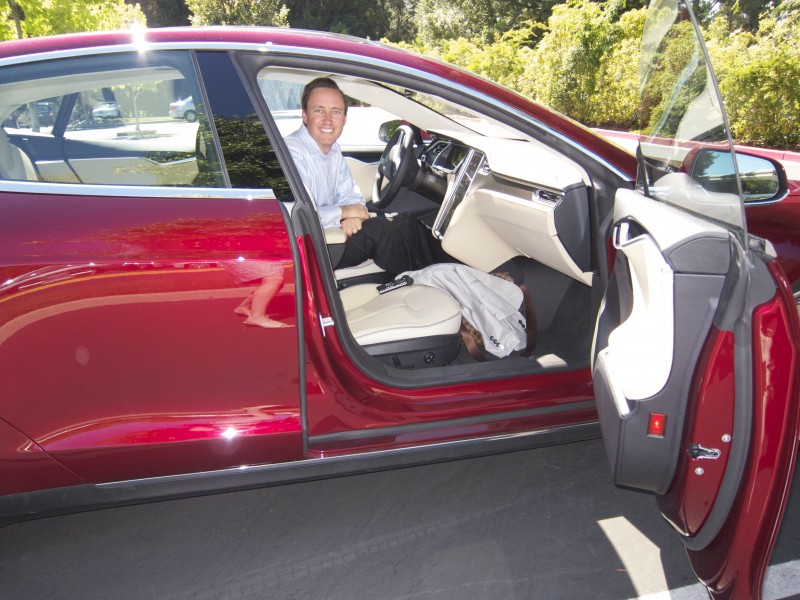
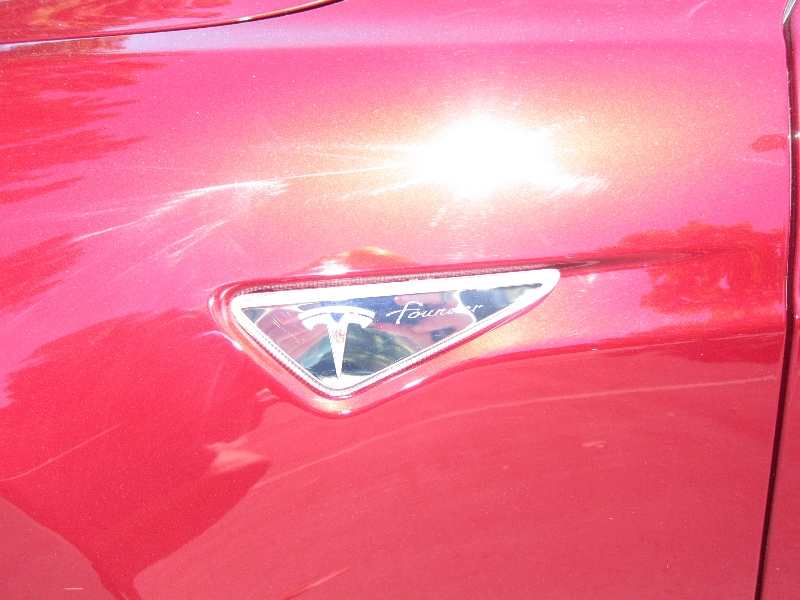
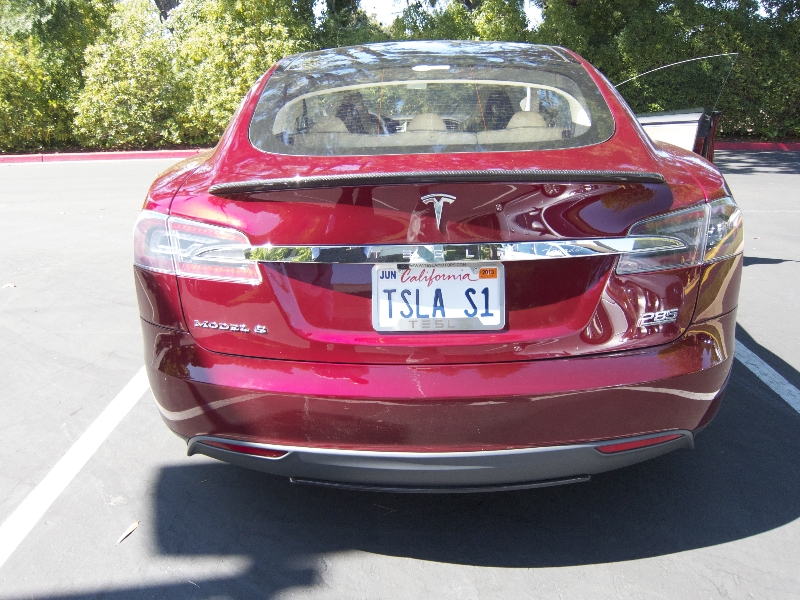
On Monday, I checked out the very first Tesla Model S at Sandhill Road, Silicon Valley. Steve Jurvetson, a Tesla board member is the proud owner.
Hoping for a splendid drive along 280, I was disappointed when Jurvetson said he’d promised the Tesla team that there’d be no test drives until the official release on June 22nd. Not even a wee tour around the parking lot.
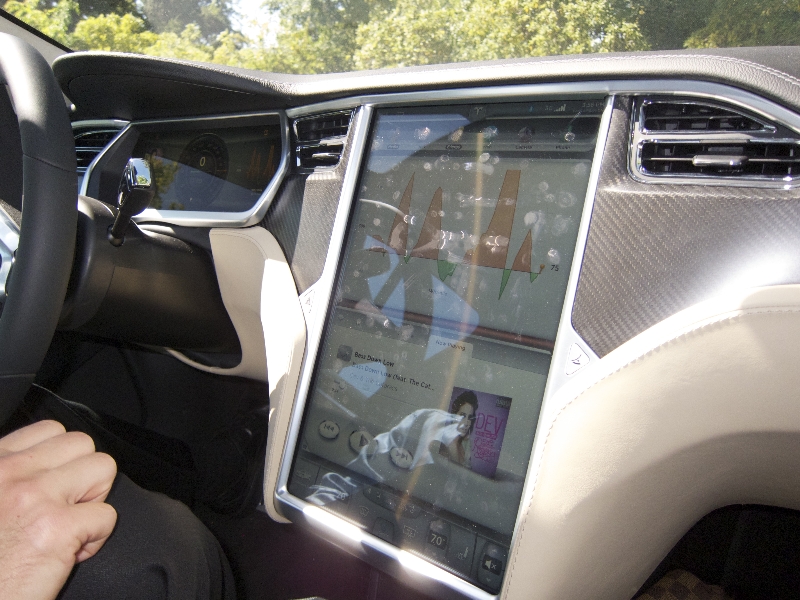
But I did get a detailed tour of the car’s interior and will be reporting more details soon about Jurvetson’s car and my fascinating two-hour tour of the Tesla Factory, here and on NPR’s KQED radio.
You’ll notice that there’s no tailpipe on the car. All electric, zero emissions.
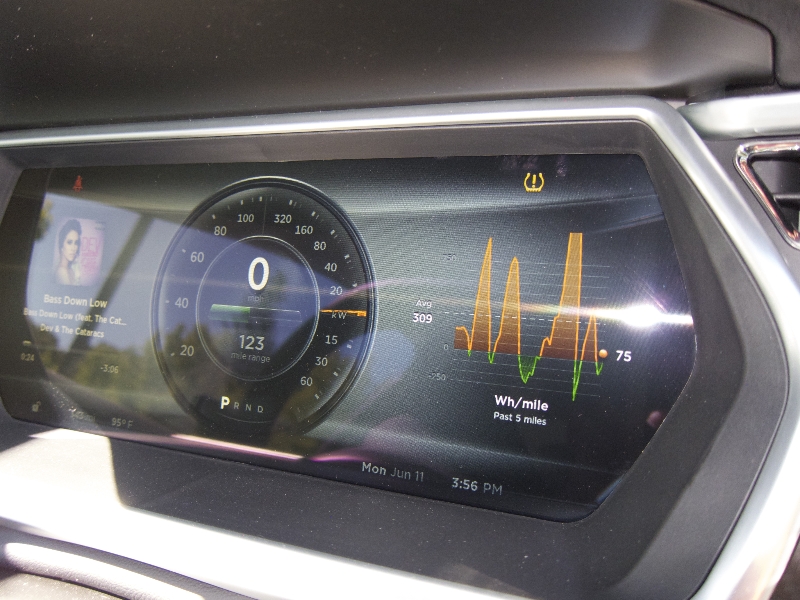
Note the acceleration patterns. The Model S generates electricity when you take your foot off the gas pedal.
Read transcripts, see photos and check out our ARCHIVES featuring exclusive interviews with Tom Friedman, Paul Krugman, Vinod Khosla and many more green experts and visionaries…
Join the conversation at our Fresh Dialogues Facebook Page
I recently recorded a story for KQED radio about Apple’s “dirty” iCloud and the more I dug into the issue, the greener the world’s most valuable company appeared to get. By the time I’d finished researching the topic, visiting a local data center, talking with an expert in energy efficiency, and interviewing members of the public at my local Whole Foods store, Apple released a statement announcing it was going “all in.”
“By the end of 2012, we’ll meet the energy needs of our Maiden, North Carolina, data center using entirely renewable sources,” the statement read.
The data center is a LEED Platinum building (the highest rating of the US Green Building Council standards) with an impressive collection of energy efficient design features from a chilled water storage system to a white cool roof which maximizes solar reflection. The whole project looks so “insanely green” it might start to make once green-revered Google turn a shade of (envious) green.
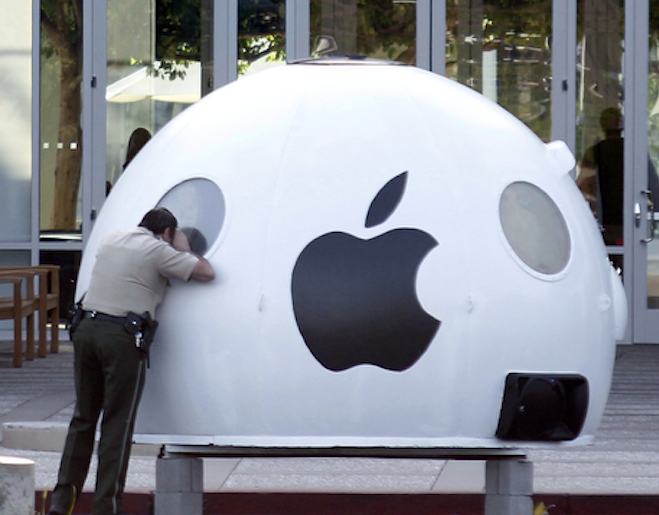
Was it the black balloons released in Apple’s spectacular retail stores in the Bay Area and around the world? The giant iPod “squatting” outside Apple’s Headquarters in Cupertino? The supersize iPhones walking around the campus demanding Apple clean its “dirty” cloud? The slick video or the 200,000+ petitions asking Apple CEO Tim Cook to stop using dirty coal? The environmental group Greenpeace would like to think so.
But it’s likely that none of the above induced Apple to green its cloud. These decisions to install 20 MW of solar arrays (from SunPower) and the largest non-utility fuel cell installation (from Bloom Energy) were years in the making, and the Greenpeace campaign weeks old. But having Greenpeace on its case does appear to have helped Apple discover some transparency in its operations. Something for which it’s not exactly famous. And that transparency will likely spur further clean action from other IT companies.
In a detailed release, Apple explained exactly where the 60% onsite clean energy is coming from and made a public commitment to power the remainder using local and regional clean energy supplies, including NC GreenPower.
In the war of words and facts between the environmentalist group and Apple, prior to the company coming clean, several commentators accused Greenpeace of “doing a Mike Daisey” on Apple. That is, intentionally fabricating the facts to make a stronger case against the tech giant. In the end, Greenpeace spokesperson Gary Cook told me, “We will continue our campaign to push Apple – and other IT giants like Microsoft and Amazon – to clean the cloud until Apple has policies to ensure that they will grow using exclusively clean energy.”
As for Google and the other fast growing cloud users like Amazon and Microsoft, we’ll be watching closely to see if a “greener than thou” race starts warming up. Each leapfrogging the other to out-green their competitor’s data centers. A race for the most insanely green cloud? Bring it on.
And he’s got an historic precedent to back his case – from Medieval France no less.
“It’s a very powerful idea that could become something of great importance to California,” he said. “New ideas are never received as well as old ideas, but I think California is the one place where high speed rail can get its start for the United States.”
But with California’s budget in the red and more spending cuts on the table, can California afford to spend a penny on high speed rail?
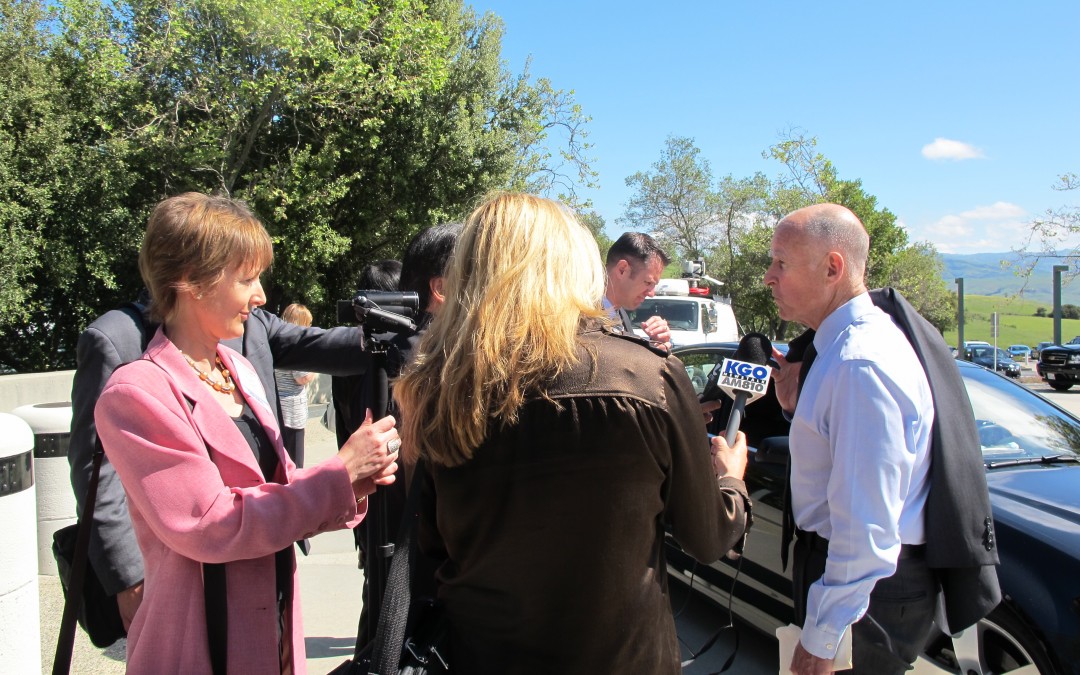
The 74 year-old governor took a page from history and replied with a question: “How did the peasants of medieval France afford to build the cathedral of Chartres?”
He then enlightened Fresh Dialogues with this answer, “They did it slowly… they did it with community investment and a great belief in the future.”
This echoes Brown’s 2012 State of the State Speech in which he said, “”Those who believe that California is in decline will naturally shrink back from such a strenuous undertaking…I understand that feeling, but I don’t share it because I know this state and the spirit of the people who choose to live here.”
Governor Brown is thinking very long term. In fact, the high gothic Chartres Cathedral, famous for its flying buttresses, took almost 60 years to build.
But it’s an unfortunate analogy. In the 13th Century, the cathedral’s “free trade zone” was also the cause of bloody riots between bishops and civic authorities over tax revenues. An ominous sign indeed for the Governor of California. Plus ca change…
.
.
Given Jerry Brown’s recent announcement that $120 M from a settlement with NRG Energy Inc. would be used to fund the provision of 200 public fast-charging stations for EVs in the Golden State (including some 5000 Nissan Leafs he confirmed have been sold to date), Fresh Dialogues also asked the governor if he drives an electric car. “Not yet,” he replied.
In earlier comments today, he referenced the new Tesla Model S, which will roll off production lines at Tesla’s Fremont Factory this summer. So is he considering a Tesla? He demurred. “I’m looking, looking, looking at it.”
Read transcripts, see photos and check out our Energy ARCHIVES featuring exclusive interviews with more green experts and visionaries…
Join the conversation at our Fresh Dialogues Facebook Page
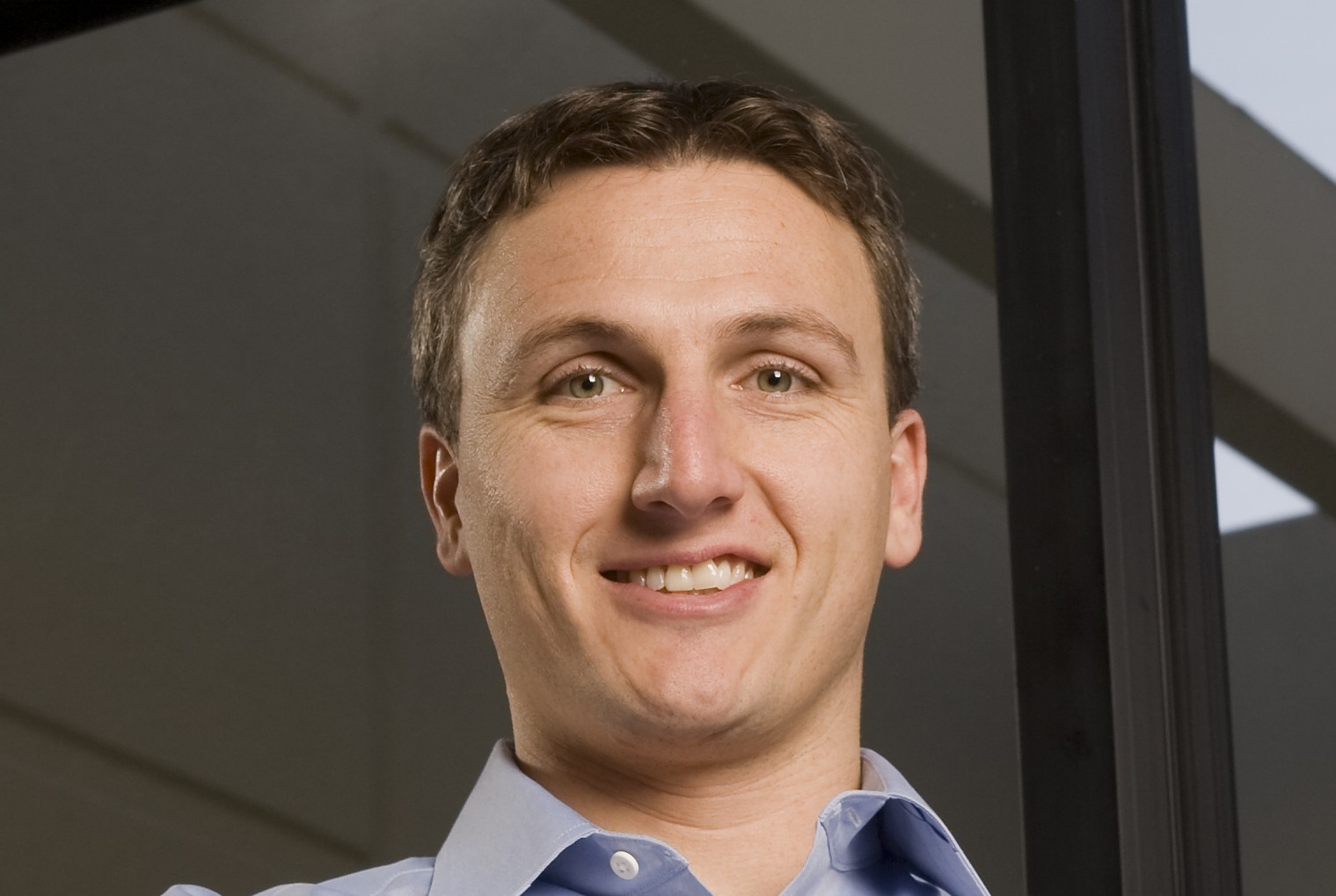
SolarCity’s CEO Lyndon Rive sat down with Fresh Dialogues last week to share details of the solar company’s business model, rapid growth, and ultimate goal of being the world’s largest energy provider. Yes indeed: this 35 year-old entrepreneur from South Africa anticipates no less than world domination.
Although Rive was tight lipped about the impending IPO expected in Q3 this year, he referred to the $280M investment from Google last year and said, “Our expectation is that companies like Google and other Fortune companies start making similar investments.”
“In order to monetize the full benefits of the solar system you need a large tax paying company. .. might as well use that tax bill to motivate the growth of the renewable industry…” he added. “We are approaching hundreds of Fortune 100 and 1000 companies…and will continually be raising funds, potentially in perpetuity.”
SolarCity is targeting companies that can benefit handsomely from the 30% Federal Business Tax Credit for solar investments. Although Rive wouldn’t name names, Apple Inc. springs to mind immediately. Record profits and enormous tax base? Check. Recently inclined to alternative energy investments? Check. In case you missed it, Apple recently invested in a massive 4.8 megawatt fuel cell development using Bloom Energy technology. Watch this space. We’ll keep you updated.
.
.
Business Model
SolarCity’s innovative model offers a range of solar options. Customers can buy systems outright or pay zero down and lease or purchase the power the system produces. Large investments from partners like Google allow the company to make solar affordable and continue growing rapidly. Rive described the company’s business model thus: “(We) install solar systems for free, so we need capital to pay for that, and take a long term revenue stream on the electricity that we sell. So, as fast as we grow, that’s the business model that we’re in.”
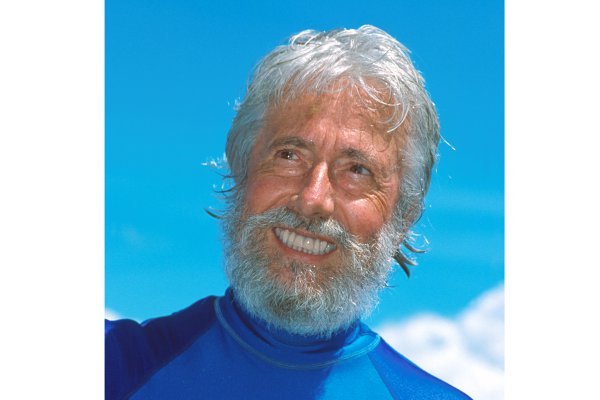
The facts of climate change are still disputed, despite consensus from a majority of scientists. Last Friday, Fresh Dialogues sat down with ocean explorer and film maker, Jean-Michel Cousteau to to get the facts from an expert who is seeing its impact in our oceans and beyond.
“Climate change is a reality,” says Jean-Michel Cousteau, the son of legendary explorer Jacques Cousteau. “What we are responsible for and the consequences we’ll have to face up to is that because our emissions of CO2 are accelerating the process, things are happening much faster.”
One of the biggest impacts he highlights is the reduced protection of our coastlines due to corals dying and sea level rising. He anticipates increased storms and flooding; and millions being displaced around the world.
I asked Cousteau: what advice does he have for people wanting to reduce their carbon footprint?
“It starts at home and by better managing our home, we save money and by the same token we save energy and emit less CO2,” says Cousteau. “The other one is our consumption. People eat too much. People are FAT!”
His forthright answer caught me off guard. No more Crème brûlée for me. We all have to make sacrifices.
Here’s a short segment of our interview. We also discussed China vs US action on climate change; President Obama’s response to climate change and his energy policy; and the important lesson his father, Jacques Cousteau, taught him.
Check out my story at:
KQED’s Climate Watch for Cousteau’s views on California’s Global Warming Solutions Act, AB 32