Fresh Dialogues is delighted to announce that it is now a regular contributor to KQED’s Climate Watch, a multimedia initiative focusing on climate science and policy issues in California. Fresh Dialogues stories will focus on the intersection of clean tech and climate change.
Here is our first story for the NPR affiliate.
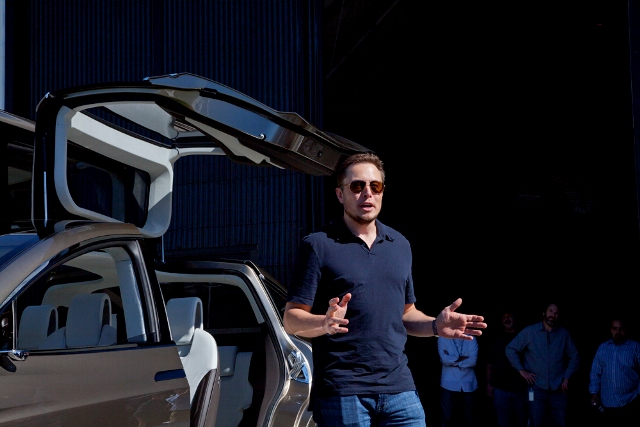
On February 8th, Tesla Motors CEO, Elon Musk, unveiled the company’s latest electric car: The Model X. Probably the sleekest and sexiest SUV you’ve ever seen, and also the priciest. But what’s most remarkable — beyond the falcon wings — is that the car will be manufactured here in the Golden State, at the former NUMMI plant in Fremont.
Why did Tesla choose to locate its headquarters and manufacturing in the high-priced San Francisco Bay Area? Was it linked to the state’s ambitious clean energy targets and policies? The new rules approved last month by the California Air Resources Board require automakers to produce 1.4 million zero-emission cars for the California market by 2025, and are part of the aggressive goal of reducing the state’s emissions 80% by 2050.
Tesla spokesperson Khobi Brooklyn eschewed policy explanations and told me, “We wanted to build our cars in California, not only creating jobs in the U.S., but also California specifically.” She cited Silicon Valley as “an incredibly rich pool of talent” and said that purchasing an existing car manufacturing facility saved money and time in preparing for car production. I’ve no doubt the California sales tax rebates on capital equipment purchasing (estimated at $20 Million) helped too.
California’s Governor Jerry Brown attended the Model X unveiling, and basked in the Tesla limelight. He was obviously delighted to be part of some good news from the Golden State for a change. “We can work our way out of our mess with creativity, openness and the kind of spirit that’s willing to take risks,” he said to the rowdy audience of Tesla groupies.
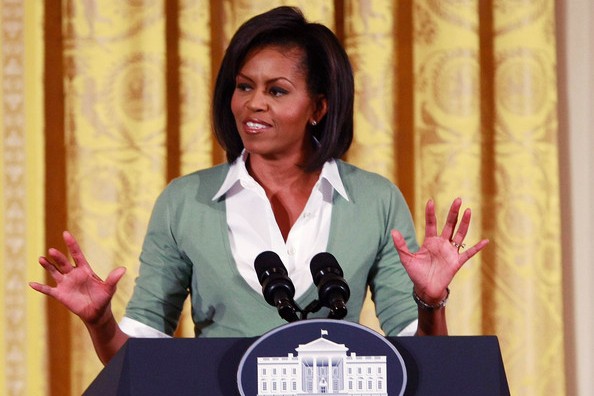
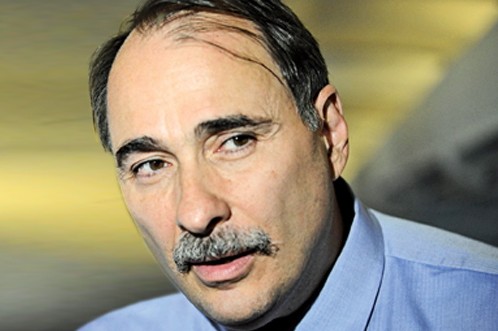
How much influence does First Lady Michelle Obama have on the President and his green policies? I put this question to David Axelrod, President Obama’s chief political strategist and his answer was candid: ENORMOUS.
Michelle Obama is well known for her Let’s Move campaign which puts good eating and anti-obesity front and center, so it’s easy to imagine this talented Harvard educated lawyer and mentor in chief is also making her views heard in the White House on issues beyond healthy eating and healthy living….including the health of the planet, climate change and even energy policy.
It was her organic kitchen garden at the White House which put Michelle Obama’s true (green) colors in the international spotlight in 2009. Fans have applauded her bold green action – planting the first kitchen garden since Eleanor Roosevelt’s Victory Garden – but Obama’s raised beds of organic arugula, spinach and Thai basil also caused a firestorm of complaint in the agriculture industry. It even inspired a priceless Little Shop of Horrors segment on the Daily Show.
In April this year, just in time for Earth Day, Michelle Obama’s first book American Grown, will be released and we’ll learn more from the First Lady about how her daughters, Malia and Sasha inspired her to rethink healthy eating and develop green thumbs. Like legendary chef, Alice Waters, she believes that increased access to healthy, affordable food can promote better eating habits and improve health of families and communities across America.
In a New York Times article, Obama explained her kitchen garden rationale. For children, she said, food is all about taste, and fresh and local food tastes better.
“A real delicious heirloom tomato is one of the sweetest things that you’ll ever eat,” she said. “And my children know the difference, and that’s how I’ve been able to get them to try different things.
“I wanted to be able to bring what I learned to a broader base of people. And what better way to do it than to plant a vegetable garden in the South Lawn of the White House?”
For his part, David Axelrod declares that the vegetables served at White House dinners are tasty but attributes it to both the organic garden and the wonderful White House chefs.
Read transcripts, see photos and check out our ARCHIVES featuring exclusive interviews with Tom Friedman, Paul Krugman, Vinod Khosla and many more green experts and visionaries…
and join the conversation at our Fresh Dialogues Facebook Page
Here is a transcript of my interview with David Axelrod on January 27, 2012 re. Solyndra, 2012 Energy Policy and President Obama’s State of the Union speech. Video here
ALISON VAN DIGGELEN: Hello and welcome to Fresh Dialogues. Today I’ll be talking with David Axelrod. President Obama’s Chief Political Strategist. David, thank you for joining me today on Fresh Dialogues
DAVID AXELROD: Happy to be here.
ALISON VAN DIGGELEN: Good. Now Obama has started his first (2012) Campaign ad with a defense of his clean energy policy. Why did Obama choose to start with green?
DAVID AXELROD: The ad that it was responding to was an ad sponsored by a SuperPAC… sponsored by the Koch brothers… two oil billionaires … and it was an attack particularly on the Solyndra issue but it was really an attack on the whole green energy initiative of the president’s. And we’re proud of that initiative…we’re proud that we’re on par to double renewable energy during the course of his first term. He believes very strongly that we need to command the clean energy technology of the future and that as a country we need to be encouraging the development of clean energy technology or we’re going to see that go to other parts of the world.
ALISON VAN DIGGELEN: You mention Solyndra specifically. Solyndra seems to be a thorn in the side of Obama. It keeps coming up. How does he intend to remove the thorn?
DAVID AXELROD: All you can do is be open and candid about it. We knew when made investments in clean energy technology that some would do well and others would not. That’s the nature of this…these are speculative investments. And that’s the reason why they needed some nudging from the government in order to blossom…You can look at Solyndra or you can look at the fact that when we started, the US had about 2% of the advanced battery manufacturing for electric cars. We’re on course to get to 40% by the middle of this decade.
ALISON VAN DIGGELEN: That’s impressive.
DAVID AXELROD: That wouldn’t have happened without the investments we’ve made. We’ve seen real growth in solar and in wind energy and so these are investments that are paying off for the country. I’m very certain that we’re going to look back at the seeds that were planted during this period and we will say that it has made a big difference for the country in a positive way.
ALISON VAN DIGGELEN: What percentage of the program’s investment went to Solyndra?
DAVID AXELROD: There were forty under this specific program, so it was a small percentage of the entire program. It was a program… that was begun under the Bush Administration and we accelerated that program because we do believe that we are in a real competition for the clean energy technology of the future and we as a country have a great interest in developing alternative energy and home grown domestic energy and renewable energy. These were investments that made sense. Some will pay great dividends, others unfortunately will not.
ALISON VAN DIGGELEN: Yes.
DAVID AXELROD: Plainly, we have to have our eye on the future and really encourage and develop renewable sources of energy. It’s good for the planet, it’s good for the economy, it’ll create great jobs…high end manufacturing jobs. This is going to continue being a thrust for us. We’re not going to back off.
ALISON VAN DIGGELEN: Thanks for joining us.
The interview took place backstage at Foothill College’s Celebrity Forum on January 27, 2012. Check back soon for more with David Axelrod:
On Michelle Obama’s influence on green policy
Read transcripts, see photos and check out our ARCHIVES featuring exclusive interviews with Tom Friedman, Paul Krugman, Vinod Khosla and many more green experts and visionaries…
and join the conversation at our Fresh Dialogues Facebook Page
“The ad that it was responding to was an ad sponsored by a SuperPAC…sponsored by the Koch brothers… two oil billionaires … and it was an attack particularly on the Solyndra issue but it was really an attack on the whole green energy initiative of the president’s. We’re proud of that initiative…we’re proud that we’re on par to double renewable energy during the course of his first term. He believes very strongly that we need to command the clean energy technology of the future and that as a country we need to be encouraging the development of clean energy technology or we’re going to see that go to other parts of the world.”
Solyndra appears to have become a thorn in the side of Obama. How does he intend to remove the thorn?
“All you can do is be open and candid about it. We knew when made investments in clean energy technology that some would do well and others would not. That’s the nature of this…these are speculative investments. And that’s the reason why they needed some nudging from the government in order to blossom…We’ve seen real growth in solar and wind energy and so these are investments that are paying off for the country. I’m very certain that we’re going to look back at the seeds that were planted during this period and we will say that it has made a big difference for the country in a positive way.”
.
.
What percentage of the program’s investment went to Solyndra?
“There were forty under this specific program, so it was a small percentage of the entire program. It was a program… that was begun under the Bush Administration and we accelerated that program because we do believe that we are in a real competition for the clean energy technology of the future and we as a country have a great interest in developing alternative energy and home grown domestic energy and renewable energy. These were investments that made sense. Some will pay great dividends, others unfortunately will not.”
Note: in a recent report at ClimateProgress, Stephen Lacey confirmed that Solyndra’s loan guarantee amounted to 1.3% of the DoE’s total loan portfolio.
On the importance of clean energy technology
“We have our eye on the future and really encourage and develop renewable sources of energy. It’s good for the planet, it’s good for the economy, it’ll create great jobs…high end manufacturing jobs.”
On the future
“This is going to continue being a thrust for us. We’re not going to back off.”
The interview took place backstage at Foothill College’s Celebrity Forum on January 27, 2012. Check back soon for more with David Axelrod:
On Michelle Obama’s influence on green policy
On The First Lady’s organic garden at the White House
Read transcripts, see photos and check out our ARCHIVES featuring exclusive interviews with Tom Friedman, Paul Krugman, Vinod Khosla and many more green experts and visionaries…
and join the conversation at our Fresh Dialogues Facebook Page
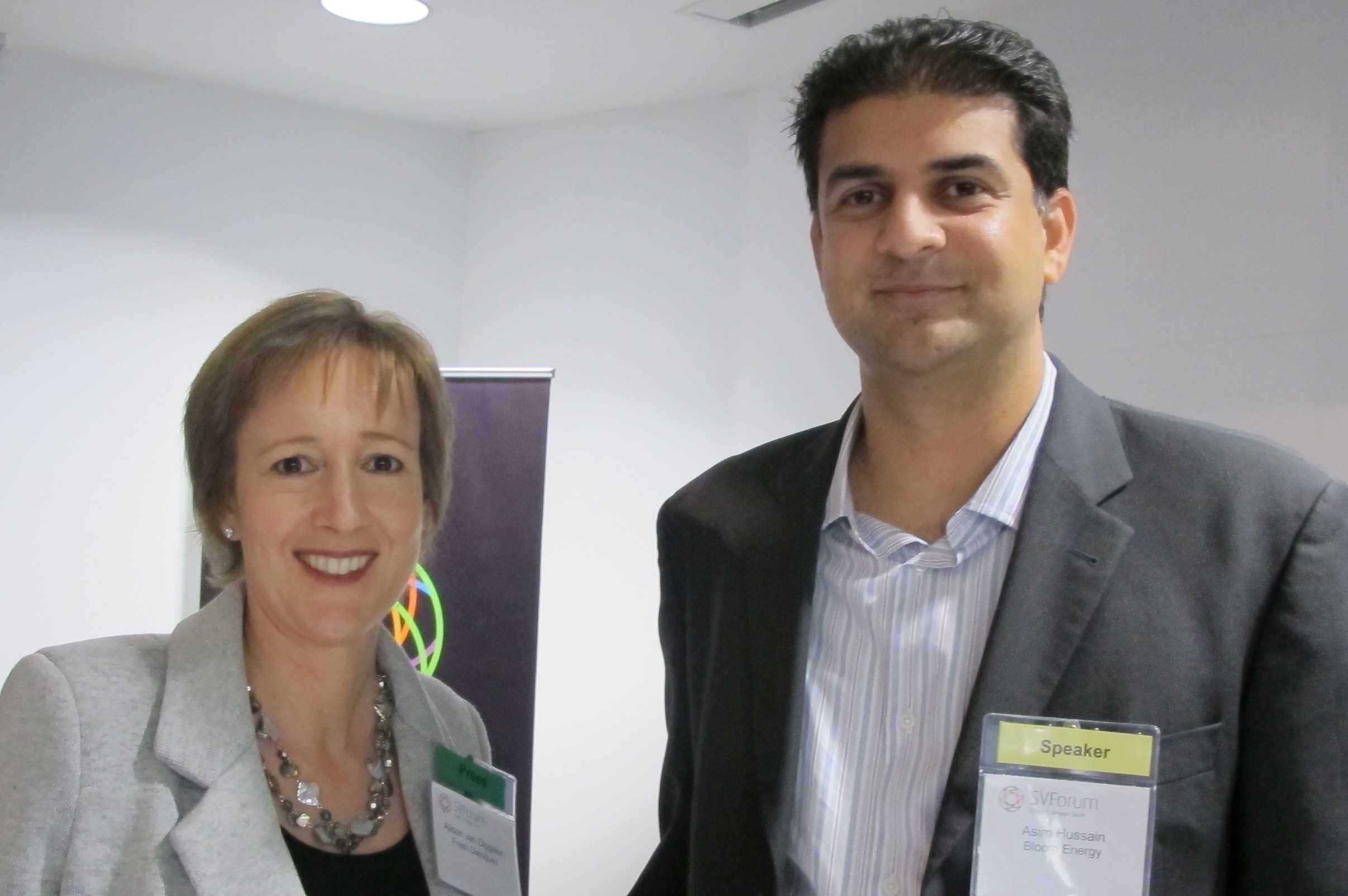
Bloom Energy‘s Director of Product Marketing, Asim Hussain, made a rare public appearance at SVForum’sClean Tech Conference last week and shared some details about Bloom’s 2012 plans:
New manufacturing facility in Delaware.
“Here in California, we’ve created 1500 clean jobs and we’re going to do the same in Delaware when we build that (30MW) manufacturing facility.” Asim Hussain
Manufacturing in California
The privately held company currently has three manufacturing facilities – including its testing facility – and they employ two Bloom Boxes to power one plant, using a biogas source. They plan to extend that capability to the recently built second plant. Unlike many Silicon Valley companies, manufacturing operations are here in the valley, although they have a global supply chain.
Bloom Electrons
Fresh Dialogues asked about the future of Bloom Electrons, the energy-only purchase model the company announced last year. Instead of paying the hefty $800,000 upfront cost for a Bloom energy server, customers sign a ten-year energy purchase agreement at a fixed price. Hussain confirmed that this model allows Bloom to access a new market segment: the nonprofit sector. The poster child for Bloom Electrons is California Institute of Technology Caltech – which began a 2 MW Bloom installation in 2010. The program has also allowed commercial clients like Walmart to expand their Bloom installations from two to twenty eight stores.
Hussain was part of a panel discussion on green building, moderated by Abby Johnson of Abacus Property. The experts included Alain Poivet of Sunplanter, Swapnil Shah of FirstFuel and PG&E’s Andrew Yip. The conference was hosted by SAP‘s green gurus Peter Graf, and Rami Branitzky
Read transcripts, see photos and check out our ARCHIVES featuring exclusive interviews with Tom Friedman, Paul Krugman, Vinod Khosla and many more green experts and visionaries…


 Fresh Dialogues is delighted to announce that it is now a regular contributor to KQED’s Climate Watch, a multimedia initiative focusing on climate science and policy issues in California. Fresh Dialogues stories will focus on the intersection of clean tech and climate change.