Jun 5, 2014 | Entrepreneurship & Innovation, Inspiring Women, Social Entrepreneurs
By Alison van Diggelen, host of Fresh Dialogues
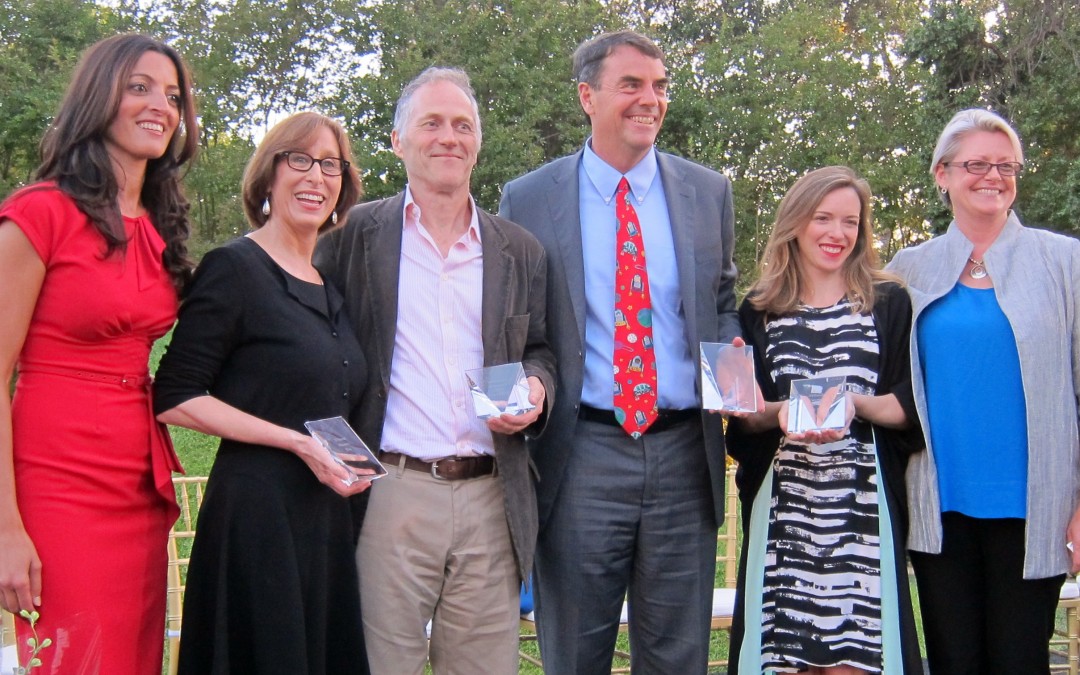
The dynamic new CEO of SVForum, Adiba Barney rolled out the red carpet this week for the 17th Visionary Awards. But despite all the glitz and glamor, there was a strong message: use tech to make the world better. Of course, each recipient has an impressive resume: Jessica Jackley, cofounder of Kiva; Tim O’Reilly, open source advocate and media producer; Tina Seelig, director of Stanford Tech Ventures Program; and Tim Draper, founder of Draper University and partner at DFJ Ventures. But how did each get where they are today and what can you learn from their journey?
Here are some of the lessons the visionaries shared at Tuesday’s event:
1. Ask: what if?
Jackley witnessed a new level of poverty while working in Africa and when she returned to Silicon Valley, she wanted to help change some lives, especially those with an entrepreneurial drive. She said, “People in Silicon Valley are always talking about the future…so ask: what if?”
Her inspiration? She was killing time at Stanford University one evening, and just happened to attend a talk by Muhammad Yunis, the Nobel Prize winning founder of “banker to the poor” Grameen Bank. His success helped launch the microlending phenomenon and inspired Kiva, a nonprofit microlender that’s now shared over half a billion dollars in startup funds with entrepreneurs around the world.
2. Have some accidents
Tim Draper confessed that he often discovered and backed companies like Skype by complete accident. Often he was actually looking for, or working on something else. His message: “If you want to be a visionary, go out and have some accidents!” And he proceeded to fling his glass of water into the crowd. Fortunately there were no injuries, though fellow journalist, Tom Foremski got the brunt of the baptism.
3. Go for love not money
Tim O’Reilly said “I urge you all: do things for love, with no expectation of return…celebrate the success of people who make a difference.” He described Silicon Valley as a place “for people who dream, who care…about stuff other than making an exit.”
Although he’s a big believer in the power of the markets, he underlined the obligation to “give back” and in his great literary style, he even quoted a passage from Victor Hugo’s “Les Miserables” to underline his point that an entrepreneur should think “much of others, and little of him (or her) self.” He’s recently embraced the vision of Jennifer Pahlka’s Code for America. It helps bring more top tech talent into government (e.g. the tech team that went to D.C. to help rescue HealthCare.Gov’s disastrous rollout).
“We need to fix government, not abandon it!” said O’Reilly.
 4. Never miss an opportunity to be fabulous
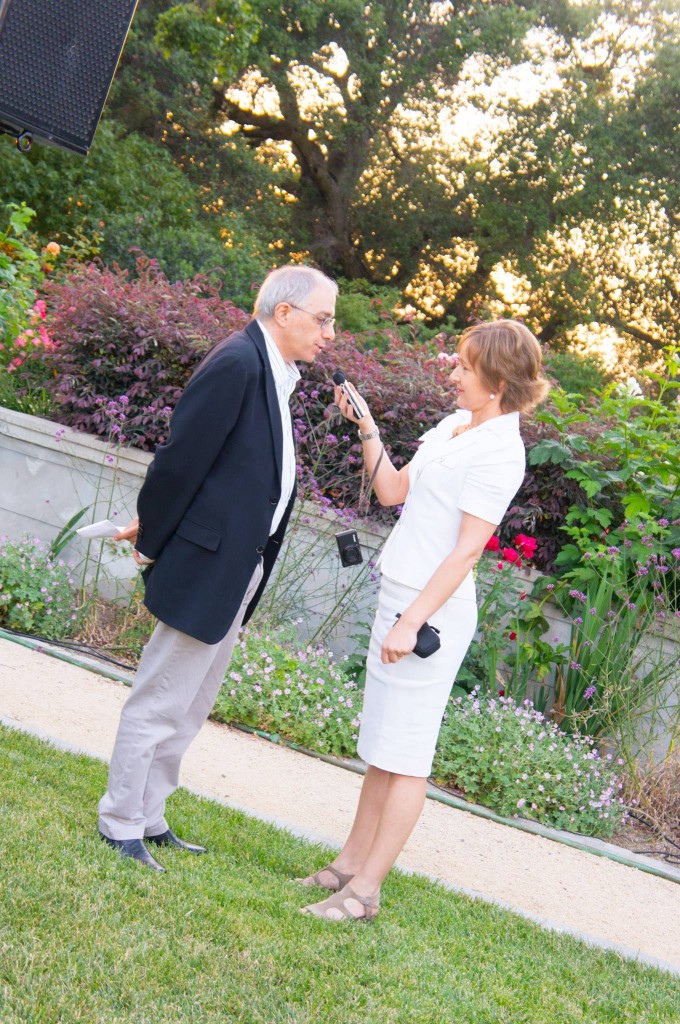
Tina Seelig is the epitome of Silicon Valley passion for entrepreneurship and technology; and urges us all to ask big questions. Her mantra is “never miss an opportunity to be fabulous” and although she didn’t say it, her energetic body language seemed to be chanelling Adele’s line from Rolling in the Deep: “Throw your soul through every open door!”
5. Have a passion for “Yes”
Steven Levy, a senior writer at Wired Magazine, and former honoree himself, introduced Tim O’Reilly and reminded everyone that behind every “no” is a “yes.”
“At the core of Silicon Valley is a passion for yes,” he said. “This is the place where people don’t look for reasons to say no…(instead) someone comes up with a crazy idea and they have permission to do it.”
Presumably he means, if you want to be a real tech visionary, there’s no place like Silicon Valley.
Check back soon for Fresh Dialogues interviews with Jessica Jackley, Tina Seelig, Jennifer Pahlka and Tim Draper.
This SVForum event took place at the home of Kelly Porter in Los Altos Hills on Tuesday June 3rd, 2014.
Photo credit: Tom Foremski
May 21, 2014 | Clean Tech, Electric Vehicles, Nuclear Energy
By Alison van Diggelen, host of Fresh Dialogues
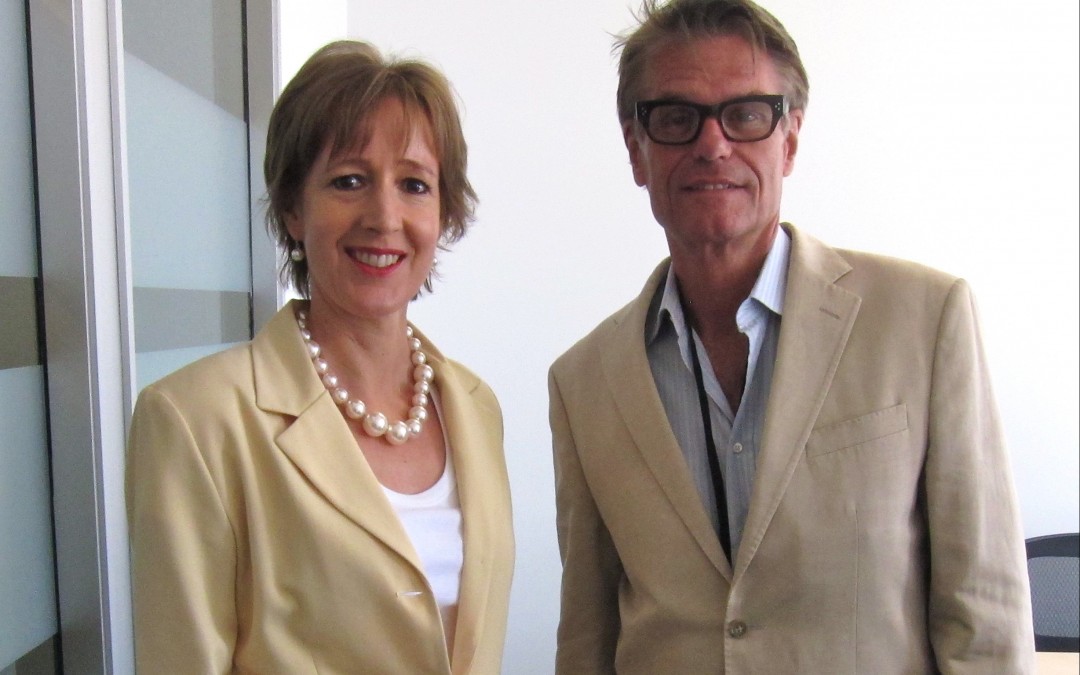
It’s amazing who you bump into at Silicon Valley conferences! Last week, it was Harry Hamlin of Mad Men fame. Turns out he’s a huge fan of Tesla Motors and Elon Musk. I put my Mad Men zeal aside and we talked internal combustion vs electric cars; the need for clean energy and why he thinks nuclear fusion, not wind and solar, is the answer. (Here’s a little primer on nuclear fusion if, like me, your physics is a wee bit rusty).
.
“I will never buy another internal combustion engine car,” says Harry Hamlin. The Mad Men star is completely enamoured by his Tesla Model S, and says it outperforms any car he’s ever driven, and he’s driven them all during his long and tumultuous acting career: from Aston Martin to Ferrari and Lamborghini to Porsche.
We discuss his vision for a clean energy future and he gives us a lesson from Einstein on nuclear fusion. You may notice a big smile on my face when he launches into an explanation of E=MC Squared. It was one of the most surreal moments in my eventful interviewing career. Hamlin may be a pretty face, but he’s also quite the intellectual.
He eschewed questions about his investments in clean energy, however Michael Kanellos of Forbes has written about the secretive company, Tri-Alpha Energy, with which Hamlin is connected. Kanellos also points out, that although nuclear fusion offers a tantalizingly abundant source of clean power, it’s not that easy to produce at scale. Hamlin may find it easy to “drive green” but the green energy bit is still a work in progress.
In other news, Hamlin confirmed that Mad Men is “an ongoing project,” so I think we safely can conclude he survives this weekend’s series finale. He also told me about his upcoming independent movies:
“The Erotic Fire of the Unthinkable” – in which he plays “the anti-hero.” Hamlin claims it’s not as X-rated as his sounds.
“The Fourth Noble Truth” – This movie about Buddhism recently won a prize at the Sonoma Film Festival.
The interview was recorded at the World Energy Innovation Forum at The Tesla Factory on May 14, 2014.
Check back soon for my interview with the Forum Chairman and Host, Ira Ehrenpreis.
See and read about more celebrity interviews at Fresh Dialogues, including Meryl Streep, Martin Sheen and Neil deGrasse Tyson.
May 16, 2014 | Inspiring Women
By Alison van Diggelen, host of Fresh Dialogues
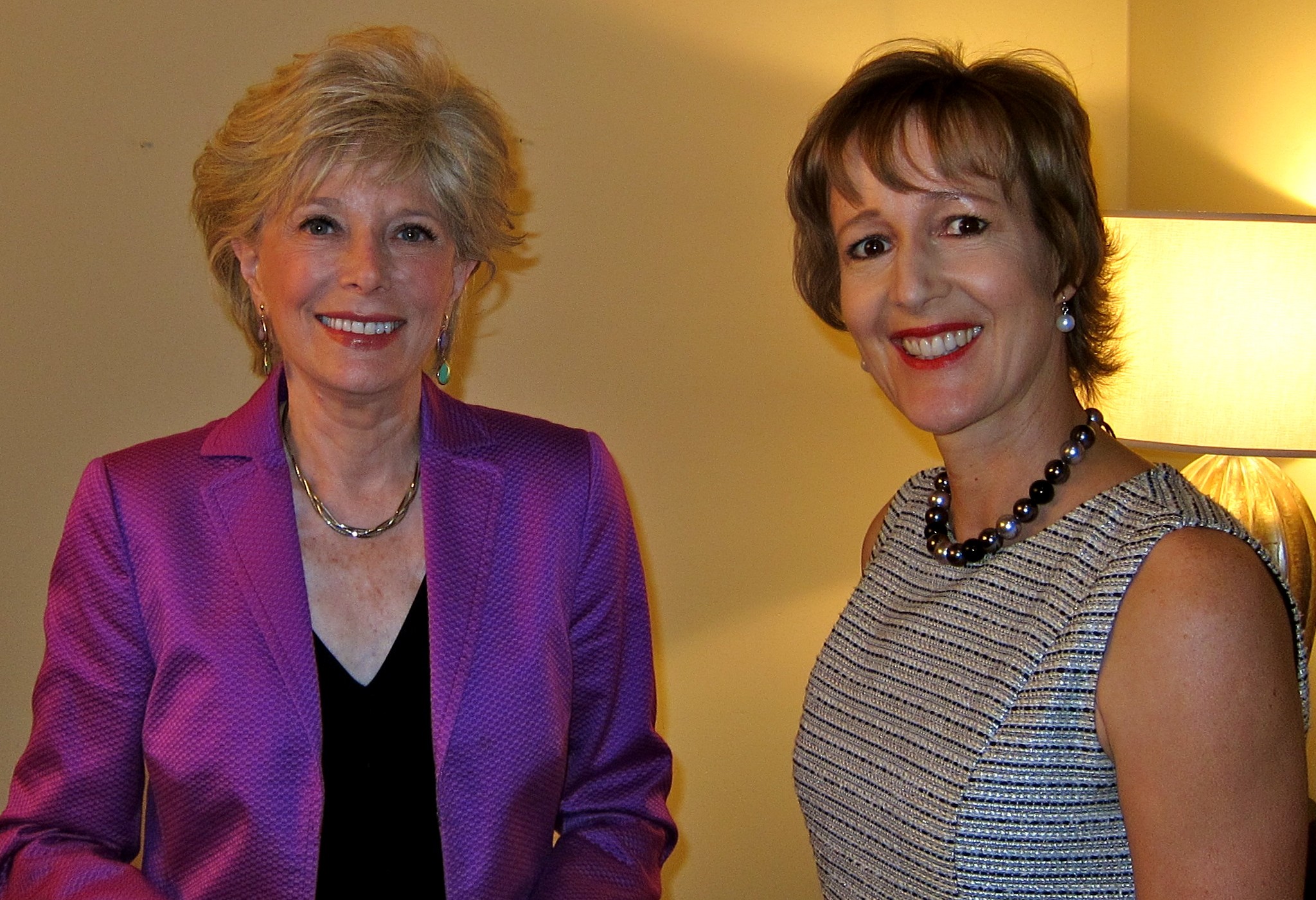
Last night, I caught up with acclaimed journalist Lesley Stahl to discuss Barbara Walters’ retirement. Here’s Stahl’s tribute to her television colleague and fellow crasher of the boys’ club:
“Barbara has been a pioneer all along,” says Stahl. “Even in hanging in there to the age of 84, she’s still leading the way.”
The 60 Minutes Correspondent and former White House Correspondent for the Carter, Reagan and George H. Bush administration gives a historic perspective on Barbara Walters’ groundbreaking role in TV journalism.
“When she started, when I started, it was generally assumed women couldn’t last in television news beyond the age of 40,” says the Emmy award winning Stahl. “Then it was 50, then Barbara reached 60…Barbara is 84, it’s fabulous!”
At 72, the vivacious Lesley Stahl continues to create newsmaking reports for 60 Minutes as well as Years of Living Dangerously. In her early days, producers told her to ”never, ever, ever smile,” she even wore glasses to look more serious. But today, the glasses are off and she frequently shows off her dynamic personality on air. She famously wrote in her biography, Reporting Live, that when she started work at 60 Minutes in 1991, joining septuagenarian colleagues like Morley Safer, she felt younger, “There simply is not a better job or a better shop in all of television news – possibly in all of journalism.”
The interview was recorded back stage at the Flint Center in Cupertino, minutes before Lesley Stahl took the stage with her 60 Minutes colleague Bob Simon, for Foothill College’s Celebrity Forum Series. Special thanks to host, Dick Henning and Foothill College President Judy Miner for their warm welcome.
Check back soon at Fresh Dialogues for Part 2 of my interview with Lesley Stahl about climate change and her eye witness account of the dramatic Arctic ice melt.
See Fresh Dialogues Inspiring Women Series featuring Meryl Streep, Susan Sarandon, Sheryl Sandberg and Belva Davis.
May 5, 2014 | China - what we can learn, Electric Vehicles, Storage, Technology, Venture Capital & Finance
By Alison van Diggelen, host of Fresh Dialogues
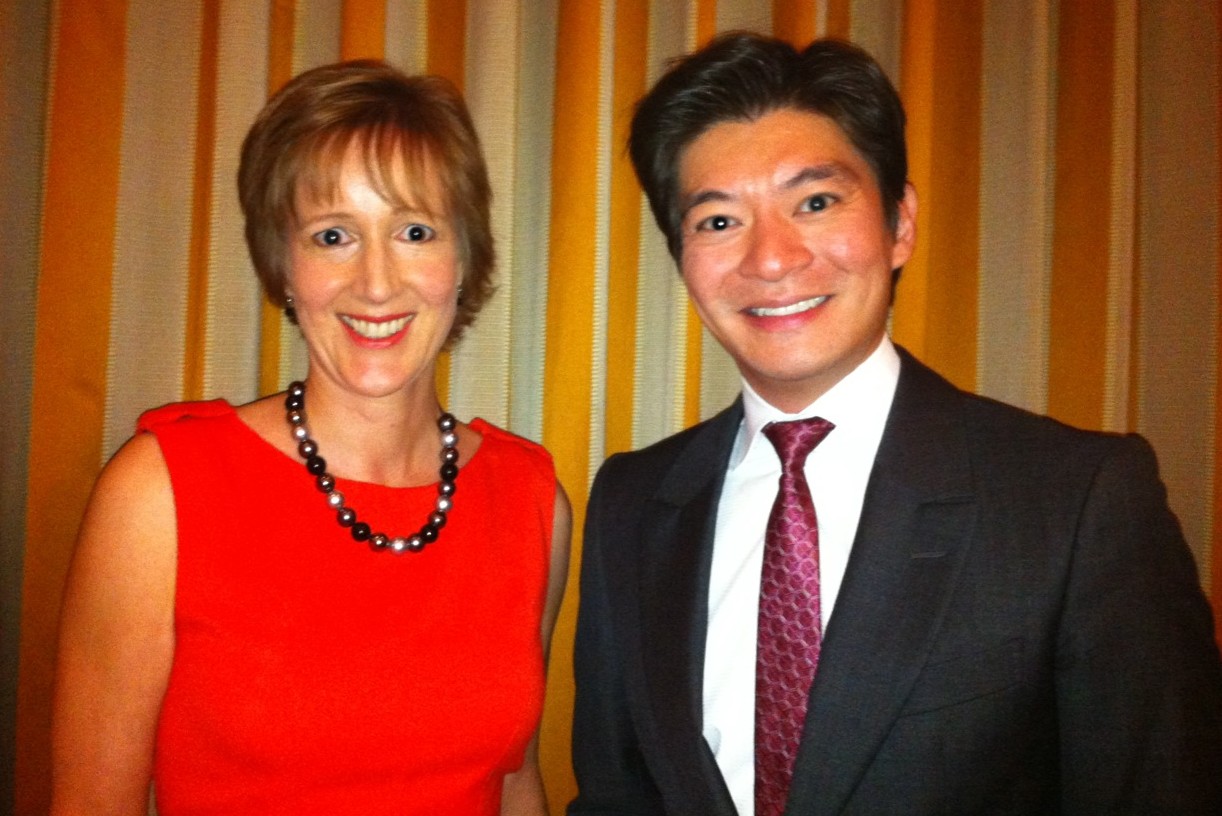
It’s no secret that cleantech has taken a bashing in the last few years, yet Andrew Chung, a partner at Khosla Ventures is still bullish about the sector’s prospects and convinced that it makes sense long-term, both domestically and globally. During our recent hour-long conversation, he admits that “keeping the cleantech fire burning” is the first thing he thinks about when he wakes in the morning.
“The number one thing is to ensure the cleantech industry continues to survive and thrive,” says Chung. He cites several companies in his portfolio that recently raised large rounds at strong valuations.
Keeping the fire burning? It’s curious imagery for someone focused on clean energy; and technologies that lower our carbon footprint. I imagine him cheerfully stoking a bonfire, plumes of black smoke filling the air.
“Would you like to qualify that?” I ask.
He chuckles, “Yes…we would capture the carbon created by the fire and transform it into something else.”
It’s a fitting segue into one of his favorite investments: LanzaTech, a company that happens to do just that. It takes carbon capture one step further, capturing waste gases like carbon monoxide from heavily polluting steel plants and converting them into “valuable fuel and chemicals.”
He calls it one of his Black Swans – highly improbable investments, that are not incremental improvements on business as usual, but giant technological leaps.
“This is cleantech done right,” Chung says. “The technology is so compelling.”
So compelling that the company recently announced a joint venture with Baosteel, a major steelmaker in China, which is investing in a new commercial facility due to come online in 2015. LanzaTech’s zero capital contribution to the deal means it can continue to scale up and pursue other partnerships in Japan, Europe, India and Russia.
I was curious to learn who helped with the initial discussions to broker the deal? None other than former British Prime Minister, Tony Blair. Those paying close attention to Khosla Ventures will remember he joined the team as a strategic advisor in 2010.
So what makes it such a compelling deal? Chung calls it a confluence of events. The blanket of smoke over Shanghai being a palpable one, leading to pressure from the Chinese government on major polluters like steel makers to clean up their act. There’s also the global ambition of many Chinese businesses who view such partnerships as strategic moves.
Societal tensions add to the pressure to solve China’s huge environmental problem. Even Jack Ma, China’s Andrew Carnegie is focusing his new philanthropic trust on health and the environment.
CONSPICUOUS ABSENCE
You’ll notice that the United States is conspicuously absent from LanzaTech’s partnership list. That fact is also at the top of Chung’s mind. Several of the potentially transformative technology companies he backs are finding it easier to get global partners than American ones.
“How do we communicate this message to D.C.?” says Chung. “If technology is not supported here, it will leave our shores.”
Chung feels the regulatory environment means that American companies are more complacent and have less appetite to take risks. He cites the U.S. car industry where employees get bonuses whether or not they achieve product improvements.
“It needs a regulatory push to compel them to take greater risk,” says Chung. “We don’t have the dire need like in China where (almost) 1 million people are dying of pollution every year.”
KINDRED SPIRITS OF ELON MUSK
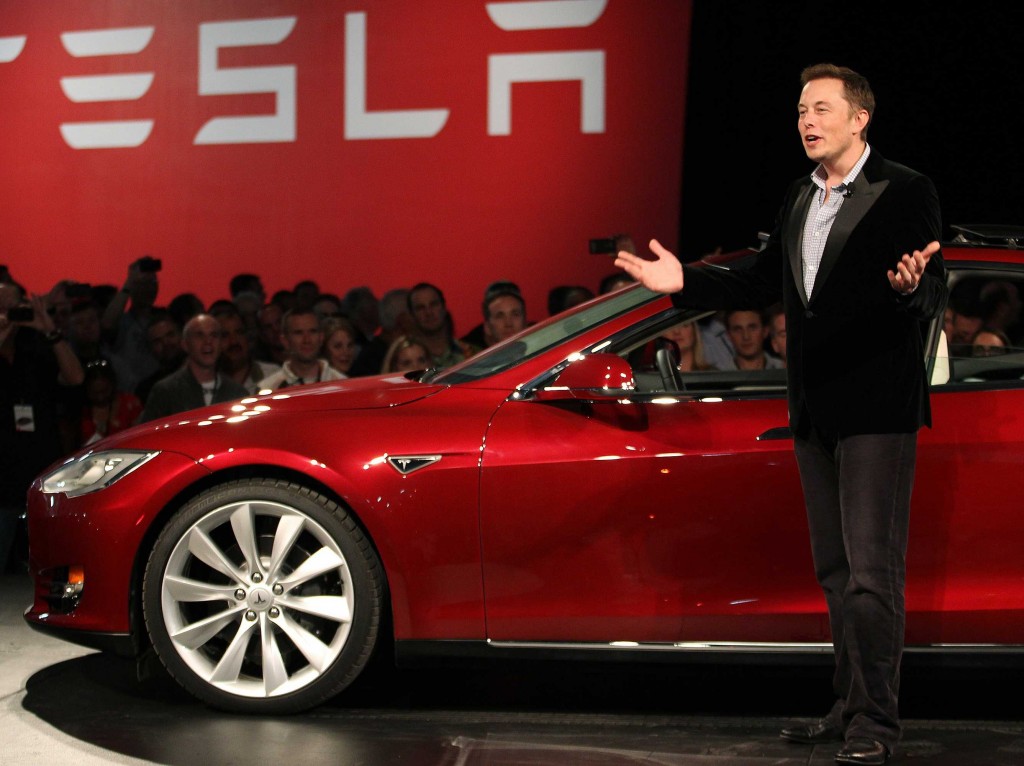 Talking of risk taking, Chung sees himself and his boss Vinod Khosla as kindred spirits of Elon Musk, who staked all his PayPal wealth on transforming the electric car sector with Tesla Motors.
“It’s a major cleantech success story,” says Chung. “Elon deserves a lot of credit…he stepped on the gas when others were giving up.”
What makes them kindred spirits? It’s more than just their strong belief in technology explains Chung. He quotes Irish playwright and cofounder of the London School of Economics, George Bernard Shaw:
“All progress depends on the unreasonable man.”
“So are you and Vinod Khosla unreasonable?” I ask.
Chung laughs. “We are contrarians!” he says. “We’re willing to do what it takes.”
He points to Khosla’s investment in Ecomotors, an internal combustion engine targetting energy efficiency gains of up to 50%. The company also has backing from Bill Gates and entered into two joint venture partnerships to build plants in China, deals involving hundreds of millions of dollars. He anticipates 200,000 engines for cars and diesel generators will roll off the production lines by the end of 2016.
“We’re addressing the transport problem from both angles,” says Chung. “We are focused on the electric revolution…battery technology investments. EcoMotors is a hedge to reflect the 99% (of the transport sector) that’s not yet electricity…electric vehicle infrastructure is still a challenge.”
SINGING FOR THE WORLD

We finally touch on what Chung calls his “secret identity,” his singing career. A finalist in Hong Kong’s version of American Idol, Chung says he has no regrets about choosing business over a singing career. Although he enjoys “bringing joy” to an audience, he’s very aware that it’s fleeting. Such momentary joy pales in comparison to his goal of having a major societal impact, or as he puts it, “Enabling 5 billion people to live like 1 billion do now.”
Chung plans to continue singing the praises of disruptive cleantech innovation. He’s firmly committed to keeping that cleantech fire burning.
See a Fresh Dialogues interview with Andrew Chung

Apr 23, 2014 | BBC World Service, China - what we can learn, Clean Tech, Solar Energy
By Alison van Diggelen, host of Fresh Dialogues
Yesterday, I was invited to join the live BBC World Service show, Business Matters to discuss Apple’s green manifesto and its rivalry with Samsung. I was interviewed by the BBC’s talented Manuela Saragosa. Here’s a transcript of the highlights. Listen to the full interview here (green discussion starts at 26:00).
Saragosa: It was Earth Day on Tuesday… there’s been no dimming of the lights here at the BBC…but technology giant, Apple has been laying out its green manifesto to mark Earth Day. The company’s CEO Tim Cook put out a video, announcing a new scheme that allows any product made by Apple to be returned to the company for recycling.
Our guest, Alison van Diggelen is in California’s Silicon Valley. Alison, green business issues are your thing, what do you make of Apple’s manifesto? Is there substance to it do you think?
van Diggelen: I think there is substance to it. The reason they put out this video is: Greenpeace has been snapping at Apple’s heels for quite some time. I did a story a couple of years ago (for NPR’s KQED Radio) when they were looking at data centers. Greenpeace came up with their own quasi Apple ad (cunningly called iCoal), showing that every time you download something or send a photo on your iPhone, you’re putting more smog into the atmosphere. It was very clever and got Apple’s attention, and now they’re really moving ahead (According to a recent EPA report – Apple is now in the top 10 clean energy users nationally and uses 92% clean energy). One of their major data centers (in North Carolina) where they do Apple iCloud, has 100% green power: clean energy, using solar and fuel cells.
In the video, they’re doing a little chest thumping, saying “Look at us – here’s what we’re doing!” And of course, launching it on the week of Earth Day was a very clever move, a strategic move…
I do think Apple deserves to be lauded. It could do more, but I think shining a light on what it’s doing so far is good.
Saragosa: But it’s come a hugely long way. I know that in 2006, Greenpeace published its first guide to green electronics and at that point it rated Apple among the worst companies (it ranked 11 out of 14 companies). I suppose things have changed quite a lot since then.
van Diggelen: Yes. I think Greenpeace deserves credit for doing what it can to put the pressure on. This report it released went through all the major tech companies: Google, Apple, Facebook, Twitter (Amazon), saying: “Here’s what they’re doing folks!” Companies that you think of as pretty green and green advocates like Google, they’re not doing enough. They could do more.
The interesting thing with Tim Cook that your listeners will definitely be interested in is that at a recent shareholders’ meeting, someone stood up and said: “We don’t like what you’re doing with all those clean energy data centers. Couldn’t you be using your funds to make better products…do other things?”
Saragosa: But is that a widely held view?
van Diggelen: This is the interesting thing: Tim Cook struck back at them. He said: “We believe that we must make the world a better place.” He stood up and said this to the shareholders…”If you don’t agree with it, sell your shares! Which was quite gutsy of him I thought. Since then Richard Branson (CEO Virgin Atlantic etc) has said the same (He recently wrote, “Businesses should never be entirely focused on the bottom line…I would urge climate deniers to get out of our way!“) So I think it’s great to see high profile CEO’s like Tim Cook and Richard Branson are doing that, and saying: Hey! We need to think about the environment, we need to think about our impact on the environment. I’m cheered by that.
Listen to more of our discussion re Apple vs Samsung battle, copycats, tech recycling, and safe disposal of electronic goods.
We also explored attitudes to the environment and clean energy in Asia with David Kuo of the Motley Fool in Singapore; and discussed the devastating levels of pollution in China’s major cities.
van Diggelen: I recently spoke with Andrew Chung, who’s a Chinese American venture capitalist in Silicon Valley. He’s doing a lot of work in China and he was telling me about one of the (green) companies he’s investing in. The impetus in China is huge: they’re having to do it because the pollution is so intense, people are dying from the pollution.
One of these companies that’s completely addressing that is LanzaTech. They’re capturing the carbon monoxide pollution from steelmakers outside Shanghai and using it to create valuable fuel and chemicals, rather than ‘just’ capturing it. It’s a really interesting solution: a win win. A win for the environment, but it’s also a money maker and great for the steelmakers. So that’s the kind of play that’s going on in China.
Read more about Google’s Green Dream at Fresh Dialogues