Sep 17, 2014 | Uncategorized
California is in its worst drought since 1977. Some say it’s the worst in a century.
Reservoirs are only a third full. Rainfall totals were about 40 percent of normal last winter. Farmers are pumping groundwater to keep crops alive. Wildfire risk is extremely high. And wildlife is in danger as creeks run dry.
Although some people are saving water, (even refusing to shower) much more could be done!
What are YOU doing to help save water? What do you think should be done to save water?
Have YOUR voice heard by sharing your top tips and creating awareness…
WIN the Fresh Dialogues #DoingForDrought Competition
 Top Prize:
* Winner will receive a Fresh Dialogues Drought Hero Award and be interviewed and featured on Fresh Dialogues YouTube Channel next to top green influencers like Elon Musk, Tom Friedman and Meryl Streep.
*He or she will get to meet an influential green industry leader.
* The winning video will be featured on Fresh Dialogues and will help influence water use in California and may also help shape water policy both here and around the world!
Honorable Mention Prizes:
*Each will receive a Fresh Dialogues Drought Hero Award
* Each video will be featured as “honorable mentions” on Fresh Dialogues.
FAQs
1. What’s the plan?
Make a short #DoingForDrought video (2 minutes max) on YouTube and mark it public. It could feature an interview with a family member, friend, or local business owner who is affected by the drought, or it could be just you, telling the world what you’re doing for the drought. If you don’t have a YouTube channel, use a friend’s channel or set one up, it’s easy.
OR
Make a #DoingForDrought poster illustrating what you’re doing or what you think should be done.
2. Then what?
Send us a link to your video or send us a jpg of your poster using our contact page with your name, email and hometown.
3. Does it cost to enter?
No. It’s a free competition, open to all.
 4. What’s the Deadline?
Competition starts today and ends Friday October 10th, 2014
4. Who decides?
The winner and honorable mentions will be announced on Monday Oct 13th, 2014 by the Fresh Dialogues team. We will be looking for energetic and pithy messages. Be creative, be practical and most of all, have fun with it!
5. What else?
We encourage you to share the competition with friends and colleagues using the hashtag #DoingForDrought @FreshDialogues and share updates at Fresh Dialogues Facebook Page
6. Still got more questions?
Send us your burning questions using our contact page or on Facebook
Good luck!
Remember:
“Never doubt that a small group of thoughtful, committed citizens can change the world; indeed, it’s the only thing that ever has.” Margaret Mead
Sep 15, 2014 | Electric Vehicles
By Alison van Diggelen, host of Fresh Dialogues
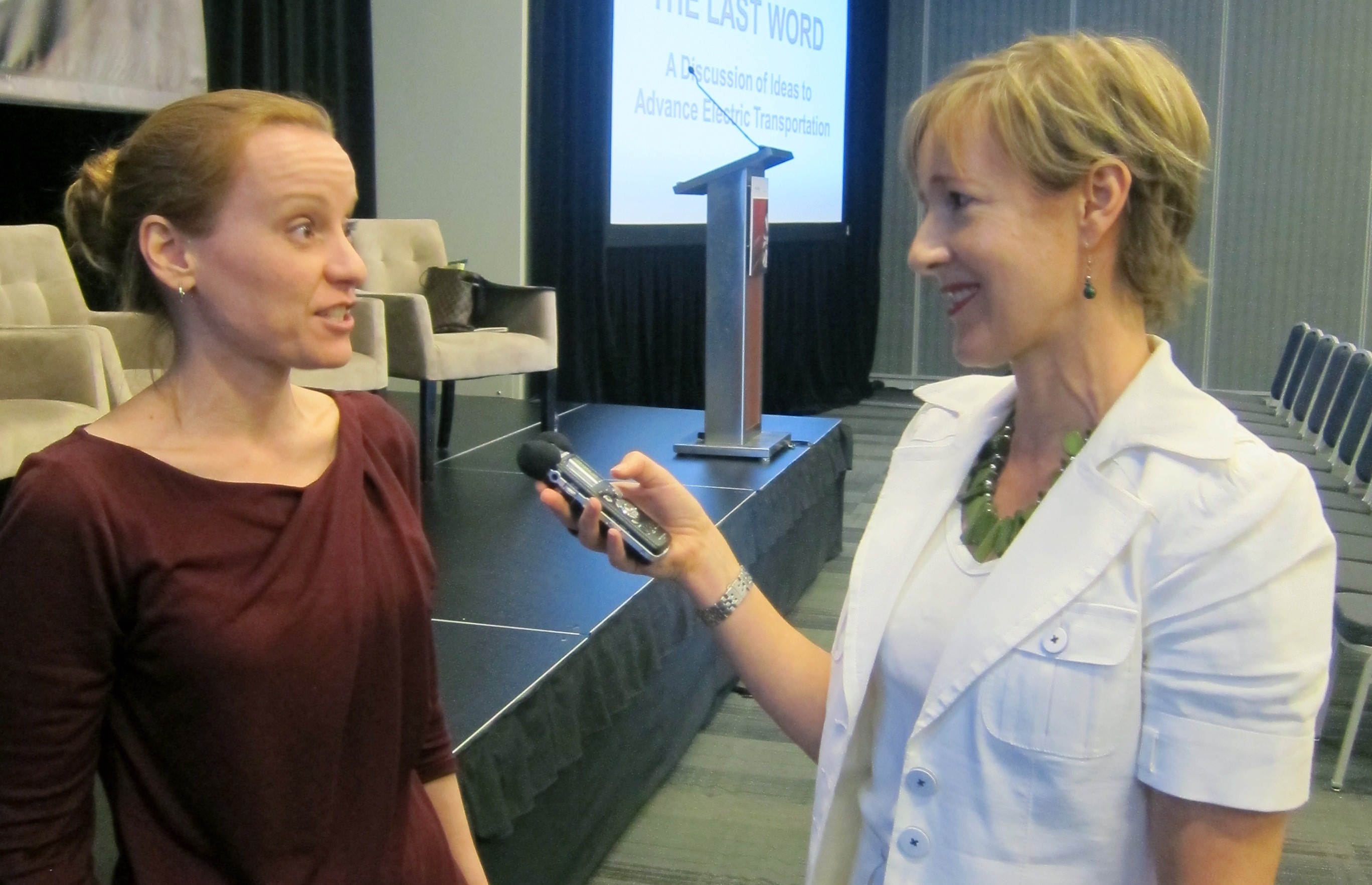
Chelsea Sexton is famous – among electric car fans – for her role in the documentary “
Who Killed the Electric Car?” I caught up with Sexton at this summer’s
Plug-In Conference in Silicon Valley and she emphasized the importance of “getting butts in seats” – electric vehicle seats that is – in order to expand the adoption of EVs.
An employee of GM, Sexton was part of the L.A. team tasked with leasing the first commercial electric vehicle:
the EV1. When GM decided to recall the car, she became a vocal opponent of the recall, but that didn’t stop the company crushing the majority of the fleet. It’s an episode in EV history that makes quite
Tesla’s Elon Musk emotional (see @39:25 in our
in-depth interview).
Today, Sexton is an outspoken advocate for the development and expansion of the electric vehicles market, and helped launch the
Automotive X Prize. Here are some highlights of our conversation:
On expanding electric vehicle ownership
“Getting butts in seats is key,” Chelsea Sexton
This mantra was repeated several times by Sexton and her fellow panelists, during the last Plenary Session: Ideas to Advance Electric Transportation.
The rationale is that the more people who experience the acceleration and performance of electric cars, the more people will buy them. Programs like Experience Electric and National Drive Electric Week (Sept 15-21) are tackling this challenge.
On why she loves electric vehicles
“I love torque more than anyone rightfully should…that experience of off-the-line speed, and racing one car against the other…that’s torque. Bill Nye jokes that I have a lead foot…I have a lithium foot.”
Sexton used her “lithium foot” during a
Wired Magazine assignment in 2013, when she got to drive the all electric Yokohama HER-02 EV.
On where electric vehicles are today
“The last few years have been the giddy freshman – we finally have electric cars again – years and now we’re in the phase – the sophomore slump – where it’s time to dig into the less sexy nuts and bolts and infrastructure.”
On the future of electric cars
“I’d like to see them no longer a novelty. The next 5 years will determine what will happen…we hope to see more vehicle types and be less reliant on incentives and be more self-sustaining.”
On Tesla Motors
“It’s the most aspirational example of an electric car…Elon (Musk) is rocket man, so who’s not excited by that?”
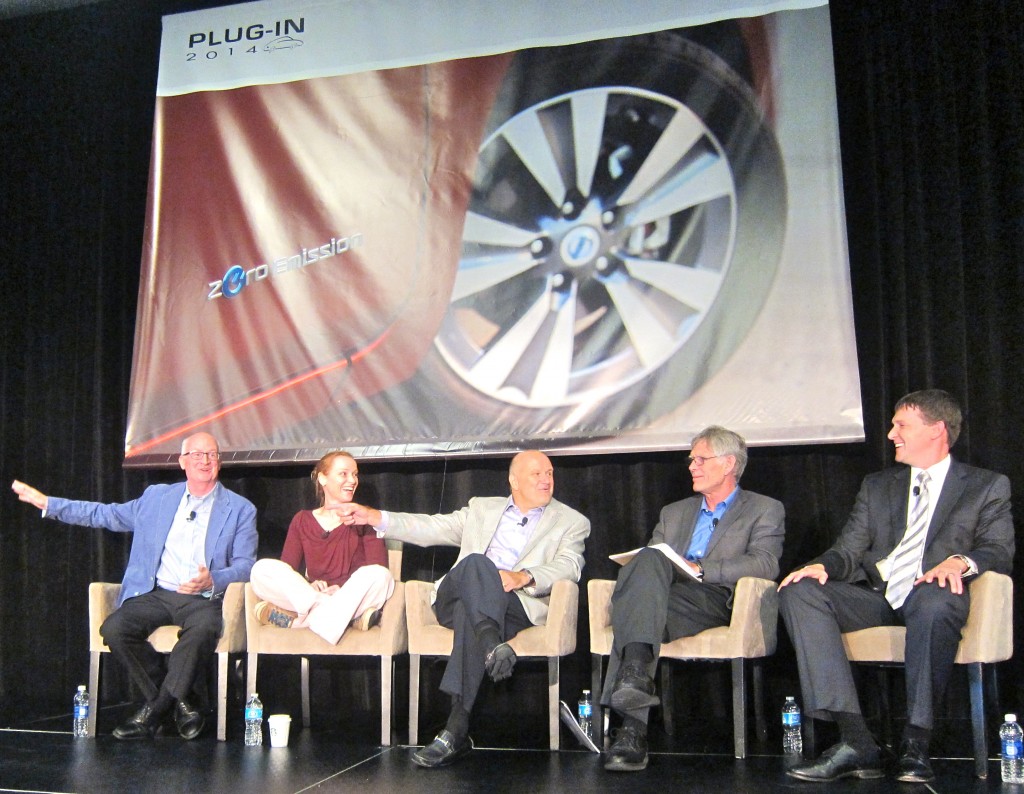 2014 Plugged-In Conference Plenary Session: Ideas to Advance Electric Transportation
From Left:
Watson Collins, Manager, Research & Business Development, Northeast Utilities
Chelsea Sexton, Founder, Lightning Rod Foundation
Edward Kjaer, Director, Transportation Electrification, Southern California Edison
Tom Turrentine, PH&EV Research Center, Institute of Transportation Studies, University of California, Davis.
Dan Bowermaster, Program Manager, EPRI, Electric Transportation, Electric Power Research Institute
Find out the latest news about Electric Vehicles and Driverless vehicles, reports from Fresh Dialogues
Aug 27, 2014 | BBC World Service, Electric Vehicles
 By Alison van Diggelen, host of Fresh Dialogues
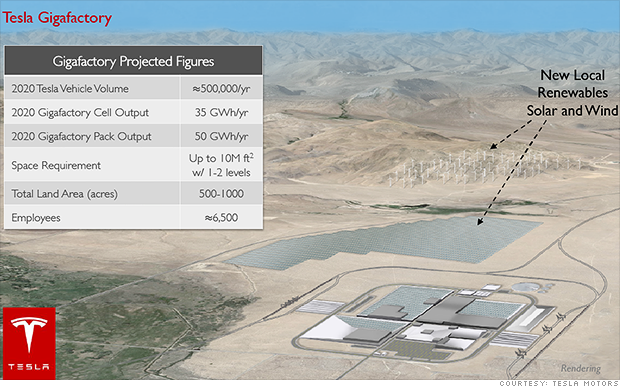
Last week I joined BBC Business Matters host, Mark Whittaker in London and CIMB Research’s Song Weng Wun in Singapore, for a discussion about Tesla’s Gigafactory; why competition between five U.S. states to secure the factory is so intense; and what it means for the future of electric cars.
Although Tesla began groundwork on a factory site in Reno, Nevada, progress has now halted. Last week, Nevada Senator, Harry Reid said, “I’m not sure they aren’t playing us.”
Meantime, California Governor, Jerry Brown is enthusiastically enticing the electric carmaker with offers of generous tax credits, employee training and fast track approvals.
Although some commentators say that the Golden State is too green to land the Tesla Factory, that hasn’t stopped State Senator Ted Gaines from remaining bullish. “I am very confident…innovators come to California because it’s unique,” Gaines said during a recent CNBC interview. “We want to fight for 6500 jobs and a $5 Billion investment.”
Listen to the global perspective at BBC Business Matters, starting @31:17.
Here is the transcript.
 Mark Whitaker: My guests on Business Matters today are Song Seng Wun from CIMB Research in Singapore, and San Francisco’s Alison van Diggelen. Alison presents a program called Fresh Dialogues which is all about high tech… and all about green. Alison, we’re always keen to hear about what’s happening in Silicon Valley. What’s the latest?
van Diggelen: The thing I’m excited about today is the fight over the Tesla gigafactory. Tesla is the maker of an all-electric vehicle, an electric car called a Model S; and the CEO Elon Musk is wanting to build what he’s calling a Gigafactory, which is a giant factory to make billions of lithium-ion batteries. Five states in the United States (California, Nevada, New Mexico, Arizona and Texas) are fighting over the privilege of having this factory in their state. It’s going to produce over 6000 jobs and obviously be a huge boost for the local economy. So it’s quite interesting to see the fierce competition over this whole green expansion here.
Whitaker: So it’s pretty high stakes. Does that give an indication that green industry has really taken off in the United States?
van Diggelen: Well Elon Musk and his team have certainly found a good formula. They’ve produced a car that has had all the top ratings in all the consumer reports. His premise is: he’s not just doing it because he thinks electric vehicles are cool. He really has the big picture in mind: he’s focused on climate change and focused on reducing our carbon footprint.
I listened in to a recent analyst conference call, and he said the sooner this factory can be built, the sooner we can reduce our carbon footprint and reduce the probability of a catastrophe.
He’s watching the ice melt in the polar caps and is concerned. So he’s really putting his money where his mouth is and saying: what can we do in the transport industry to make vehicles more electric and less carbon polluting?
Whitaker: Song Seng Wun in Singapore, are you convinced that electric cars are just round the corner?
Song Seng Wun: Here in Singapore there is certainly plenty push as far as government is concerned to ensure transportation is as green as possible and obviously, if we are able to get more cheaper, affordable cars…Singapore is probably the world’s most expensive, even for electric cars…it will be welcome here.
It’s about whether the technology involved in greening transportation can be expanded for use in other cars in manufacturing, in businesses as well, which, I suppose is what Singapore is all about: how to use existing technology for better use elsewhere to increase productivity? (Productivity) is the catchword of the day, of the year, perhaps decade, here in Singapore.
Whitaker: Alison, from what Song Seng is saying…That’s quite heartening from your point of view?
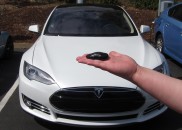 van Diggelen: Yes, it’s great to hear there is that focus on efficiency and sustainability…The Model S is between $70,000 and $100,000 here which obviously is a bit of a stretch for most of us, but what they plan is to have a third generation mass market car and this is where the Gigafactory is a key part of that. They’re planning to produce 500,000 of these all electric cars by 2020, so this is the grand strategy of making transport more electric and more energy efficient.
Listen to more of our BBC Business Matters discussion:
On the economics of Scottish independence: @26:00
On how to bring out the best in Parisian waiters @46:29
Check out other BBC Conversations on Fresh Dialogues:
On Google’s Self Driving Car in May 2014
On Apples’ Green Strategy in April 2014
On Fresh Dialogues and how it began in Feburary 2014
Aug 19, 2014 | Entrepreneurship & Innovation, Nuclear Energy
By Alison van Diggelen, host of Fresh Dialogues
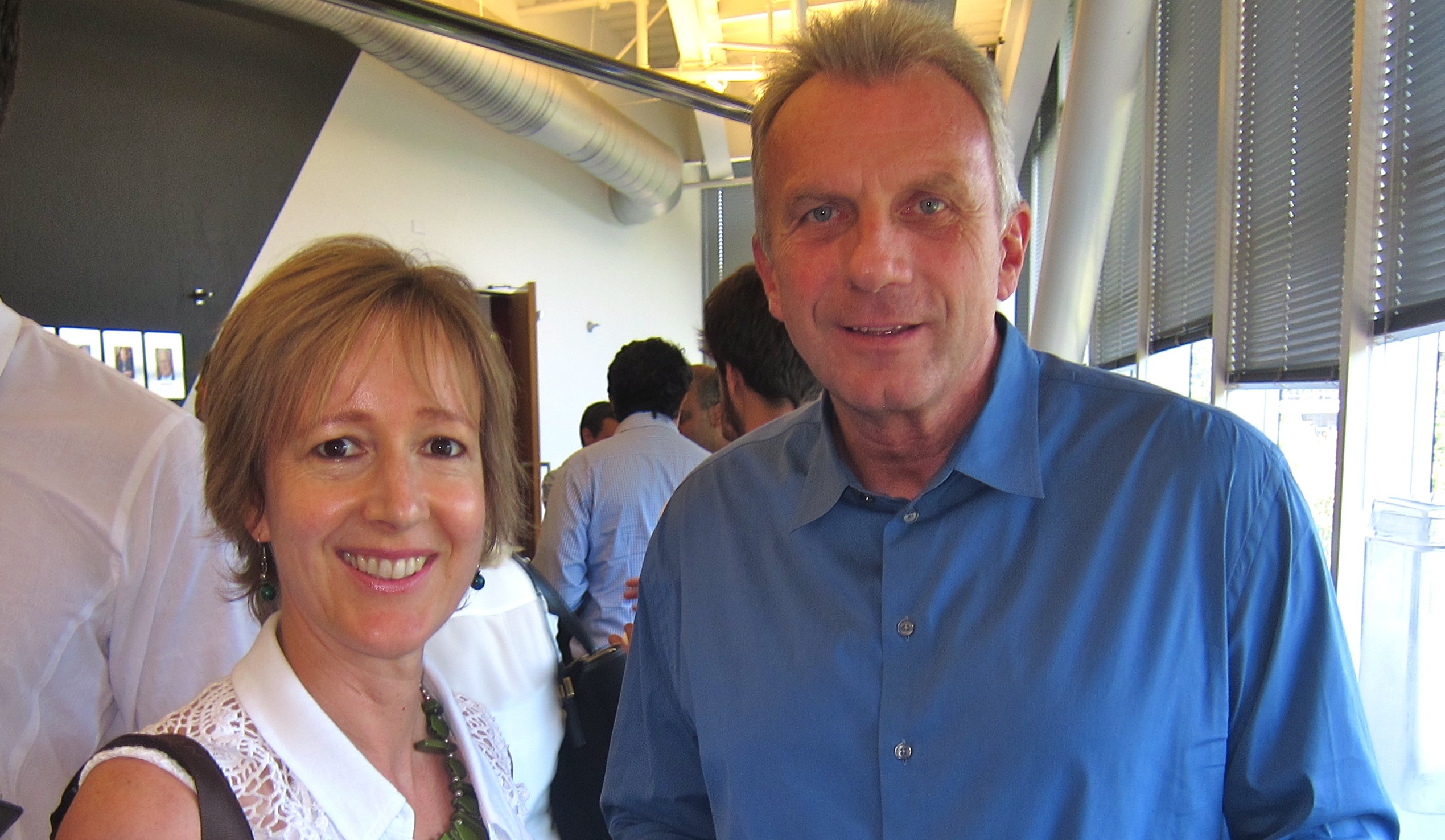
Energy was high today at the Y Combinator Demo Day, as a sea of young entrepreneurs jostled for attention – and funding – from a vast throng of Silicon Valley investors. I chatted with NFL Hall of Famer, Joe Montana who’s ditched his 49ers helmet for an angel investor hat these days (see the halo?) He was busy with the much buzzed about Helion Energy team which is working on “the world’s first commercial nuclear fusion reactor.” They hope to prove commercial scale fusion within 3 years by building a 50 Megawatt reactor in Redmond Washington, providing carbon emission-free power for 40,000 homes.
I’m curious to find out if the nuclear fusion company Tri-Alpha Energy, backed by Mad Men’s Harry Hamlin will consider a joint venture, or perhaps just some knowledge fusion?
Montana said he committed to four other startups today, including Backpack, a company that connects travelers to shoppers, cutting price differentials for items like medicine and electronics around the world; and Unwind Me, an on-demand massage app. Sign me up for that demo!
Here are photos from today’s Y Combinator Demo Day, where 75 startup teams presented and deep-pocketed investors like Jillian Manus looked for the next WhatsApp.
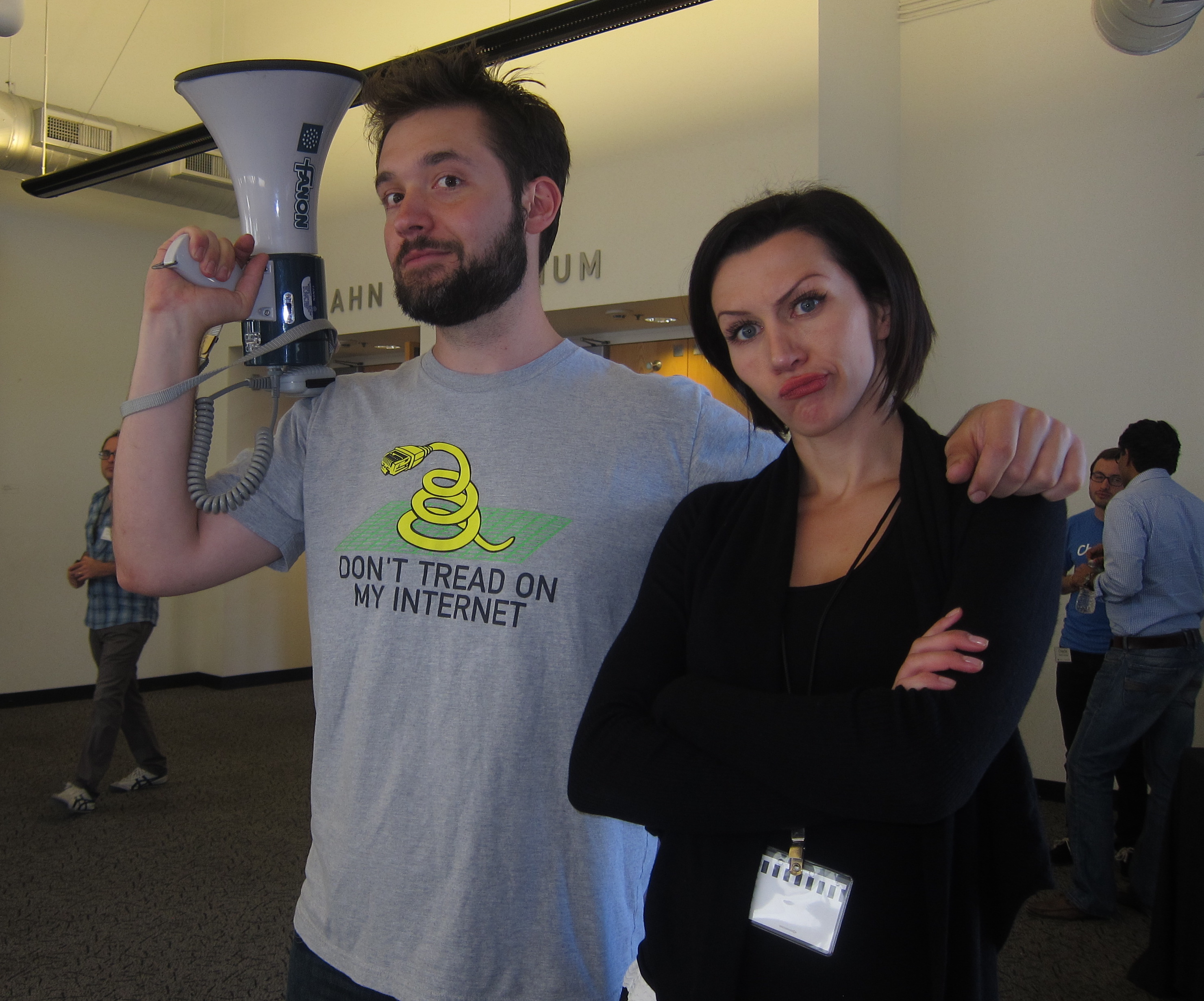
Alexis Ohanian (of Reddit fame) & Irina Lukashuk call time at Y Combinator.
Image 1 of 8
Photo credit: Fresh Dialogues
And some more (green tinged) highlights:
1. Edyn is a smart irrigation system for home gardeners and small farmers. Given California’s massive drought challenges, this one caught my eye. A huge Kickstarter success with a cool design by Jambox designer, Yves Behar, it’s set to go into production with Flextronics. Selling for $160, it could be a popular holiday gift this winter.
2. UPower is building nuclear batteries. This smart team, all MIT grads, describe their product as “a plug-and-play nuclear thermal battery.” Their target market is off-grid locations such as remote islands. I spoke with cofounder Caroline Cochran who emphasized the carbon-free, emission-free nature of nuclear batteries and assured me that they were addressing safety concerns around radioactive waste. According to a report by Kyle Russell at Techcrunch, “the reactor, in addition to being fuel agnostic (it can use thorium, uranium, or recycled fuel) can actually reduce the half life of existing waste, and spent fuel from it can be reused in another reactor with some processing.”
3. Beep is an operating system to make your speakers smart. Think: the Internet of “Audio-Things.” The ex-Googlers confirm that Beep already works with Pandora and Spotify and say you’ll soon be able to control your favorite NEST thermostat using your voice. It sounds like Star Trek’s Enterprise is closer than you think…
4. Vatler offers a valet service for workers, special event attendees, etc. Think: Uber for parking. As the CEO said in his presentation, drive into any big city (say San Francisco?) and “parking’s a bitch.” His team’s solution: an app to help you find an instant valet, using a quick tap on your phone. Quicker than looking, cheaper than parking.
5. The Immunity Project is developing a free vaccine to end AIDS and HIV. Frankly, it made all the earlier presentations seem trivial solutions to “first world problems” (except perhaps UPower) and got the audience’s most enthusiastic response. Find out more about this ambitious project here.
And read more about the day from Colleen Taylor at Tech Crunch, Vauhini Vara at The New Yorker and Roberto Baldwin of Nextweb, who shares his top 10 picks.
Big thanks to Y Combinator partner, Kat Manalac for the invitation.
Joe Montana photo credit: Vicki Thompson of SV Business Journal.
The event was held at the Computer History Museum in Mountain View where there’s a remarkable collection of photos by Doug Menuez in the foyer, featuring Silicon Valley tech luminaries, including the inimitable Steve Jobs. Check it out next time!
Jun 18, 2014 | Inspiring Women, Women in tech
By Alison van Diggelen, host of Fresh Dialogues
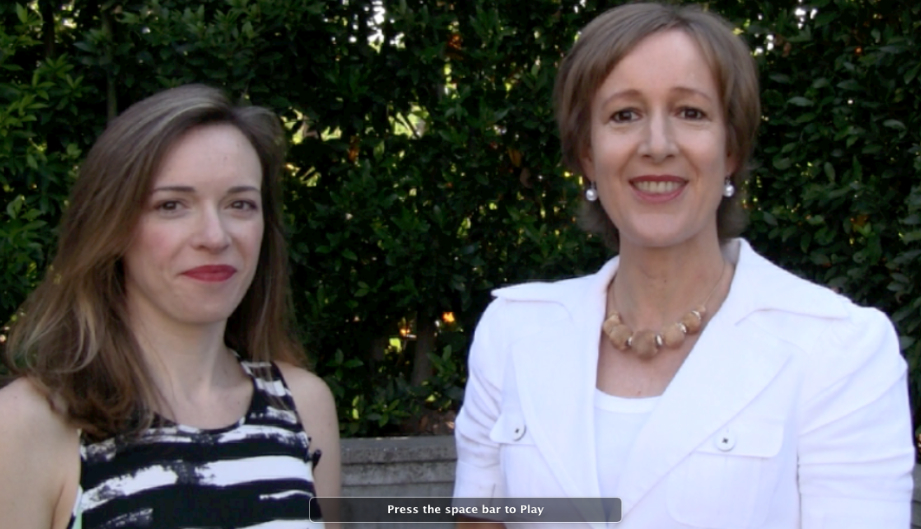
Jackley took a few moments with me to share tips for aspiring entrepreneurs and some clues about her latest startup, launching this Fall.
She enthuses about Silicon Valley being “an incredibly special pocket of the world” where “people have a great capacity to imagine new futures.”
“So many people here have the resources and skills to make these new stories unfold, become real,” she adds.
Here are some highlights of our conversation.
Tips for aspiring entrepreneurs:
1. Be passionate
Do something you are passionate about and have a vision for.
2. Start small
Remember Kiva began with seven entrepreneurs and a little over $3000. It recently surpassed the $500,000,000 mark in microloans to entrepreneurs around the world, serving almost 2 million Kiva users in 76 countries. The average loan amount is $10.
3. Be excellent
Serve one person, or one community well and build from there. Be thoughtful, intentional and think about the details. Study and absorb what’s unfolding in front of you, and be present.
On her new startup
1. Focus
I’m excited to focus on serving working parents…I’m in the trenches right now and that’s the people I want to serve.
2. The Problem
I hope to consult with companies on their policies, culture that supports or doesn’t support working parents. There’s a lot of room for improvement in existing companies.
3. The Solution
My goal is to make it easier and provide options for working parents to prioritize and design their own work and lives around that. Parenting is one of the most entrepreneurial things that I’ll ever do. There’s so much that maps from my experience into motherhood that I want to share with other people. I want to work at the company level and with individuals to demand what they want.
4. The Context
In Europe, it’s top down, (working parents) are taken care of by institutions. I don’t want to wait for that (policy change) to happen here. It’s the better and faster way to go here, in this (US) culture.
Find out more about other SVForum visionary award winners and check back soon for interviews with Stanford’s Tina Seilig, VC Tim Draper and Jennifer Pahlka, founder of Code for America.
Come join the conversation on Facebook
This video is part of a special “Inspiring Women” series at Fresh Dialogues featuring Meryl Streep, Sheryl Sandberg, Jennifer Granholm, Maureen Dowd, and Belva Davis. Check out the YouTube video series here