It’s no secret that cleantech has taken a bashing in the last few years, yet Andrew Chung, a partner at Khosla Ventures is still bullish about the sector’s prospects and convinced that it makes sense long-term, both domestically and globally. During our recent hour-long conversation, he admits that “keeping the cleantech fire burning” is the first thing he thinks about when he wakes in the morning.
“The number one thing is to ensure the cleantech industry continues to survive and thrive,” says Chung. He cites several companies in his portfolio that recently raised large rounds at strong valuations.
Keeping the fire burning? It’s curious imagery for someone focused on clean energy; and technologies that lower our carbon footprint. I imagine him cheerfully stoking a bonfire, plumes of black smoke filling the air.
“Would you like to qualify that?” I ask.
He chuckles, “Yes…we would capture the carbon created by the fire and transform it into something else.”
It’s a fitting segue into one of his favorite investments: LanzaTech, a company that happens to do just that. It takes carbon capture one step further, capturing waste gases like carbon monoxide from heavily polluting steel plants and converting them into “valuable fuel and chemicals.”
He calls it one of his Black Swans – highly improbable investments, that are not incremental improvements on business as usual, but giant technological leaps.
So compelling that the company recently announced a joint venture with Baosteel, a major steelmaker in China, which is investing in a new commercial facility due to come online in 2015. LanzaTech’s zero capital contribution to the deal means it can continue to scale up and pursue other partnerships in Japan, Europe, India and Russia.
I was curious to learn who helped with the initial discussions to broker the deal? None other than former British Prime Minister, Tony Blair. Those paying close attention to Khosla Ventures will remember he joined the team as a strategic advisor in 2010.
So what makes it such a compelling deal? Chung calls it a confluence of events. The blanket of smoke over Shanghai being a palpable one, leading to pressure from the Chinese government on major polluters like steel makers to clean up their act. There’s also the global ambition of many Chinese businesses who view such partnerships as strategic moves.
Societal tensions add to the pressure to solve China’s huge environmental problem. Even Jack Ma, China’s Andrew Carnegie is focusing his new philanthropic trust on health and the environment.
CONSPICUOUS ABSENCE
You’ll notice that the United States is conspicuously absent from LanzaTech’s partnership list. That fact is also at the top of Chung’s mind. Several of the potentially transformative technology companies he backs are finding it easier to get global partners than American ones.
“How do we communicate this message to D.C.?” says Chung. “If technology is not supported here, it will leave our shores.”
Chung feels the regulatory environment means that American companies are more complacent and have less appetite to take risks. He cites the U.S. car industry where employees get bonuses whether or not they achieve product improvements.
“It needs a regulatory push to compel them to take greater risk,” says Chung. “We don’t have the dire need like in China where (almost) 1 million people are dying of pollution every year.”
KINDRED SPIRITS OF ELON MUSK
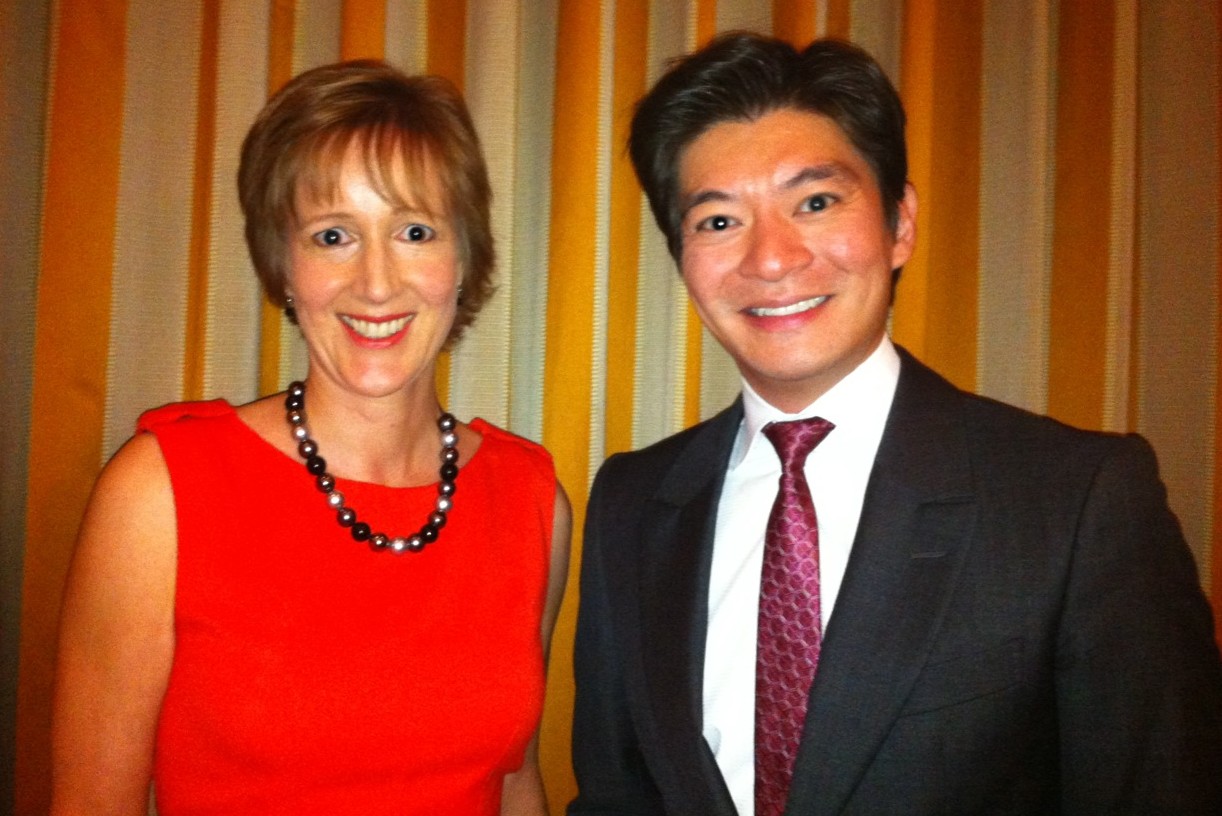
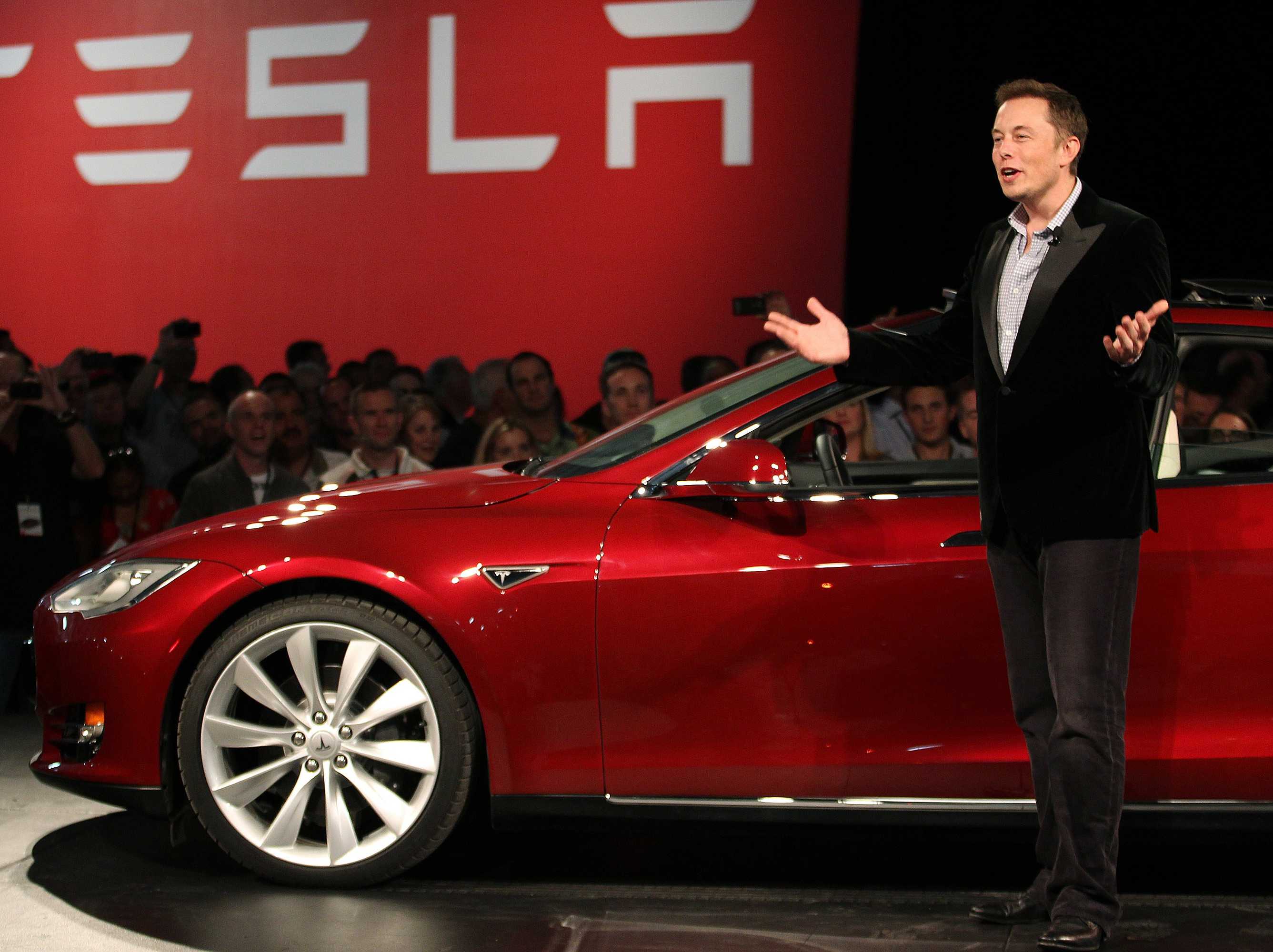
Talking of risk taking, Chung sees himself and his boss Vinod Khosla as kindred spirits of Elon Musk, who staked all his PayPal wealth on transforming the electric car sector with Tesla Motors.
“It’s a major cleantech success story,” says Chung. “Elon deserves a lot of credit…he stepped on the gas when others were giving up.”
What makes them kindred spirits? It’s more than just their strong belief in technology explains Chung. He quotes Irish playwright and cofounder of the London School of Economics, George Bernard Shaw:
“All progress depends on the unreasonable man.”
“So are you and Vinod Khosla unreasonable?” I ask.
Chung laughs. “We are contrarians!” he says. “We’re willing to do what it takes.”
He points to Khosla’s investment in Ecomotors, an internal combustion engine targetting energy efficiency gains of up to 50%. The company also has backing from Bill Gates and entered into two joint venture partnerships to build plants in China, deals involving hundreds of millions of dollars. He anticipates 200,000 engines for cars and diesel generators will roll off the production lines by the end of 2016.
“We’re addressing the transport problem from both angles,” says Chung. “We are focused on the electric revolution…battery technology investments. EcoMotors is a hedge to reflect the 99% (of the transport sector) that’s not yet electricity…electric vehicle infrastructure is still a challenge.”
SINGING FOR THE WORLD
We finally touch on what Chung calls his “secret identity,” his singing career. A finalist in Hong Kong’s version of American Idol, Chung says he has no regrets about choosing business over a singing career. Although he enjoys “bringing joy” to an audience, he’s very aware that it’s fleeting. Such momentary joy pales in comparison to his goal of having a major societal impact, or as he puts it, “Enabling 5 billion people to live like 1 billion do now.”
Chung plans to continue singing the praises of disruptive cleantech innovation. He’s firmly committed to keeping that cleantech fire burning.
Yesterday, I was invited to join the live BBC World Service show, Business Matters to discuss Apple’s green manifesto and its rivalry with Samsung. I was interviewed by the BBC’s talented Manuela Saragosa. Here’s a transcript of the highlights. Listen to the full interview here (green discussion starts at 26:00).
Saragosa: It was Earth Day on Tuesday… there’s been no dimming of the lights here at the BBC…but technology giant, Apple has been laying out its green manifesto to mark Earth Day. The company’s CEO Tim Cook put out a video, announcing a new scheme that allows any product made by Apple to be returned to the company for recycling.
Our guest, Alison van Diggelen is in California’s Silicon Valley. Alison, green business issues are your thing, what do you make of Apple’s manifesto? Is there substance to it do you think?
van Diggelen: I think there is substance to it. The reason they put out this video is: Greenpeace has been snapping at Apple’s heels for quite some time. I did a story a couple of years ago (for NPR’s KQED Radio) when they were looking at data centers. Greenpeace came up with their own quasi Apple ad (cunningly called iCoal), showing that every time you download something or send a photo on your iPhone, you’re putting more smog into the atmosphere. It was very clever and got Apple’s attention, and now they’re really moving ahead (According to a recent EPA report – Apple is now in the top 10 clean energy users nationally and uses 92% clean energy). One of their major data centers (in North Carolina) where they do Apple iCloud, has 100% green power: clean energy, using solar and fuel cells.
In the video, they’re doing a little chest thumping, saying “Look at us – here’s what we’re doing!” And of course, launching it on the week of Earth Day was a very clever move, a strategic move…
I do think Apple deserves to be lauded. It could do more, but I think shining a light on what it’s doing so far is good.
Saragosa: But it’s come a hugely long way. I know that in 2006, Greenpeace published its first guide to green electronics and at that point it rated Apple among the worst companies (it ranked 11 out of 14 companies). I suppose things have changed quite a lot since then.
van Diggelen: Yes. I think Greenpeace deserves credit for doing what it can to put the pressure on. This report it released went through all the major tech companies: Google, Apple, Facebook, Twitter (Amazon), saying: “Here’s what they’re doing folks!” Companies that you think of as pretty green and green advocates like Google, they’re not doing enough. They could do more.
The interesting thing with Tim Cook that your listeners will definitely be interested in is that at a recent shareholders’ meeting, someone stood up and said: “We don’t like what you’re doing with all those clean energy data centers. Couldn’t you be using your funds to make better products…do other things?”
Saragosa: But is that a widely held view?
van Diggelen: This is the interesting thing: Tim Cook struck back at them. He said: “We believe that we must make the world a better place.” He stood up and said this to the shareholders…”If you don’t agree with it, sell your shares! Which was quite gutsy of him I thought. Since then Richard Branson (CEO Virgin Atlantic etc) has said the same (He recently wrote, “Businesses should never be entirely focused on the bottom line…I would urge climate deniers to get out of our way!“) So I think it’s great to see high profile CEO’s like Tim Cook and Richard Branson are doing that, and saying: Hey! We need to think about the environment, we need to think about our impact on the environment. I’m cheered by that.
Listen to more of our discussion re Apple vs Samsung battle, copycats, tech recycling, and safe disposal of electronic goods.
We also explored attitudes to the environment and clean energy in Asia with David Kuo of the Motley Fool in Singapore; and discussed the devastating levels of pollution in China’s major cities.
van Diggelen: I recently spoke with Andrew Chung, who’s a Chinese American venture capitalist in Silicon Valley. He’s doing a lot of work in China and he was telling me about one of the (green) companies he’s investing in. The impetus in China is huge: they’re having to do it because the pollution is so intense, people are dying from the pollution.
One of these companies that’s completely addressing that is LanzaTech. They’re capturing the carbon monoxide pollution from steelmakers outside Shanghai and using it to create valuable fuel and chemicals, rather than ‘just’ capturing it. It’s a really interesting solution: a win win. A win for the environment, but it’s also a money maker and great for the steelmakers. So that’s the kind of play that’s going on in China.
It’s been a stellar year at Fresh Dialogues. Here are our top ten green interviews: from Tesla’s Elon Musk to Google’s Rick Needham. Most are exclusive Fresh Dialogues interviews, but some were special assignments for NPR’s KQED, The Computer History Museum, The Commonwealth Club and The Churchill Club (2013).
1.Elon Musk on burning oil, climate change and electric vehicles
“It’s the world’s dumbest experiment. We’re playing Russian roulette and as each year goes by we’re loading more rounds in the chamber. It’s not wise… We know we have to get to a sustainable means of transportation, no matter what.” Tesla CEO, Elon Musk. Read more/ see video
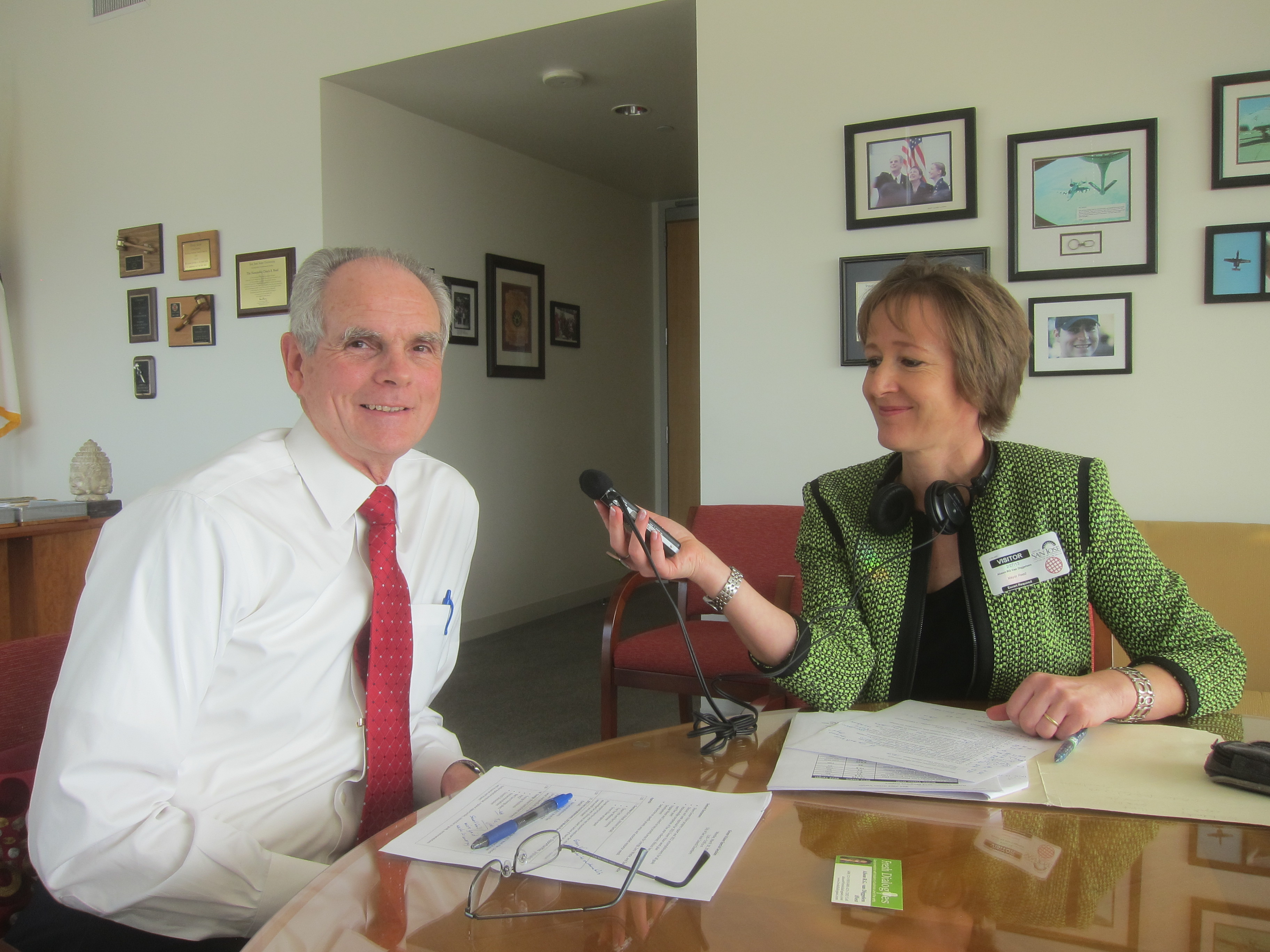
2. Mayor Chuck Reed on leveraging private funding for San Jose’s Green Agenda
“I said from the beginning that the key to being able to succeed with our green vision was to work with other people’s money.” San Jose Mayor Chuck Reed. Read more/ listen.
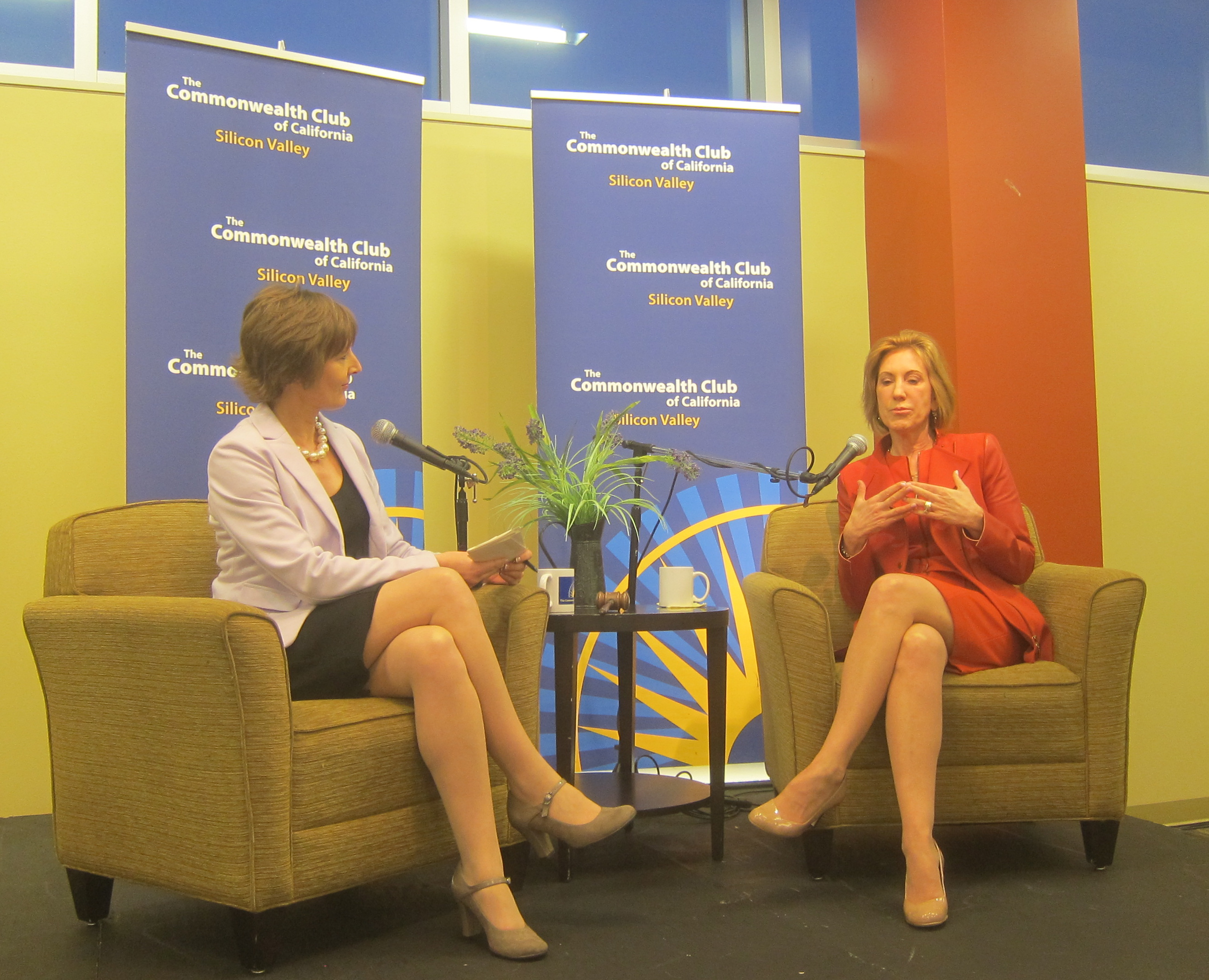
3. Carly Fiorina on fighting climate change
“The most effective thing the US should do is start substantive discussions with China on what they can do.” Carly Fiorina. Read more or listen here.
4. Jennifer Granholm on Obama and energy policy
“He should create a clean energy jobs race to the top.” Former Michigan Gov., Jennifer Granholm. Read more/ see video
5. Peter Rumsey on Net Zero Buildings and kids
“They’re going to say, ‘Wow, that’s one of the things we can do to solve this whole big climate change problem.” San Francisco Exploratorium Green Designer, Peter Rumsey. Read more/ see video
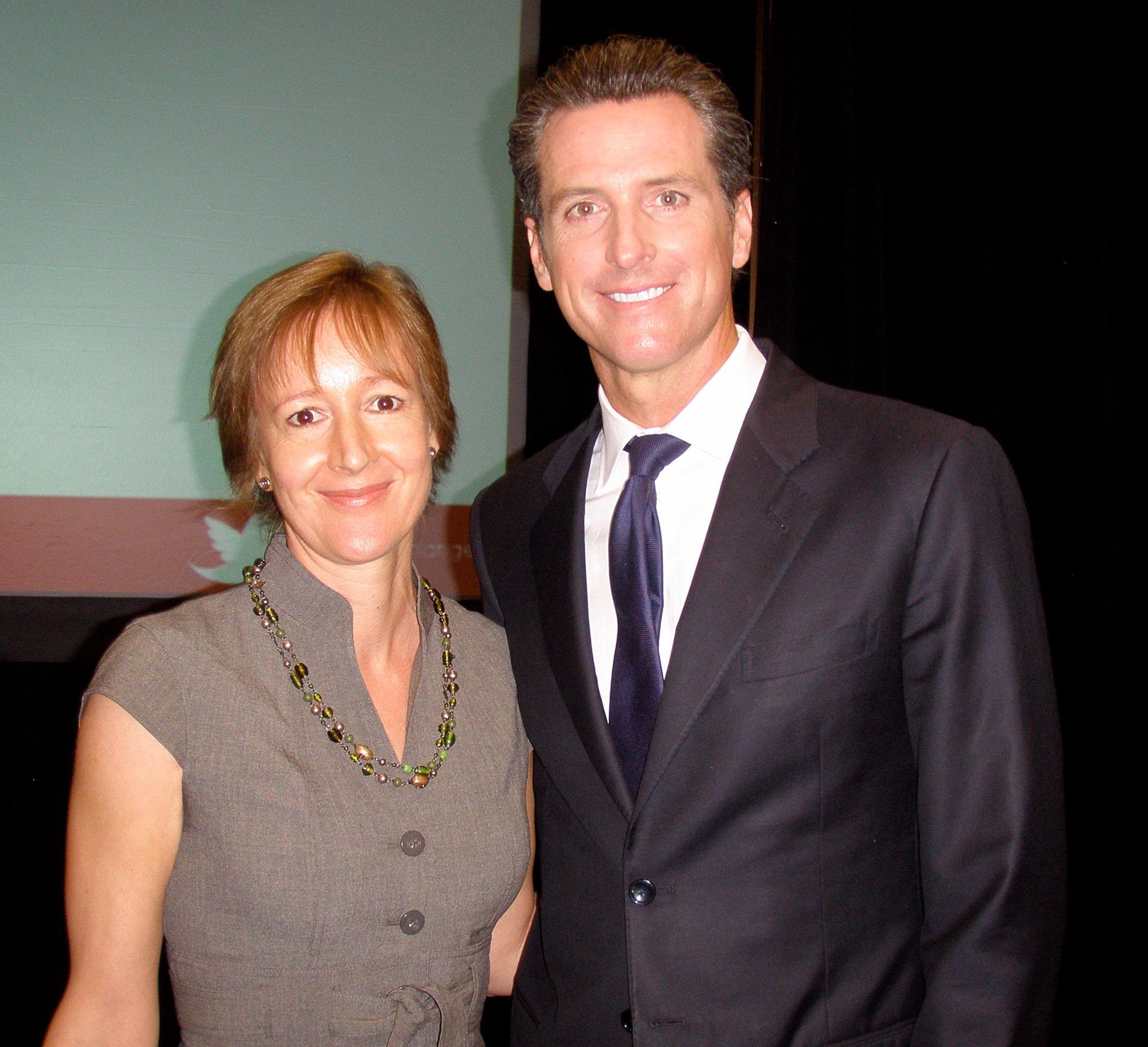
6. Gavin Newsom on why a carbon tax makes sense
“I want to see a standard that could bring this country back to international prominence in terms of leaning in to a low carbon green growth strategy, so that we can dramatically change the way we produce and consume energy and lead the world.”Gavin Newsom, Lt. Governor of California. Read more/ see video
7. Steven Chu on climate change deniers
“I’d put them in the same category as people who said, in the 60′s and 70′s, that you haven’t proved to me that smoking causes cancer. This is a real issue. We have to do something about it!” Former Energy Secretary, Steven Chu. Read more/see video
8. GM’s Pam Fletcher on electric vehicle adoption
“We need a lot of customers excited about great products. I want to keep people focused on all the good things that moving to electrified transportation can do for customers and for the country.” GM’s Chief of Electrified Vehicles, Pam Fletcher. Read more/ see video
9. Laurie Yoler on why Tesla is succeeding, despite the odds
“You know you’re on to something good when everyone you talk to is a naysayer. It takes a huge amount of courage and tenacity to continue going forth.” Qualcomm executive and founding board member of Tesla Motors, Laurie Yoler. Read more/see video at 11:20
10. Rick Needham on self driving cars, car sharing and Google’s electric car fleet
“It’s not just the car that’s underutilized; it’s the infrastructure, the roads…There’s an enormous opportunity…on the environmental side, on the human safety side, on utilization of infrastructure side.” Google’s Rick Needham. Read more/see video
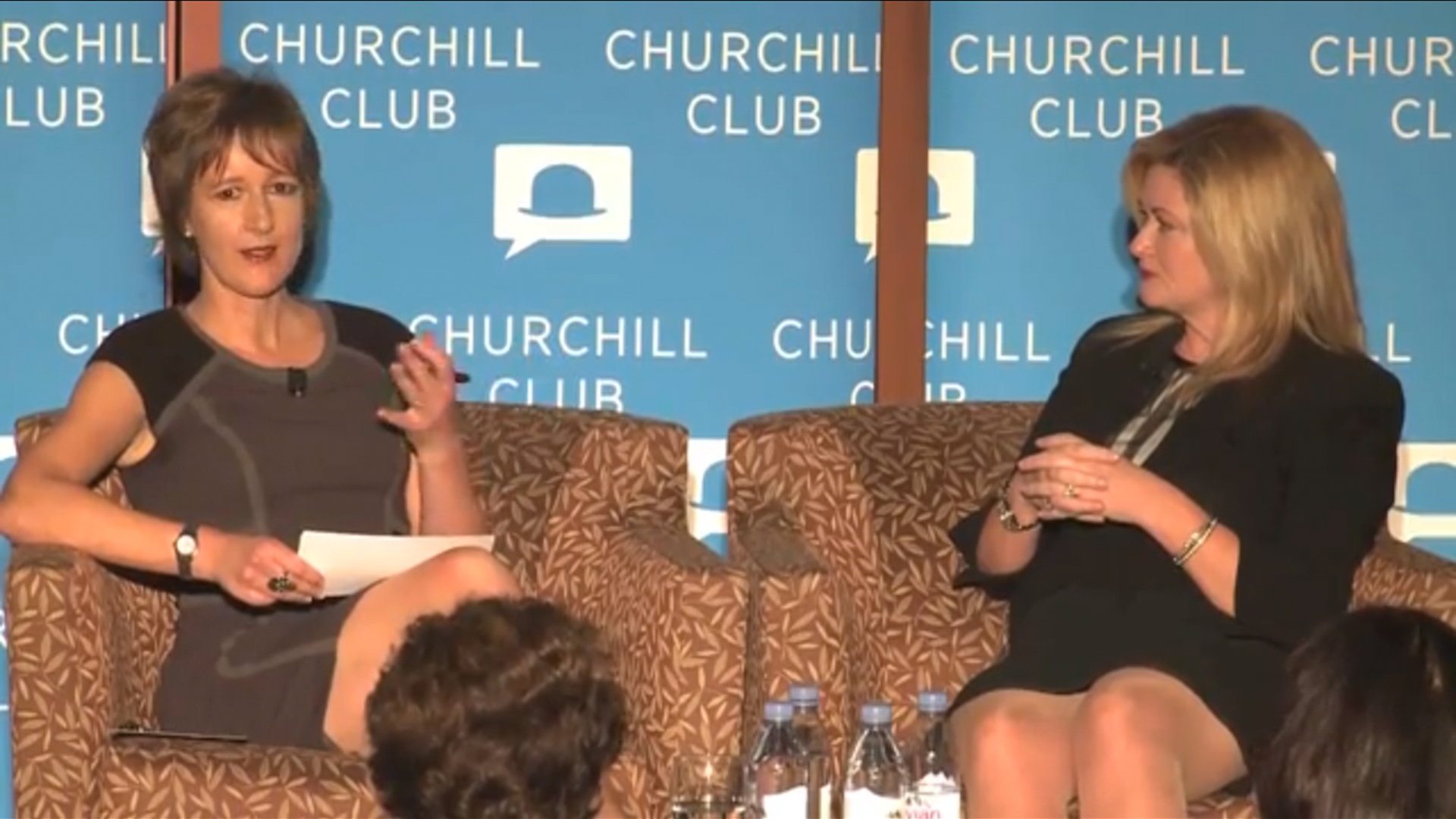
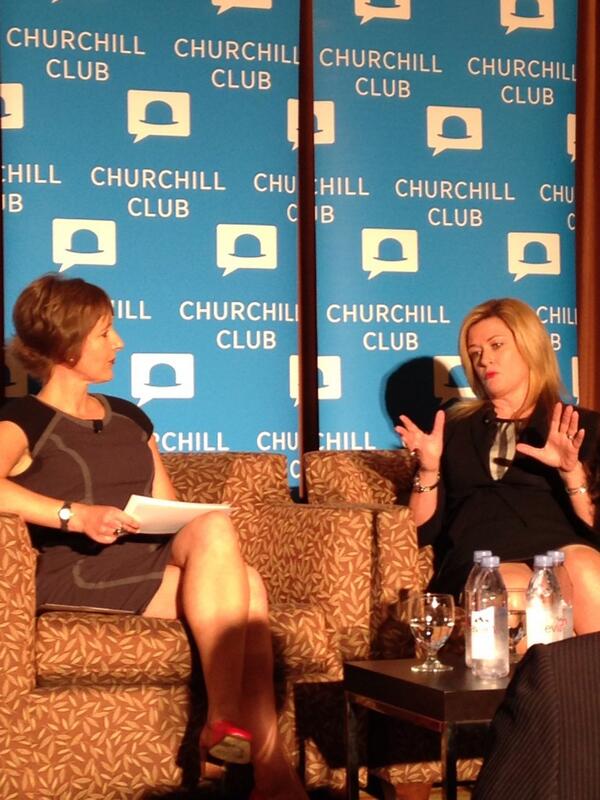
Will GM experts share their wisdom with Tesla to make the Model S less prone to fires? That’s the question I put to GM’s Chief of Electrified Vehicles, Pam Fletcher last week at the Churchill Club in Silicon Valley.
You’ve no doubt heard that three fires have been reported in Tesla Model S in the last five weeks. As we all know, three’s a trend. Granted, they weren’t episodes of random spontaneous combustion. Instead they were ignited by one high-impact crash and two high-speed encounters with metal debris which acted like a “pole vault” to puncture the undercarriage of the car and hence the battery. Although Tesla’s Elon Musk has declared, there won’t be a recall, it’s almost certain the National Highway Traffic Safety Administration will investigate. What needs to be done to make Teslas more impervious to battery puncturing road debris?
.
As you’ll see in the video, Pam Fletcher confirms that GM has sold 58,000 Chevy Volts since its launch in 2010 and after 300 million miles on the road, not one has had a similar fate to Tesla’s Model S. She acknowledges that there were fire issues in 2011 at the crash-testing phase, but emphasises no real-world incidents similar to the Model S have occurred.
Fires, Electric Cars and Achilles Heels
First some background. In 2011, safety regulators investigated Chevy Volt crash tests resulting in one battery pack catching fire and one smoking and emitting sparks. The troubling issue was the week-long delay between the crash test and the battery pack catching fire.
During our interview, Fletcher confirms that after the investigation, GM made no change to the battery cells, but did put “some additional reinforcement on the outside of the battery.”
It also implemented a process with first responders that includes depowering of the battery after a severe crash.
Ironically, Tesla got the highest safety ranking from regulators and has a first responders guide in place, however all parties seemed oblivious to the vehicle’s Achilles’ Heel. It obviously needs more durable undercarriage protection to prevent any more fiery “pole vaulting” episodes. To date, Elon Musk has been strongly resistant to such an approach. A recall will taint not only Tesla’s award winning brand, but entail extra costs and manufacturing delays for this relatively small auto company. To make matters worse, extra reinforcement will increase the weight of the Model S, and the extra pounds will have a knock-on effect on the vehicle’s range.
But it looks like Tesla’s Elon Musk may have to get some tips from GM on adequate car underbelly protection or find his own solutions.
It’s unlikely Tesla will change the configuration of its batteries. According to Reuters, Tesla’s battery pack stretches across the base of the vehicle and is made up of small lithium-ion battery cells, like those used in laptops. By contrast, GM uses large-format battery cells in a T-shape in the center of the Chevy Volt.
Fletcher was eager to move past fiery discussions and talk about adoption rates and “getting to scale.” She described the newly unveiled Cadillac ELR (a luxury electric hybrid based on the Chevy Volt) which will be available for test drives this week at the LA Auto Show. We also discussed autonomous cars, why EV adoption rates are so high in Silicon Valley; what to expect from the next generation Chevy Volt; and what surprised her about the thousands of Volt drivers on the road today.
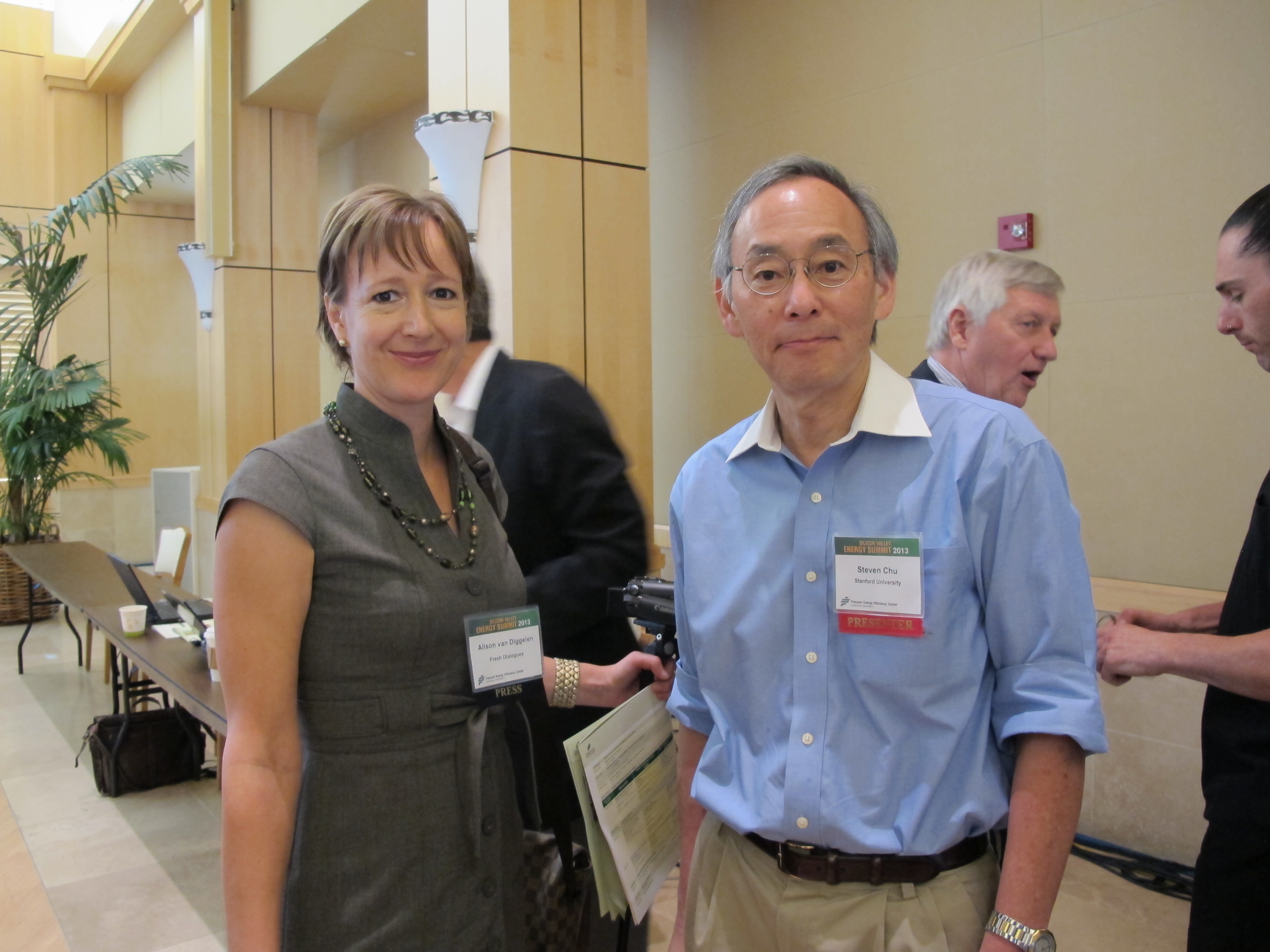
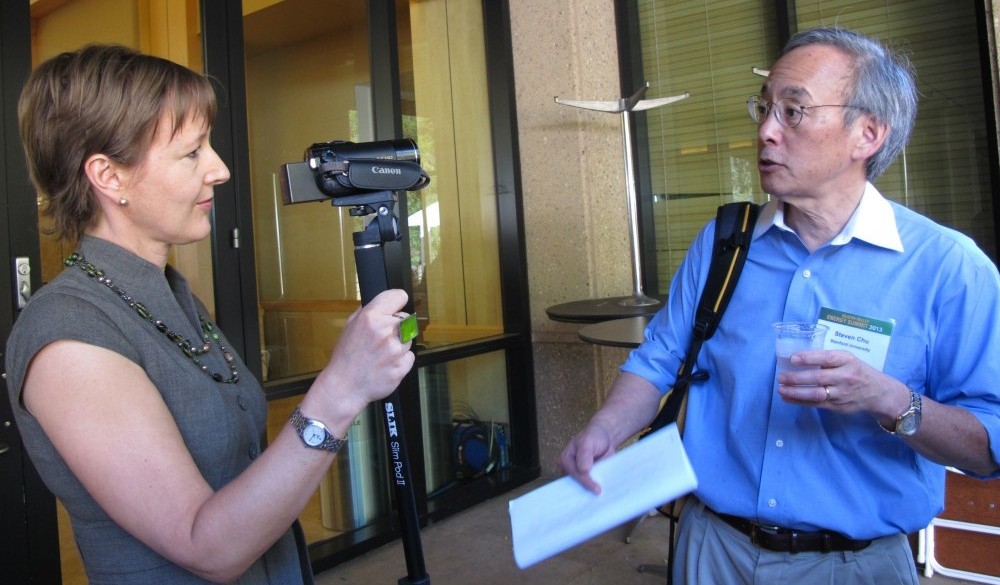
In this exclusive Fresh Dialogues interview, former Energy Secretary Steven Chu shares his reaction to Obama’s major speech on climate change; explains how a carbon tax will drive U.S. competitiveness; has a message for climate deniers; and even shares tips for being more energy efficient in the kitchen. When did you last get cooking tips from a Nobel Prize winning physicist who’s been described as the One Hundred Billion Dollar Man? It’s time to listen up folks! It’s time to listen up folks!
“This is a real issue. We have to do something about it!”
When asked if he wrote or was involved in writing the speech, Chu joked that he has ‘been involved’ for 4 1/4 years and recently regaled several heads of state (including President Obama) with his powerpoint pitch for raising appliance efficiency standards, reminding them that “there’s money to be made…and saved.”
.
On Carbon Tax
“A carbon tax must be non-regressive and revenue neutral. It will drive efficiency…competitiveness. Educating the public (on climate change, energy policy) is very important, but it’s about economic opportunities and (creating) a growth market. Change will be partly market driven.”
On Climate Change Deniers
“I’d put them in the same category as people who said, in the 60’s and 70’s, that you haven’t proved to me that smoking causes cancer.”
On Chu’s vision for distributed energy
“Distribution companies partnering with the private sector have the opportunity to access fairly inexpensive capital and be part owners in distributed power and energy storage in benign environments, like inside a home or building. When you do that, the price of electricity will go down (3 to 4 times). All of a sudden utility companies will be in a growth business…Utilities should wake up and see there’s money to be made!”
Chu cited the advantages of black-out reduction thanks to demand control; and underlined the multitude of opportunities that low-priced software and sensing equipment offer.
On Cooking with Chu
Tip #1: “If you’re boiling a pot of water: if you put a lid on it, it comes to boil much more quickly.”
Tip #2: “Pick the right sized pot, don’t pick a pot five times bigger, twice as big.”
– Steven Chu, Nobel Prize winner in physics 1997, Former Energy Secretary, 2009-13.
No word yet on whether Steven Chu is planning to give up his new job at Stanford University for a prime time cooking show…Though we hear there is an opening.
The interview was recorded at the Silicon Valley Energy Summit, presented by the Precourt Energy Efficiency Center, Stanford University on June 28, 2013. Photos by Lina Broydo.
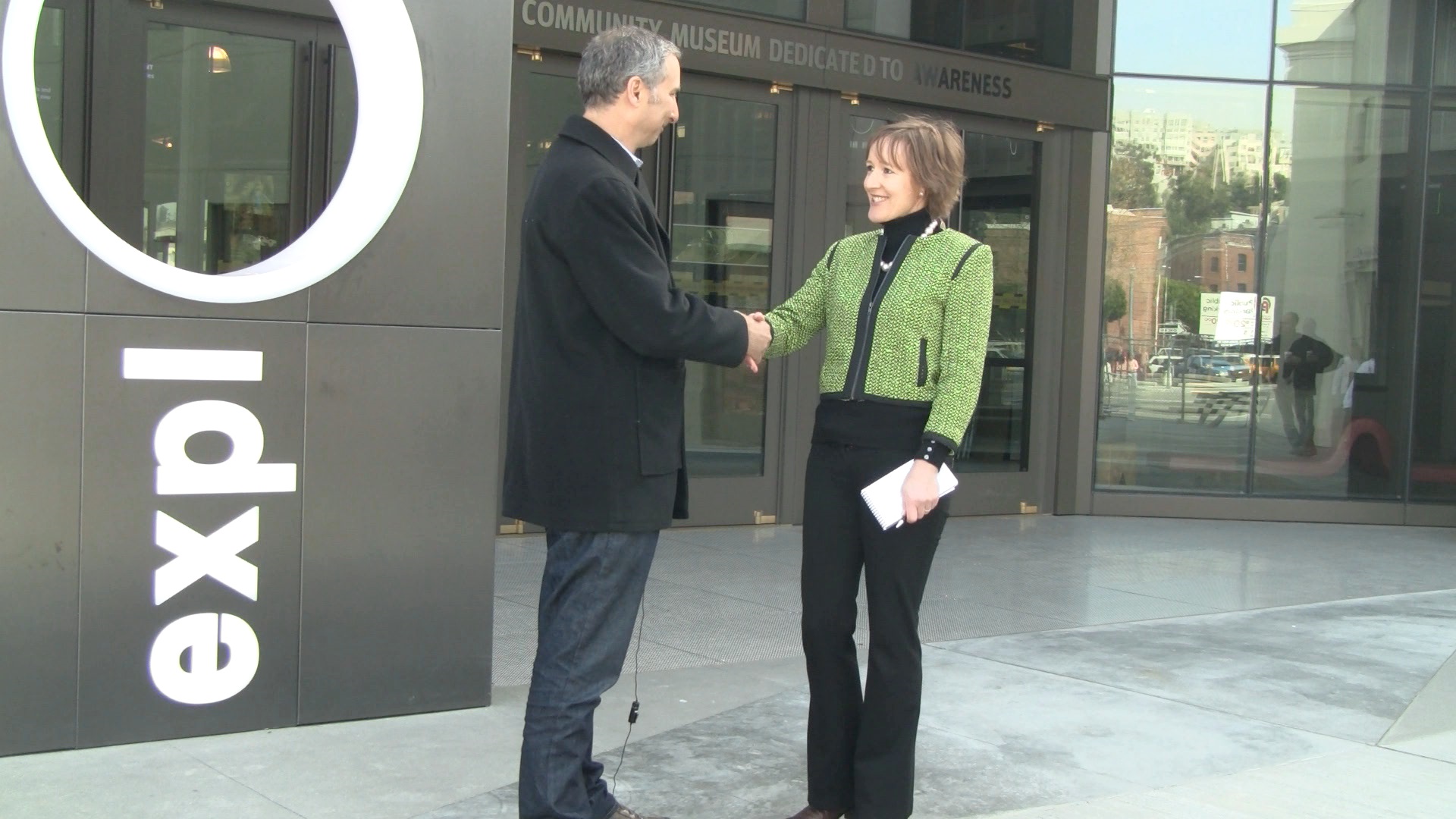
Get this: It’s not the 330 year-old Douglas fir tree, sliced open to reveal stunning time markers, or the 20 foot tall “Tinkerers’ Clock,” powered by windshield wiper motors.
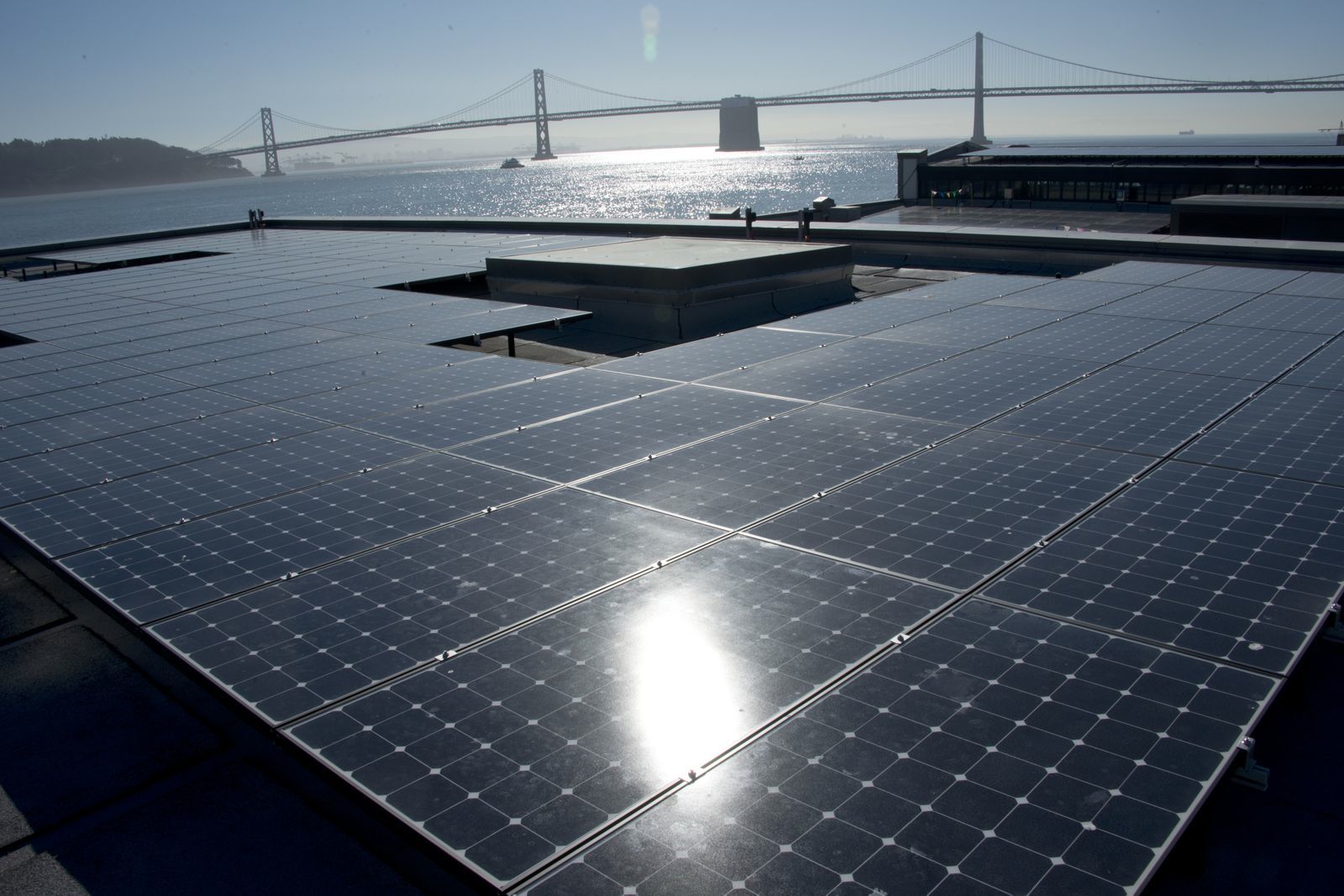
No. It’s the entire Exploratorium structure itself, an audacious experiment in green building that aims to create the world’s largest “net-zero” energy museum.
What’s “net-zero,” you ask? Simple, it’s a building that creates as much energy as it consumes.
.
How it works
Peter Rumsey, CTO at Integral Group led the design of the building’s net-zero components and explains to Fresh Dialogues how it all works in this video.
A complex system that brings in 74,000 gallons of water per hour from San Francisco Bay to heat and cool the building via miles of floor-embedded pipes;
A rain-water catchment used for flushing toilets.
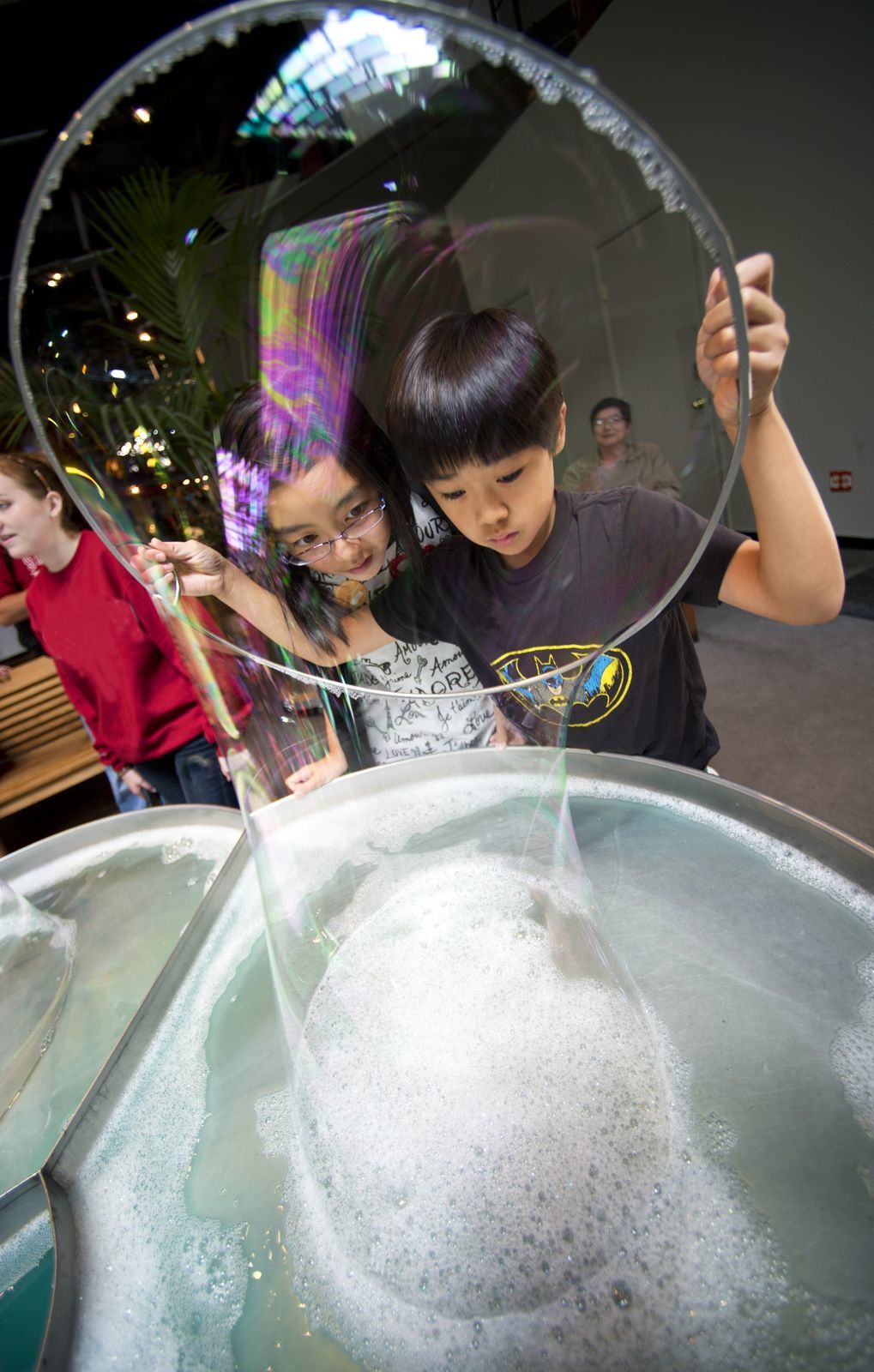
Rumsey may be an enthusiastic advocate for green building, but what gets him most excited is the idea that the San Francisco Exploratorium will inspire kids to think net-zero is the way of the future.
“They’re going to say, ‘Wow, that’s one of the things we can do to solve this whole big climate change problem,” says Rumsey. “We can design and build buildings that make their own energy and don’t create a carbon problem.’ As kids grow up and become leaders in society, they’ll be the ones saying, ‘we should just do that zero energy thing. I saw it when I was a kid…it was no big deal.'”
Despite much talk about the state of the art green building features, Rumsey says, “There’s nothing cutting edge about the building…we’ve taken things that are ‘off the shelf’ and applied them in creative and innovative ways. We call it ‘state of the shelf’.”

 Talking of risk taking, Chung sees himself and his boss Vinod Khosla as kindred spirits of Elon Musk, who staked all his PayPal wealth on transforming the electric car sector with Tesla Motors.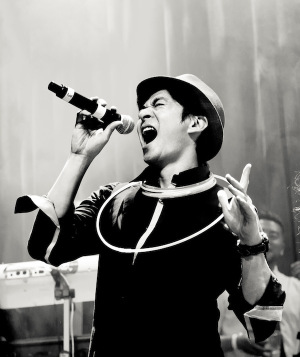



 On Cooking with Chu