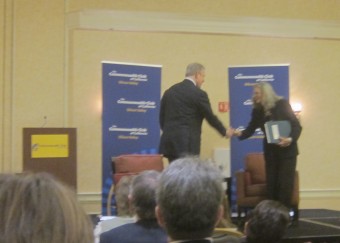
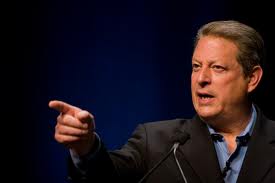
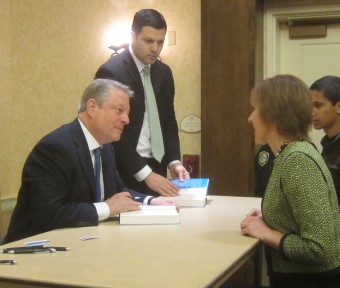
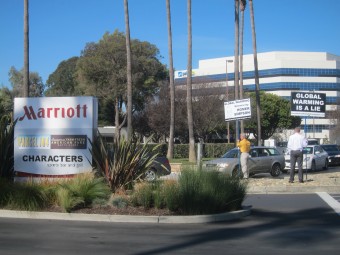
Yesterday, Al Gore braved the picket line in Silicon Valley to appear at the Commonwealth Club and discuss his new book, “The Future: Six Drivers of Global Change.”
Needless to say, Fresh Dialogues was keen to turn the conversation from issues of World Brain and Thomas Paine to Gore’s forte: climate change. Fortunately for the climate-concerned, the talented moderator, CwC Club CEO Gloria Duffy chose our burning question from the dozens of wannabees that landed on her lap.
Gore is forceful in his call for a carbon tax and optimistic in his description of the growing investment in, and the reducing price of renewable energy. He also explains why Silicon Valley will retain its preeminence in technology innovation, particularly in cleantech, despite future challenges.
Fresh Dialogues: What can President Obama realistically hope to achieve in his second term to combat climate change?
Al Gore: I’m hoping that tonight, just a few hours from now (during the State of the Union address), that he will announce that he’s going to have the EPA regulate for global warming pollution for existing existing power plants and facilities. It’s already been applied to newly constructed facilities, and being challenged in court; but there was a ruling in 2007 that global warming pollution is included under the Clean Air Act. So I’m hoping that he will do that as a minimum. But ultimately we’re going to have to put a price on carbon, either directly with a CO2 tax or indirectly with a a carbon cap and trade system, by whatever name.
Many other countries are now moving closer toward that. China has implemented a pilot program in two cities and five provinces; and has announced it has a pilot for a nationwide cap and trade system. India has put a tax on coal. Australia, the largest coal exporter in the world has implemented both, a CO2 tax and cap and trade. Seventeen other countries are moving rather quickly in this direction, South Korea, Ireland among them. European Union is already there. As of January 1, California has been the leader, once again…Quebec, British Columbia. Local and regional governments around the world. It’s not enough yet, and we do need a nationwide system. And for those who say, ‘it might make us less competitive,’ first I strongly disagree; but the World Trade Organization rules allow for border adjustments if some country doesn’t include its carbon pollution in its export prices, so it doesn’t affect competitiveness, except in a positive way, because we have invented most of these technologies, we aught to have the jobs created here.
Yesterday it was announced that the number one new source of electricity generation in the US in 2012 was from wind energy. Australia announced last week that electricity from wind is now cheaper than electricity from new plants run by either coal or natural gas. The price of renewables is coming down continually, the more we use, the cheaper it gets. It’s one of those virtuous circles, and cost down curves like Moore’s Law. It’s not quite that steep but it’s extremely impressive.
In 2010, for the first year in world history global aggregate investments in renewable energy exceeded global aggregate investments in fossil fuel….these are trends that are extremely powerful and I hope that the administration here does find a way to put a price on carbon. The idea that it’s a so-called externality that we can safely ignore is ludicrous. It’s just ludicrous.
Can Silicon Valley keep the crown as No. 1 tech innovation hub?
Having spent over two years researching future trends with futurist experts such as Ray Kurzweil, Gore remains bullish about Silicon Valley’s future as the innovation and tech capital of the world. He acknowledges that the Internet is a force for creative destruction that redistributes expertise, opportunities, and capital, but concludes that a need for innovation hubs will remain, attracting people with the best science, industry and technology skills.
“Silicon Valley is going to remain the epicenter of high technology development,” he says. “Principally in the digital technologies but increasingly in green technologies. Even though it’s been a roller coaster ride, the momentum of green technology around the world is incredible.”
He likens Silicon Valley’s expertise in tech to Milan’s in fashion, pointing out that despite our ability to get fashion trends online, Milan remains a center of fashion in the world, because the best minds in fashion go there. He adds, “The importance of people being able to meet and collaborate in person ensures the continued importance of particular geographic centers of expertise.”
Update on SOTU
Obviously, Al Gore was wrong in assuming that President Obama would announce an extension of EPA regulations to existing power plants in his SOTU; however, I have no doubt he’s delighted at the president’s call to action:
“For the sake of our children and our future, we must do more to combat climate change!”
President Obama also urged congress to pursue a bipartisan market-based solution to climate change and announced his plan to use his executive powers to speed up the transition to more sustainable energy sources and use some oil and gas revenues to create an energy security trust to drive new research and technology to shift cars and trucks off oil “for good.” Does that mean more federal funding for electric vehicles?
He added: “So tonight, I challenge you to join me in setting a new goal: By 2035, 80 percent of America’s electricity will come from clean energy sources.”
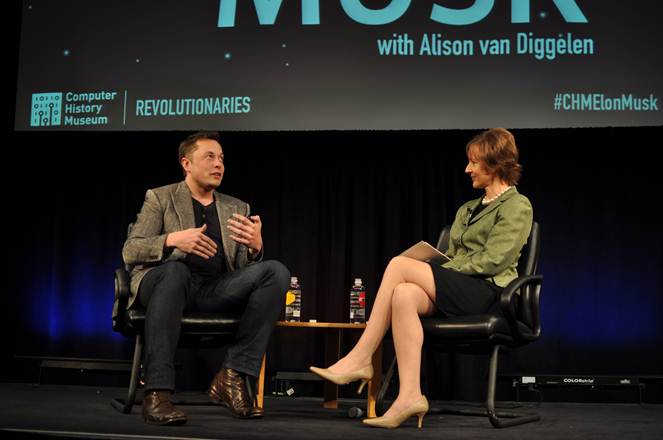
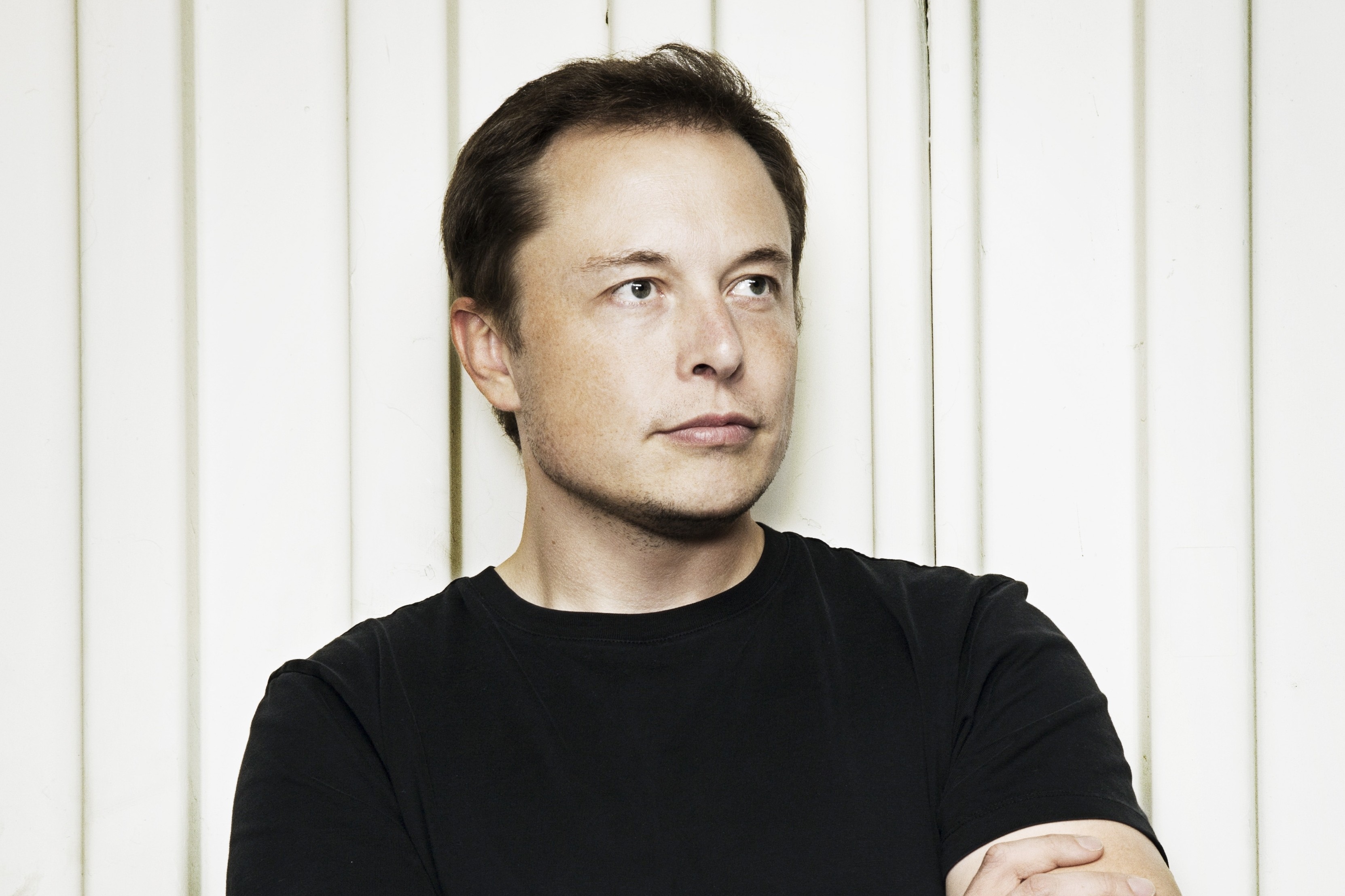
Last night Elon Musk, CEO of SpaceX and Tesla Motors joined me in conversation for the Revolutionaries Series at the Computer History Museum in Silicon Valley. We explored his journey from South Africa to Silicon Valley and beyond and he was exceptionally candid about his entrepreneurial highs and lows. He also shared a fascinating glimpse into the future…flying cars, hyperloops and Mars, oh my! His eyes welled up as he spoke with deep emotion about Neil Armstrong, the need for space exploration and the impassioned vigils after the death of the EV1. But he also displayed a great sense of humor throughout the interview. Did you know he plans to die on Mars? Just not on impact.
.
Here is the transcript of our conversation:
Here’s the podcast from KQED:
On the chances of a SpaceX IPO this year
Not likely. Elon explained that he’s not in a hurry to make SpaceX a public company because the short term desires of shareholders would conflict with the company’s longer term goals (which included manned space flights to Mars).
On flying cars
He anticipates the production of flying cars in the near future (and he wasn’t talking about the acceleration of Tesla’s Model S). In response to my question: will it be an Elon Musk production? he demurred. But when I asked, is someone going to do it? He replied: someone *is* doing it.
On the inspiration for Tesla Motors
Musk had the audience roaring with laughter when we discussed the wailing and gnashing of teeth that occurred after the forced recall of the EV1. He said, “How often do customers have candlelight vigils for the end of life of a product? Especially a GM product?”
On being an entrepreneur @38.0 on video
Remember that failure is the most likely outcome. Only do it, if you’re compelled to do it and are willing to eat glass and stare into the abyss.
“If you don’t eat glass you are not going to be successful,” Elon Musk
On the importance of sleep
Musk recommends getting a good night’s sleep, as you’ll be more productive. Despite running two companies and having five children, he averages 6 hours a night. Less than that and he admits to getting grumpy and achieving much less.
On the environment @55.0-1.00.00 on video
He says putting hydrocarbons into the atmosphere is “the world’s dumbest experiment“…We’re playing a lethal game of Russian roulette with the atmosphere and every year, we’re adding another bullet.
The hour long interview will appear on the Computer History Museum YouTube channel next week and air on KQED TV in April. Check back soon for more photos and more details on inspiration, innovation and SolarCity. Check out #CHMElonMusk on Twitter for more audience reaction.
This week SolarCity made public details of its plans for a $200M IPO, an all too rare sunny event for the clean energy sector in this doom laden post Solyndra era. Yet the filing revealed information which might have some investors take a cloudier view of the company’s future.
Although the company has installed solar arrays on over 33,000 U.S. buildings, and revenues have been growing healthily, SolarCity is still in the red and relies on the 30% Federal Investment Tax Credit to keep expanding. As Katie Fehrenbacher reports, the company is being investigated for overvaluing its solar systems for the tax credit. To date, SolarCity’s business model has benefited enormously from the surplus of cheap Chinese solar panels, and prices (until recently) have been trending down. But that is due to change with the large increase in duties imposed on certain Chinese solar panel makers; and the bankruptcy of other Chinese panel suppliers. Investigations by the Treasury Department are ongoing, as is the evolving landscape of solar panel industry.
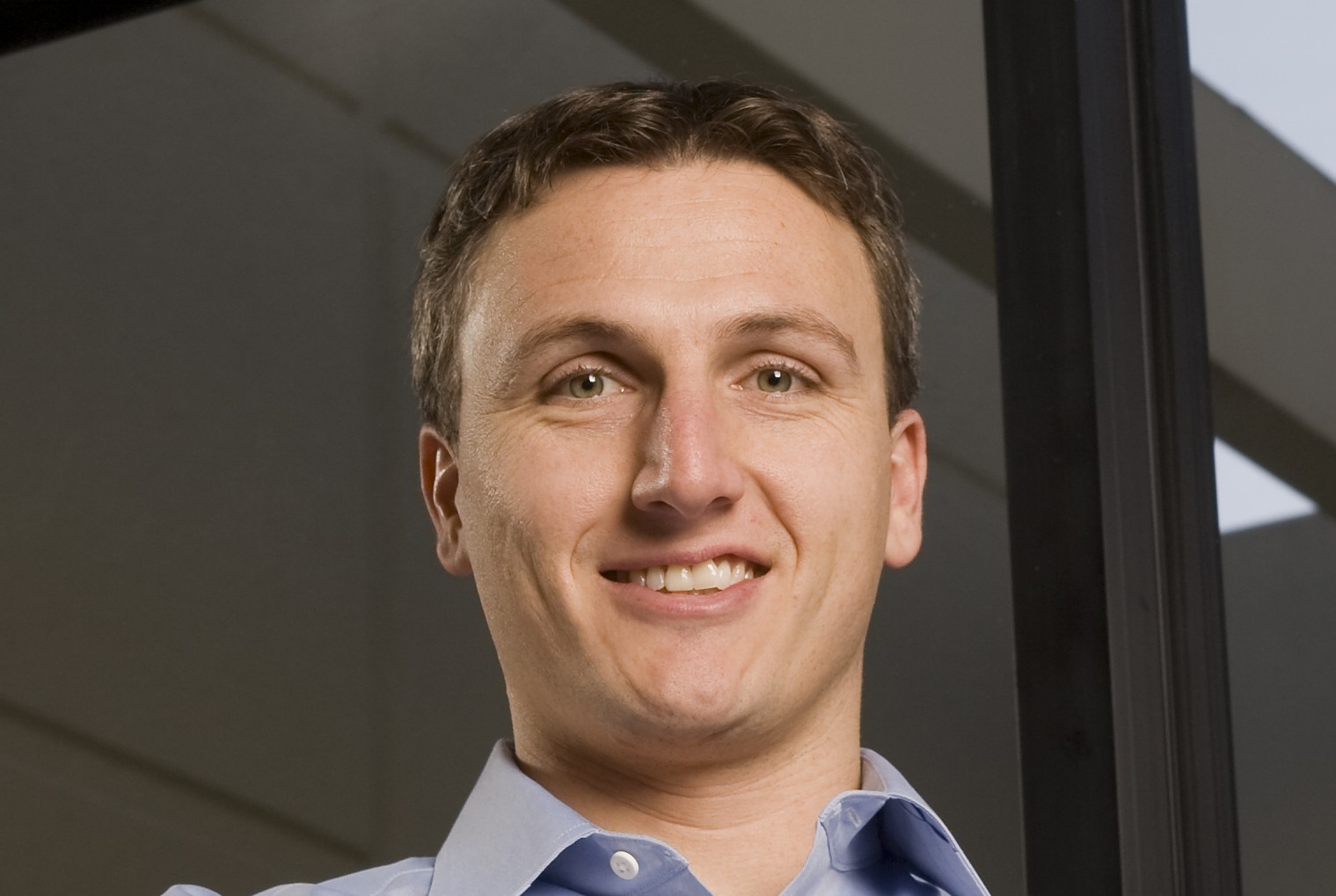
In a Fresh Dialogues interview earlier this year, CEO Lyndon Rive was bullish about the company’s prospects and even suggested SolarCity was seeking “world domination” in the energy supply sector. He addressed the increase in tariffs on Chinese solar panels:
“It’s more of an annoyance than a concern,” Rive said. “It’s a worldwide market…if China’s costs go up, we’ll just buy from somebody else.”
Rive talked about tempering the growth of SolarCity, to avoid the pitfalls of expanding too rapidly.
“We have a four month waiting list….four months is totally acceptable. Our customers totally understand it,” said Rive. “Could we grow even faster? Yes. But then the wheels may start getting shaky. So we are growing at a healthy rate to ensure quality, safety and also customer satisfaction.”
The IPO disclosures reveal that Elon Musk has over 30% of the shares in the company, followed by John Fisher of Draper Fisher Jurvetson with 26%. The Rive brothers, cofounders of SolarCity with their cousin Elon Musk have a combined 14% only. Here’s Lyndon Rive’s perspective on how Musk contributes to SolarCity as chairman.
Did you know that buildings account for almost 40 percent of total energy use in the U.S.; almost 40 percent of carbon dioxide emissions; and 12 percent of total water consumption? The climate friendly solution is “green building.”
But what does green building mean? And what is the future of green building? Phil Williams, VP of Webcor Builders sat down with Fresh Dialogues to answer these questions and explain how the venture capital and building sectors work together to deliver innovative green building products – like smart glass – that reduce energy consumption and environmental impact.
Here are some highlights of our conversation (edited for clarity and length):
What is green building?
“The term actually started here in San Francisco in the mid-1990s, and starts with a certification of a building under the LEED standard (Leadership in Energy and Environmental Design), developed by the US Green Building Council. We try to reduce the energy, the water, be responsible in the use of materials and create healthy interior environments.” Phil Williams
Why build green?
“There’s a high probability of climate change due to man’s impact; it’s seen as good business, it’s my energy bill today in terms of what is my overall cost of doing business.” Phil Williams
What should we expect from green building in the future?
It’s like a box of Cheerios…you’ve got some healthy products, you’ve got some less healthy products, some with sugar, some with fat. The consumer can now make a choice. When we didn’t know, the consumers were blind to the health or the energy consumption of a building. The marketplace will determine what happens, but now the information will be available.” Phil Williams
How do new green building products get in the supply chain?
“We work closely with several venture capital firms that are specifically focused in the built environment, and we have a strong engineering background…We can be part of that next breed of product…we have that advantageous viewpoint that we can lend to our clients and we can help those new innovative firms get a foothold in a very competitive industry. Any insight that we can provide benefits everyone.” Phil Williams
Webcor is sponsoring a four part interview series all about Green Building. Check back soon for more details.
Meantime, you can check out other green building interviews and stories by clicking here or on the Green Building Tab above.
I recently recorded a story for KQED radio about Apple’s “dirty” iCloud and the more I dug into the issue, the greener the world’s most valuable company appeared to get. By the time I’d finished researching the topic, visiting a local data center, talking with an expert in energy efficiency, and interviewing members of the public at my local Whole Foods store, Apple released a statement announcing it was going “all in.”
“By the end of 2012, we’ll meet the energy needs of our Maiden, North Carolina, data center using entirely renewable sources,” the statement read.
The data center is a LEED Platinum building (the highest rating of the US Green Building Council standards) with an impressive collection of energy efficient design features from a chilled water storage system to a white cool roof which maximizes solar reflection. The whole project looks so “insanely green” it might start to make once green-revered Google turn a shade of (envious) green.
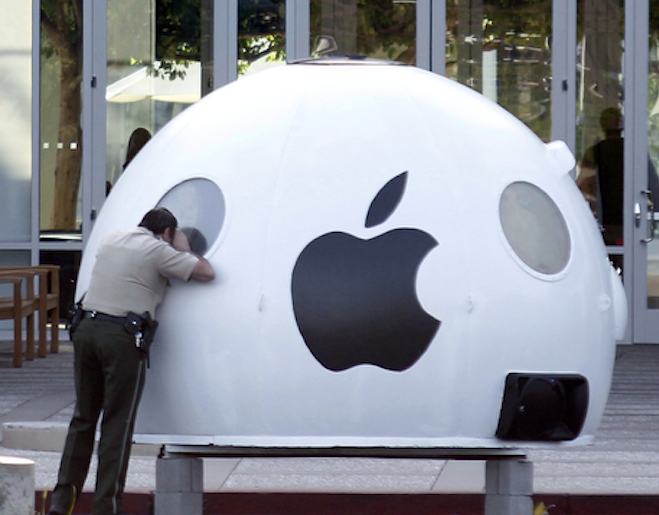
Was it the black balloons released in Apple’s spectacular retail stores in the Bay Area and around the world? The giant iPod “squatting” outside Apple’s Headquarters in Cupertino? The supersize iPhones walking around the campus demanding Apple clean its “dirty” cloud? The slick video or the 200,000+ petitions asking Apple CEO Tim Cook to stop using dirty coal? The environmental group Greenpeace would like to think so.
But it’s likely that none of the above induced Apple to green its cloud. These decisions to install 20 MW of solar arrays (from SunPower) and the largest non-utility fuel cell installation (from Bloom Energy) were years in the making, and the Greenpeace campaign weeks old. But having Greenpeace on its case does appear to have helped Apple discover some transparency in its operations. Something for which it’s not exactly famous. And that transparency will likely spur further clean action from other IT companies.
In a detailed release, Apple explained exactly where the 60% onsite clean energy is coming from and made a public commitment to power the remainder using local and regional clean energy supplies, including NC GreenPower.
In the war of words and facts between the environmentalist group and Apple, prior to the company coming clean, several commentators accused Greenpeace of “doing a Mike Daisey” on Apple. That is, intentionally fabricating the facts to make a stronger case against the tech giant. In the end, Greenpeace spokesperson Gary Cook told me, “We will continue our campaign to push Apple – and other IT giants like Microsoft and Amazon – to clean the cloud until Apple has policies to ensure that they will grow using exclusively clean energy.”
As for Google and the other fast growing cloud users like Amazon and Microsoft, we’ll be watching closely to see if a “greener than thou” race starts warming up. Each leapfrogging the other to out-green their competitor’s data centers. A race for the most insanely green cloud? Bring it on.
What do Elon Musk, SolarCity and Burning Man have in common? The answer is illuminating for those seeking climate friendly solutions to our energy needs.
Elon Musk is well known in Silicon Valley as founder of luxury electric vehicle maker Tesla Motors and SpaceX, the space transport company. But what’s less known is Musk’s contribution to SolarCity, the solar installer and energy efficiency auditor. Not only did Musk inspire the creation of the San Mateo based solar company, but he’s working closely with the founders on a futuristic clean energy storage solution, coupling lithium-ion batteries with rooftop solar power.
When you discover that SolarCity cofounders, Lyndon and Peter Rive and Elon Musk are first cousins, such ambitious collaborations make more sense, but where does the inspiration come from and how does Musk have the time to keep all these projects moving forward? SolarCity’s Lyndon Rive shared some family insights in a recent Fresh Dialogues interview.
Last week, SolarCity company confirmed that it’s working on stage two of a collaboration to couple Tesla lithium-ion storage batteries with SolarCity’s residential and commercial PV solar arrays. Stage one involved $1.8 M funding from the California Public Utilities Commission to fund a research program in 2010. Stage two seeks to commercialize the program on a modest scale, with over 7o applications pending under the California Public Utility Commission’s Self-Generation Incentive Program (SGIP), which provides incentives for distributed energy generation. The strategy seeks to leverage funding from the federal investment tax credit (ITC) for clean power and subsidies from SGIP, up to 60% of the system cost.
As Chairman of SolarCity, Elon Musk is not involved in the day to day running of the solar company but CEO Lyndon Rive admits that his cousin only contributes “maybe two hours a month” to the company – by phone – and three hours a quarter for board meetings. Not many minutes to have a significant impact on a company, for your average chairman. But Musk appears to have a rare gift for strategy.
“Elon is a phenomenal genius,” says Rive. “So when he gives you the time and you lay out the plan, he can quickly identify the hole in the plan… this is the true definition of quality vs quantity. .. you can fix whatever potential pot-hole you might run into, just in a ten minute discussion with Elon.”
So you can only imagine the ambitious discussions Musk and Rive had in 2004 on a road trip to Burning Man, the weeklong cultural event held annually in Black Rock Desert, Nevada. It was en route that Rive shared his desire to do something that had a larger environmental impact (than enterprise software) and Musk “came up with the initial idea” for SolarCity.
Burning Man has been described as a seven day experiment in community, art, radical self-expression, and radical self-reliance and culminates in the burning of a wooden effigy. Perhaps it was the profusion of attendees using free standing solar panels to power their RVs; the atmosphere of radical creativity or witnessing all that carbon going into the desert air, but whatever sparked the conversation has had profound impact on the US solar market. SolarCity has the largest share of solar installations in the US and is growing so rapidly, it’s hiring four new employees a day nationally, 10 a month in the Bay Area. Rive’s ambitious goal is world domination in the energy market, no less.
Burning Man may yet become the Mecca for clean tech entrepreneurs as well as the counter culture set; a journey worth emulating for other entrepreneurs seeking clean tech solutions to the world’s energy needs. Past attendees from the business world include Amazon C.E.O. Jeff Bezos, Google co-founders Larry Page and Sergey Brin, and Google C.E.O. Eric Schmidt.
For more Fresh Dialogues interview with SolarCity click here

 Fresh Dialogues: What can President Obama realistically hope to achieve in his second term to combat climate change?
 now cheaper than electricity from new plants run by either coal or natural gas. The price of renewables is coming down continually, the more we use, the cheaper it gets. It’s one of those virtuous circles, and cost down curves like Moore’s Law. It’s not quite that steep but it’s extremely impressive.