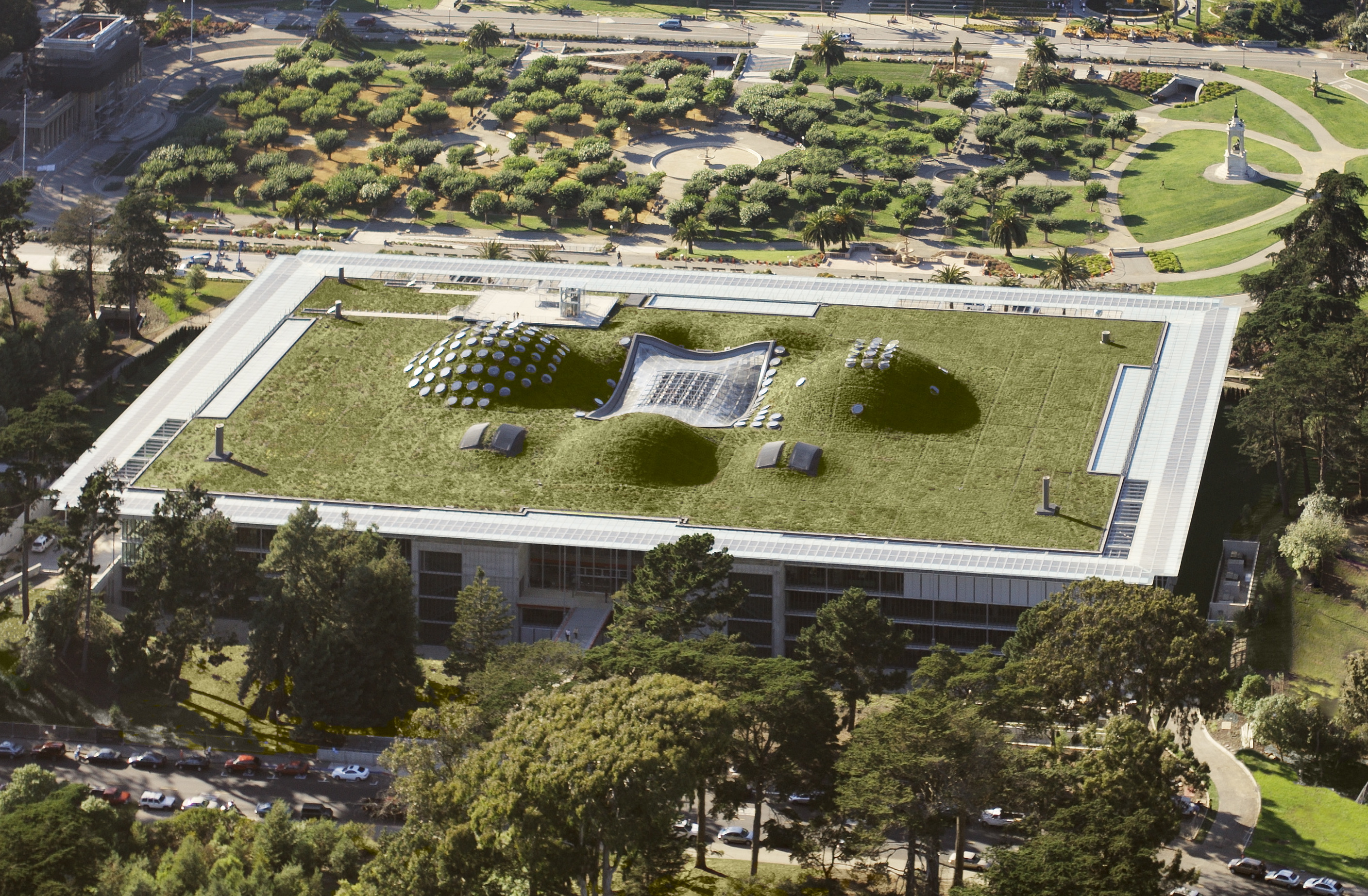
Did you know that buildings account for almost 40 percent of total energy use in the U.S.; almost 40 percent of carbon dioxide emissions; and 12 percent of total water consumption? The climate friendly solution is “green building.”
But what does green building mean? And what is the future of green building? Phil Williams, VP of Webcor Builders sat down with Fresh Dialogues to answer these questions and explain how the venture capital and building sectors work together to deliver innovative green building products – like smart glass – that reduce energy consumption and environmental impact.
Here are some highlights of our conversation (edited for clarity and length):
What is green building?
“The term actually started here in San Francisco in the mid-1990s, and starts with a certification of a building under the LEED standard (Leadership in Energy and Environmental Design), developed by the US Green Building Council. We try to reduce the energy, the water, be responsible in the use of materials and create healthy interior environments.” Phil Williams
Why build green?
“There’s a high probability of climate change due to man’s impact; it’s seen as good business, it’s my energy bill today in terms of what is my overall cost of doing business.” Phil Williams
What should we expect from green building in the future?
It’s like a box of Cheerios…you’ve got some healthy products, you’ve got some less healthy products, some with sugar, some with fat. The consumer can now make a choice. When we didn’t know, the consumers were blind to the health or the energy consumption of a building. The marketplace will determine what happens, but now the information will be available.” Phil Williams
How do new green building products get in the supply chain?
“We work closely with several venture capital firms that are specifically focused in the built environment, and we have a strong engineering background…We can be part of that next breed of product…we have that advantageous viewpoint that we can lend to our clients and we can help those new innovative firms get a foothold in a very competitive industry. Any insight that we can provide benefits everyone.” Phil Williams
Webcor is sponsoring a four part interview series all about Green Building. Check back soon for more details.
Meantime, you can check out other green building interviews and stories by clicking here or on the Green Building Tab above.
Tesla Motors released its first batch of all electric Model S sedans today. The cars are actually built – not just assembled – at the Tesla Factory in high priced Silicon Valley. The company’s CEO, Elon Musk, says he’s creating “the greatest car company of the 21st Century,” yet despite the hoopla, Tesla is one of the most shorted stocks on the Nasdaq. Will this ambitious entrepreneur – who led the successful SpaceX mission to the international space station last month – prove detractors wrong again?
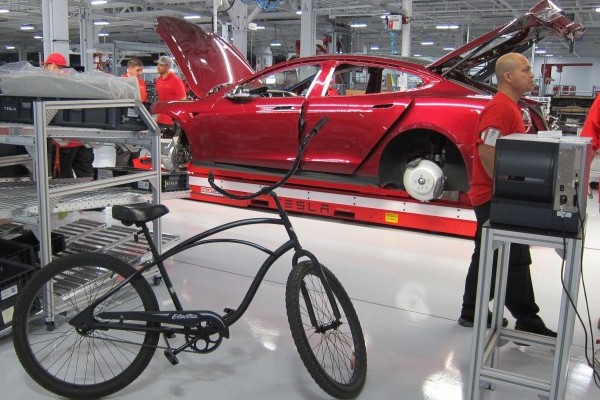
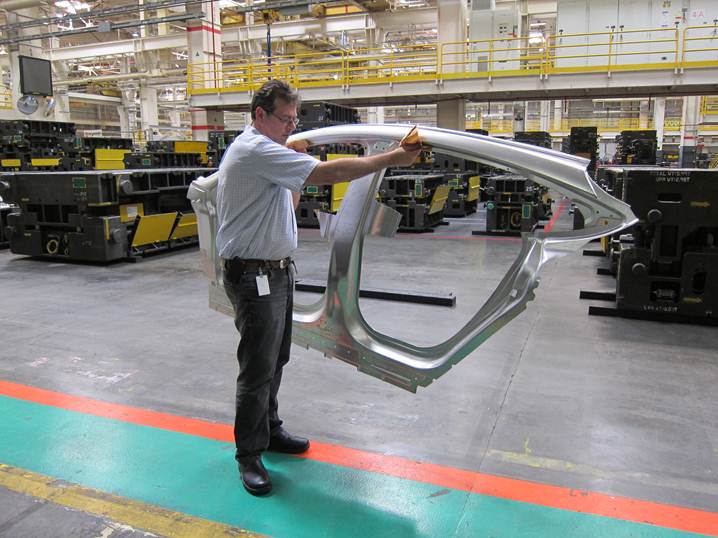
I visited the factory on June 14 and Gilbert Passin, VP of Manufacturing at Tesla gave me a fascinating two hour tour. He explained the process of making a Model S, from the stamping shop, where huge hydraulic press machines stamp sheets of aluminum into 3-dimensional fenders, hood panels, doors, and roofs; to the quality testing where the paint work is meticulously checked and recycled water is used to test each model’s watertightness.
At the stamping shop, Passin says, “These parts are extremely critical because it’s like the foundation of what makes a good car…See the robot is actually picking up the part in slow motion to make sure that everything works well…you don’t want anything to break.”
Shiny red robots and red T-shirt clad employees work hard at the factory: stamping, assembling, welding, painting and testing. The release of the first ten Model S Sedans is a big milestone for this innovative company. We talk to Charles James Lambert, who is a team leader working on the stylish and unique door handles Tesla manufactures at the factory. “I’m building a door handle that’s going on something fabulous to me: the model S…so sexy to me, the car, right?” he says. “That we have a door handle that responds. It’s pure elegance to me.”
Steve Jurvetson, a Tesla board member, snagged the very first prelaunch Model S (Elon Musk had to wait for number 2) and raves about it with the wide-eyed glee of a teenager describing his first set of wheels. “It’s kind of like driving in a hyper space portal to the future…” says Jurvetson.
Yet this futuristic car, that accelerates 0-60 in 4.4 seconds, does so in a whisper, not a roar. Jurvetson argues that silent is better. “It’s like saying I sleep better when there’s industrial noise going on outside my house, really?” he says and suggests that for drivers who miss the roar of an internal combustion engine, downloadable sounds might be the answer… “People can make it sound like whatever you want. You know, Harley Davidson: “huff pwuffpwuff pwuff.” Fine…just dial it up…blast your ears out…who cares?” he says.
Jurvetson, a Silicon Valley venture capitalist, sincerely believes that all vehicles will be electric one day and Tesla will lead the way. “I love what it represents: emblem of the future and a symbolic step towards a oil-free economy.”
The Model S is phase two of Elon Musk’s masterplan to disrupt the car industry and create efficient sustainable transportation. In 2008, Tesla released the Roadster, a high-end electric sports car priced at over$100,000. With the Model S, Tesla has made a more affordable car, and a year or two after its Model X comes out in 2013, aims to produce a 3rd generation model for $30,000. An electric car “for the masses.” Tesla has already catalyzed an industry shift. Today most major car companies are releasing electric or hybrid models. “Even some of the biggest competitors – the gas burning giants of the past – have admitted that they kicked off their electric vehicle program because they saw what Tesla did,” says Jurvetson. “Management said: this little company in CA is doing it, why can’t we?”
Tesla may be a trailblazer, but it faces a bumpy road ahead. Those shorting the stock (betting that the stock will fall in value on the Nasdaq) have a bearish reaction to Tesla’s high debt levels, tough competition and uncertain prospects for mass-market adoption. But it’s more than just the scrappy startup -the Millennium Falcon (Star Wars)- against the Empire (GM, Ford et al). Damon Lavrinc, Transportation Editor for Wired Magazine explains, “The established players don’t like to be challenged on their own home surf.”
He argues that to succeed, Tesla must address both range anxiety and charging time challenges. Price is also an issue. The 150-mile range car may have a base price of $50,000 after federal rebates. But for the fully loaded 300-mile range model, you’ll pay closer to $100,000. California buyers also get a state rebate ($2500) plus those precious carpool stickers. “Once we can get that price of entry lower, once we can get that battery capacity larger, that’s when it’s really going to take off,” says Damon Lavrinc. So far, Tesla has 10,000 reservations for the Model S and will deliver about half this year, ramping up to 20,000 in 2013, if the orders continue to come.
Experts compare it to the BMW 5 Series, but Tesla’s VP of Manufacturing explains its edge. “We’ll change the world by bringing a product that’s extremely efficient, very clean for theplanet, extremely fast, extremely comfortable…extremely beautiful,” says Passin. But Tesla has to get it right the first time, there’s no room for error.
Back in the Tesla Factory, at the end of our tour, Passin explains, “The car has to be finished, has to be perfect, the people working here know this is the end of the line, so it has to be good.” Although these challenges seem formidable, Elon Musk is attacking them like a true tech superhero, channeling the wild ambition of Steve Jobs and his obsessive search for perfection. Musk reportedly works 80-90 hours a week, splitting his time between Tesla and his space exploration company, SpaceX. Elon Musk was reportedly the inspiration for the Iron Man movies. “He may have superpowers, I don’t know,” says Passin, chuckling.
Last month, Musk proved naysayers wrong with his historic SpaceX Mission to the international space station. Can he do the same for the Electric Vehicle market? So much depends upon the successful launch of the Model S sedan. Damon Lavrinc of Wired Magazine sums up what’s at stake: “It’s not just so much a make or break it for Tesla, it is very much a make or break it for the entire electric vehicle industry.”
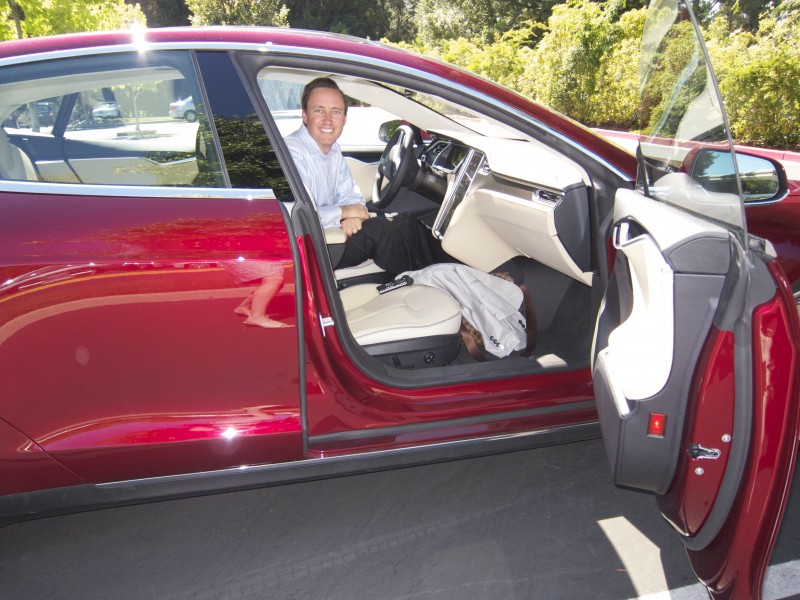
On Monday, I checked out the very first Tesla Model S at Sandhill Road, Silicon Valley. Steve Jurvetson, a Tesla board member is the proud owner.
Hoping for a splendid drive along 280, I was disappointed when Jurvetson said he’d promised the Tesla team that there’d be no test drives until the official release on June 22nd. Not even a wee tour around the parking lot.
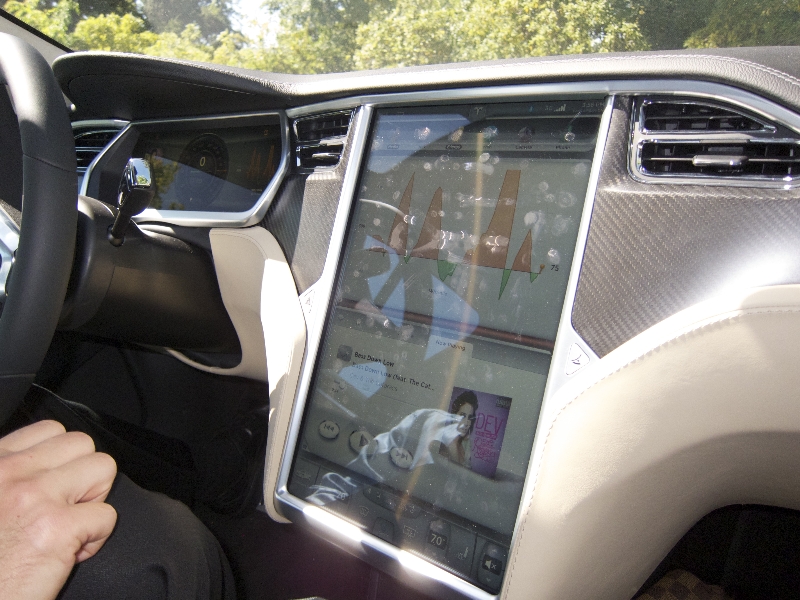
But I did get a detailed tour of the car’s interior and will be reporting more details soon about Jurvetson’s car and my fascinating two-hour tour of the Tesla Factory, here and on NPR’s KQED radio.
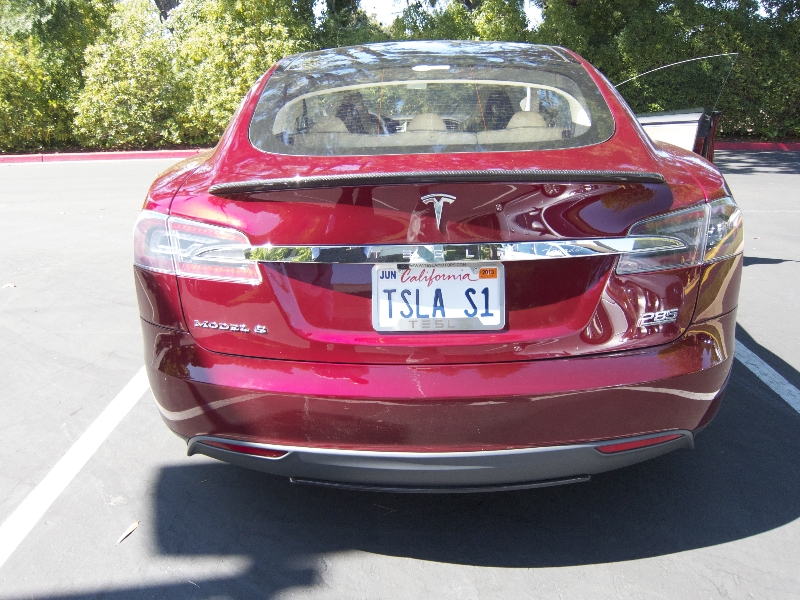
You’ll notice that there’s no tailpipe on the car. All electric, zero emissions.
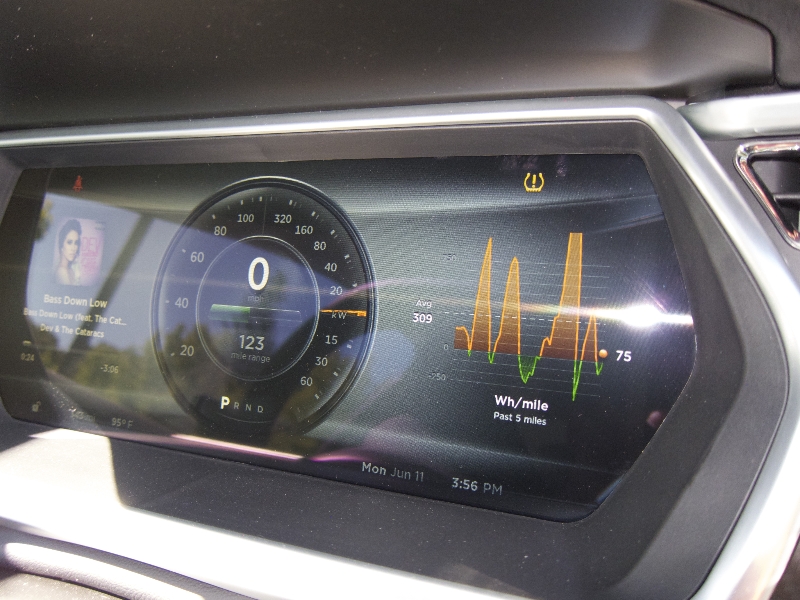
Note the acceleration patterns. The Model S generates electricity when you take your foot off the gas pedal.
Read transcripts, see photos and check out our ARCHIVES featuring exclusive interviews with Tom Friedman, Paul Krugman, Vinod Khosla and many more green experts and visionaries…
Join the conversation at our Fresh Dialogues Facebook Page
I recently recorded a story for KQED radio about Apple’s “dirty” iCloud and the more I dug into the issue, the greener the world’s most valuable company appeared to get. By the time I’d finished researching the topic, visiting a local data center, talking with an expert in energy efficiency, and interviewing members of the public at my local Whole Foods store, Apple released a statement announcing it was going “all in.”
“By the end of 2012, we’ll meet the energy needs of our Maiden, North Carolina, data center using entirely renewable sources,” the statement read.
The data center is a LEED Platinum building (the highest rating of the US Green Building Council standards) with an impressive collection of energy efficient design features from a chilled water storage system to a white cool roof which maximizes solar reflection. The whole project looks so “insanely green” it might start to make once green-revered Google turn a shade of (envious) green.
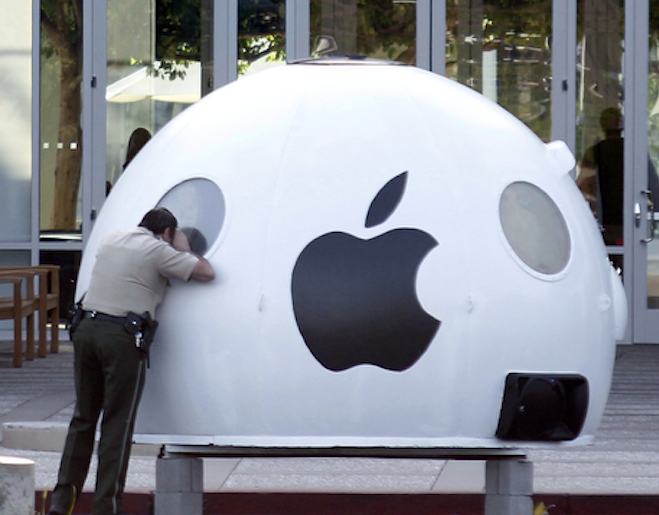
Was it the black balloons released in Apple’s spectacular retail stores in the Bay Area and around the world? The giant iPod “squatting” outside Apple’s Headquarters in Cupertino? The supersize iPhones walking around the campus demanding Apple clean its “dirty” cloud? The slick video or the 200,000+ petitions asking Apple CEO Tim Cook to stop using dirty coal? The environmental group Greenpeace would like to think so.
But it’s likely that none of the above induced Apple to green its cloud. These decisions to install 20 MW of solar arrays (from SunPower) and the largest non-utility fuel cell installation (from Bloom Energy) were years in the making, and the Greenpeace campaign weeks old. But having Greenpeace on its case does appear to have helped Apple discover some transparency in its operations. Something for which it’s not exactly famous. And that transparency will likely spur further clean action from other IT companies.
In a detailed release, Apple explained exactly where the 60% onsite clean energy is coming from and made a public commitment to power the remainder using local and regional clean energy supplies, including NC GreenPower.
In the war of words and facts between the environmentalist group and Apple, prior to the company coming clean, several commentators accused Greenpeace of “doing a Mike Daisey” on Apple. That is, intentionally fabricating the facts to make a stronger case against the tech giant. In the end, Greenpeace spokesperson Gary Cook told me, “We will continue our campaign to push Apple – and other IT giants like Microsoft and Amazon – to clean the cloud until Apple has policies to ensure that they will grow using exclusively clean energy.”
As for Google and the other fast growing cloud users like Amazon and Microsoft, we’ll be watching closely to see if a “greener than thou” race starts warming up. Each leapfrogging the other to out-green their competitor’s data centers. A race for the most insanely green cloud? Bring it on.
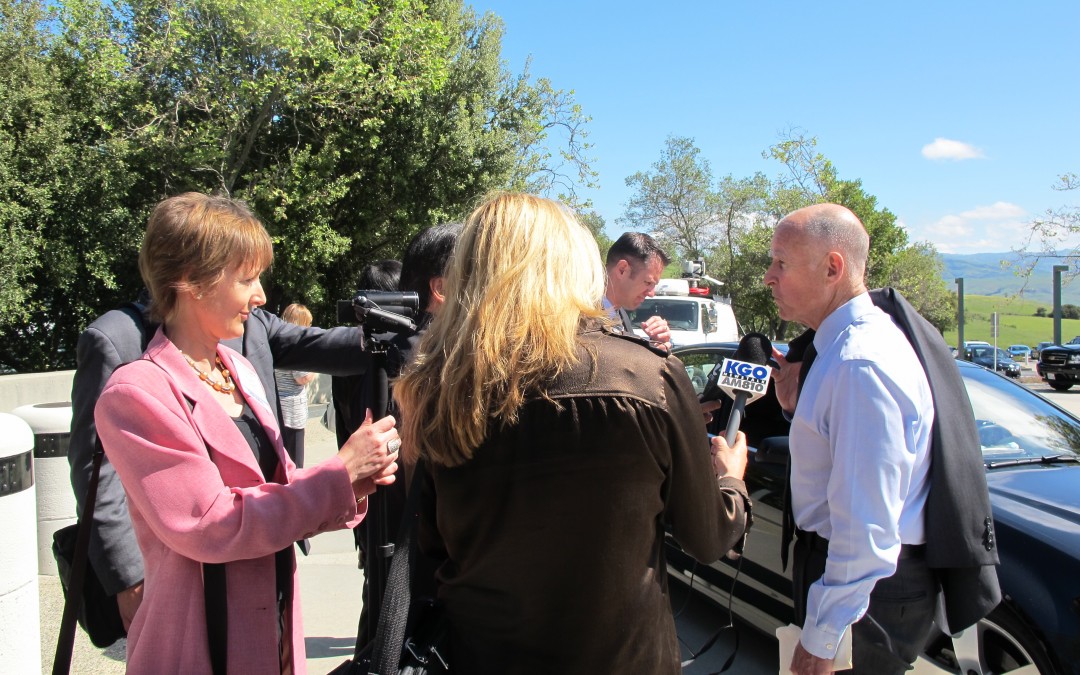
And he’s got an historic precedent to back his case – from Medieval France no less.
“It’s a very powerful idea that could become something of great importance to California,” he said. “New ideas are never received as well as old ideas, but I think California is the one place where high speed rail can get its start for the United States.”
But with California’s budget in the red and more spending cuts on the table, can California afford to spend a penny on high speed rail?
The 74 year-old governor took a page from history and replied with a question: “How did the peasants of medieval France afford to build the cathedral of Chartres?”
He then enlightened Fresh Dialogues with this answer, “They did it slowly… they did it with community investment and a great belief in the future.”
This echoes Brown’s 2012 State of the State Speech in which he said, “”Those who believe that California is in decline will naturally shrink back from such a strenuous undertaking…I understand that feeling, but I don’t share it because I know this state and the spirit of the people who choose to live here.”
Governor Brown is thinking very long term. In fact, the high gothic Chartres Cathedral, famous for its flying buttresses, took almost 60 years to build.
But it’s an unfortunate analogy. In the 13th Century, the cathedral’s “free trade zone” was also the cause of bloody riots between bishops and civic authorities over tax revenues. An ominous sign indeed for the Governor of California. Plus ca change…
.
.
Given Jerry Brown’s recent announcement that $120 M from a settlement with NRG Energy Inc. would be used to fund the provision of 200 public fast-charging stations for EVs in the Golden State (including some 5000 Nissan Leafs he confirmed have been sold to date), Fresh Dialogues also asked the governor if he drives an electric car. “Not yet,” he replied.
In earlier comments today, he referenced the new Tesla Model S, which will roll off production lines at Tesla’s Fremont Factory this summer. So is he considering a Tesla? He demurred. “I’m looking, looking, looking at it.”
Read transcripts, see photos and check out our Energy ARCHIVES featuring exclusive interviews with more green experts and visionaries…
Join the conversation at our Fresh Dialogues Facebook Page