This week SolarCity made public details of its plans for a $200M IPO, an all too rare sunny event for the clean energy sector in this doom laden post Solyndra era. Yet the filing revealed information which might have some investors take a cloudier view of the company’s future.
Although the company has installed solar arrays on over 33,000 U.S. buildings, and revenues have been growing healthily, SolarCity is still in the red and relies on the 30% Federal Investment Tax Credit to keep expanding. As Katie Fehrenbacher reports, the company is being investigated for overvaluing its solar systems for the tax credit. To date, SolarCity’s business model has benefited enormously from the surplus of cheap Chinese solar panels, and prices (until recently) have been trending down. But that is due to change with the large increase in duties imposed on certain Chinese solar panel makers; and the bankruptcy of other Chinese panel suppliers. Investigations by the Treasury Department are ongoing, as is the evolving landscape of solar panel industry.
In a Fresh Dialogues interview earlier this year, CEO Lyndon Rive was bullish about the company’s prospects and even suggested SolarCity was seeking “world domination” in the energy supply sector. He addressed the increase in tariffs on Chinese solar panels:
“It’s more of an annoyance than a concern,” Rive said. “It’s a worldwide market…if China’s costs go up, we’ll just buy from somebody else.”
Rive talked about tempering the growth of SolarCity, to avoid the pitfalls of expanding too rapidly.
“We have a four month waiting list….four months is totally acceptable. Our customers totally understand it,” said Rive. “Could we grow even faster? Yes. But then the wheels may start getting shaky. So we are growing at a healthy rate to ensure quality, safety and also customer satisfaction.”
The IPO disclosures reveal that Elon Musk has over 30% of the shares in the company, followed by John Fisher of Draper Fisher Jurvetson with 26%. The Rive brothers, cofounders of SolarCity with their cousin Elon Musk have a combined 14% only. Here’s Lyndon Rive’s perspective on how Musk contributes to SolarCity as chairman.
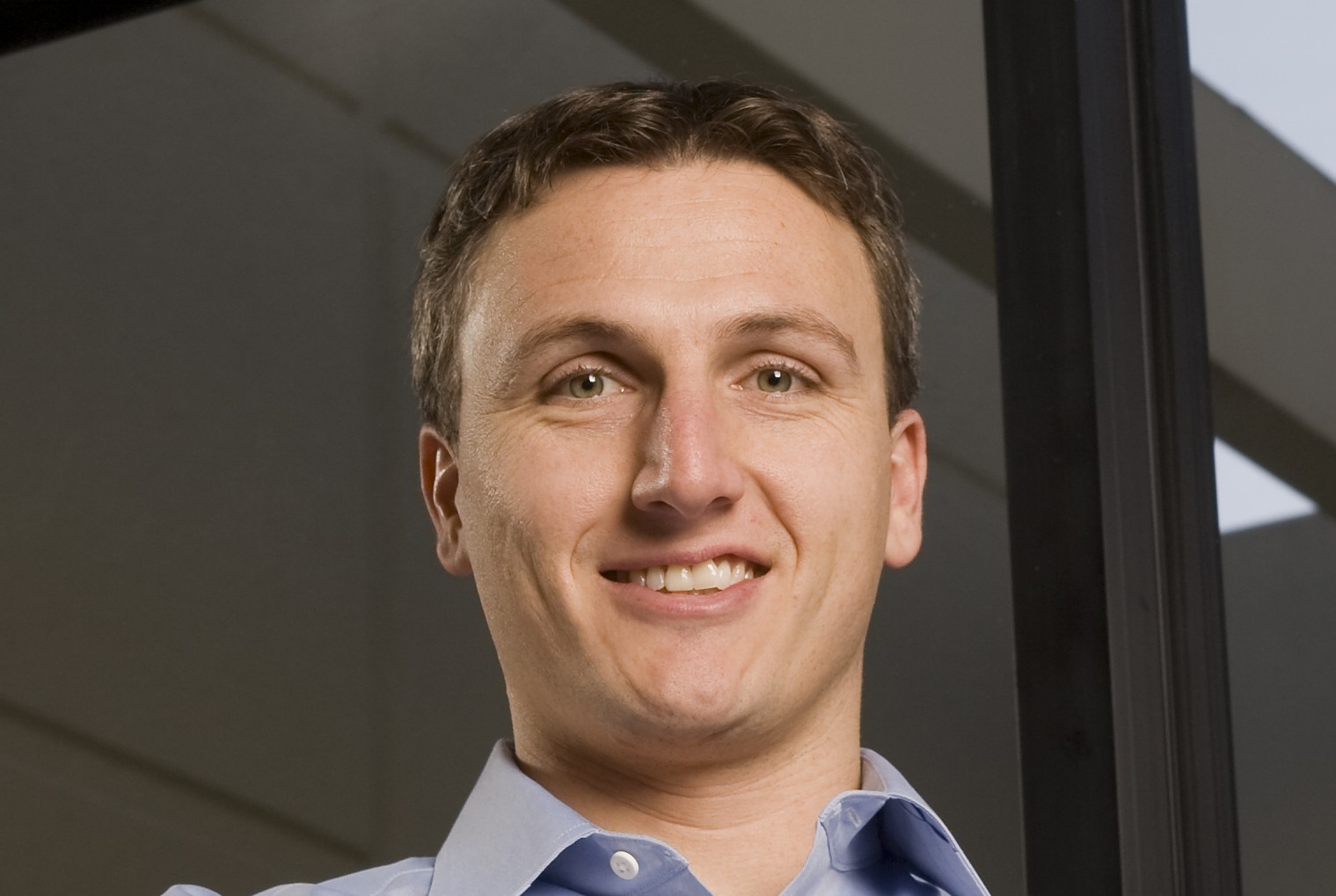
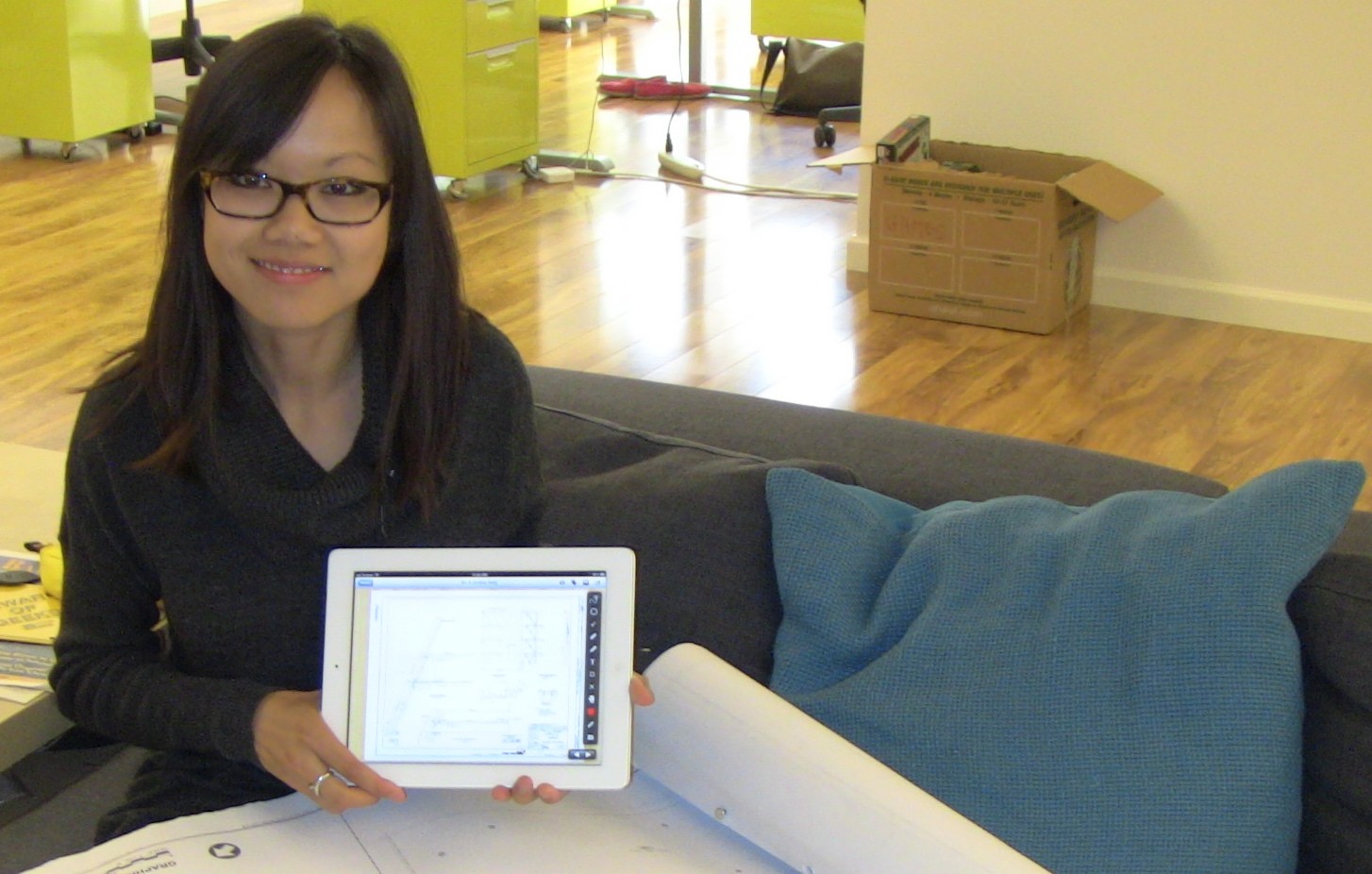
Last week, Fresh Dialogues visited PlanGrid, the recent Y Combinator startup winner that’s tackling what some call the “insane paper” problem that the construction industry produces. Computer-Aided Design (or CAD) works well as a green and efficient solution for the design phase, but once on the field, architects, site managers and construction supervisors still have to lug around giant reams of blueprints. Thirty year old CEO Ryan Sutton-Gee explains how he had a lightbulb moment when the iPad came out and COO Tracy Young demonstrates their solution. Using the cloud, PlanGrid can upload up to 60,000 blueprints to an iPad, and enable construction teams to edit, update, tag photos and instantly share information as construction progresses. Sutton-Gee likens the on-site photo tagging ability to Instagram, with automatic uploads allowing construction teams to verify time, date and location information at each stage in the construction.
Here are some highlights from my conversation with Sutton-Gee and Tracy Young:
On the Paper Problem
“Our estimate is that $4 Billion was spent in 2011 just on paper in construction alone, which is a ridiculous. It’s an insane about of paper. It’s an insane amount of trees.”
On the PlanGrid Solution
“There are the hard cost savings of reducing paper and then there are the soft cost savings of saving time and reducing rework. On several projects, we’ve reduced the paper consumption by 90%.” PlanGrid CEO Ryan Sutton-Gee
“You could fill up all of downtown San Francisco with paper – that’s how many trees we’re saving.” PlanGrid COO Tracy Young
On Silicon Valley
“We are being used by very large Silicon Valley companies – that everyone is familiar with – to build some of their office spaces. (Apple’s new campus perchance?) People in Silicon Valley are always up with tech. They’re the early adopters in everything, including us.”
On Y Combinator and Startup Advice
“It was really great with Y Combinator. The most important thing that took a while to realize is that it’s actually not that risky…Even if everything had gone totally wrong for us, at worse I would have spent six months working on something I was really passionate about…That was the opportunity cost… If you’re in an industry and there’s a huge problem and there’s a technically feasible solution…go for it!”
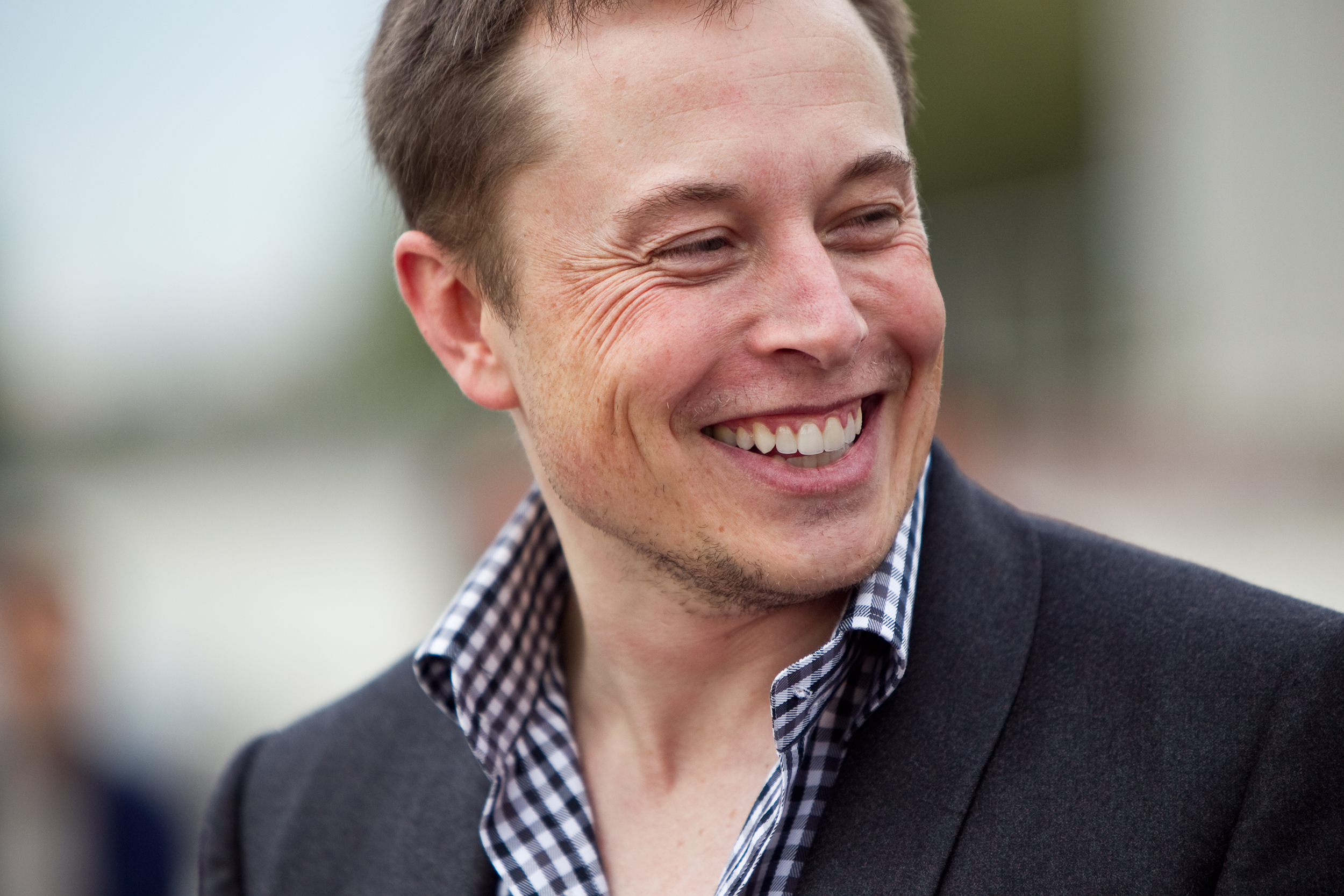
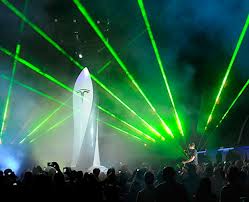
Today on Bloomberg News, Tesla CEO, Elon Musk, ever the space junkie, described the new 100-strong Tesla supercharger network like this: “it will feel like alien spaceships landed at highway rest stops….a beacon of hope and inspiration.”
Tesla announced details of its superchargers network on Monday September 24th.
The new fast chargers will boost the existing west coast network that enables EV drivers to journey from Canada to Mexico using slower level 2 chargers. Meanwhile, terrestrial Tesla spokesperson Christina Ra shared more mundane details of the company’s new supercharger network during our recent test drive of the Model S.
“It’s intented to solve the conundrum of the road trip, long distance travel,” said Ra. “So we will have superchargers along frequently traveled roadways, for example between LA and San Francisco, to enable charging during road trips.”
It is anticipated these fast chargers will be located at Harris Ranch, Coalinga (for the LA/San Francisco travelers) as well as dozens of other locations like Tesla, Newport Beach to connect popular Tesla centers across the country.
Power Nap?
Tesla is eager to emphasize the speed and convenience of these super chargers, but let’s face it, no matter how cosmic, the experience won’t be as rapid as a five-minute pit stop at the gas pump.
“It doesn’t really modify your behavior,” says Ra. “It takes about a half hour to replenish 150-160 miles of range.”
Fresh Dialogues asked: Time for a cuppa coffee or a perhaps short nap? Indeed. The practice might add a whole new dimension to the term power nap.
Ever the pragmatist, Ra confirmed, “Time for lunch…bathroom break.”
Three intrepid Model S drivers just completed the first coast to coast drive, from San Francisco to D.C. Perhaps they can test drive some of the new superchargers on the return leg?
Click here for live video and full details of the Tesla superchargers network on Monday September 24th, 8pm (or beyond).
In June, Fresh Dialogues toured the Tesla Factory and last week we finally got behind the wheel of the finished product: a Model S Performance. It’s an impressive vehicle: sleek, stylish and powerful. Very powerful. The acceleration felt like a rocket. We took it 0-50 in about four seconds and thanks to its low center of gravity, it was easy to handle on the winding hill roads around Palo Alto. Going 60 plus on Highway 280 felt smooth and effortless. You gain speed so fast, it’s quite formidable, especially for this Toyota Prius driver. In the latest test drive, Motor Trends confirmed a 0-60 mph time of 3.9 seconds; faster than Tesla’s own specs of 4.4. That makes it the fastest American sedan.
I’d heard about the ‘sensitive’ accelerator pedal and wondered how it would be in the confined space of the Tesla HQ parking lot? But I found it easy to navigate and control both in forward and reverse gears. Backing into a parking space was a cinch thanks to the rear camera.
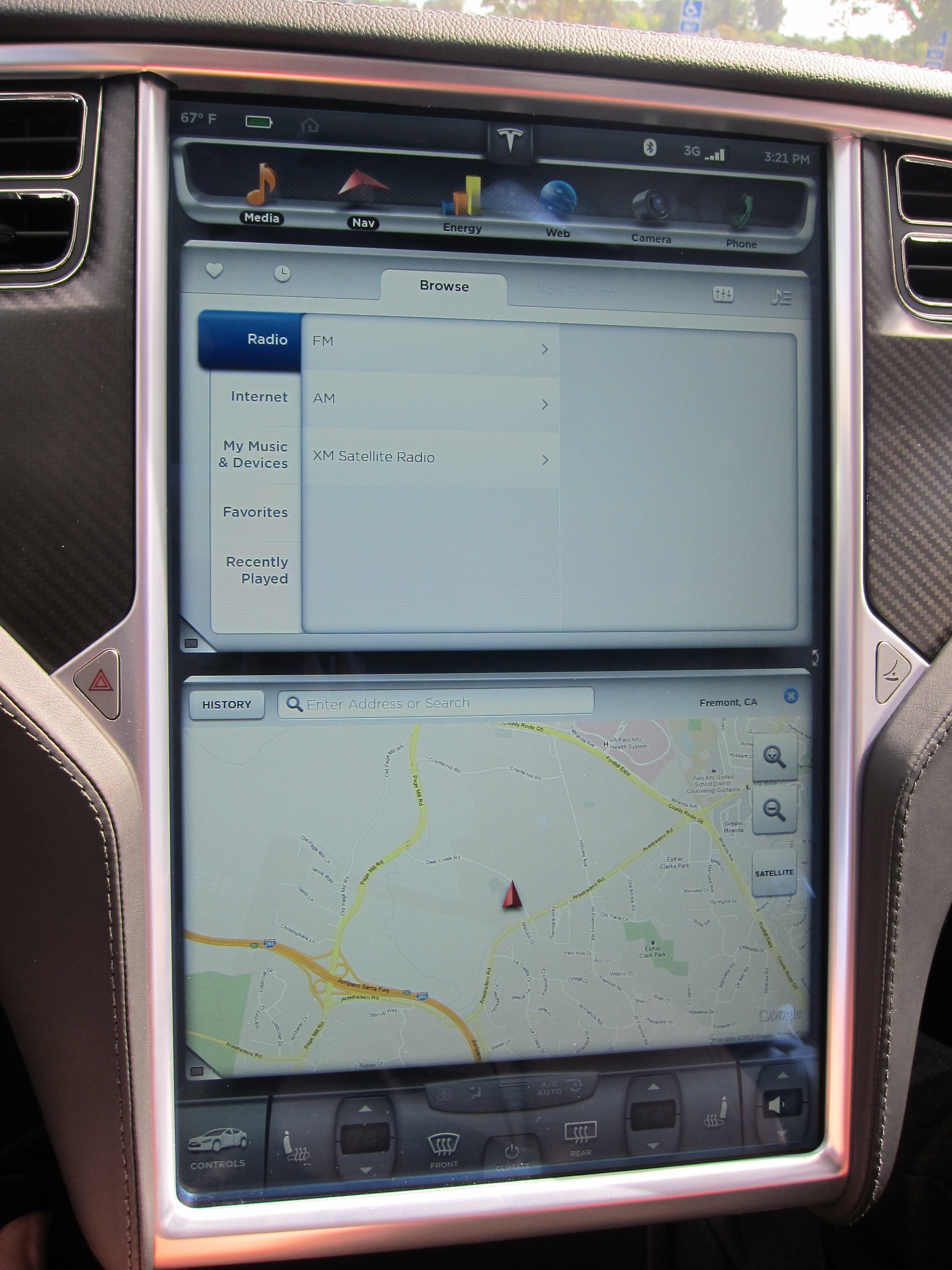
The massive 17-inch touch screen looked like it could be a major driving distraction, but having experienced its utility, I’m more appreciative. Glad to see that most functions can be controlled from the steering wheel, including the impressive sound system. Spinal Tap fans will be delighted to learn that the volume goes to eleven (really!); a spec no doubt dictated by Tesla product architect, Elon Musk with tongue firmly in cheek.
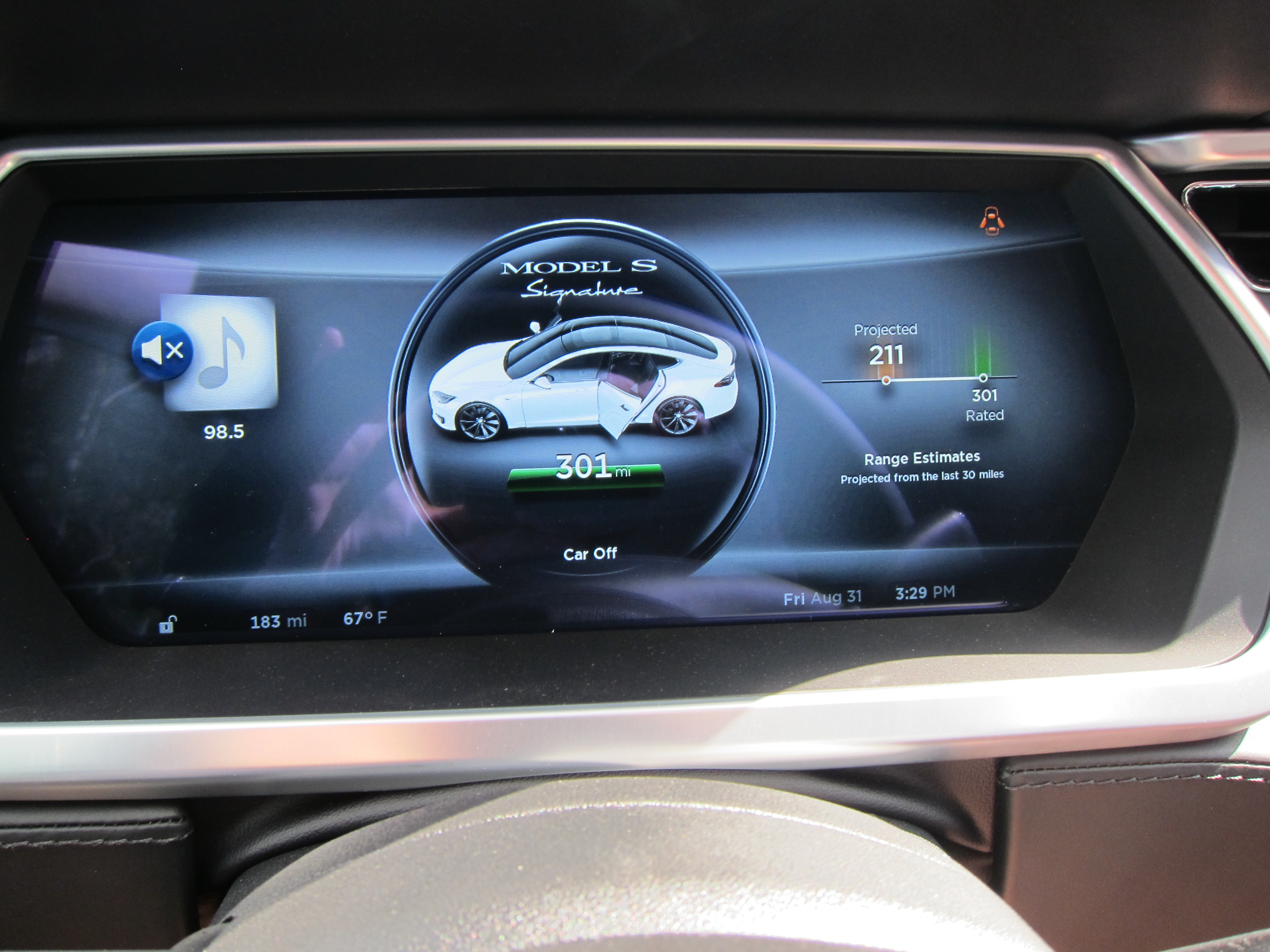
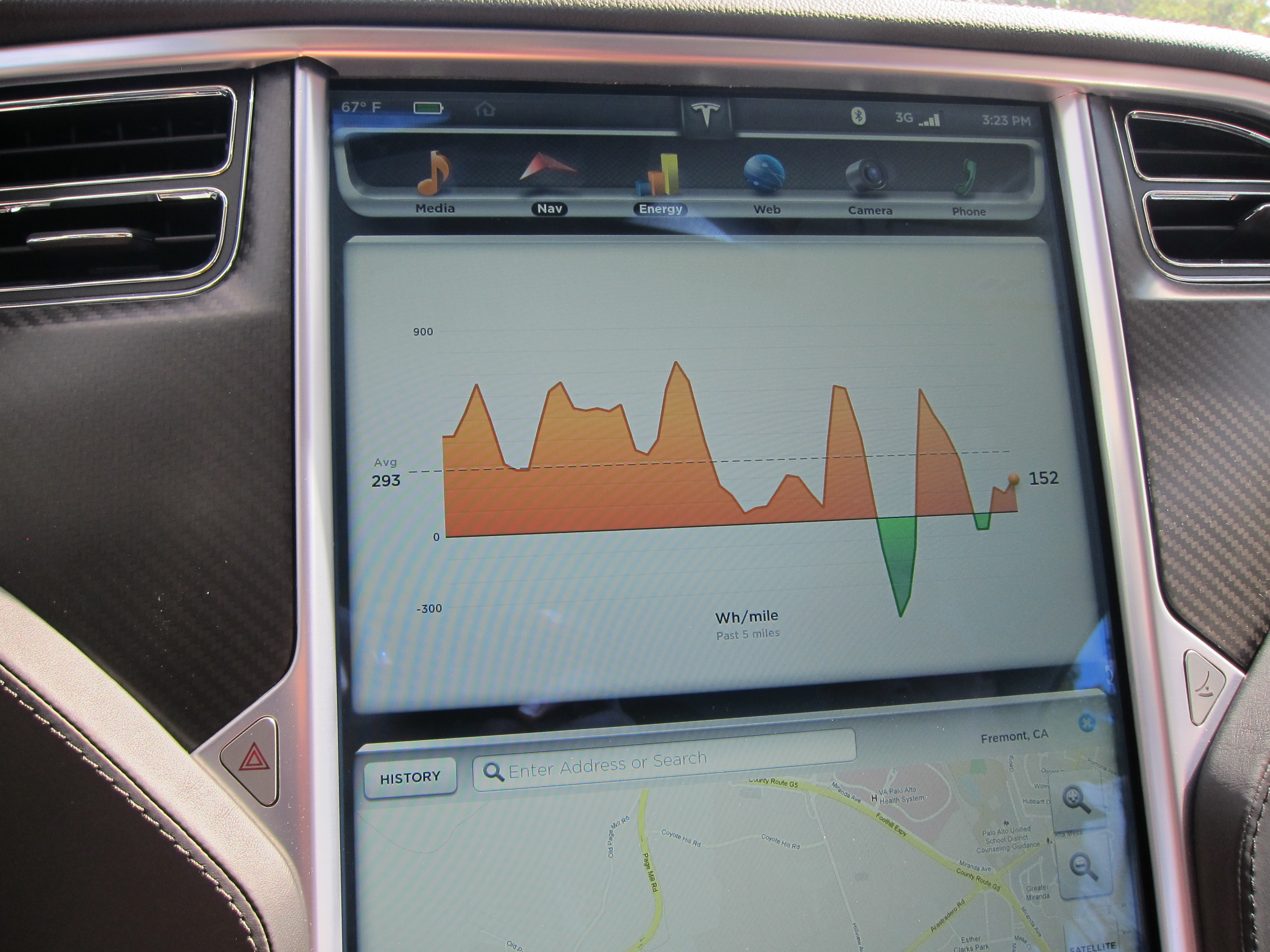
You can choose what appears on your dashboard: energy consumption, range, media, climate control, etc.
Tesla’s Christina Ra explained the energy charts and how the range is impacted by all that powerful acceleration.
The regenerative breaking was very noticeable (see green shading on graph). The second you take your foot off the accelerator, you feel it kicking in, giving you more control and increasing the range of the car. It’s rated 265 miles by the EPA, but the way we were driving, the projected range fell to 192. To get the maximum range, Tesla recommends an optimum speed of 55 mph, with the windows up and no A/C.
Two criticisms:
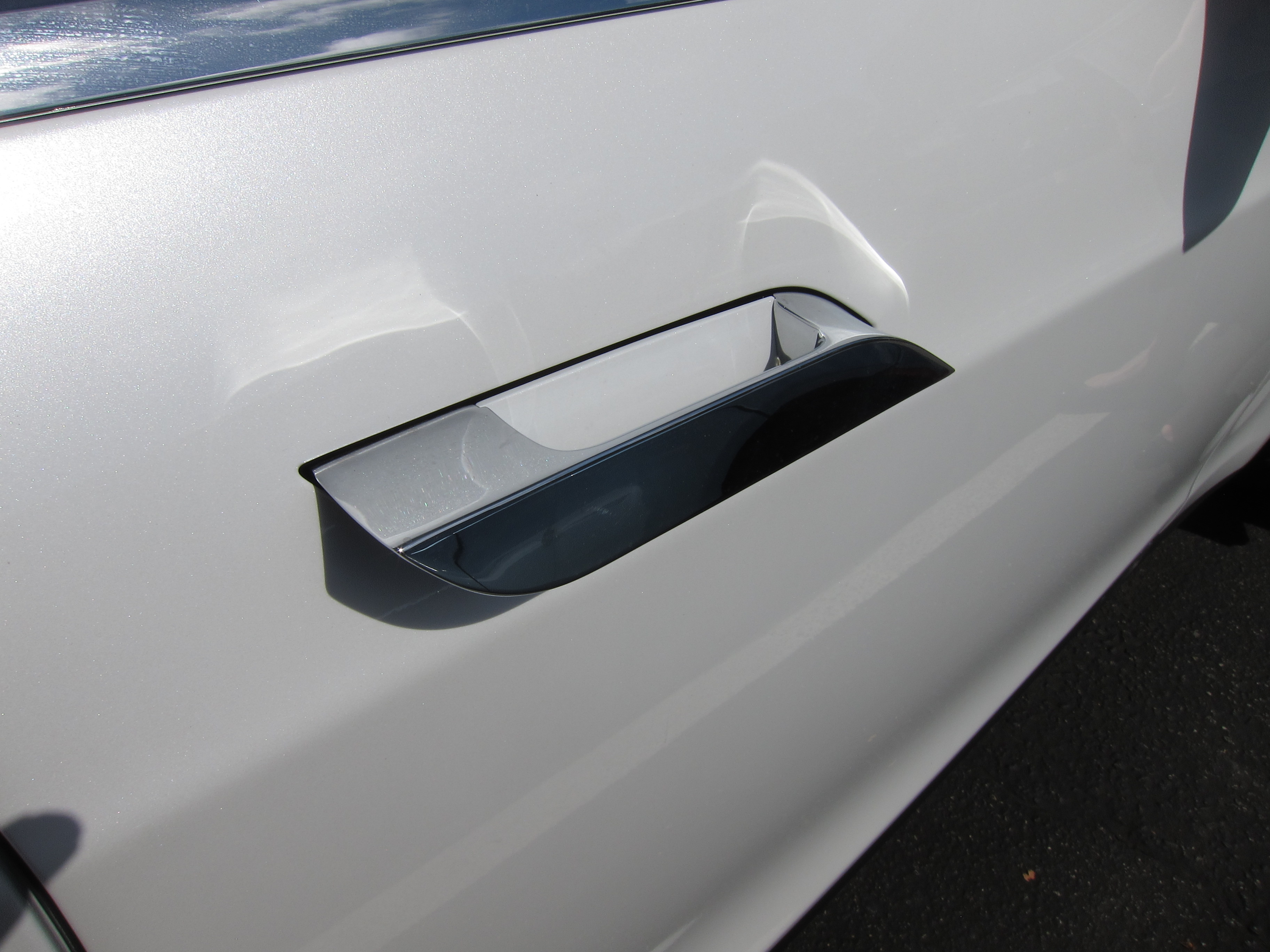
1. These snazzy door handles certainly look and act cool. Tesla Factory worker Charles Lambert said it best, they’re distinctive and sexy. According to reports, they’re not just eye candy, they actually improve the aerodynamics of the car. I understand they’re fitted with an anti-break-your-fingers release mechanism, but when I checked it out, the handle gave me a good finger squeeze – not in a good way. It stung. Maybe I’m extra sensitive, but I think Tesla should consider adjusting the specs, just a tad.
2. When you get in the car and sit down in the driver seat, the car switches on. Touch the foot break and the motor is on and ready to go. But when you stop, it feels disconcerting not to have an “off” button. Say you pull over to make a phone call… or enjoy the sunset? I’d be more comfortable knowing this super powerful motor is definitely off. And isn’t suddenly going to take off….
Overall though, a remarkable driving experience and a giant leap up from my beloved Toyota Prius. Made in Silicon Valley is definitely a plus.
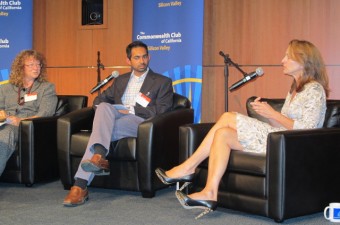
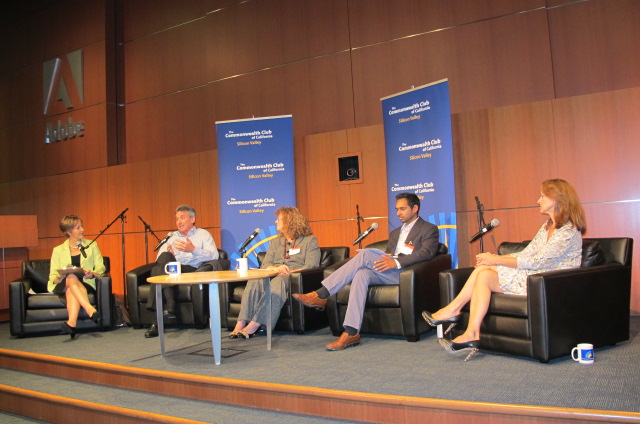
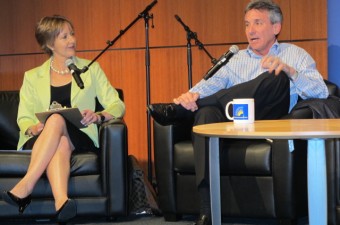
This month, I moderated a panel of green jobs experts for the Commonwealth Club Silicon Valley. Experts included: Parag Chokshi, Clean Energy Public Affairs Manager, Google; Josh Green, General Partner, Mohr Davidow Ventures; Linda Keala, Vice President Human Resources, SolarCity and Nanci Klein, Deputy Director, Office of Economic Development, City of San Jose.
The panel shared insights about the green economy, as well as tips for finding and securing green investments and green jobs. Here are highlights of our conversation (edited for space and clarity).
What are hot sectors in the green economy?
Josh Green, Mohr Davidow Ventures: “In the current environment, we’re looking for less capital intensive deals (energy efficiency, LED lighting and building management systems), so that means we’re on the side of energy demand much more than energy production. People call this cleantech IT – Information Technology. I’m an investor in Xicato, an LED module company. The LED convergence will happen…the payback is less than two years and (it’s) equivalent to halogen light. You don’t have to replace them for ten years or more and especially in a commercial settings, you end up lowering your maintenance costs.”
On cleantech growth sectors in Silicon Valley
Nanci Klein, Office of Economic Development, City of San Jose: “People say manufacturing has left the US…but manufacturing is very exciting here. When you talk about innovation and commercialization, Silicon Valley is a hub around new product introduction. Contract manufacturers will take a low volume, high mix of products. …the ten largest in the world – Tier One contract manufacturers – are all here in Silicon Valley, six of them in San Jose. They’re like a secret weapon resource. We try to link baby investors to these companies. You take someone with a hot idea and you put them with all of the accelerated services…if the product is good you can have a rocket in terms of acceleration.”
Josh Green, Mohr Davidow Ventures: “The loan guarantee program is operating well within the loan loss reserves. Certain loans are going to fail…The Solyndra mess became a big political football…the good news is that we’ve passed the half life…Congress officially stopped all its hearings. There will be continued efforts to end the loan guarantee program…but Solyndra itself: it’s over in terms of an issue. As investors, it never was an issue, it was a company that was not successful…I’ve got a portfolio with lots of companies that are not successful. Out of 100 investments, if you have 10 that meet your investment objectives (10x your money or better) then you’re ‘wildly’ successful, that makes you a top venture capitalists. That means you have a 90% – under your expectations success – rate.”
Tips on getting a green job
Linda Keala, Director of HR, SolarCity:
1. “A background in cleantech is not a prerequisite.”
2. “Differentiate yourself – what about the job (post) got you inspired? What resonated about the company?”
3. “I love getting handwritten letters. A personalized message tells me this is who I am, this is what I can bring to the company. Sometimes I get them in little pink envelopes…”
4. “Touch a spot in our hearts and we’ll take a close look at that resume.”
Josh Green, Mohr Davidow Ventures: “Have passion to change the world.”
How to get a job in Google’s Green Team (there are currently seven openings in the sustainability/green team areas)
Parag Chokshi, Clean Energy Public Affairs Manager at Google:
Here are the qualities Google looks for:
1. “Be a self starter, work independently and drive forward a project.”
2. “Think about creative solutions. We value innovation and creativity.”
3. “Show passion and new ways of thinking about things…that is very valuable.”
How is the City of San Jose helping entrepreneurs in Silicon Valley and beyond?
Nanci Klein, Office of Economic Development, City of San Jose: Here are some of the resources available – The Entrepreneur Center in downtown San Jose; Business Owner Space; Opportunity Fund. Check out SJEconomy.com. She also recommends the Cleantech Open competition and SolarTech an association for those in solar and financing sectors. The City of San Jose is working in partnership with Lawrence Berkeley Lab and others to create Prospect Silicon Valley, a demonstration and commrecialization center for cleantech startups.
On storage and battery technology
Josh Green, Mohr Davidow Ventures: “Storage is the most important development that could happen for our grid at the utility scale storage level as well as the emerging EV market to encourage the widespread adoption of EVs. ON the grid side, there is NO storage…the second you produce an electron it has to be consumed…this results in the creation of “Peaker Plants” used for 5-15 hours a year (especially in August). Storage has the greatest potential to unlock value.
In the transportation sector, lithium ion batteries are the lightest batteries and they still weigh about 1400 lbs in the new Tesla Model S. To the extent that you can get these to be a smaller battery pack you can unlock incredible advantages.
For the next 10 years, lithuim ion technologies are going to be where batteires and storage are focused. There are about 50-60 venture backed companies in the Bay Area, working on advanced battery technology. Mohr Davidow has invested in extracting lithium from geothermal brine at goethermal plants in Southern California. Its the lowest cost producer in the world with the best environmental footprint. We believe that lithium will help fuel the storage revolution.“

 Three intrepid Model S drivers just completed the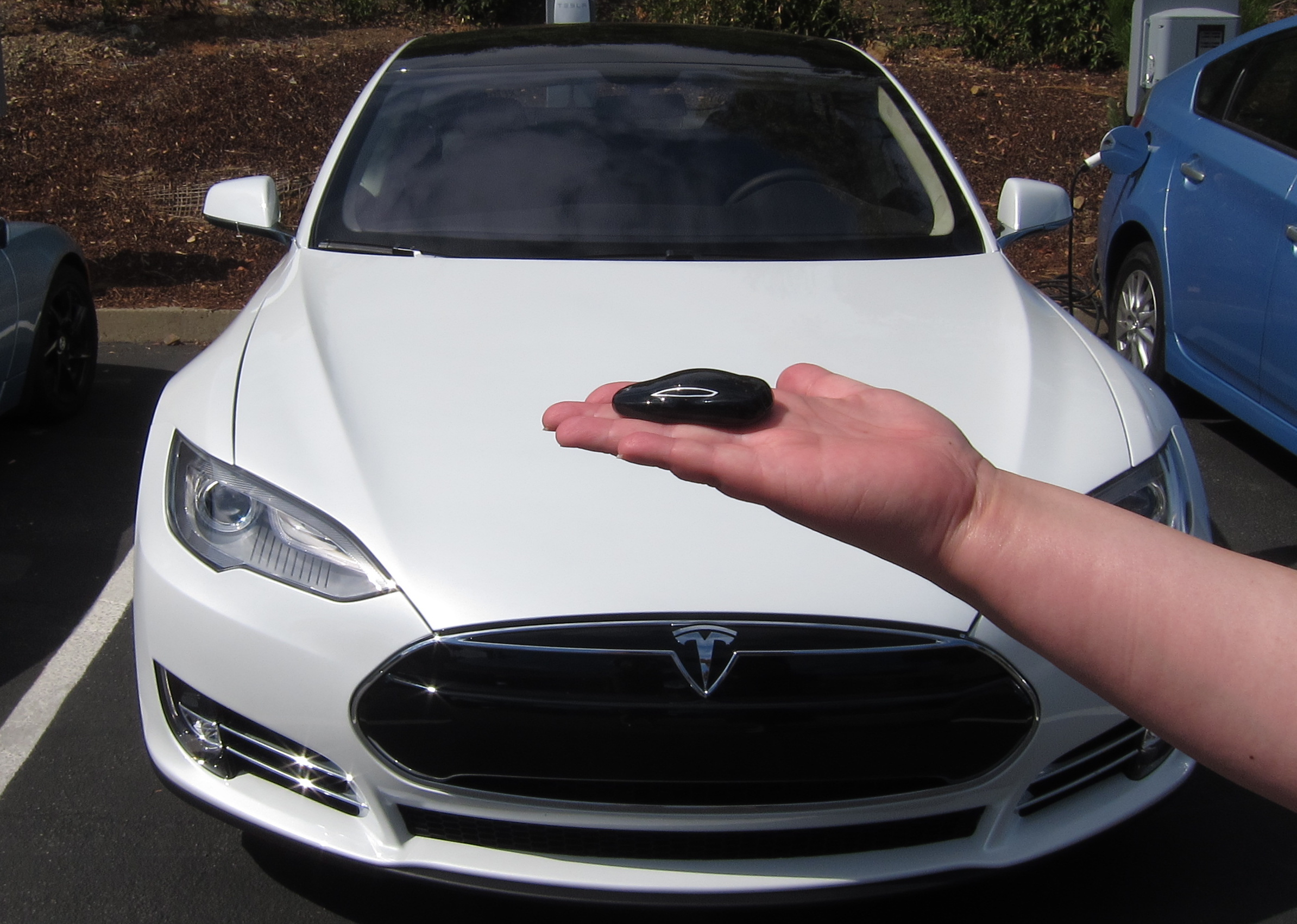
 On Solyndra