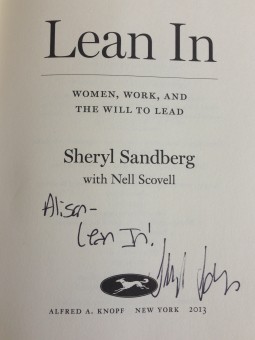
If you think you’ve read everything about Sheryl Sandberg and her book “Lean In” think again. Last night, Sandberg joined her ex-boss, Google’s Eric Schmidt in conversation at Silicon Valley’s Computer History Museum. As the guy who recruited Sandberg to Google back in 2001, Schmidt used his intimate knowledge to give us something new: an insider’s view of this remarkable woman. He describes her as “One of the great leaders of our industry who has built two multimillion dollar businesses already and has a lot ahead of her.”
Sitting with “Lean In” on his lap, Schmidt casually thumbed through her book, quoting excerpts, asking astute questions and making pithy remarks about topics such as gender bias, finding “the perfect” partner and even shared some of his business philosophy. To close, he asked her to read a short passage and the audience appeared to hold its collective breath. Check out the video.
Here are some highlights:
On leaning in while Parenting
“Wake up Silicon Valley. Put more girls into computer camp!” Sheryl Sandberg
Sandberg was appalled to discover that only 5 of the 35 kids enrolled in a Stanford computer science camp last year were girls.
On Gender Bias
“I’ve written the book on it and it’s still happening to me!” Sheryl Sandberg
On Pay Negotiations
“Women still pay a penalty for negotiating for themselves.” Sheryl Sandberg
John Hollar makes humorous introductions at the Sandberg/Schmidt event. Photo: Fresh Dialogues
Best Advice from Eric Schmidt
“Don’t be an idiot. Google is a rocket ship and when you’re offered a seat on a rocket ship, don’t ask what seat.” Sheryl Sandberg
On Choosing a Partner
“Marry someone who wants equality…(including) night feedings, and changing 50% of diapers.” Sheryl Sandberg
On Motherhood
“Work efficiency grows when you become a mother.” Sheryl Sandberg
On Stay At Home Mothers (SAHMs) and the Mommy wars
“I can feel guilty or grateful….(choose) to be more generous with each other. ” Sheryl Sandberg
On Re-entering the workforce (after time off being a SAHM)
“Ask where are my skills needed. Experience is less relevant. Be flexible, adapt.” Sheryl Sandberg
On Mandating Quotas for Company Boards
“I’m not arguing for it…it hasn’t moved other numbers in places like Norway (like the number of female VPs, other leadership roles).” Sheryl Sandberg
On Stupidest Criticism of her book
“I’m blaming women…I’m not!” Sheryl Sandberg
On Best Criticism
“I’m embracing stereotypes…I don’t want to, but that is what’s required till we get many more women leaders.” Sheryl Sandberg
On what happens next
“We’ve set up a community at LeanIn.org and people are starting circles, even fathers and daughters are starting circles. We’re unleashing a movement.” Sheryl Sandberg
Sheryl Sandberg urges all women to Lean In. Photo: Fresh Dialogues
On political aspirations
“I’m rooting for Hillary in 2016. I’m happy at Facebook and helping women get into office.” Sheryl Sandberg
Eric Schmidt also had some memorable remarks
On Finding the Right Partner
“Dave (Sandberg’s husband Dave Goldberg) is indeed perfect.” Eric Schmidt
On the work-life juggle, guilt trips
“Redefine your situation as success.” Eric Schmidt
On Feminism
“Feminism 2.0 means understanding stereotypes and becoming empowered.” Eric Schmidt
On Succeeding in Business
“Revenue solves all known problems. Concentrate on cashflow.” Eric Schmidt
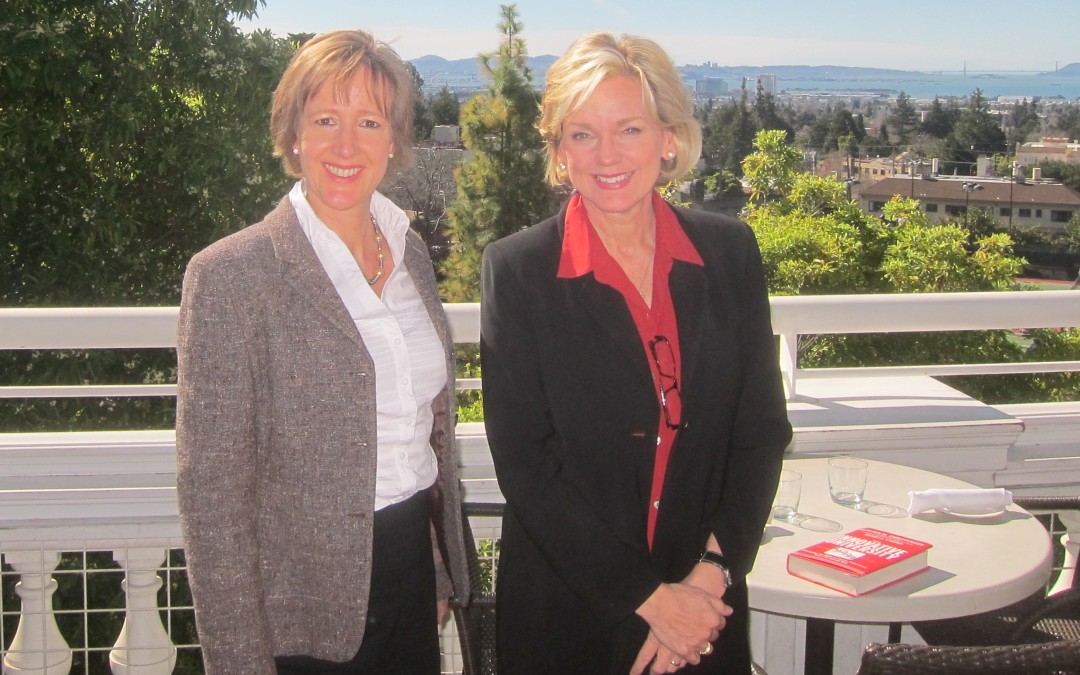
Let’s face it, President Obama is struggling to get anything through Congress right now, never mind a national energy policy, but here’s a big idea from Berkeley’s Jennifer Granholm to create more clean energy and clean jobs… from the bottom up.
You may remember Jennifer Granholm as the Governor of Michigan (2003-2011), the TV host of “The War Room” or the passionate speechmaker at the DNC 2012; but perhaps her most lasting contribution to the world will be this big idea: a Clean Energy Race to the Top.
Leveraging her experience in Michigan, where she attempted to transform the state’s “rustbelt” image to “greenbelt” by investing heavily in clean energy and green jobs, she’s seen the strategy’s economic impact and is eager to keep the momentum going. This time, on a national basis.
.
.
Modeled after the Education Race to the Top (RTT), her clean energy idea is to offer a pot of money to incentivize all 50 states to compete and raise their clean energy standards to 80% by 2030. Just think: The Amazing Race for Clean Energy.
Her budget? A cool $4.5 Billion. By her calculations, that’s less than one tenth of 1% of Federal funding (and close to the RTT budget for education), nevertheless in today’s economy, funding prospects look grim.
Granholm’s Clean Energy Race to the Top sounds like a smart idea, but in these times of brutal belt tightening and sequestration, securing that funding looks like mission impossible. It will be fascinating to watch the debate unfold here and at her TED talk; and see if she gets any traction for it during this congress.
It might not be perfect time for a Clean Energy Race to the Top, but don’t expect the idea to wither and die. Granholm may be keeping a relatively low profile as a law professor at UC Berkeley these days, but if there’s another Clinton (or Obama) in the White House in 2016 or beyond (I’m talking Hillary or Michelle), we may see Granholm taking a cabinet role. She’s earning her stripes for a position as Energy Secretary, and that could one day make her big idea a reality.
This Fresh Dialogues interview took place at the Claremont Hotel, Berkeley on February 21, 2013
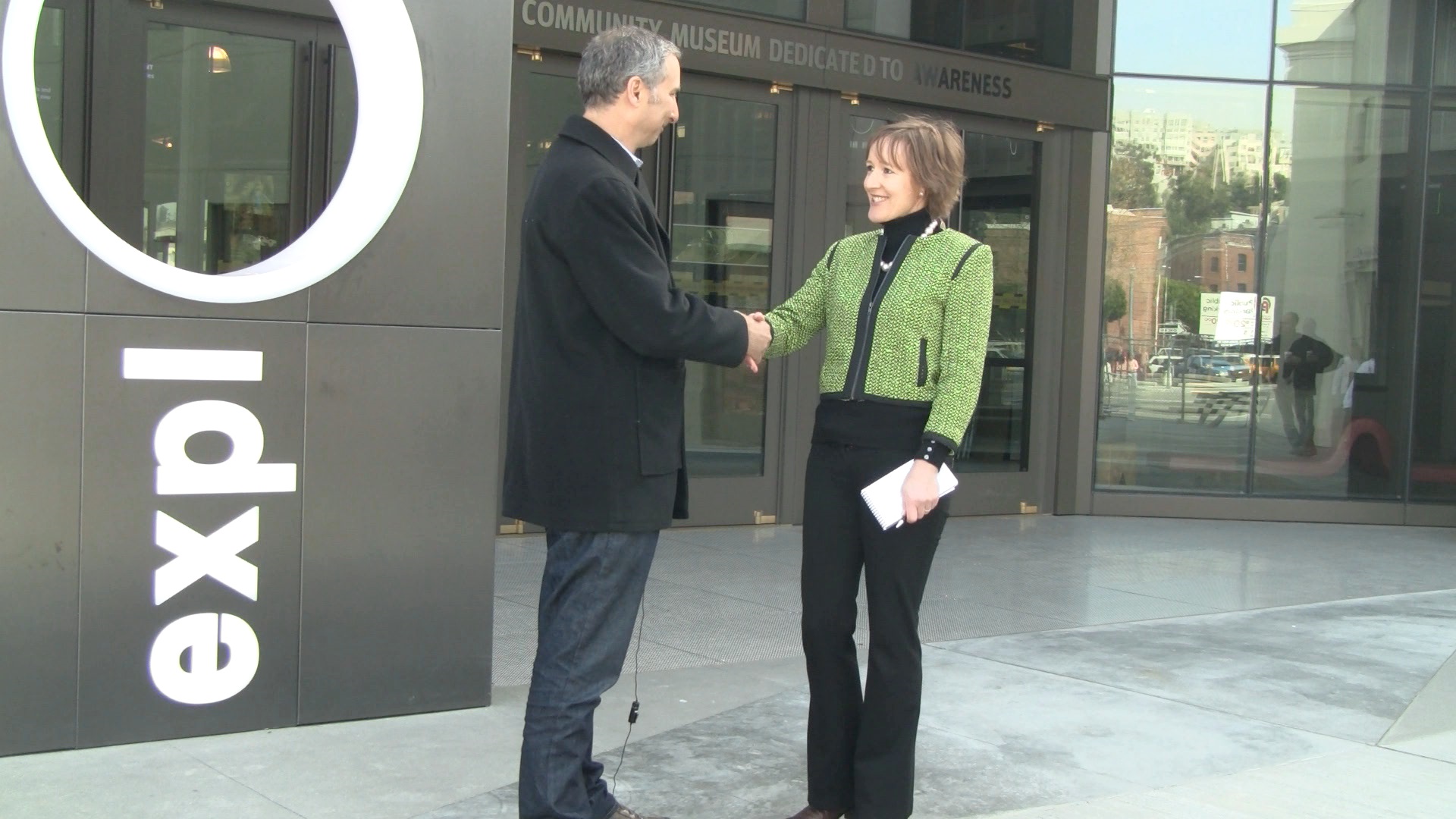
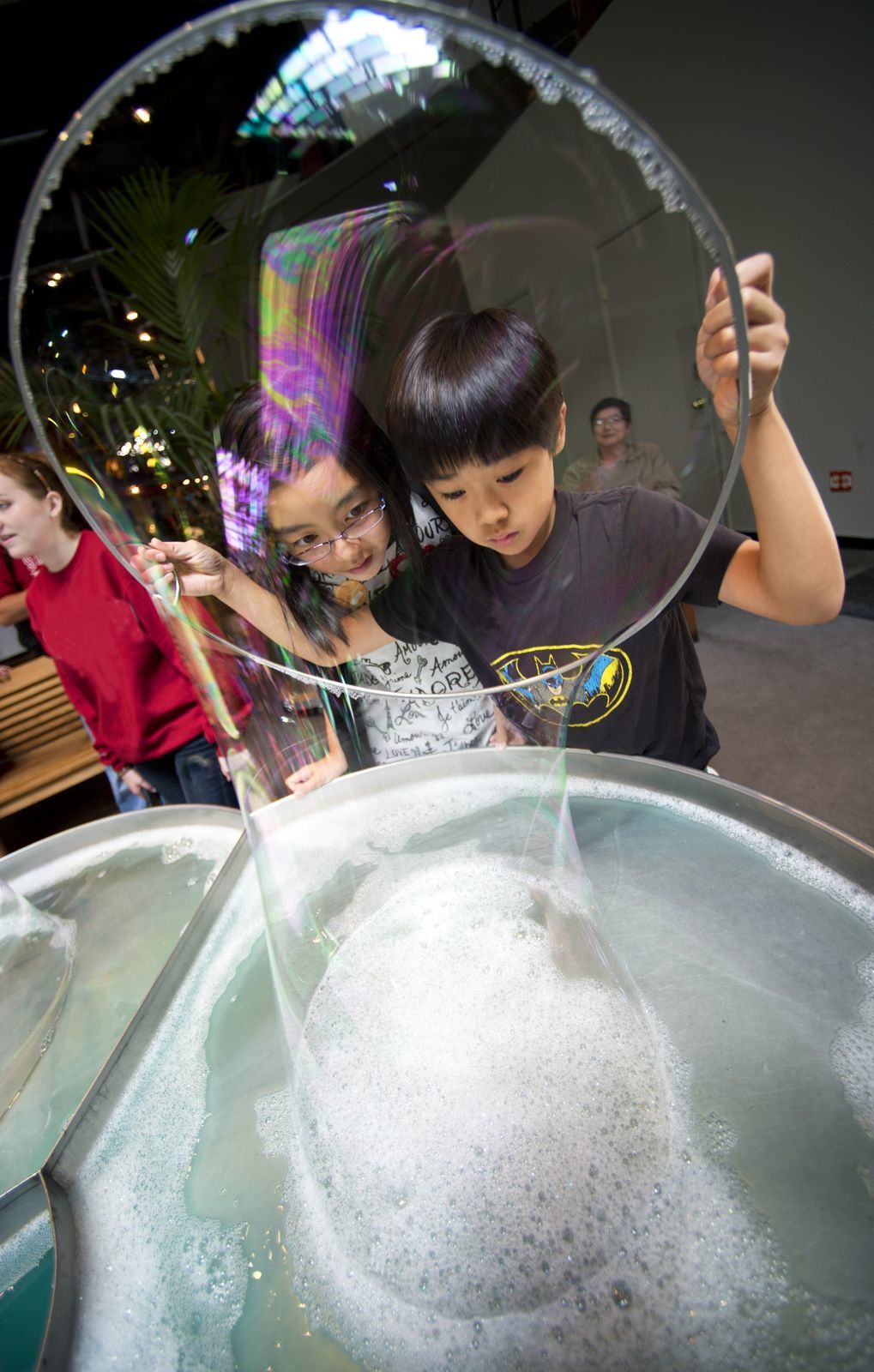
Get this: It’s not the 330 year-old Douglas fir tree, sliced open to reveal stunning time markers, or the 20 foot tall “Tinkerers’ Clock,” powered by windshield wiper motors.
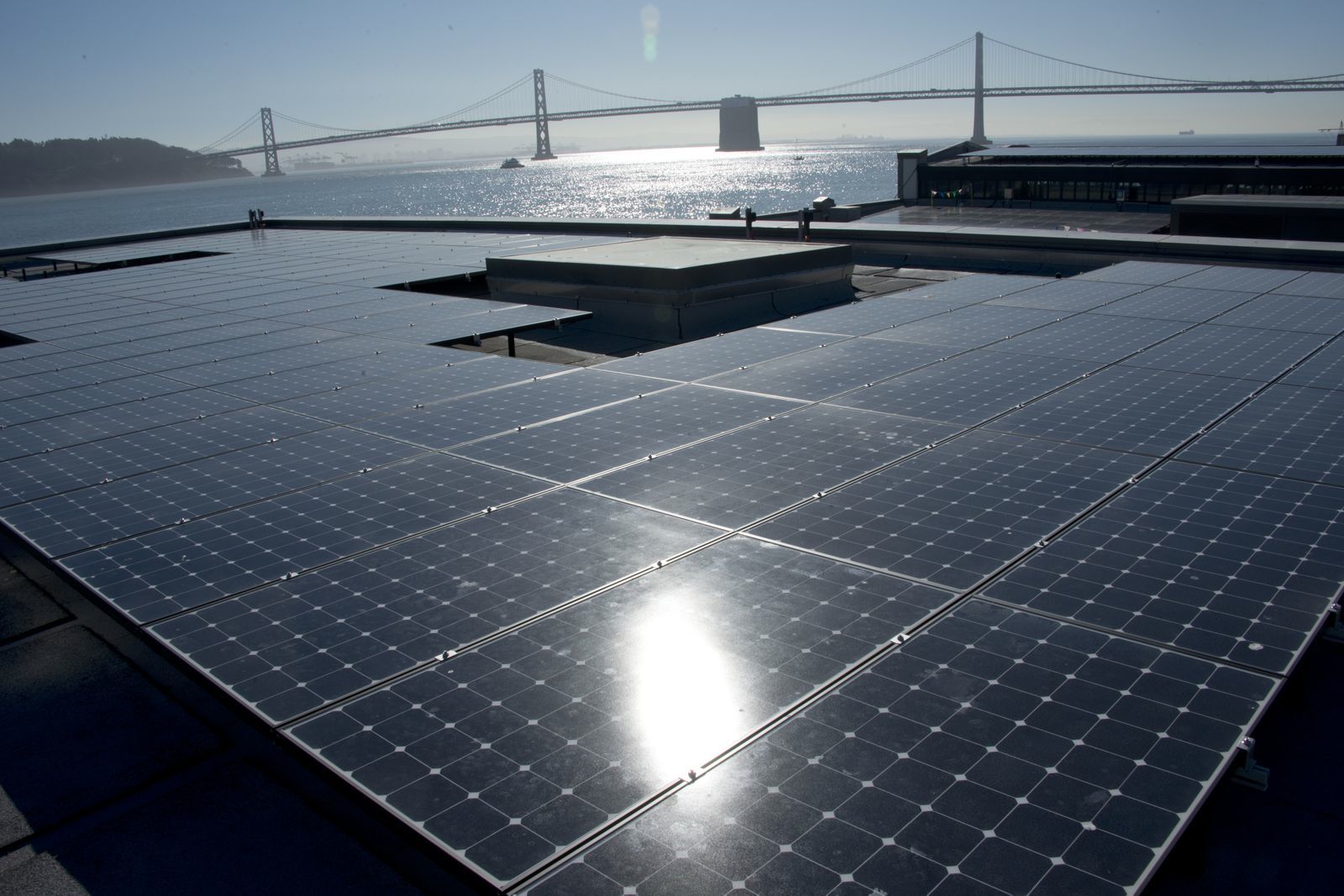
No. It’s the entire Exploratorium structure itself, an audacious experiment in green building that aims to create the world’s largest “net-zero” energy museum.
What’s “net-zero,” you ask? Simple, it’s a building that creates as much energy as it consumes.
.
How it works
Peter Rumsey, CTO at Integral Group led the design of the building’s net-zero components and explains to Fresh Dialogues how it all works in this video.
A complex system that brings in 74,000 gallons of water per hour from San Francisco Bay to heat and cool the building via miles of floor-embedded pipes;
A rain-water catchment used for flushing toilets.
Rumsey may be an enthusiastic advocate for green building, but what gets him most excited is the idea that the San Francisco Exploratorium will inspire kids to think net-zero is the way of the future.
“They’re going to say, ‘Wow, that’s one of the things we can do to solve this whole big climate change problem,” says Rumsey. “We can design and build buildings that make their own energy and don’t create a carbon problem.’ As kids grow up and become leaders in society, they’ll be the ones saying, ‘we should just do that zero energy thing. I saw it when I was a kid…it was no big deal.'”
Despite much talk about the state of the art green building features, Rumsey says, “There’s nothing cutting edge about the building…we’ve taken things that are ‘off the shelf’ and applied them in creative and innovative ways. We call it ‘state of the shelf’.”
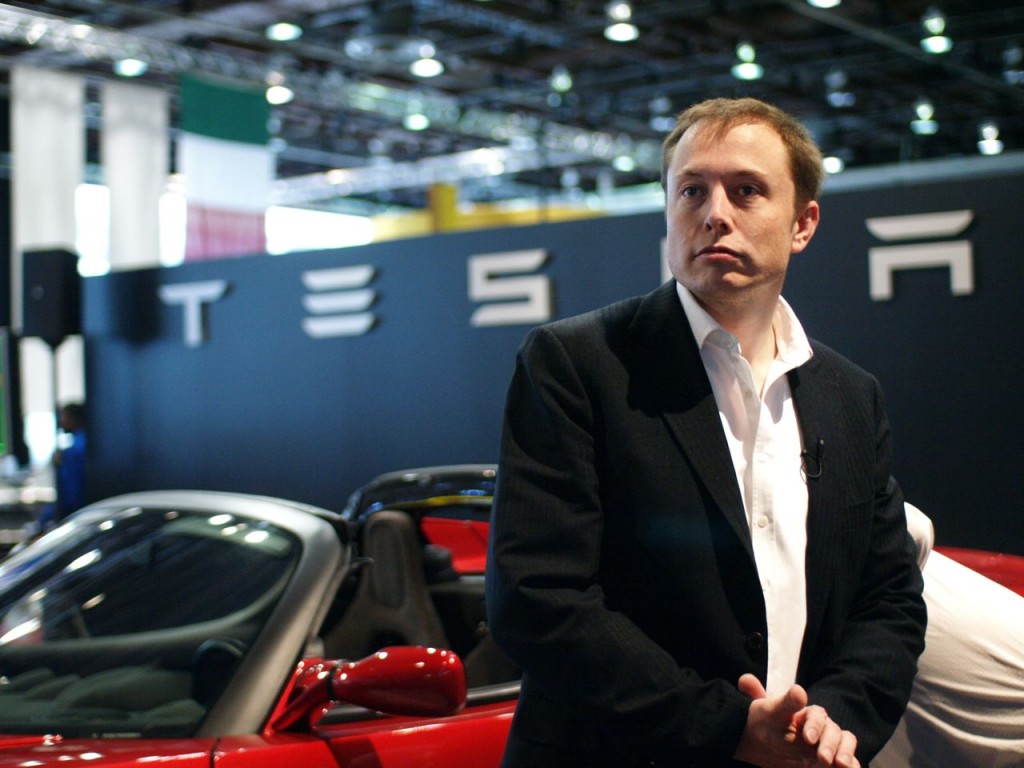
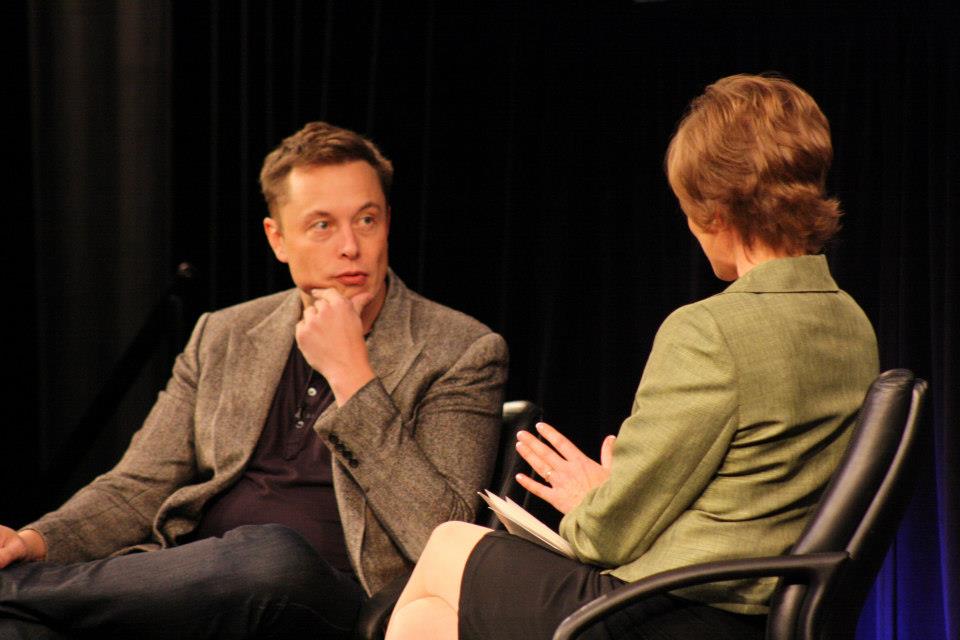
Last month, I interviewed Tesla Motors and SpaceX CEO, Elon Musk at the Computer History Museum in Silicon Valley and asked him what he’s learned from Steve Jobs and whether, in his view, innovation is plateauing. We also discussed how he felt about critics like his hero Neil Armstrong who spoke out against SpaceX and the commercialization of space. His answers may surprise you.
Here’s a transcript of our conversation that starts @51:19. (Page down for more transcripts)
Alison van Diggelen: I’d like to move on to innovation and motivation.There’s been a lot of talk lately about that fact that innovation is leveling off, we’re not making dramatic increases or improvements in innovation, like we did when the plane was invented…do you agree with that?
Elon Musk: No I don’t agree with that. We’ve seen huge improvements in the Internet, and new things…In recent years: Twitter, Facebook being pretty huge…when people thought the Internet was done. Some of the things we’re doing like electric cars are a new thing. And I do think there are some pretty significant breakthroughs in genomics. We’re getting and better and better at decoding genomes and being able to write genetics. That’s going to be a huge, huge area. There’s likely to be breakthroughs in Artificial Intelligence…and I suspect we will even see the flying car…
Alison van Diggelen: Is that going to be an Elon Musk production?
Elon Musk: No.
Alison van Diggelen: Are you going to let someone else do that?
Elon Musk: Yeah, Well, I think…someone else is doing that.
.
@1.00.30 On Steve Jobs
Alison van Diggelen: I’d now…let’s move on to focus on Silicon Valley. Steve Jobs was and is a wonderful Silicon Valley icon. Is he someone you’ve admired and what have you learned from Steve’s life and work?
Elon Musk: Well he’s certainly someone I’ve admired. Although I did try to talk to him once at a party and he was super rude to me… But I don’t think it was me, I think it was par for the course.
Alison van Diggelen: I don’t think you were the first.
Elon Musk: No not the first. No. I was actually there with… an old friend… Larry Page. I’ve known Larry since before he got venture funding for Google. He was the one who introduced me to Steve Jobs. It’s not like I was tugging on his coat (saying), ‘please talk to me.’ But obviously he was an incredible guy and made fantastic products. The guy had a certain magic about him that was really inspiring. I think that’s really great.
Alison van Diggelen: Is it that magic that you try to emulate?
Elon Musk: No, I think Steve Jobs was way cooler than I am.
@1.02.00
Alison van Diggelen: So I’d like to get inside your head a little bit. When you come up with an idea, do you doodle it on a pad of paper, or do you get your iPad out and take notes? I mean, when you come up with something new, a new rocket design or whatever it is, how does that manifest itself? Could we see you being creative?
Elon Musk: It’s somewhat clichéd but it happens a lot in the shower. I don’t know what it is about showers. (audience whistles). I know, exactly. Get the camera. (laughter) Like, yeah. I just kind of stand there in the shower and ..
Alison van Diggelen: So you have long showers…create lots of ideas…
Elon Musk: I do actually (laughter). Long showers. It sounds wrong…
Alison van Diggelen: So there’s no iPad in the shower?
Elon Musk: …Not to mention the Burning Man epiphanies. Those are huge. And then there are some times late at night when I’ve been thinking about something and I can’t sleep then I’ll be up for several hours pacing around the house, thinking about things. Occasionally I might sketch something or send myself an email…(see FD)
Alison van Diggelen: So we have a question from the audience. Who inspires you or do you have a mentor?
Elon Musk: I don’t have a mentor, though I do try to get feedback from as many people as possible. I have friends and I ask them what I think of this that and the other thing. Larry Page is a good friend of mine…I value his advice a lot, and I have many other good friends, so I think it’s good to solicit feedback, particularly negative feedback actually. Obviously people don’t love the idea of giving you negative feedback, unless it’s on blogs…they do that.
Alison van Diggelen: How do you deal with negative feedback, because you get some tough criticism, especially with SpaceX, you had incumbents like Neil Armstrong even, speaking out and saying this is wrong, you know. We don’t want commercial companies in space, it’s not a place for commerce. So how did you deal with that and how with naysayers in general, because you’ve had a lot.
Elon Musk: Yeah, that was kind of troubling, cos growing up Neil Armstrong was kind of a hero. So it kind of sucks to…
Alison van Diggelen: Knife in the back…?
Elon Musk: Yeah, that’s a bit of a blow. I think he was somewhat manipulated by other interests. I don’t know if he knew quite what he was saying in those congressional hearings.
Continues…
***
Want to continue reading the transcript? Here’s the final part of the interview:
As the nation anticipates a “climate friendly” State of the Union speech from President Obama Tuesday, let’s take a look at what one of Silicon Valley’s most successful innovators and job creators has to say about the government’s role in climate change and innovation.
Last month, I interviewed Tesla Motors and SpaceX CEO, Elon Musk at the Computer History Museum in Silicon Valley and asked him what specifically President Obama can do to stimulate the economy. He acknowledges that presidents can only do so much, saying,”You’re actually like the captain of a very huge ship and have a small rudder.”
Musk argues that too much government regulation can stand in the way of innovation, especially in the auto industry; and is generally in favor of minimal government intervention in the economy. On climate change, however, he was forceful and described our oil based, carbon intensive economy as creating a “crazy chemical experiment on the atmosphere” with likely catastrophic consequences. He concludes that taxing carbon is vital.
.
Here is the transcript of our conversation:
Alison van Diggelen: Do you feel the government is standing in the way of innovation at all?
Elon Musk: Well sometimes…I don’t think the government tends to stand in the way of innovation but it can over-regulate industries to the point where innovation becomes very difficult. The auto industry used to be a great hotbed of innovation at the beginning of the 20th Century. But now there are so many regulations that are intended to protect consumers…I mean the body of regulation for cars could fill this room. It’s just crazy how much regulation there is. Down to what the headlamps are supposed to be like. They even specify some of the elements of the user interface on the dashboard…some of these are completely anachronistic because they’re related back to the days when you had a little light that would illuminate an image. So we had to reserve space on the instrument panel of the Model S for where all of the indicators…that a car would have…you know you’ve got these little lights…
Alison van Diggelen: Check engine or whatever…
Elon Musk: Yeah…all these little things. There is a whole bunch of them. ‘We can’t have anything else in that space. ‘ But how about we have one space and render a different graphic? ‘Oh no, because people are expecting to see them in this space.’ Nobody is expecting to see them in that space.
Alison van Diggelen: So you can’t argue with these regulations?
Elon Musk: Well you can argue with them, but not with much success. (laughter). You can actually get these things changed, but it takes ages. Like one of the things we’re trying to get is: why should you have side mirrors if you could have say, tiny video cameras and have them display the image inside the car? But there are all these regulations saying you have to have side mirrors. I went and met with the Secretary of Transport and like, can you change this regulation…? Still nothing has happened and that was two years ago.
Alison van Diggelen: So you’re banging your head against the wall…
Elon Musk: We need to get these regulations changed.
Alison van Diggelen: So talking of government, President Obama is obviously trying to do what he can…if you had five minutes with President Obama, what would you advise him for one: stimulating the economy and entrepreneurship and (two) creating jobs. Is there one thing if he could successfully get through that would be a big stimulus?
Elon Musk: I think actually…the reality of being president is that you’re actually like the captain of a very huge ship and have a small rudder (laughter). If there was a button that a president could push that said ‘economic prosperity,’ they’d be hitting that button real fast…
Alison van Diggelen: Full steam ahead.
Elon Musk: You can imagine…the speed of light, how fast they’d be pressing that button. That’s called the re-election button. I’m not sure how much the president can really do. I’m generally a fan of minimal government interference in the economy. The government should be the referee but not the player. And there shouldn’t be too many referees. But there is an exception, which is when there’s an un-priced externality, such as the CO2 capacity of the oceans and atmosphere. So, when you have an un-priced externality, then the normal market mechanisms don’t work and then it’s the government’s role to intervene in a way that’s sensible. The best way to intervene is to assign a proper price to the common good that is being consumed.
Alison van Diggelen: So you’re saying there should be a tax on gas?
Elon Musk: There should be a tax on carbon. If the bad thing is carbon accumulation in the atmosphere, then there needs to be a tax on that. And then you can get rid of all subsidies and all, everything else. It seems logical that there should be a tax on things that are most likely to be bad. That’s why we tax cigarettes and alcohol. These are probably bad for you, certainly cigarettes are (laughter). So you want to err on the side of taxing things that are probably bad. And not tax things that are good. Given that there is a need to gather tax to pay for federal government…We should shift the tax burden to bad things and then adjust the tax on bad things according to whatever’s going to result in behavior that we think is beneficial for the future.
I think currently that what we’re doing right now, which is mining and burning trillions of tons of hydrocarbons that used to be buried very deep underground, and now we’re sticking them in the atmosphere and running this crazy chemical experiment on the atmosphere. And then we’ve got the oil and gas companies that have ungodly amounts of money. You can’t expect them to roll over and die. They don’t do that. What they much prefer to do is spend enormous amounts of money lobbying and running bogus ad campaigns to preserve their situation.
It’s a lot like tobacco companies in the old days. They used to run these ad campaigns with doctors, guys pretending they were doctors, essentially implying that smoking is good for you, and having pregnant mothers on ads, smoking.
Alison van Diggelen: Do you have a message for the climate change skeptics and the big oil people?
Elon Musk: Well, as far as climate change skeptics…I believe in the scientific method and one should have a healthy skepticism of things in general…if you pursue things from a scientific standpoint, you always look at things probabilistically and not definitively…so a lot of times if someone is a skeptic in the science community, what they’re saying is that they’re they’re not sure that it’s 100% certain that this is the case. But that’s not the point. The point is, to look at it from the other side. To say: What’s the percentage chance that this could be catastrophic for some meaningful percentage of earth’s population? Is it greater than 1%? Is it even 1%? If it is even 1%, why are we running this experiment?
Alison van Diggelen: You’ve called it Russian roulette. We’re playing Russian roulette with the atmosphere…
Elon Musk: We’re playing Russian roulette and as each year goes by we’re loading more rounds in the chamber. It’s not wise. And what makes it super insane is that we’re going to run out of oil anyway. It’s not like there’s some infinite oil supply. We are going to run out of it. We know we have to get to a sustainable means of transportation, no matter what. So why even run the experiment? It’s the world’s dumbest experiment (applause).
Read more Transcript Excerpts from our 2013 interview:



 Alison van Diggelen: So talking of government, President Obama is obviously trying to do what he can…if you had five minutes with President Obama, what would you advise him for one: stimulating the economy and entrepreneurship and (two) creating jobs. Is there one thing if he could successfully get through that would be a big stimulus?

