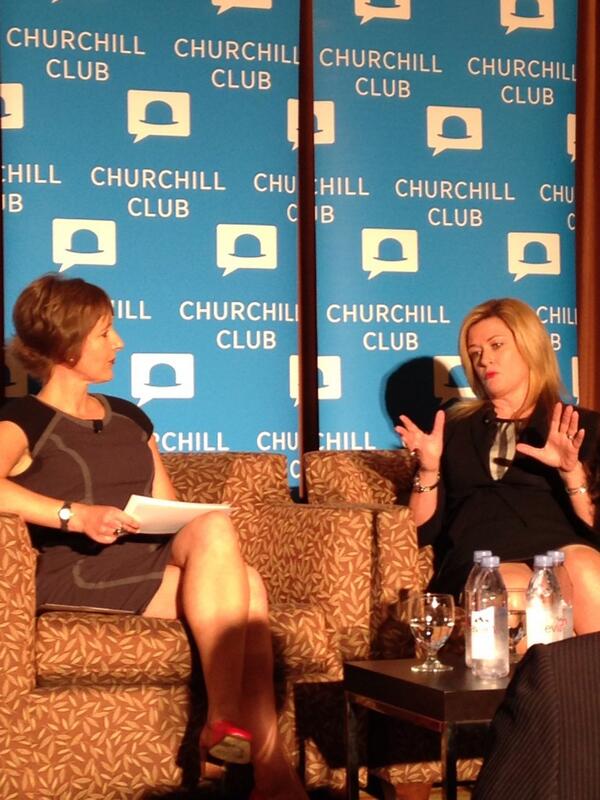
Will GM experts share their wisdom with Tesla to make the Model S less prone to fires? That’s the question I put to GM’s Chief of Electrified Vehicles, Pam Fletcher last week at the Churchill Club in Silicon Valley.
You’ve no doubt heard that three fires have been reported in Tesla Model S in the last five weeks. As we all know, three’s a trend. Granted, they weren’t episodes of random spontaneous combustion. Instead they were ignited by one high-impact crash and two high-speed encounters with metal debris which acted like a “pole vault” to puncture the undercarriage of the car and hence the battery. Although Tesla’s Elon Musk has declared, there won’t be a recall, it’s almost certain the National Highway Traffic Safety Administration will investigate. What needs to be done to make Teslas more impervious to battery puncturing road debris?
.
As you’ll see in the video, Pam Fletcher confirms that GM has sold 58,000 Chevy Volts since its launch in 2010 and after 300 million miles on the road, not one has had a similar fate to Tesla’s Model S. She acknowledges that there were fire issues in 2011 at the crash-testing phase, but emphasises no real-world incidents similar to the Model S have occurred.
Fires, Electric Cars and Achilles Heels
First some background. In 2011, safety regulators investigated Chevy Volt crash tests resulting in one battery pack catching fire and one smoking and emitting sparks. The troubling issue was the week-long delay between the crash test and the battery pack catching fire.
During our interview, Fletcher confirms that after the investigation, GM made no change to the battery cells, but did put “some additional reinforcement on the outside of the battery.”
It also implemented a process with first responders that includes depowering of the battery after a severe crash.
Ironically, Tesla got the highest safety ranking from regulators and has a first responders guide in place, however all parties seemed oblivious to the vehicle’s Achilles’ Heel. It obviously needs more durable undercarriage protection to prevent any more fiery “pole vaulting” episodes. To date, Elon Musk has been strongly resistant to such an approach. A recall will taint not only Tesla’s award winning brand, but entail extra costs and manufacturing delays for this relatively small auto company. To make matters worse, extra reinforcement will increase the weight of the Model S, and the extra pounds will have a knock-on effect on the vehicle’s range.
But it looks like Tesla’s Elon Musk may have to get some tips from GM on adequate car underbelly protection or find his own solutions.
It’s unlikely Tesla will change the configuration of its batteries. According to Reuters, Tesla’s battery pack stretches across the base of the vehicle and is made up of small lithium-ion battery cells, like those used in laptops. By contrast, GM uses large-format battery cells in a T-shape in the center of the Chevy Volt.
Fletcher was eager to move past fiery discussions and talk about adoption rates and “getting to scale.” She described the newly unveiled Cadillac ELR (a luxury electric hybrid based on the Chevy Volt) which will be available for test drives this week at the LA Auto Show. We also discussed autonomous cars, why EV adoption rates are so high in Silicon Valley; what to expect from the next generation Chevy Volt; and what surprised her about the thousands of Volt drivers on the road today.
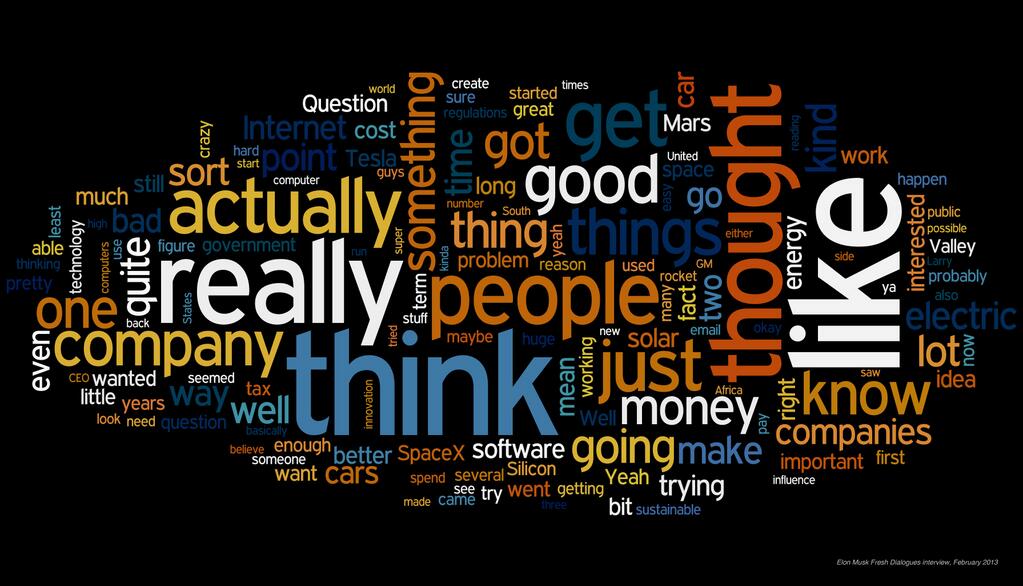
When was the last time you saw a piece of art inspired by an interview? I stumbled across a series of six word clouds inspired by the following Elon Musk interviews.
They were created by Tyra Robertson who leads Elon Enthusiast.
1. KQED’s Computer History Museum Visionaries Series
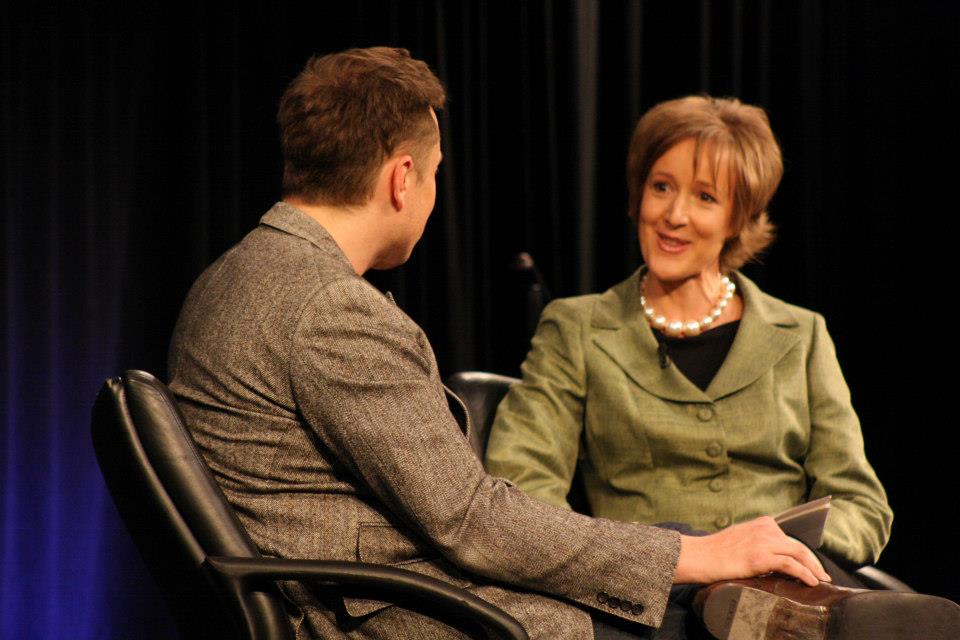
I was very honored to be included in such an illustrious collection. If you missed my interview at the Computer History Museum in January 2013, here’s the video.
.
.
And here’s some feedback from across the web:
“I am impressed with your ease and confidence and the way you were able to lead Musk with charm and fluency and keep the flow of the interview crisp and vital — in a word alive! Good work & warm congratulations.” Michael Krasny, Host KQED’s Forum
“Having seen every single video of Elon Musk, what I really apppreciated was that the interviewer prefaced her questions with content from Elon’s more practiced answers, so we saved a lot of time and just jumped into a ton of new information never mentioned in other interviews. Very good interviewer. 10/10!” Maximus Victorius on YouTube
“Loved the program. Alison conveyed a mastery of the subject, and the vocal counterpart was delicious. Perhaps the best interview I have heard.” Steve Jurvetson, Silicon Valley Venture Capitalist
“Alison really captured his charm and warmth and aspirations in a lovely way. He seemed more at ease and willing to be honest with Alison than in any interview I have seen him in. Her questions were excellent, and she was so articulate and poised on stage.” Laurie Yoler, a Tesla investor who was part of the 500-strong live audience.
“This is an example of my favorite kind of interview, the journalist asks well thought questions and then sits back and lets the subject tell the story.” Tyra Robertson, Elon Enthusiast
“I love how knowledgeable the interviewer is. It really opens up different answers from Elon that I haven’t heard a million times.” AlphacentauriAB on Reddit
Here is the transcript from the final part of my January 2013 interview with Elon Musk at the Computer History Museum. We discuss team building; time management; the Buffett school of thought; keeping companies ‘in the family;’ and why Musk wants to die on Mars, just not on impact.
More transcript excerpts are available at Fresh Dialogues. See below for selections.
Alison van Diggelen: It’s one thing to have these wonderful ideas in the shower or at Burning Man, but it’s another to build, motivate and retain a team of excellent people. Can you talk about some tips and things you’ve learned that obviously work for you?
Elon Musk: Well I mean, think about a company. A company is a group of people that are organized to create a product or service. That’s what a company is. So in order to create such a thing, you have to convince others to join you in your effort and so they have to be convinced that it’s a sensible thing, that basically there’s some reasonable chance of success and if there is success, the reward will be commensurate with the effort involved. And so I think that’s it…getting people to believe in what you’re doing – and in you – is important.
In the beginning there will be few people who believe in you or in what you’re doing but then over time, as you make progress, the evidence will build and more and more people will believe in what you’re doing. So, I think it’s a good idea when creating a company to create…to have a demonstration or if it’s a product to have a good mark up or even if it’s software to have good demoware, or to be able to sketch something so people can really envision what it’s about. Try to get to that point as soon as possible. And then iterate to make it as real as possible, as fast as possible. If that makes sense.
.
Alison van Diggelen: So you’re CEO of two companies, you’re chairman of SolarCity. Talk about time management. How on earth do you do this? Do you get any sleep?
Elon Musk: Sometimes, not enough. Sleep is really great. I find if I don’t get enough sleep then I’m quite grumpy. Obviously, I think most people are that way. And also, I try to figure out what’s the right amount of sleep, because I find I can drop below a certain threshold of sleep and although I’d be awake more hours and I could sustain it, I would get less done…my mental acuity would be affected. So I found generally, the right number for me is around six to six and a half hours on average per night.
Alison van Diggelen: And any other tips on managing to run two companies simultaneously?
Elon Musk: Having a smart phone is incredibly helpful because that means you can do email during interstitial periods, like if you’re in a car (he has a driver), you’re walking, in the bathroom, everywhere. You can do email practically when you’re awake and so that’s really helpful: to have email for SpaceX, and Tesla integrated on my phone. And then you have to apply a lot of hours to actual working.
Alison van Diggelen: And where do the boys fit in? You have five sons. Do they tag along?
Elon Musk: I do drag them along on a lot of things actually…they’re remarkably unimpressed. I wish they were more interested…the twins are eight the triplets are six. maybe they’ll get more interested later.
Alison van Diggelen: Do you see one day grooming one of them, or several of them, to take over your companies?
Elon Musk: If they’re really interested in working at Tesla or SpaceX then I’d help them do that. I’m not sure I’d necessarily try to insert them into the CEO role at some point. If the rest of the team and the board felt that they were the right person, then that would be fine but I wouldn’t want people to feel that I’d installed my kid there. I don’t think that would be good for either the company or the kid really.
I was of the school of thought that it’s best to give away 99% or more of one’s assets, the Buffett School of thought. I’m mostly inclined in that direction, but after seeing what happened with Ford, GM and Chrysler, where GM and Chrysler went bankrupt but Ford did not, and Ford seemed to make better long term choices…in part because of the influence of the Ford family. I thought, well OK, there may be some merit in having some longer term family ownership. At least a portion of it. It acts as a positive influence…in the longterm interest of the company…so the company does proper longterm things. Look at what happened also in Silicon Valley with Hewlett Packard. I think it’s quite sad. That to some degree is because there was much diminished influence by the Hewlett and Packard families. I think they should have prevailed…when they were opposed to the merger that took place at one point. I think they were right, actually.
Alison van Diggelen: And looking to the future for SpaceX…is there an IPO planned for this year?
Elon Musk: No, there’s no IPO planned. I must say, running a public company does have its drawbacks.
Alison van Diggelen: So you’re not in a hurry?
Elon Musk. No. In the case of Tesla and Solarcity…we had to raise capital and we had a kind of complex equity structure that had to be resolved by going public. So I thought we kind of needed to do that in those two cases. We don’t have to do that at SpaceX. I think there’s a good chance we will at some point in the future, but SpaceX’s objectives are super longterm and the market is not. So I’m a bit worried that if we did go public, certainly if we went public too soon, that the market pressure would force us to do short term things and abandon longterm projects…
Alison van Diggelen: Like going to Mars?
Elon Musk: Right! Going to Mars is very longterm.
Alison van Diggelen: You do have other projects on the back burner. You’ve talked about the Hyperloop: a way of people getting from downtown LA to downtown San Francisco in under half an hour. An electric supersonic airplane. Which of those two are bubbling up that we might hear more about in the near future?
Elon Musk: I did promise that I’d do some paper on the Hyperloop idea and things got a little hectic toward the end of last year because I’d committed to make these milestones at Tesla, to the public markets, and I had to stay true to that obligation, which required an insane level of work and attention. And then we also had the SolarCity IPO and it was a very difficult IPO to get done. That IPO occurred just by the skin of its teeth. It was such a tough one…
Alison van Diggelen: Were you just determined that it had to be in December?
Elon Musk: Well,if it wasn’t in December, it would mean pushing it out quite a bit and the problem is, we’d already pushed it out quite a bit. So if we didn’t go public, we’d have to do a private round and then…the whole thing wouldn’t feel right. It’s like you’re sitting at the altar, and you don’t do the wedding. It’s a bit awkward. So we really needed to do it and I think if we hadn’t done it, people would have looked at it as a failure. It wouldn’t have been good. There have just been too many failures…in the solar…not enough success, let’s say, in the solar arena. We need to chalk up success…
Alison van Diggelen: It was a rare piece of sunshine for the solar industry last year…
Elon Musk: Right. Exactly. Ironically…the solar industry doesn’t have a lot of that.
Alison van Diggelen: So it’s time, unfortunately, for the last question. You’ve come a long way since being that six year old little boy, breaking the rules. You turn 42 this year. What is on the cards…where do you see yourself in 10 years time, 20 years time…40 years time?
You famously said you want to die on Mars, just not on impact (laughter).
Elon Musk: Right. Exactly.
Alison van Diggelen: Tell us about that dream…
Elon Musk: Actually, I was asked by a journalist, ‘Do you want to die on Mars?’ and I said, ‘yes, but wait…not on impact. Just to be clear.’
That’s one of the possibilities… So I guess I’d like to be able to go to Mars while I’m still able to manage the journey reasonably well. I don’t want to be like 75 and go to Mars…
Alison van Diggelen: You don’t want to take your zimmer frame with you?
Elon Musk: Ha. Right, you know, at least in the beginning, it could be mildly arduous…I’d like to get there ideally in my 50’s. That would be kind of cool.
Alison van Diggelen: So you see that happening, in the next…?
Elon Musk: I aspire to make that happen, and I can see the potential for that happening. I’m not saying it will happen, but I think it can happen…I’ll try to make it happen.
Alison van Diggelen: Great. Ladies and gentlemen: Elon Musk.
(Applause)
Highland Cathedral music courtesy of Carol Stiglic, VP Programming, Computer History Museum
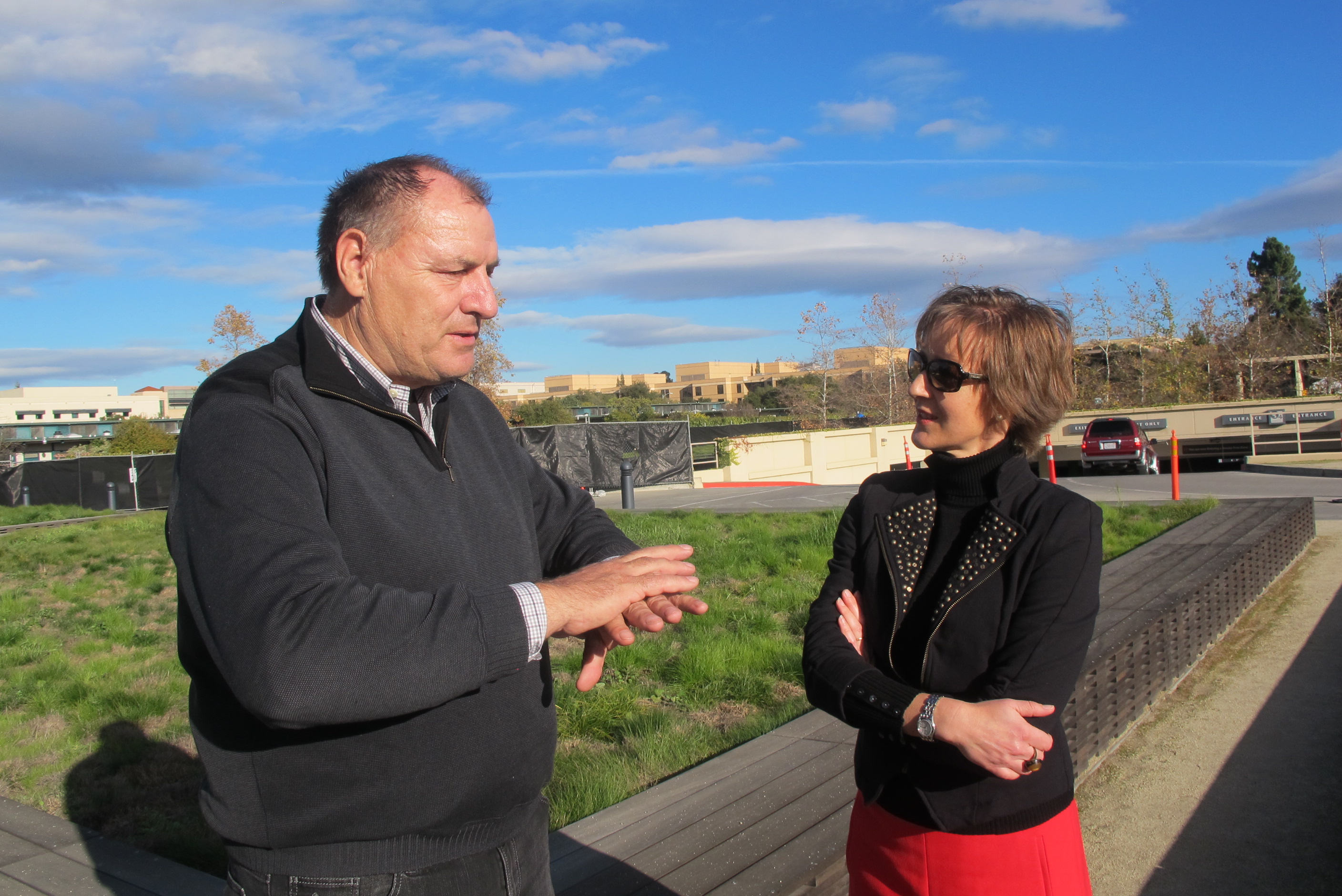
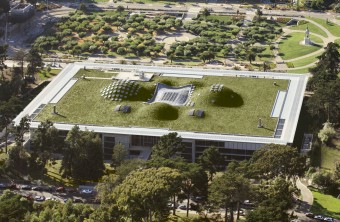
It’s well known that green roofs are good for the environment, but did you know they can have major impact on your productivity and energy costs? Paul Kephart has been building green (or living) roofs for over twenty years, from Post Ranch Inn in Big Sur to the California Academy of Sciences in San Francisco. We met at one of his Silicon Valley projects, the Stanford Medical Center, and he explained how green roofs not only save in heating/cooling costs, but can increase worker productivity and even speed up patient recovery rates. He predicts that green roofs will go mainstream in the near future, especially in California where companies like Facebook are embracing the concept. Check out Facebook’s new Frank Gehry campus design featuring a rooftop park. Here are some of the highlights of our conversation:
What is a green (or living) roof?
“A layer of soil and plant material that typically covers the top of a structure…We find these on residential, civic and commercial buildings throughout North America.”
“They cool the city by decreasing the ambient temperature around the building by as much as 60 degrees in the summer months; they also help us save on our energy costs by thermally regulating the building envelope and increasing energy efficiency and reducing the cool load by up to 20 degrees in the conditioned space…they provide habitat for migratory birds and insects: butterflies, humming birds…”
“We know in a hospital setting..when patients have access to green, they heal 35% faster. That’s one of the reasons why Lucille Packard Hospital incorporated this greening as part of the structure.”
How do they help during a storm like Hurricane Sandy?
“One of their main benefits is storm water management. It’s like a big sponge. When it rains, all that water is absorbed in that column of soil and it mitigates for these flash flood events…They become more resilient to these catastrophic events or more resilient long term to changes in climate or spikes in energy demand.”
What’s driving the use of green roofs in the private sector for companies like Facebook?
“What we’re trying to do is protect the structure, the building envelope, regulate its thermal performance which means a great life cycle analysis for those that are interested in that bottom line. That’s one of the key components, one of the primary drivers of this greening movement in North America and beyond It’s why this industry has grown 80% over the last five years. We’re seeing a return on investment. This landscape is a non-mowed California grassland..it takes very little input and water to provide a beautiful green space, fresh air, habitat. ”
“When people have access to a park or greenery or look out of their corporate offices on this kind of setting, that they’re more productive and have less absenteeism. That’s why you see corporate America, like Facebook saying let’s build this beautiful park on top of our structure. Corporate America begins to adopt a greening and sustainable standard as part of its architecture, it’s a great statement…and demonstrates that it’s possible…California is going to adopt these green measures and it’s going to take off.”
What’s in the future for green roofs?
“With political will and public education and this emphasis on financial return on energy savings, we can turn this around and green our cities.”
This Fresh Dialogues interview was recorded at Stanford Medical Center in Palo Alto, December 20, 2012. Camera work and stills courtesy of Lina Broydo.
For the first time, entrepreneur Elon Musk shared his whole life story in front of a live audience in Silicon Valley. He joined me in conversation at the Computer History Museum on January 22 and we explored: What makes a Revolutionary?
Musk takes us on a journey from the suburban streets of South Africa to the tech mecca of Silicon Valley…and beyond. He tells me about his teenage “existential crisis” and his bookish quest for the meaning of life; how the retirement of NASA’s space shuttle inspired his space transport startup SpaceX; and why he became the reluctant CEO of electric car company Tesla Motors.
.
Interview highlights and key turning points in his career:
The Rebellious Child: Musk grew up in South Africa. At age 6, he desperately wanted to attend his cousin’s birthday party, but was grounded for some long-forgotten transgression. How did he get there? (This was probably the first of his many rule-breaking adventures.)
“It was clear across town, 10 or 12 miles away, further than I realized actually, but I just started walking…I think it took me about four hours…My mother freaked out.”
The Iron Man Inspiration: He was a huge fan of comics and read Iron Man comics. Did he ever imagine he’d be the inspiration for Robert Downey Jr’s movie character, Tony Stark?
“I did not. I would have said zero percent chance…I wasn’t all that much of a loner…at least not willingly. I was very very bookish.”
The Hitchhikers Guide to the Galaxy: How did the novel fire his imagination?
“I was around 12 or 15…I had an existential crisis, and I was reading various books on trying to figure out the meaning of life and what does it all mean? …I read Hitchhikers Guide to the Galaxy and it highlighted an important point which is that a lot of times the question is harder than the answer. And if you can properly phrase the question, then the answer is the easy part. To the degree that we can better understand the universe, then we can better know what questions to ask. Then whatever the question is that most approximates: what’s the meaning of life? That’s the question we can ultimately get closer to understanding. And so I thought to the degree that we can expand the scope and scale of consciousness and knowledge, then that would be a good thing.”
Why was Silicon Valley his mecca at age 17?
“Whenever I read about cool technology, it would tend to be in the United States…I wanted to be where the cutting edge technology was and of course, Silicon Valley is where the heart of things is…it sounded like some mythical place.”
Why did his startup X.com (the precursor to PayPal) come close to dying in 2000?
“The growth in the company was pretty crazy…by the end of the first four or five weeks we had a hundred thousand customers and it wasn’t all good…we had some bugs in the software…Various financial regulatory agencies were trying to shut us down, Visa and Mastercard were trying to shut us down, eBay…the FTC…there were a lot of battles there. (But) we had a really talented group of people at PayPal…It worked out better than we expected.”
After making over $150M from PayPal, why not just buy an island and relax?
“The idea of lying on a beach as my main thing sounds horrible to me…I would go bonkers. I’d have to be on serious drugs…I’d be super duper bored…I like high intensity.”
SpaceX’s Falcon 9 launcher that carried Dragon to orbit, 2012. Fresh Dialogues interview
On the seeds of SpaceX
“I always thought that we’d make much more progress in space…and it just didn’t happen…it was really disappointing, so I was really quite bothered by it. So when we went to the moon, we were supposed to have a base on the moon, we were supposed to send people to Mars and that stuff just didn’t happen. We went backwards. I thought, well maybe it’s a question of there not being enough intention or ‘will’ to do this. This was a wrong assumption. That’s the reason for the greenhouse idea…if there could be a small philanthropic mission to Mars…a small greenhouse with seeds and dehydrated nutrients, you’d have this great shot of a little greenhouse with little green plants on a red background. I thought that would get people excited…you have to imagine the money shot. I thought this would result in a bigger budget for NASA and then we could resume the journey…”
On negotiations with the Russian military to buy two ICBMs
“They just thought I was crazy…I had three quite interesting trips to Russia to try to negotiate purchase of two Russian ICBMs…minus the nukes…I slightly got the feeling that was on the table, which was very alarming. Those were very weird meetings with the Russian military…’remarkably capitalist’ was my impression (of the Russians).”
Why he chose to create his own rocket company, SpaceX
“I came to the conclusion that my initial premise was wrong that in fact that there’s a great deal of will, there’s not such a shortage. But people don’t think there’s a way. And if people thought there was a way or something that wouldn’t break the federal budget, then people would support it. The United States is a distillation of the human spirit of exploration. People came here from other places…people need to believe that it’s possible, so I thought it’s a question of showing people that there’s a way…There wasn’t really a good reason for rockets to be so expensive. If one could make them reusable, like airplanes then the cost of rocketry (and space travel) would drop dramatically.”
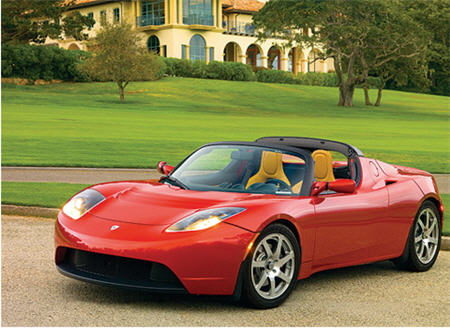
How did the vigils for the death of the EV 1 help inspire Tesla Motors?
“It’s crazy. When was the last time you heard about any company, customers holding a candlelight vigil for the demise of that product? Particularly a GM product? I mean, what bigger wake-up call do you need? Like hello, the customers are really upset about this…that kind of blew my mind.”
“I tried really hard not to be the CEO of two startups at the same time…It’s not appealing and shouldn’t be appealing if anyone thinks that’s a good idea. It’s a terrible idea.”
On the idea for SolarCity
“Solar is the obvious primary means of sustainable energy generation…in fact, the earth is almost entirely solar powered today. The only reason we’re not a frozen ice-ball at 3 degrees Kelvin is because of the sun…”
Check back soon for more from Musk on:
where his inspiration strikes (hint: not just Burning Man)
how to build, motivate and retain an excellent team


 Camera work and stills courtesy of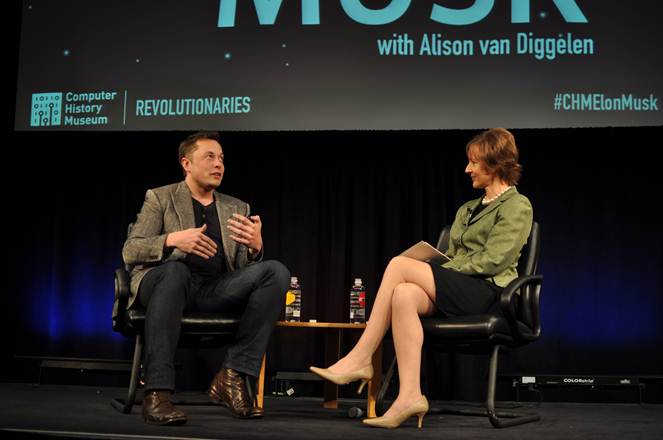
 How did the vigils for the death of the EV 1 help inspire Tesla Motors?

