Google’s infamous Don’t Be Evilmantra has inspired some remarkable projects, including the newly launched Google Ideas, but it’s Google’s Green Dream that caught my attention this week.
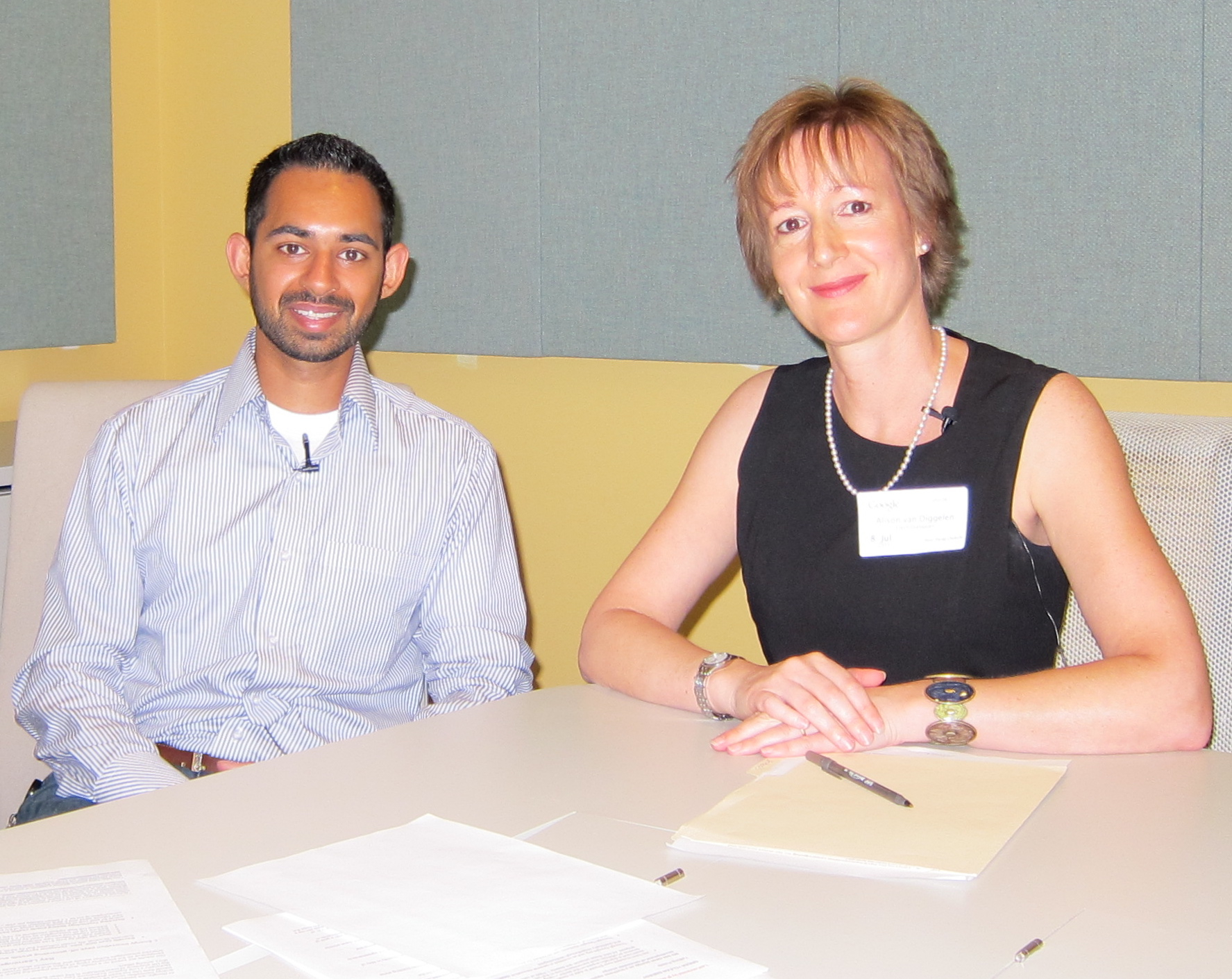
On Friday, I sat down with Parag Chokshi, Clean Energy Public Affairs Manager, at Google’s Mountain View Headquarters. We discussed Google’s recently published report, The Impact of Clean Energy Innovationwhich paints a picture of green nirvana in the US economy and energy market – if green investment and government incentives spur rapid innovation. And it’s a big IF, based on some rather optimistic assumptions, that’s why we’re calling it Google’s Green Dream.
Among the report’s predictions… By 2030, clean energy innovation will:
– boost US economic growth by $155-$244 Billion in GDP/year
– create over one million new jobs
– help electric vehicles command a 90% market share (small cars and trucks)
– save households almost $1000/year in energy bills
– reduce US oil consumption by over 1 B barrels/ year and greenhouse gases by 13-20%
The report concludes that if investment and incentives are delayed five years, the opportunity cost will be $2-3 Trillion.
Is this a realistic Green Dream by Google’s Green Czar Bill Weihl and his team? Or naive wishful thinking? Chokshi acknowledges that Google is examining some “aggressive scenarios” but underlines that the report’s purpose is to stimulate debate on how to get to this Green Dream; and to spur more investment by both the public and private sector. In this Fresh Dialogues VIDEO, Chokshi outlines the dramatic improvements in battery technology that are crucial to increasing the adoption of electric vehicles, but declined to confirm whether Google is investing its considerable financial and engineering muscle in the already crowded race to build a better EV battery. We can only speculate.
TRANSCRIPT of Google Interview with Parag Chokshi, Clean Energy Pubic Affairs Manager. Recorded on Friday July 8, 2011. The interview has been edited for length. Highlights here.
Alison van Diggelen: Today, we’re at the Google Headquarters in Mountain View California. I’m here with Parag Chokshi, and he is Pubic Affairs Manager of Clean Energy at Google.
(Parag) You have an audacious goal at Google: to make renewable energy less costly than coal. …
Parag Chokshi: That’s right.
Alison: How is that target going and can you talk on that target?
Parag: Sure…there are a lot of initiatives that we do in support of that goal. There’s an internal effort – an engineering effort – that focuses on solar thermal technology, so that’s another piece of getting to that goal. And of course there’s the Energy innovation study that we published just last week. We’re really trying to provide some data on the long-term impact of investment by the public and the private sector in an effort to spur more investment and to get other folks involved toward getting to that goal.
There are a lot of pieces to it: an internal engineering team, the investments we’re making and then some efforts in the policy and advocacy space.
Alison: What were some of the most exciting conclusions that the report made?
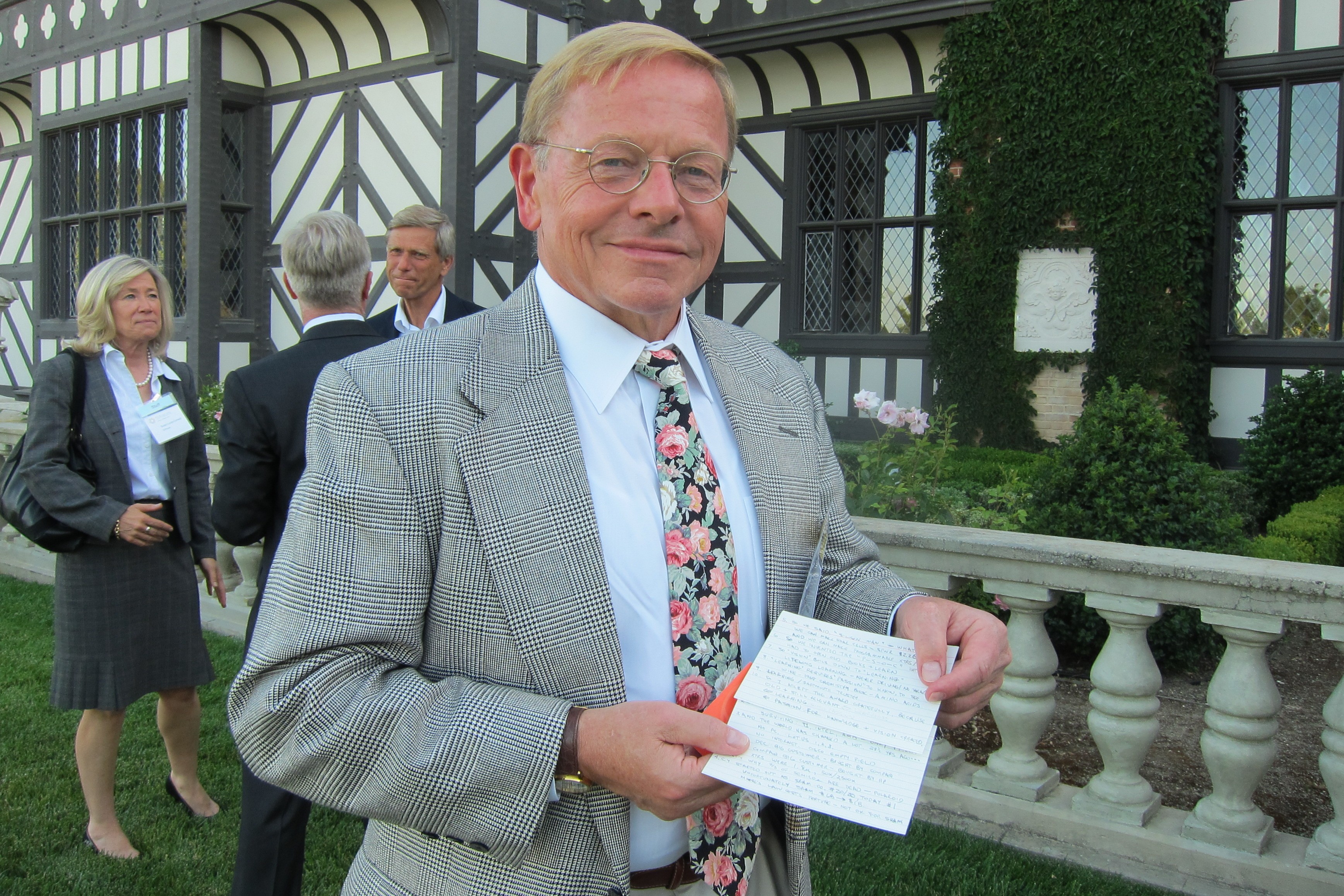
TJ Rodgers, the outspoken CEO of Cypress Semiconductor, was one of four Visionary Awards recipients at the Oscars of Silicon Valley June 21st – a gathering of Silicon Valley elite presented by SV Forum. He was introduced by Eric Benhamou of Benhamou Ventures who described Rodgers as “a tough boss, argumentative and very competitive,” and added “I’m using polite language here.”
Renowned for his libertarian views, and highly critical of government “meddling” in the economy, Rodgers, who led the acquisition of SunPower by Cypress in 2004, shared some of his business philosophy with Fresh Dialogues. And check out this VIDEO CLIP to hear why Rodgers almost named Cypress “Pear Tree” and how he maintains his passion for learning…in his hot tub, with the newspapers, a floating desk and LEDs.
TJ Rodgers on global warming
“Global warming is a secular religion…I call it the Church of Greenhouse Gases.”
TJ Rodgers on New York Times columnist and author of Hot, Flat and Crowded, Tom Friedman
“Friedman is doing a disservice to the American economy. He’s a writer. He knows nothing about cleantech and creating businesses and jobs.”
TJ Rodgers on the role of government in stimulating the green economy
“I believe in a level playing field. Scrap subsidies for oil….I’m against laws like AB 32.”
Note: In 2010, TJ Rodgers took a strong and vocal stand for California’s Proposition 23, which sought the suspension of AB 32, the law that regulates greenhouse gas emissions. He quit his position on the board of SunPower, adding, “I was at odds with the management of SunPower…they knew who I was when I saved their ass.” (referring to Cypress Semiconductor’s purchase of Sunpower in 2004 which proved to be a mutually advantageous choice for both companies)
.
.
TJ Rodgers on why you should invest in cleantech
“A ‘greater good” motivation is not a good argument. Business isn’t charity. Create products people need, efficiently and produce profit for shareholders. Profits give you the moral high ground…they make for a good economy and more jobs.”
TJ Rodgers on cleantech entrepreneurs who want to ‘save the planet’
“I’d be more skeptical about investing in cleantech entrepreneurs who are motivated by global warming…it’s like a religion. It’s not good business.”
Today, we’re presenting the third in our new Lesson Plan Seriesbased on Fresh Dialogues interviews. The series is compiled by Lisa Lubliner, our new Fresh Dialogues Education Expert.
In 2010, Fresh Dialogues produced a video featuring Mark Platshon, a venture capitalist at Vantage Point Capital Partners, one of the leading investors in battery and energy storage innovation. Mark gave a good overview of energy storage, its limits and potential; and explained what venture capitalists are looking for in new storage technologies. Let’s call the VIDEO Batteries 101.
“Throw a dart at (two elements on) the periodic table and you can make a battery out of it…a potato and a penny can make a battery…unfortunately we have a very limited periodic table…(and remember) Moore’s Law doesn’t apply to chemistry!” VC, Mark Platshon
To find out more about batteries and explore a step by step lesson plan about batteries – check out the lesson plan link below:
Why are batteries important to us?
How do batteries work?
How are lithium ion batteries superior to alkaline ones?
How can battery efficiency be improved?
How does battery innovation impact electric cars and the transport sector?
For more videos and interviews with Green Visionary and NYT columnist, Tom Friedman; Nobel Prize winning economist, Paul Krugman; Oceanographer and Titanic discoverer, Robert Ballard et al…check out Fresh Dialogues archives
Today, we are launching a new feature on Fresh Dialogues – lesson plans – to help teachers build captivating ways of educating their students about climate change and the green economy. This is possible thanks to Lisa Lubliner, our new Fresh Dialogues Education Expert. She will be matching some compelling Fresh Dialogues videos with topics such as Green Innovation, Batteries and Storage, Saving Energy at Home and School, and Fuel Cells 101. Check back soon at our Educators Page where we will list lesson plans as they are added. Got ideas for background info and resources? Share them here or on our Facebook Page.
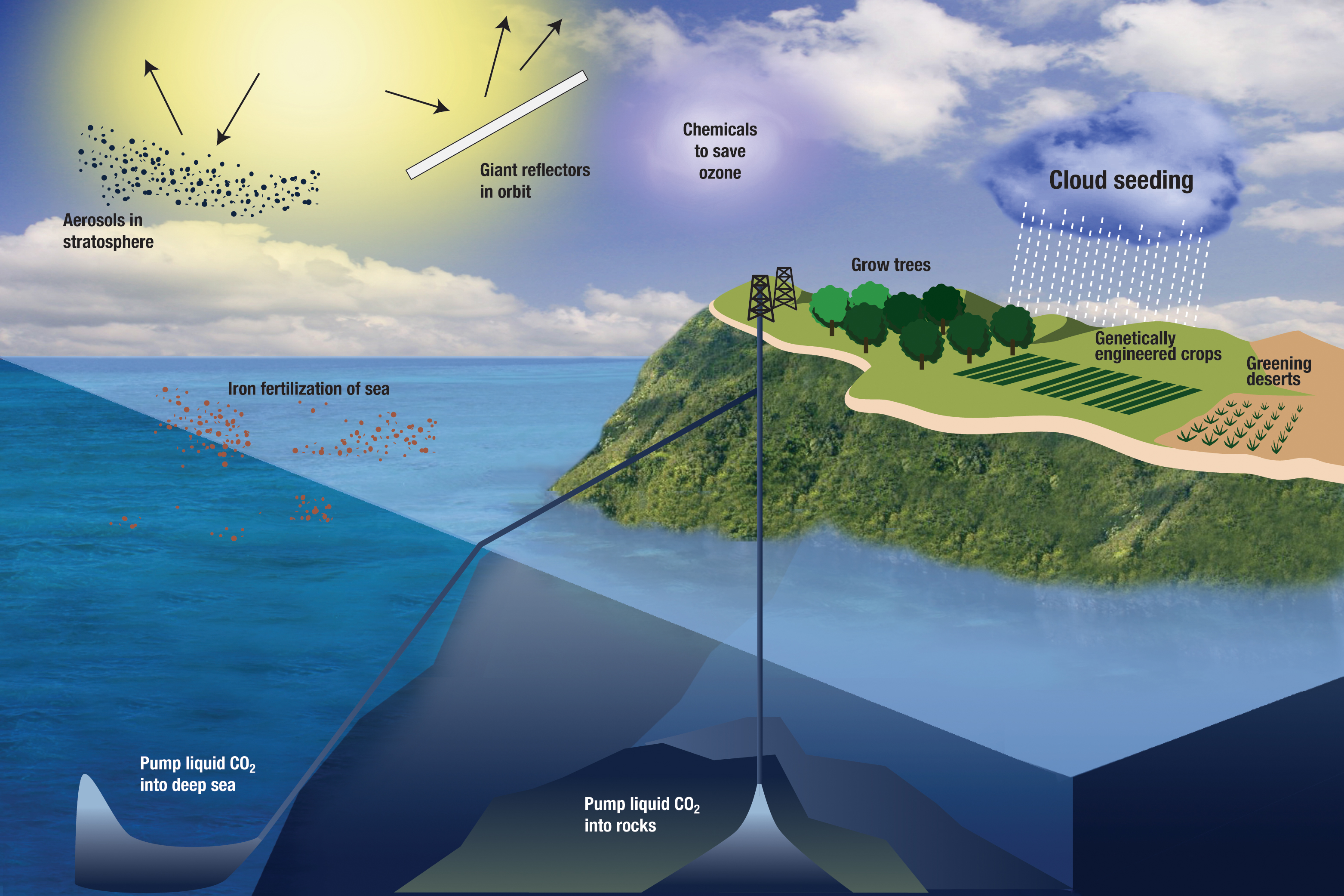
Lesson Plan: Stashing CO2 in Rocks
Carbon Capture and Sequestration
Grades 6-8
In this activity, students will learn more about carbon sequestration by creating a carbonated beverage out of apple juice and dry ice. This experiment illustrates how carbon dioxide can be stored in a substance. Students will compare and contrast the results to determine if liquid carbonation is an effective method for carbon sequestration.
Lesson background
One of the leading causes of global climate change is carbon dioxide. Carbon dioxide is a greenhouse gas that traps and stores heat from the sun that would normally escape from Earth’s atmosphere into space. Though some heating is beneficial to life on Earth, too much carbon dioxide in the atmosphere leads to dramatic changes in the Earth’s climate. One important field of research aimed at combating climate change is carbon sequestration. Carbon sequestration is the science of taking carbon dioxide out of the air and storing it away. Scientists have been experimenting with different methods of carbon sequestration through chemical, biological or physical means.
Subject Standards
Subject Matter: Physical Science/Geology National Standards:NS.5-8.1, NS.5-8.2
Source Links
Ira Flatow Science Friday Blog – Check out the excellent Science Friday video that goes with the topic.
Background information and extension activities
Have students view this short Fresh Dialogues video showing Nobel Prize winning economist, Paul Krugman explain the cap and trade system for carbon and why he thinks climate legislation could work. Here’s the interview transcript
About our Fresh Dialogues Education Expert: Lisa Lubliner is a respected and energetic educator with a varied background in teaching and administration. She has worked as a teacher (Moreland District, California – Teacher of the Year), served as a Gifted and Talented Education consultant, evaluated schools for the State of California and created a successful model for Independent Study Programs in the San Francisco Bay Area. She has an extensive background in alternative education and strives to engage students through real-world projects that emphasize critical thinking and the creation of action plans.
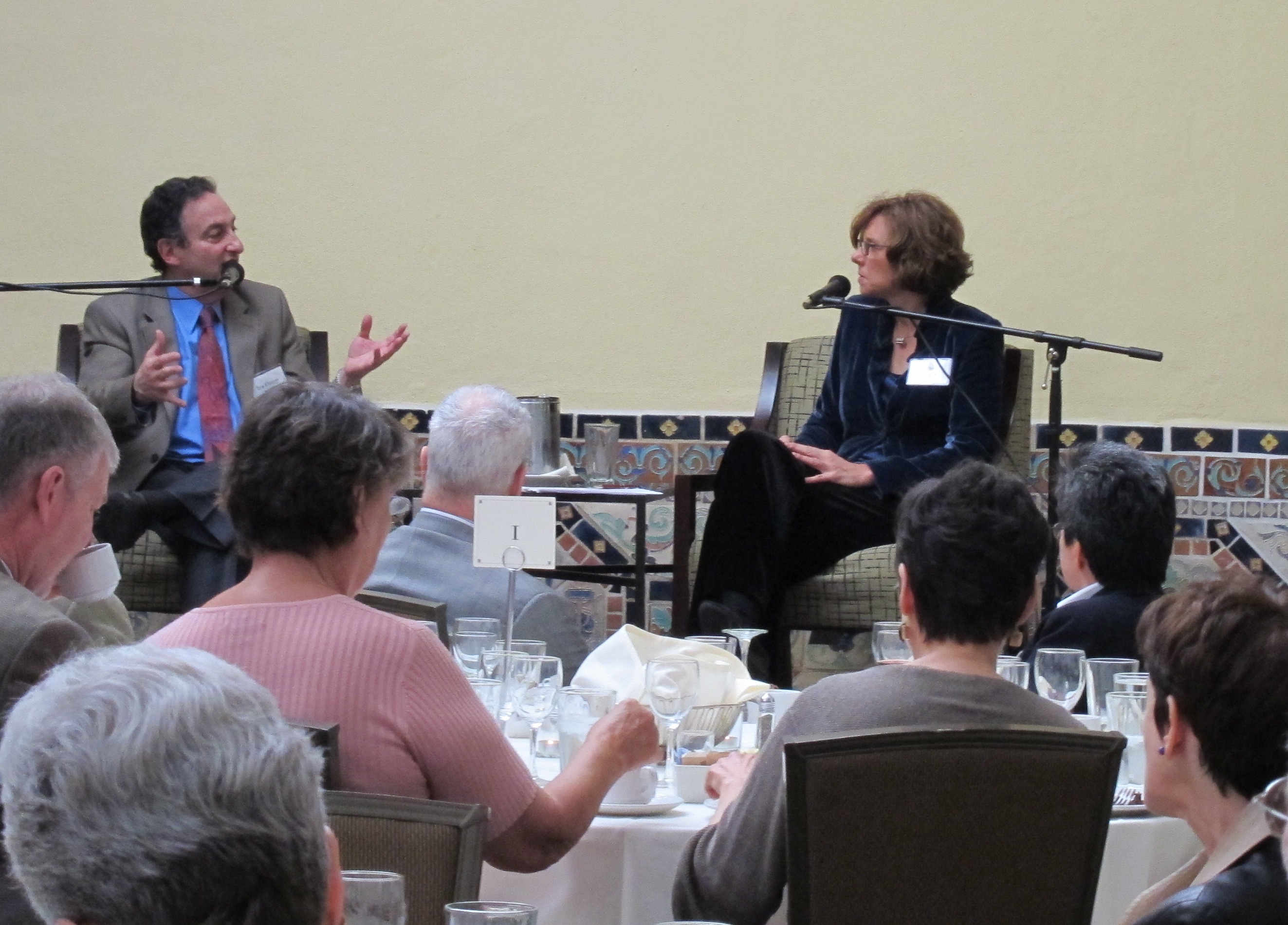
Ira Flatow, the exuberant host of NPR’s Science Friday came to Silicon Valley this week. At a reception for KQED at the St. Claire Hotel Atrium in downtown San Jose, Ira took the stage for an animated conversation with Andrea Kissack, Senior Editor of KQED’s QUEST. Here are some of the highlights:
On Japan’s nuclear disaster
“This is an opportunity to build something new – infrastructure for solar thermal (power plants) for example, or wind power…we could be the Saudi Arabia of Wind. Why do you need one solution? We should look at science – see the biodiversity lesson.”
On nuclear power
“Japan was ‘prepared’ but didn’t plan for the Perfect Storm. Nature will find a way to outsmart us.”
On Global Warming
“Over 50% of incoming Republicans don’t ‘believe’ in global warming. The great majority of scientists AGREE on global warming…we don’t talk about ‘the debate’ on Science Friday. Should you bring creationists in to debate evolution? Or have a debate that the world is not flat?”
On Clean Energy and California
“We look to California as a leader in clean energy. We have to get over cheap gas and pay the real value of gas. We expect $2 a gallon while Europe is paying $10.”
How to change the energy status quo?
“If you want change, you have to DEMAND IT. Like in the 60’s. You can’t change people’s minds if they’re entrenched. With Global Warming however, change is happening and the evidence of melting ice is visible.”
On Science Education
“All kids are natural scientists – they need good teachers and mentors to nurture it.”
I was surprised to learn that Science Friday gets only 10% of its budget from NPR. The remainder it has to raise through fundraising. If you enjoy Science Friday and want to learn more about supporting it, check out this link.
For other Fresh Dialogues interviews with an education focus, click here

 Green@Google – A day in the life of a Googler