What do Elon Musk, SolarCity and Burning Man have in common? The answer is illuminating for those seeking climate friendly solutions to our energy needs.
Elon Musk is well known in Silicon Valley as founder of luxury electric vehicle maker Tesla Motors and SpaceX, the space transport company. But what’s less known is Musk’s contribution to SolarCity, the solar installer and energy efficiency auditor. Not only did Musk inspire the creation of the San Mateo based solar company, but he’s working closely with the founders on a futuristic clean energy storage solution, coupling lithium-ion batteries with rooftop solar power.
When you discover that SolarCity cofounders, Lyndon and Peter Rive and Elon Musk are first cousins, such ambitious collaborations make more sense, but where does the inspiration come from and how does Musk have the time to keep all these projects moving forward? SolarCity’s Lyndon Rive shared some family insights in a recent Fresh Dialogues interview.
Last week, SolarCity company confirmed that it’s working on stage two of a collaboration to couple Tesla lithium-ion storage batteries with SolarCity’s residential and commercial PV solar arrays. Stage one involved $1.8 M funding from the California Public Utilities Commission to fund a research program in 2010. Stage two seeks to commercialize the program on a modest scale, with over 7o applications pending under the California Public Utility Commission’s Self-Generation Incentive Program (SGIP), which provides incentives for distributed energy generation. The strategy seeks to leverage funding from the federal investment tax credit (ITC) for clean power and subsidies from SGIP, up to 60% of the system cost.
As Chairman of SolarCity, Elon Musk is not involved in the day to day running of the solar company but CEO Lyndon Rive admits that his cousin only contributes “maybe two hours a month” to the company – by phone – and three hours a quarter for board meetings. Not many minutes to have a significant impact on a company, for your average chairman. But Musk appears to have a rare gift for strategy.
“Elon is a phenomenal genius,” says Rive. “So when he gives you the time and you lay out the plan, he can quickly identify the hole in the plan… this is the true definition of quality vs quantity. .. you can fix whatever potential pot-hole you might run into, just in a ten minute discussion with Elon.”
So you can only imagine the ambitious discussions Musk and Rive had in 2004 on a road trip to Burning Man, the weeklong cultural event held annually in Black Rock Desert, Nevada. It was en route that Rive shared his desire to do something that had a larger environmental impact (than enterprise software) and Musk “came up with the initial idea” for SolarCity.
Burning Man has been described as a seven day experiment in community, art, radical self-expression, and radical self-reliance and culminates in the burning of a wooden effigy. Perhaps it was the profusion of attendees using free standing solar panels to power their RVs; the atmosphere of radical creativity or witnessing all that carbon going into the desert air, but whatever sparked the conversation has had profound impact on the US solar market. SolarCity has the largest share of solar installations in the US and is growing so rapidly, it’s hiring four new employees a day nationally, 10 a month in the Bay Area. Rive’s ambitious goal is world domination in the energy market, no less.
Burning Man may yet become the Mecca for clean tech entrepreneurs as well as the counter culture set; a journey worth emulating for other entrepreneurs seeking clean tech solutions to the world’s energy needs. Past attendees from the business world include Amazon C.E.O. Jeff Bezos, Google co-founders Larry Page and Sergey Brin, and Google C.E.O. Eric Schmidt.
For more Fresh Dialogues interview with SolarCity click here
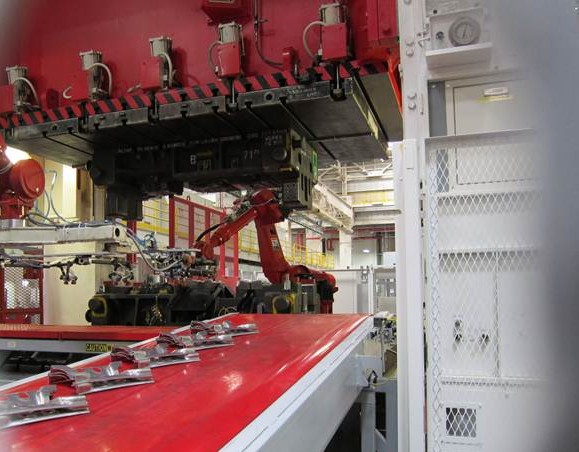
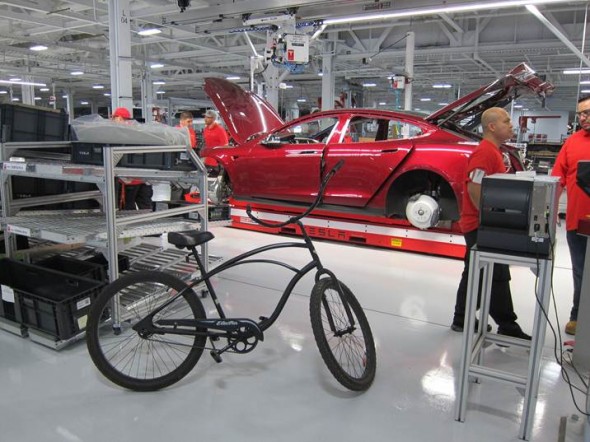
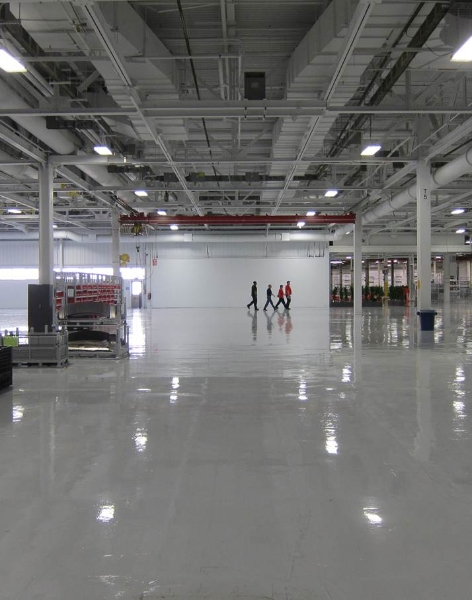
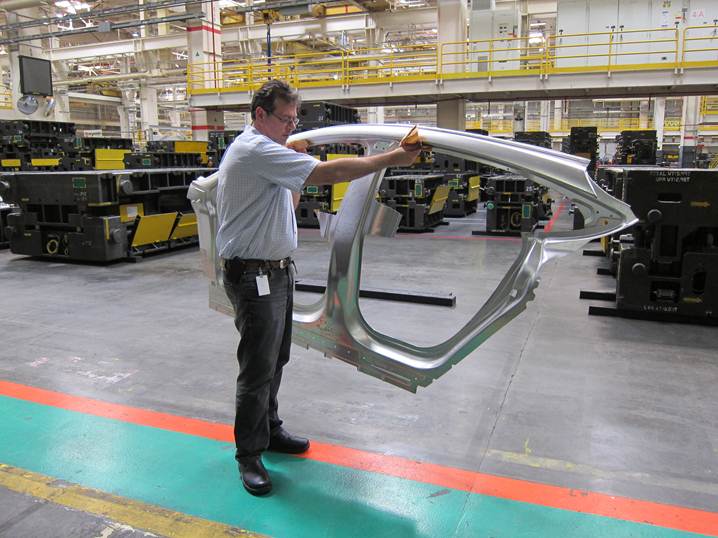
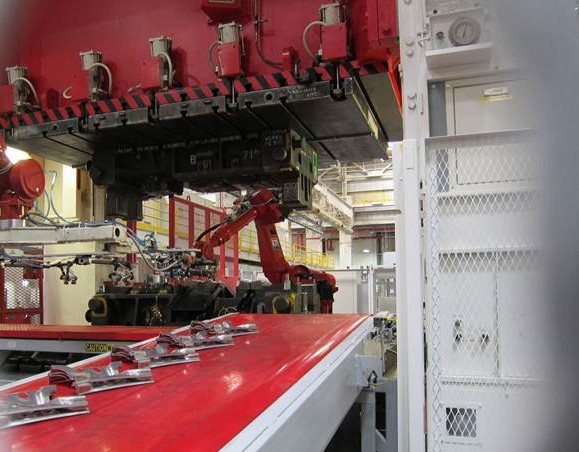
Here are some photos of our Tesla Factory tour on June 14, 2012 with VP of Manufacturing, Gilbert Passin.
Check back soon for more commentary…and my Tesla radio story on NPR’s KQED California Report. It includes some great sound from the Tesla factory and interviews with Tesla board member Steve Jurvetson, VP Manufacturing Gilbert Passin, Wired Magazine’s Damon Lavrinc and Charles Lambert, an enthusiastic Tesla factory worker who describes the door handles as “sexy.”
Fresh Dialogues is delighted to announce that it is now a regular contributor to KQED’s Climate Watch, a multimedia initiative focusing on climate science and policy issues in California. Fresh Dialogues stories will focus on the intersection of clean tech and climate change.
Here is our first story for the NPR affiliate.
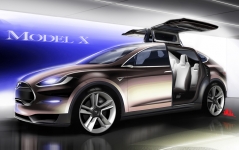
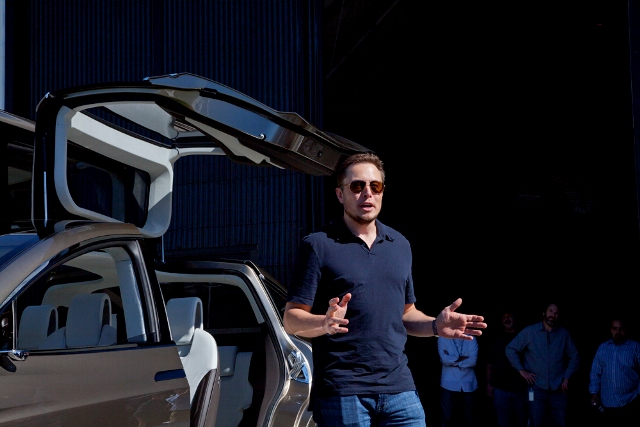
On February 8th, Tesla Motors CEO, Elon Musk, unveiled the company’s latest electric car: The Model X. Probably the sleekest and sexiest SUV you’ve ever seen, and also the priciest. But what’s most remarkable — beyond the falcon wings — is that the car will be manufactured here in the Golden State, at the former NUMMI plant in Fremont.
Why did Tesla choose to locate its headquarters and manufacturing in the high-priced San Francisco Bay Area? Was it linked to the state’s ambitious clean energy targets and policies? The new rules approved last month by the California Air Resources Board require automakers to produce 1.4 million zero-emission cars for the California market by 2025, and are part of the aggressive goal of reducing the state’s emissions 80% by 2050.
Tesla spokesperson Khobi Brooklyn eschewed policy explanations and told me, “We wanted to build our cars in California, not only creating jobs in the U.S., but also California specifically.” She cited Silicon Valley as “an incredibly rich pool of talent” and said that purchasing an existing car manufacturing facility saved money and time in preparing for car production. I’ve no doubt the California sales tax rebates on capital equipment purchasing (estimated at $20 Million) helped too.
California’s Governor Jerry Brown attended the Model X unveiling, and basked in the Tesla limelight. He was obviously delighted to be part of some good news from the Golden State for a change. “We can work our way out of our mess with creativity, openness and the kind of spirit that’s willing to take risks,” he said to the rowdy audience of Tesla groupies.
On the eve of Tesla’s IPO, Richard Lowenthal of Coulomb Technologies discusses the vital role of charging stations in creating a thriving ecosystem for electric vehicles. Lowenthal, a Silicon Valley based maker of charging stations, argues that a comprehensive network of charging stations is a vital prerequisite for the roll out of electric cars such as the Tesla, Smart Car, Chevy Volt and Nissan Leaf in the next two years.
Lowenthal explains why a visit to Tesla Motors inspired him to launch his green company after a successful career in high tech at StrataCom and Stardent Computers. For its part, Coulomb Technologies is still in the early stages of installing charging stations and faces competition from the larger, better funded Better Place which offers battery swaps as well as charging. However, Coulomb recently won a $15 Million grant from the Department of Energy and its ChargePoint America program is scheduled to install 4600 charging stations in nine strategic regions of the United States by September 2011.
Reports indicate that despite Tesla’s questionable financials – the company has failed to have a profitable quarter – investors are “giddy” about today’s IPO. It seems that for some, the “cool factor” and zero to 60 in under 4 seconds trumps all….at least in the short term.
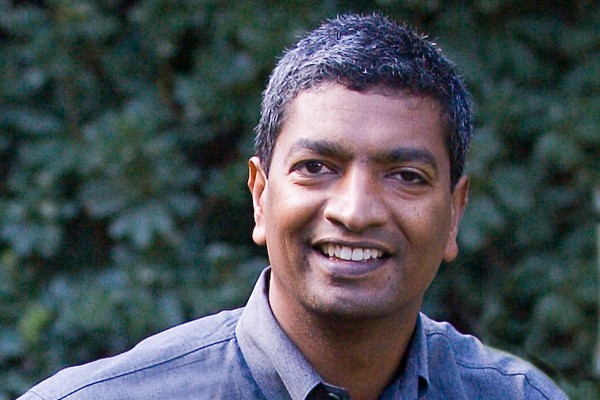
In Part Two of my Bloom Energyinterview with CEO KR Sridhar, we discuss the affordability of the Bloom Box and what barriers to entry make the fuel cell sector difficult to penetrate. As CNET’sBrooke Crothers emphasized in his recent article there are many fuel cell manufacturers with expensive products; Bloom has to prove itself special by making its fuel cells SIGNIFICANTLY more affordable. It’s a long road from $800,000 (Google and eBay’s beta Bloom Boxes’ price tag) to $3,000 -which KR says is the backyard-box goal).
The BBC’s correspondent, Maggie Shiel underlines affordability in her post on Bloom’s reach for energy Nirvana; and Grist’s Todd Woodyexpounds further on the challenges Bloom faces and Walmart’s role in driving down costs. New York Times columnist Tom Friedman has a unique take on the Bloom story in a recent column called “Dreaming the Impossible Dream.”
This from Bloom CEO, KR Sridhar:
“Our goal is clearly to make it affordable. It needs mass market adoption… If it’s not affordable, it’ll be the niche market…it’ll be a Tesla. We need it to be a Honda Civic.”
“It’s a very complex interdisciplinary field…it requires knowledge in a significant number of engineering, science, and material science disciplines. And the development of all the process know-how is fairly complex.”
Financial
“There’s a significant amount of capital that need to be invested over a long period of time to get it to where it needs to be.” (Reportedly over $400 Million has been invested in Bloom Energy since 2002, from several venture capital firms, led by Kleiner Perkins’ John Doerr.)
To see Part I of the Bloom Energy interview where KR discusses the company’s technology and efficiency click here
To check out more VIDEO interview segments at the Fresh Dialogues Channel click here