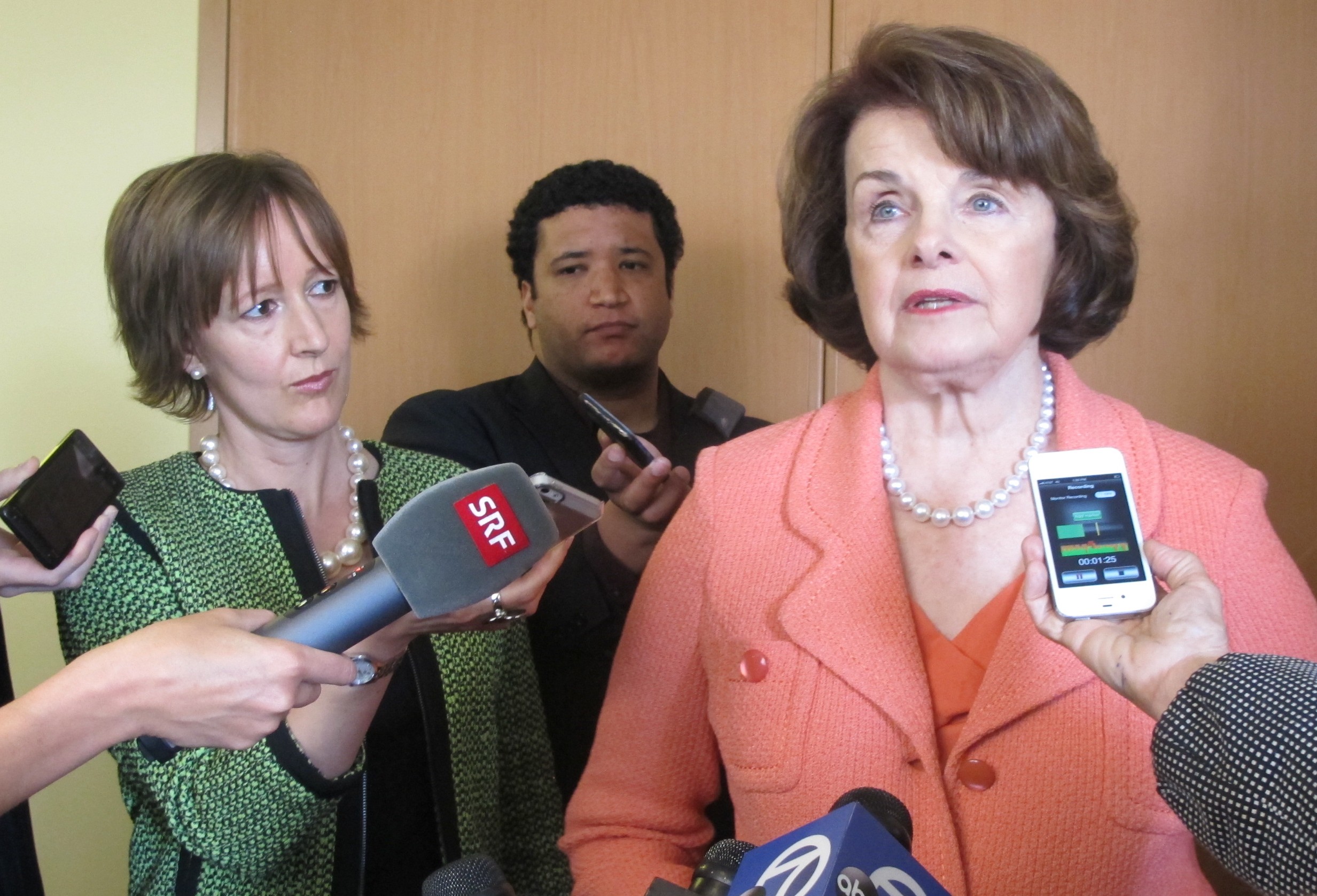
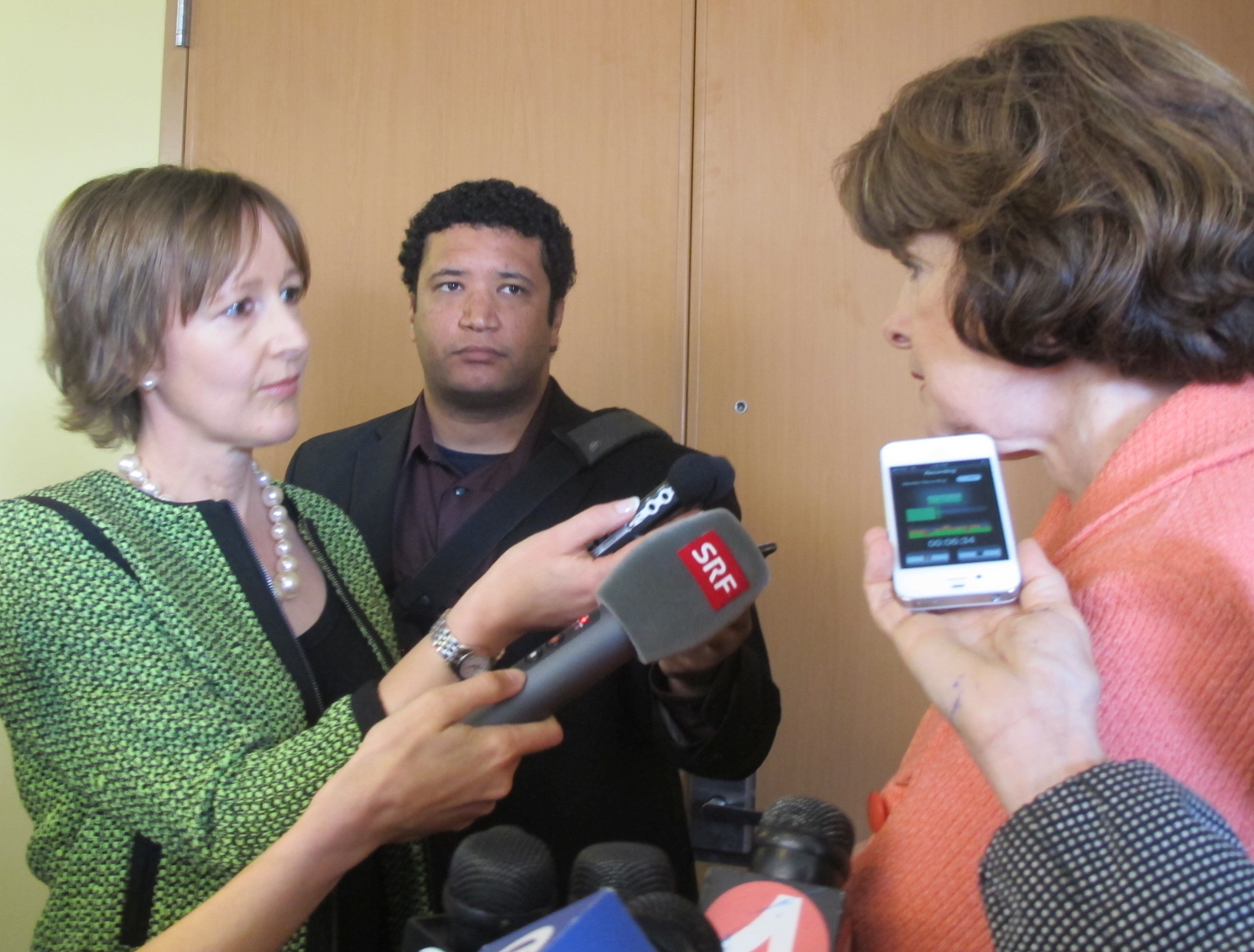
Senator Dianne Feinstein shared her plans to introduce a new “carbon fee” bill, during a press conference Wednesday in downtown San Francisco.
“I think a carbon fee is growing in popularity,” said Feinstein, after an appearance at the Commonwealth Club. Her plans follow President Obama’s SOTU call for “market based solutions to climate change,” and a growing consensus among experts in favor of using the taxation system to control carbon dioxide emissions.
She referred to her colleague, Senator Barbara Boxer’s recent bill (co-sponsored by Sen. Bernie Sanders), which proposed a “carbon fee and dividend scheme” that would tax carbon emitters, such as coalmines, at the source. Here’s the rationale:
By increasing the price of fossil fuel in the market…
It levels the playing field between carbon-based fuels and renewable fuels, such as wind and solar, making renewables more competitive and attractive to consumers and investors.
A portion of the “dividend” (the carbon “fee” proceeds) would be refunded to US residents.
Similar schemes have been implemented in British Columbia, Sweden and Ireland with some success. The aim is to encourage consumers to see the true cost of their energy choices. The fee represents some of the externalities of choosing fossil fuel, such as particulate pollution and greenhouse gases, which contribute to climate change.
Feinstein’s proposal was short on details, but she confirmed, “It’s my intention to introduce a fee of $10 a ton and we’ll see what happens to it.”
The Boxer-Sanders proposal is for a tax (or “fee”) of $20 per ton of carbon. Presumably Feinstein feels it’ll be more palatable to start at a lower level and gradually phase in a higher tax over several years.
Feinstein acknowledged that with other issues stealing center stage (notably saber-rattling in North Korea and the ongoing domestic gun control debate), climate change is not currently on the government’s “high priority list,” so it’s hard to predict what progress the government will achieve.
Nevertheless, Feinstein was vocal on the topic of climate change and bullish about renewable energy during an earlier interview with the Commonwealth Club’s Greg Dalton:
“People don’t really understand. They think the earth is immutable. They think we can’t destroy it, that it’s here to stay. It’s not so… As we fill the atmosphere with pollutants: methane, carbon dioxide, other things…it warms the earth. And it begins with animal habitat disappearing, the ocean beginning to rise, more violent hurricanes, tornadoes…drought is more prevalent.”
“What’s going to be the ultimate change is weather. People see weather, they see the devastation and so eventually people are going to come around to support restrictions on carbon dioxide, maybe a fee on the use of carbon to replace our deficit, our debt. A $20 fee (per ton of carbon or methane equivalent) is like $1.2 Trillion in revenue over 10 years. If you just take half that: $600 Billion.”
“I wouldn’t say there’s much (support in the Senate) but I would say this: people are coming to realize now… climate change is getting worse. Actually since 2008, ‘good energy’ has doubled. Electric cars are being more prevalent, hybrids are being more prevalent. People are saving money. Good things are happening. The question is: can we really bite the bullet and make the decision that we’re going to save the planet?”
On the Keystone Pipeline
“I’m told the area in Alberta (Canada) is bigger than the state of Florida, I’m told it’s a forested area which they mow down and begin to dig the huge giant lakes which they pour chemicals in to produce this form of tar sands oil. The earth is defaced forever.”
“Now we have to make up our minds: do we want to deface large portions of our earth forever? I don’t think so because we’re making progress on clean energy and that ought to really be where we go.”
“Some people say if the pipeline isn’t built north-south through the center of our country, they’re only going to do it east to west and send it to China. That’s not a good argument.”
Feinstein urged the audience to read the latest article on tar sands from National Geographic.
On California’s Monterey Shale Reserves
“I don’t think candidly that it’s all that necessary. There will be no oil drilling off the coast of California, if Senator Boxer and I prevail, and we have so far. My emphasis would be on clean energy: the wind farms, the solar facilities and there’s so much research going on on different forms of fuel. Leave those fossil fuels alone because they pollute the atmosphere.” Read more on the country’s largest shale oil resource from KQED.
Photo by Alison van Diggelen
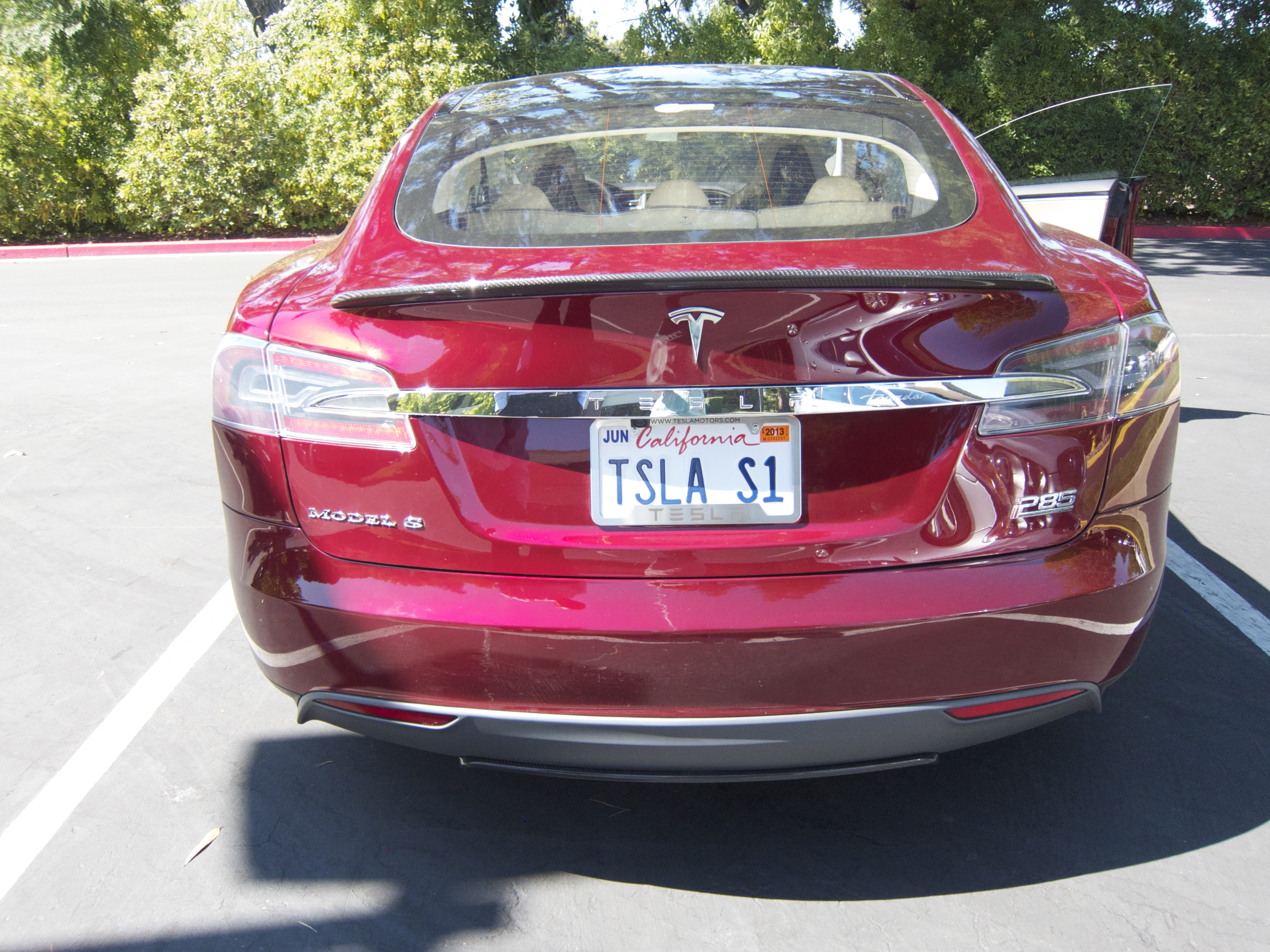
On Tesla’s Model S
“I sat on one (a Tesla Model S) out at the Tesla Fremont plant. I kind of dented the fender. But anyway…” (laughter)
Feinstein drives a Lexus hybrid
On California’s water shortages
“We’re on our way to a much drier climate…the Sierra Nevada snowpack’s drying up and it’s very serious…The key is: we need to store more water from the wet years and hold it for the dry years and this environmentalists don’t like. It may mean raising a couple of dams (eg Shasta)…I do believe that the time is now to have a storage water bond. The most important thing we can do for our state is to hold water from the wet years for the dry years and we should get that done (or) we’re going to lose our agriculture… I live in Washington now for a lot of the time and I can tell you the crops grown in California taste much better than most places in the world.”
On subsidies to oil and gas
“I think the day has come for subsidies to go for industries other than startups like some of the clean energy…solar. As you know, everything is “cut cut cut” back there (DC) right now. With sequestration cutting another $85 Billion before the beginning of the fiscal year and the amount goes up. So there’s going to be cut after cut after cut. And they’re big cuts. So I think we need to look at tax reform and we need to look at all those deductions and remove a lot of them and we also need to look at our entitlements programs.”
As the nation anticipates a “climate friendly” State of the Union speech from President Obama Tuesday, let’s take a look at what one of Silicon Valley’s most successful innovators and job creators has to say about the government’s role in climate change and innovation.
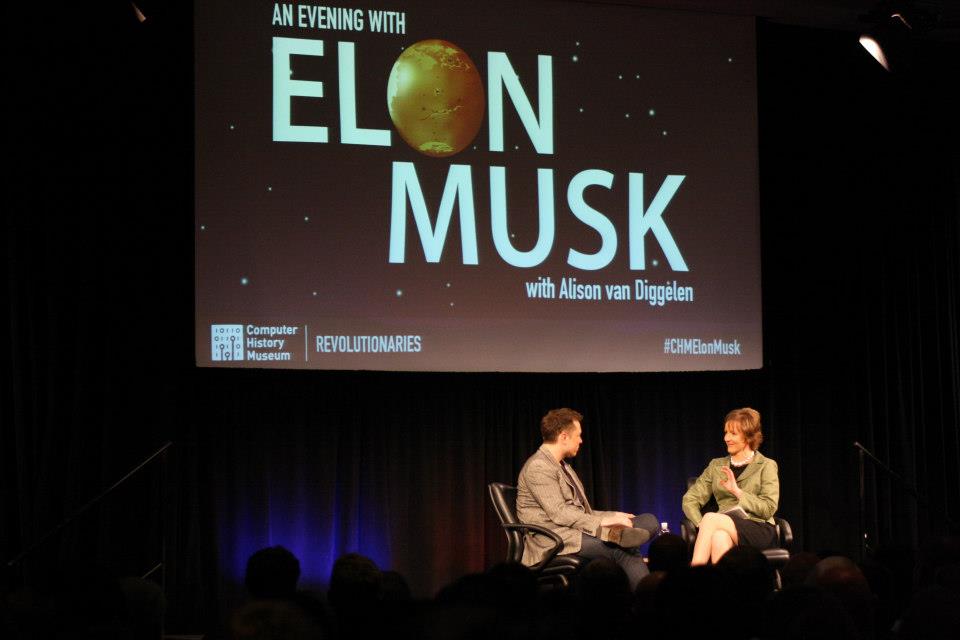
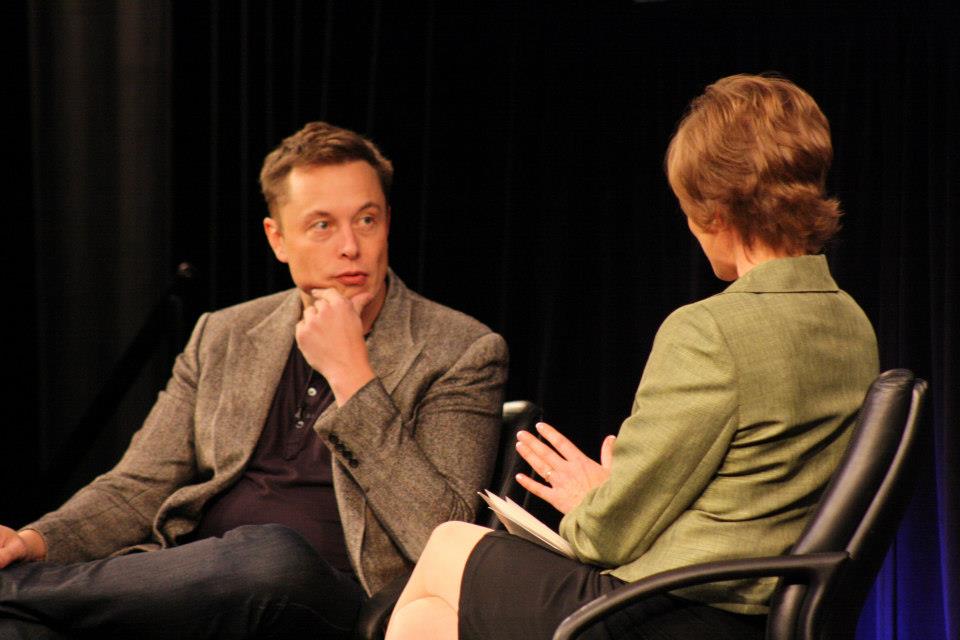
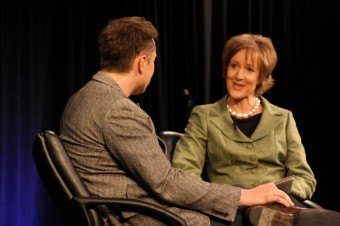
Last month, I interviewed Tesla Motors and SpaceX CEO, Elon Musk at the Computer History Museum in Silicon Valley and asked him what specifically President Obama can do to stimulate the economy. He acknowledges that presidents can only do so much, saying,”You’re actually like the captain of a very huge ship and have a small rudder.”
Musk argues that too much government regulation can stand in the way of innovation, especially in the auto industry; and is generally in favor of minimal government intervention in the economy. On climate change, however, he was forceful and described our oil based, carbon intensive economy as creating a “crazy chemical experiment on the atmosphere” with likely catastrophic consequences. He concludes that taxing carbon is vital.
.
Here is the transcript of our conversation:
Alison van Diggelen: Do you feel the government is standing in the way of innovation at all?
Elon Musk: Well sometimes…I don’t think the government tends to stand in the way of innovation but it can over-regulate industries to the point where innovation becomes very difficult. The auto industry used to be a great hotbed of innovation at the beginning of the 20th Century. But now there are so many regulations that are intended to protect consumers…I mean the body of regulation for cars could fill this room. It’s just crazy how much regulation there is. Down to what the headlamps are supposed to be like. They even specify some of the elements of the user interface on the dashboard…some of these are completely anachronistic because they’re related back to the days when you had a little light that would illuminate an image. So we had to reserve space on the instrument panel of the Model S for where all of the indicators…that a car would have…you know you’ve got these little lights…
Alison van Diggelen: Check engine or whatever…
Elon Musk: Yeah…all these little things. There is a whole bunch of them. ‘We can’t have anything else in that space. ‘ But how about we have one space and render a different graphic? ‘Oh no, because people are expecting to see them in this space.’ Nobody is expecting to see them in that space.
Alison van Diggelen: So you can’t argue with these regulations?
Elon Musk: Well you can argue with them, but not with much success. (laughter). You can actually get these things changed, but it takes ages. Like one of the things we’re trying to get is: why should you have side mirrors if you could have say, tiny video cameras and have them display the image inside the car? But there are all these regulations saying you have to have side mirrors. I went and met with the Secretary of Transport and like, can you change this regulation…? Still nothing has happened and that was two years ago.
Alison van Diggelen: So you’re banging your head against the wall…
Elon Musk: We need to get these regulations changed.
Alison van Diggelen: So talking of government, President Obama is obviously trying to do what he can…if you had five minutes with President Obama, what would you advise him for one: stimulating the economy and entrepreneurship and (two) creating jobs. Is there one thing if he could successfully get through that would be a big stimulus?
Elon Musk: I think actually…the reality of being president is that you’re actually like the captain of a very huge ship and have a small rudder (laughter). If there was a button that a president could push that said ‘economic prosperity,’ they’d be hitting that button real fast…
Alison van Diggelen: Full steam ahead.
Elon Musk: You can imagine…the speed of light, how fast they’d be pressing that button. That’s called the re-election button. I’m not sure how much the president can really do. I’m generally a fan of minimal government interference in the economy. The government should be the referee but not the player. And there shouldn’t be too many referees. But there is an exception, which is when there’s an un-priced externality, such as the CO2 capacity of the oceans and atmosphere. So, when you have an un-priced externality, then the normal market mechanisms don’t work and then it’s the government’s role to intervene in a way that’s sensible. The best way to intervene is to assign a proper price to the common good that is being consumed.
Alison van Diggelen: So you’re saying there should be a tax on gas?
Elon Musk: There should be a tax on carbon. If the bad thing is carbon accumulation in the atmosphere, then there needs to be a tax on that. And then you can get rid of all subsidies and all, everything else. It seems logical that there should be a tax on things that are most likely to be bad. That’s why we tax cigarettes and alcohol. These are probably bad for you, certainly cigarettes are (laughter). So you want to err on the side of taxing things that are probably bad. And not tax things that are good. Given that there is a need to gather tax to pay for federal government…We should shift the tax burden to bad things and then adjust the tax on bad things according to whatever’s going to result in behavior that we think is beneficial for the future.
I think currently that what we’re doing right now, which is mining and burning trillions of tons of hydrocarbons that used to be buried very deep underground, and now we’re sticking them in the atmosphere and running this crazy chemical experiment on the atmosphere. And then we’ve got the oil and gas companies that have ungodly amounts of money. You can’t expect them to roll over and die. They don’t do that. What they much prefer to do is spend enormous amounts of money lobbying and running bogus ad campaigns to preserve their situation.
It’s a lot like tobacco companies in the old days. They used to run these ad campaigns with doctors, guys pretending they were doctors, essentially implying that smoking is good for you, and having pregnant mothers on ads, smoking.
Alison van Diggelen: Do you have a message for the climate change skeptics and the big oil people?
Elon Musk: Well, as far as climate change skeptics…I believe in the scientific method and one should have a healthy skepticism of things in general…if you pursue things from a scientific standpoint, you always look at things probabilistically and not definitively…so a lot of times if someone is a skeptic in the science community, what they’re saying is that they’re they’re not sure that it’s 100% certain that this is the case. But that’s not the point. The point is, to look at it from the other side. To say: What’s the percentage chance that this could be catastrophic for some meaningful percentage of earth’s population? Is it greater than 1%? Is it even 1%? If it is even 1%, why are we running this experiment?
Alison van Diggelen: You’ve called it Russian roulette. We’re playing Russian roulette with the atmosphere…
Elon Musk: We’re playing Russian roulette and as each year goes by we’re loading more rounds in the chamber. It’s not wise. And what makes it super insane is that we’re going to run out of oil anyway. It’s not like there’s some infinite oil supply. We are going to run out of it. We know we have to get to a sustainable means of transportation, no matter what. So why even run the experiment? It’s the world’s dumbest experiment (applause).
Read more Transcript Excerpts from our 2013 interview:
For the first time, entrepreneur Elon Musk shared his whole life story in front of a live audience in Silicon Valley. He joined me in conversation at the Computer History Museum on January 22 and we explored: What makes a Revolutionary?
Musk takes us on a journey from the suburban streets of South Africa to the tech mecca of Silicon Valley…and beyond. He tells me about his teenage “existential crisis” and his bookish quest for the meaning of life; how the retirement of NASA’s space shuttle inspired his space transport startup SpaceX; and why he became the reluctant CEO of electric car company Tesla Motors.
.
Interview highlights and key turning points in his career:
The Rebellious Child: Musk grew up in South Africa. At age 6, he desperately wanted to attend his cousin’s birthday party, but was grounded for some long-forgotten transgression. How did he get there? (This was probably the first of his many rule-breaking adventures.)
“It was clear across town, 10 or 12 miles away, further than I realized actually, but I just started walking…I think it took me about four hours…My mother freaked out.”
The Iron Man Inspiration: He was a huge fan of comics and read Iron Man comics. Did he ever imagine he’d be the inspiration for Robert Downey Jr’s movie character, Tony Stark?
“I did not. I would have said zero percent chance…I wasn’t all that much of a loner…at least not willingly. I was very very bookish.”
The Hitchhikers Guide to the Galaxy: How did the novel fire his imagination?
“I was around 12 or 15…I had an existential crisis, and I was reading various books on trying to figure out the meaning of life and what does it all mean? …I read Hitchhikers Guide to the Galaxy and it highlighted an important point which is that a lot of times the question is harder than the answer. And if you can properly phrase the question, then the answer is the easy part. To the degree that we can better understand the universe, then we can better know what questions to ask. Then whatever the question is that most approximates: what’s the meaning of life? That’s the question we can ultimately get closer to understanding. And so I thought to the degree that we can expand the scope and scale of consciousness and knowledge, then that would be a good thing.”
Why was Silicon Valley his mecca at age 17?
“Whenever I read about cool technology, it would tend to be in the United States…I wanted to be where the cutting edge technology was and of course, Silicon Valley is where the heart of things is…it sounded like some mythical place.”
Why did his startup X.com (the precursor to PayPal) come close to dying in 2000?
“The growth in the company was pretty crazy…by the end of the first four or five weeks we had a hundred thousand customers and it wasn’t all good…we had some bugs in the software…Various financial regulatory agencies were trying to shut us down, Visa and Mastercard were trying to shut us down, eBay…the FTC…there were a lot of battles there. (But) we had a really talented group of people at PayPal…It worked out better than we expected.”
After making over $150M from PayPal, why not just buy an island and relax?
“The idea of lying on a beach as my main thing sounds horrible to me…I would go bonkers. I’d have to be on serious drugs…I’d be super duper bored…I like high intensity.”
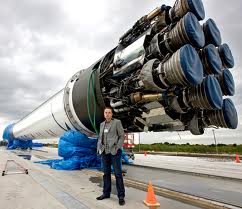
SpaceX’s Falcon 9 launcher that carried Dragon to orbit, 2012. Fresh Dialogues interview
On the seeds of SpaceX
“I always thought that we’d make much more progress in space…and it just didn’t happen…it was really disappointing, so I was really quite bothered by it. So when we went to the moon, we were supposed to have a base on the moon, we were supposed to send people to Mars and that stuff just didn’t happen. We went backwards. I thought, well maybe it’s a question of there not being enough intention or ‘will’ to do this. This was a wrong assumption. That’s the reason for the greenhouse idea…if there could be a small philanthropic mission to Mars…a small greenhouse with seeds and dehydrated nutrients, you’d have this great shot of a little greenhouse with little green plants on a red background. I thought that would get people excited…you have to imagine the money shot. I thought this would result in a bigger budget for NASA and then we could resume the journey…”
On negotiations with the Russian military to buy two ICBMs
“They just thought I was crazy…I had three quite interesting trips to Russia to try to negotiate purchase of two Russian ICBMs…minus the nukes…I slightly got the feeling that was on the table, which was very alarming. Those were very weird meetings with the Russian military…’remarkably capitalist’ was my impression (of the Russians).”
Why he chose to create his own rocket company, SpaceX
“I came to the conclusion that my initial premise was wrong that in fact that there’s a great deal of will, there’s not such a shortage. But people don’t think there’s a way. And if people thought there was a way or something that wouldn’t break the federal budget, then people would support it. The United States is a distillation of the human spirit of exploration. People came here from other places…people need to believe that it’s possible, so I thought it’s a question of showing people that there’s a way…There wasn’t really a good reason for rockets to be so expensive. If one could make them reusable, like airplanes then the cost of rocketry (and space travel) would drop dramatically.”
How did the vigils for the death of the EV 1 help inspire Tesla Motors?
“It’s crazy. When was the last time you heard about any company, customers holding a candlelight vigil for the demise of that product? Particularly a GM product? I mean, what bigger wake-up call do you need? Like hello, the customers are really upset about this…that kind of blew my mind.”
“I tried really hard not to be the CEO of two startups at the same time…It’s not appealing and shouldn’t be appealing if anyone thinks that’s a good idea. It’s a terrible idea.”
On the idea for SolarCity
“Solar is the obvious primary means of sustainable energy generation…in fact, the earth is almost entirely solar powered today. The only reason we’re not a frozen ice-ball at 3 degrees Kelvin is because of the sun…”
Check back soon for more from Musk on:
where his inspiration strikes (hint: not just Burning Man)
how to build, motivate and retain an excellent team
On Tuesday evening, Elon Musk, CEO of Tesla Motors sat down with me at the Computer History Museum in Mountain View to discuss his life’s work. During the hour long interview, he gave a detailed account of Tesla Motors’ early days and how he became the reluctant CEO.
Why reluctant? Well, he was in the throws of getting his other little startup off the ground…the rocket company, SpaceX. If you missed that story, SpaceX has become the de facto replacement for NASA’s space shuttle and serves the International Space Station.
.
But back to electric cars…Here’s what Elon said:
“I really didn’t want to be CEO of two startups at the same time. It was not appealing. And shouldn’t be appealing by the way, if anyone is thinking that’s a good idea. It’s a terrible idea.”
And yet, he’s somehow making it work. Tesla’s Model S was picked as Motor Trend’s Car of the Year 2013 and he doesn’t seem quite so reluctant these days. In this transcript excerpt, he also offers this advice to entrepreneurs:
“In the beginning there will be few people who believe in you or in what you’re doing but then over time, as you make progress, the evidence will build and more and more people will believe in what you’re doing… it’s a good idea when creating a company to have a demonstration… a good mark up or if it’s software to have good demoware, or to be able to sketch something so people can really envision what’s it’s about.”
The interview aired this week on KQED radio and the podcast is now available on this page. Or listen here
Here’s a transcript excerpt.
The Reluctant Tesla CEO: Transcript of January 22, 2013 Interview with Elon Musk
Alison van Diggelen: Shortly after founding SpaceX, you then got interested in electric vehicles and I understand you watched the vigils for the death of the EV1, when they were all smashed. Talk about that and why you felt even after founding SpaceX: ‘I have to get involved with Tesla.’
Elon Musk: Yea, well. My interest in electric vehicles goes back a long time…goes back 20 plus years.
Alison van Diggelen: To the dating scene…(Musk refers earlier in the interview to the fact that in his college days, he used to bore dates with his fascination with electric cars and says, ‘it was not a winning combination…but recently it’s been more effective.’
Elon Musk: Exactly and in fact the original reason I came to Silicon Valley was to work on electric vehicle energy storage technology. I thought that big car companies would develop electric cars. It was obviously the right move and I thought that was vindicated when General Motors and Toyota announced…General Motors was doing the EV1, Toyota did the electric RAV 4, the original one. And they made these announcements and brought those to market and I thought: well this is great, we’re going to have electric cars, GM is obviously going to do the EV2 and 3 and then just keep getting better. Everything would be cool.
And then when California relaxed its regulations on electric cars, GM recalled all of the EV1s and crushed them into little cubes, which seemed kind of nutty. So in fact, the people didn’t want their EV1s recalled…
Alison van Diggelen: Yes…
Elon Musk: In fact they tried court orders to stop the cars from being recalled. They held a candlelit vigil, OK in the yard where the cars were crushed…now…
Alison van Diggelen: Did you attend that vigil?
Elon Musk: No, I did not.
Alison van Diggelen: You’re moved by it.
Elon Musk: Well certainly, I mean, it’s crazy…When was the last time you heard about any company… customers holding a candlelight vigil for the demise of their product? Particularly a GM product? (laughter) I mean what bigger wake up call do you need? Like hello! The customers are really upset about this. They’d really prefer if it didn’t get recalled. So that kind of blew my mind. So it was like ‘wow.’
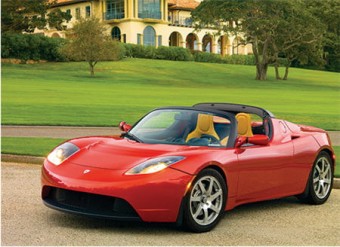
And then we had the advent of lithium ion batteries which really is one of the key things to make electric cars work, but it’s still nothing. And so in 2003, I actually had lunch with one of the other cofounders of the company JB Straubel (now CTO of Tesla Motors) who was actually working on a hydrogen airplane or something. He mentioned to me the tzero car that was done by AC Propulsion.
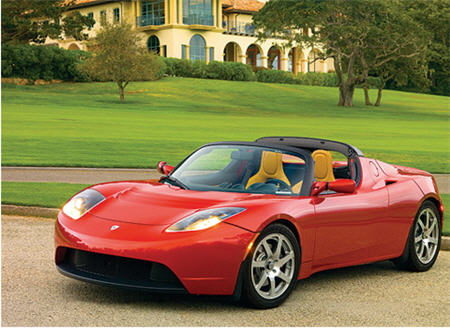
AC Propulsion are the sort of guys who had actually been on the EV1 program and they took a gasoline sports car, a kit car and outfitted it with lithium ion batteries, consumer grade cells, and they created a car which was essentially the precursor of the (Tesla) Roadster, and had very similar specifications: sub 4 seconds zero to 60 mph, 250 mile range and also a two-seater sports car. But it was quite primitive. It didn’t have a roof for one thing. At all. And none of them had doors. But it didn’t have any safety system at all, no air bags, it wasn’t homologated, so you couldn’t sell it. So in order to sell that car, in order to create a commercial version of that car, there was a fair bit of work that was required.
I kept trying to get AC Propulsion to commercialize the tzero, and I said: ‘Look, I’ll fund the whole effort, we really need to do this.’
But they just refused to do it. They wanted to make an electric Scion. Which in principle sounds good, but in fact it would have cost $75,000 and nobody wants to buy a $75,000 Scion.
The technology was just not ready. There was just no way to make a good value proposition.
Alison van Diggelen: What was it that compelled you to say: ‘I have to be CEO here and lead this company.’ Why not just say: ‘I’ll help you JB and get this rolling’?
Elon Musk: Well I really didn’t want to be CEO of two companies. I tried really hard not to be actually. Yes. So AC Propulsion finally said…I told AC Propulsion: ‘If you’re not going to do this, I’m going to create a company to do this.’
And they said well, there’s some other guys who’re also interested in doing that and you guys should combine efforts and create a company. And that’s basically how Tesla came together.
And then we had a lot of drama (laughter). But since I’d provided like 95% of the money, so I could have been the CEO from day one… but I really didn’t want to be CEO of two startups at the same time. It was not appealing. And shouldn’t be appealing by the way, if anyone is thinking that’s a good idea. It’s a terrible idea.
…
Alison van Diggelen: It’s one thing to have all those wonderful ideas in the shower and at Burning Man, but it’s another thing to build, motivate and retain a team of excellent people. Can you talk about some tips and some things you’ve learned that obviously work for you?
Elon Musk: Yeah. Well a company is a group of people that are organized to create a product or service. That’s what a company is. So in order to create such a thing, you have to convince others to join you in your effort and so they have to be convinced that it’s a sensible thing, that basically there’s a some reasonable chance of success and if there is success, the reward will be commensurate with the effort involved. And so I think that’s it…getting people to believe in what you’re doing – and in you – is important.
In the beginning there will be few people who believe in you or in what you’re doing but then over time, as you make progress, the evidence will build and more and more people will believe in what you’re doing. So, I think it’s a good idea when creating a company to create…to have a demonstration or if it’s a product to have a good mark up or even if it’s software to have good demoware, or to be able to sketch something so people can really envision what’s it’s about. Try to get to that point as soon as possible. And then iterate to make it as real as possible, as fast as possible. I think that makes sense.
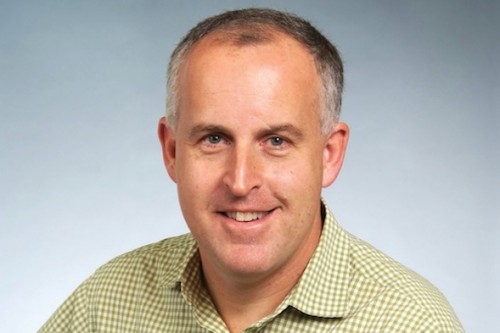
This week, I spoke with Diurmuid O’Connell, VP of Business Development at Tesla Motors and he confirmed the company is not just focused on sexy fast cars but connectivity and energy storage.
“The totem of social acceptance is no longer personal mobility, it’s personal connectivity…the smart phone,” says O’Connell, citing the company’s massive 17 inch touchscreen which offers everything from navigation, to climate control to web browsing. He describes how it gives consumers the ability to upgrade a vehicle immediately and remotely; a useful benefit especially for what he calls “the perfect navigation system.”
“The screen can be updated in real time to improve not just the entertainment and climate control aspects but actually the performance of the vehicle,” he adds.
O’Connell also shared some details of Tesla’s push into energy storage. I asked him if the focus was on utility scale storage or distributed energy storage and he made reference to Bloom Energy – the Sunnyvale based fuel cell maker – that has a business model aimed at both sectors. Energy storage is something that many experts describe as the holy grail for advanced energy systems and Tesla has a large team of engineers working hard on the challenge at its Deer Park, Palo Alto facility. When I pressed him on future breakthroughs, O’Connell admitted the team is making good progress and said an announcement was likely within the next 12 months.
The video was recorded at SVForum’s CleanTech breakfast, moderated by Rob Shelton of PwC, in Silicon Valley on October 16, 2012. Check back soon for more on Net Zero buildings and other clean tech innovation trends.

 Feinstein’s proposal was short on details, but she confirmed, “It’s my intention to introduce a fee of $10 a ton and we’ll see what happens to it.”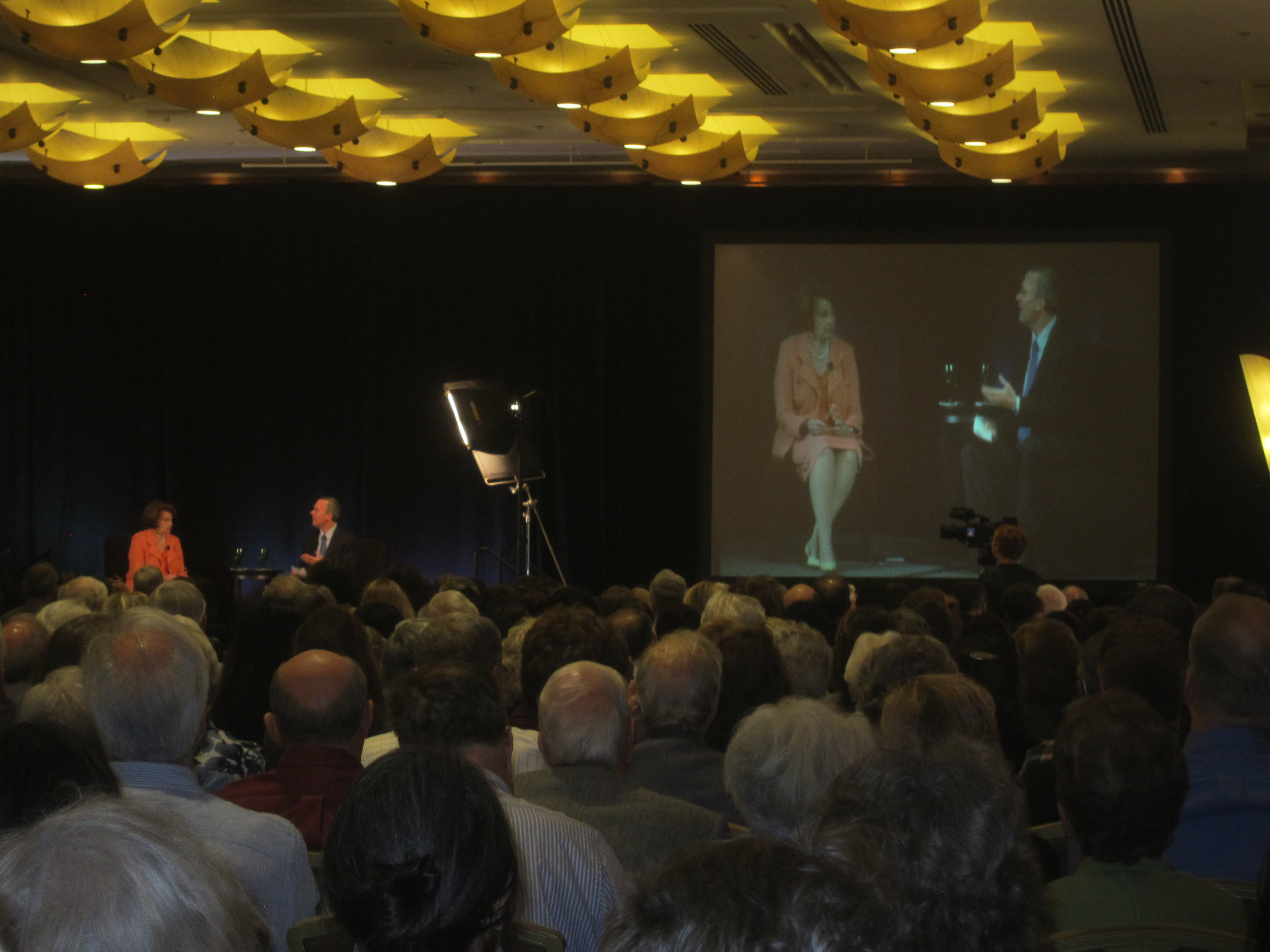
 Alison van Diggelen: So talking of government, President Obama is obviously trying to do what he can…if you had five minutes with President Obama, what would you advise him for one: stimulating the economy and entrepreneurship and (two) creating jobs. Is there one thing if he could successfully get through that would be a big stimulus?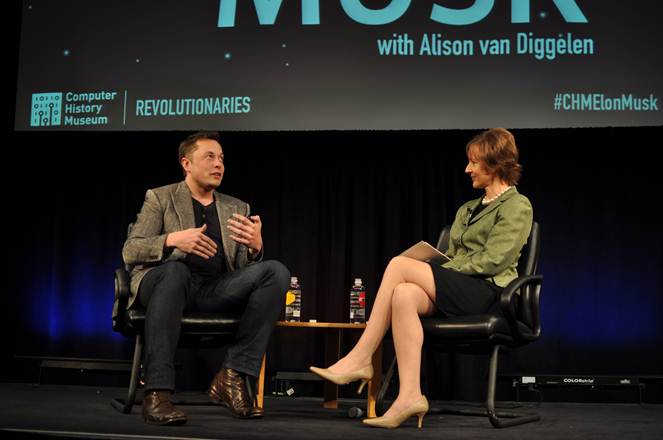
 How did the vigils for the death of the EV 1 help inspire Tesla Motors?