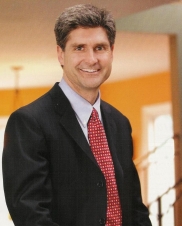
You’ve no doubt heard about the November ballot measure (Proposition 23) which aims to to scupper California’s landmark climate change legislation, AB 32. In this Fresh Dialogues interview, Carl Guardino, CEO of the Silicon Valley Leadership Group, didn’t pull any punches in his response to those behind the plan.
“We’re not going to sit idly by and watch you dismantle our environmental achievements… which are also economic ones,” says Carl Guardino.
The Silicon Valley Leadership Group, which represents over 300 major companies in the valley, including Google, Hewlett Packard and IBM (approximately one in three private sector jobs) provides a proactive voice for Silicon Valley businesses on public policy issues, locally and in Sacramento and Washington D.C.
.
Here’s a recap of the issue:
AB 32 is the Golden State’s attempt to cap carbon emissions to 1990 levels by introducing a version of a cap-and-trade carbon tax which would hit power plants, refineries and cement manufacturers hard.
What is Proposition 23?
Supporters call it “The California Jobs Initiative,” and point to the high cost and potential job losses of implementing AB 32; but Proposition 23’s main impact would be to suspend (and effectively repeal) the provisions of AB 32. In turn, AB 32 supporters have launched a Stop Dirty Energy Prop Campaign to thwart the proposition. As of today, Proposition 23 is way ahead in the social media popularity index with over 4,500 Facebook “likes” for Prop 23 compared to just under 3,000 for its opponents.
And here’s how Guardino describes it:
“A veiled attempt to dismantle California’s environmental achievements.”
.
Who is behind it?
Two Texas-based oil companies, Valero Energy Corporation and Tesoro Corporation, provided the initial funding to launch the campaign. Valero donated over $4 Million to the cause.
Guardino’s argument
“This is an economic engine not a caboose and we’re not going to let folks ruin the engine that continues to fuel the renewable energy, clean green economy. It’s not only good for our environment – and it’s critical – it’s also good for our economy and jobs; and we’ve proved that through innovation of products, processes and what we do with our people every day in Silicon Valley.”
“What’s wonderful about Silicon Valley is that it’s never been an ‘either or’ – it’s never been about the environment or the economy,” says Carl Guardino. “We can have our cake and eat it too.”
June 24 marked the 13th annual SDForum Visionary Awards, a celebration of the innovators and chutzpah that make Silicon Valley unique. Although the four visionaries come from diverse backgrounds, Silicon Valley was the common theme for the evening. The visionaries gave a revealing glimpse into the Silicon Valley State of Mind. What exactly is Silicon Valley? What’s its role in the world?
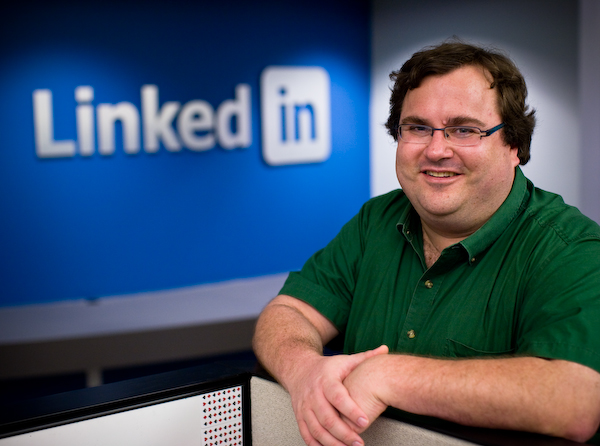
This week, we look at Reid Hoffman’s viewpoint. He’s co-founder of LinkedIn and a renowned innovator in Silicon Valley. He had some strong words to say about the power of entrepreneurship and its ability to jumpstart the economy.
Jeff Weinerof LinkedIn introduced Reid Hoffman as someone with a brilliant strategic mind and ability to invent the future. As well as being Executive Chairman of LinkedIn, Hoffman is also a partner with venture capitalists, Graylock Partners. Pointing to his colleague’s multidisciplinary background (Hoffman studied symbolic systems and philosophy at Stanford and Oxford respectively), Weiner concluded that education provided the building blocks to create an outstanding public thinker and social networking pioneer. Weiner reminded the audience that Hoffman understood the ability of technology to inform and connect people, inspiring him to launch Socialnet (a precursor to LinkedIn) before Facebook and MySpace existed.
Hoffman walked to the podium with some reluctance, saying that listening to the introduction made him “want to run and hide”; yet he started his speech off by grounding us in time and place.
“It’s an enormous privilege to be at this center fulcrum of how we change the world, that we call Silicon Valley,” he said, and posed the powerful question, “What more should we do with that?”
Talking like a true Silicon Valley techie, he suggested not two “answers,” but two “vectors” to his question. And, the visionary he is, Hoffman thinks BIG. First, he recommended leveraging entrepreneurship as a powerful way to get the world economy back on track. Drawing from author, Tom Friedman’s thesis, Hoffman said,
“We live in a world that is increasingly flat and increasingly accelerating. When you have challenges like economic turbulence and uncertainty… entrepreneurship is a really good pattern…we need to make it more available globally.”
Provoking wry laughter from the crowd, he pointed out that there is no entrepreneurs’ lobby in Washington DC, and implied there should be one to encourage entrepreneurship as part of the stimulus package, both here in the U.S. and around the world.
His second “vector” or call to action was: how can we take business models to the non-profit sector? Drawing from his work at Kiva.org and Endeavor.org, he suggested hybrid models of self-sustaining nonprofits that can help spread entrepreneurship and create high impact change.
“I love to play at the heart of what we do best in Silicon Valley,” said Hoffman. “To take risks, develop technologies and use financing and inspire entrepreneurship to create a lever by which we move the world.”
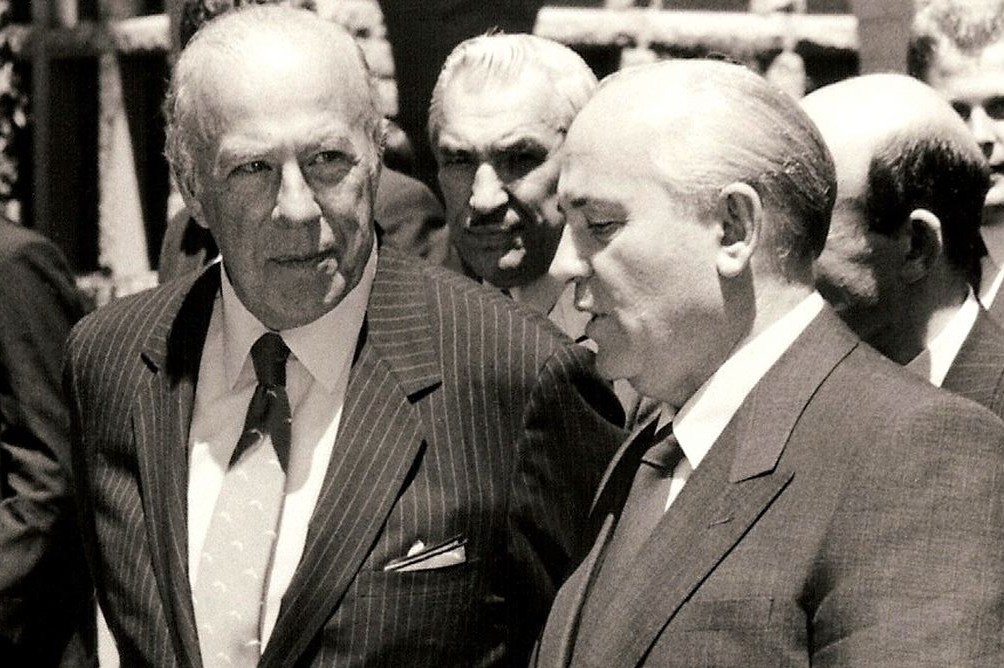
Former U.S. Secretary of State, George Shultzdelivered an eloquent summary of the facts surrounding AB 32(California’s answer to global warming) at the Silicon Valley Energy Summit at Stanford University on June 25. Shultz, a Distinguished Fellow at the Hoover Instituteand Advisory Council Chair at the Precourt Energy Efficiency Center, was billed as a Moderator/ Provocateur at the event, and despite his 89 years, he rose to the challenge and then some. In concluding remarks, he said it would be “an unmitigated disaster” if the measure to suspend AB 32 passes in the November election.
He was moderating a panel which included Lawrence Goulder, Director of environmental and Energy Policy at Stanford; Kevin Kennedy, Assistant Executive Office, Office of Climate Change, California Air Resources Board (CARB) and Peter Miller, Senior Scientist, Natural Resources Defense Council. Check back for more details on each soon.
“The emission of carbon imposes a cost on society…you have to recognize that cost…” George Shultz
“If we’re going to level the playing field…we want a system that’s number one: effective… and number two: creates as little drag as possible or even gives a slight lift to the economy.” George Shultz
Last night, President Obama addressed the nation for the first time from the Oval office. His subject: the BP oil spill disaster. Although some say he was “vapid”, Obama seized the opportunity to call for a clean energy future and end our addiction to fossil fuels. He underlined China’s massive investment in clean energy jobs and industries (subtext: just like the Space Race in the 50’s & 60’s, the race for Clean Energy has begun, and the U.S. is falling behind); and reminded us that we send almost ONE BILLION DOLLARS EACH DAY to foreign countries for their oil.
“The tragedy unfolding on our coast is the most painful and powerful reminder yet that the time to embrace a clean energy future is now. Now is the moment for this generation to embark on a national mission to unleash America’s innovation and seize control of our own destiny.” President Obama.
.
In this week’s Fresh Dialogues, we look at the advice gleaned recently from a panel of clean tech experts in Silicon Valley. If the Obama administration is serious about unleashing America’s innovation and creating a clean energy future, it would do well to take note.
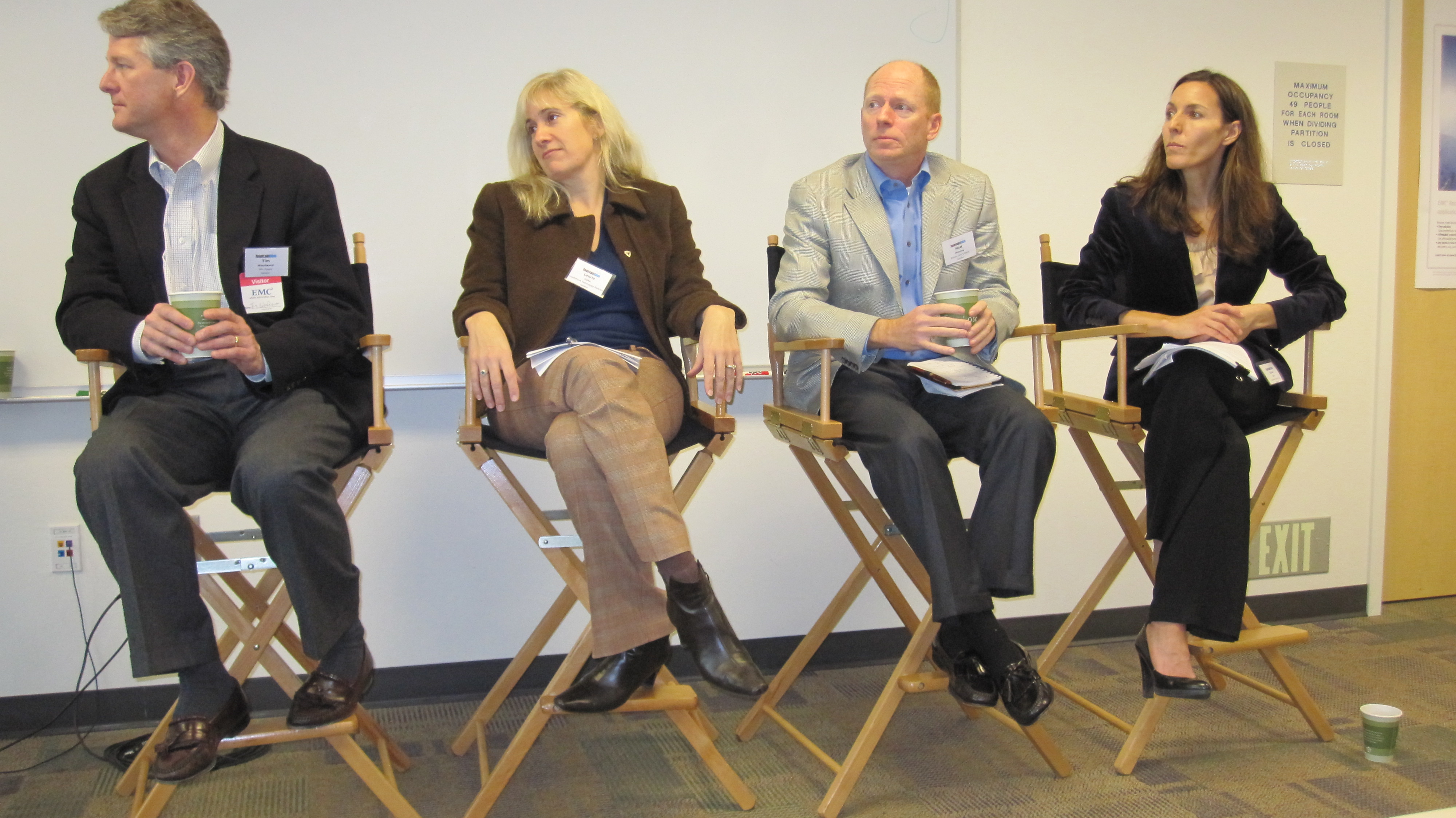
From the Fresh Dialogues archives: The Obama administration ought to have sent an envoy to the FountainBlueState of Clean Green Conference this year. A panel of Silicon Valley clean tech experts had much to share on this question: how can Obama better jumpstart the clean tech economy?
Tim Woodward, Managing Director, Nth Power said the government needs to create market demand, and recommends that every government building should have solar power and be retrofitted for energy efficiency; but he warned,
“There’s a little too much of a ‘large check mandate’ in the Federal Government that picks technologies and stifles innovation at lower levels: figure out how to get smaller dollars into the innovation engine of smaller companies.”
“I look at the pricing and incentivizing through market pricing. We’re still subsidizing imported oil without putting the investment into alternative energies…I think we should put a tax on imported oil and use it to help pay off some of the defense spending we’re using to protect the transmission of that oil. We need to forge ahead with cap and trade legislation… until we have a price on carbon it’s hard for the markets to plan and have any certainty.”
.
Elise Zoli, Partner and Chair, Energy Practice, Goodwin Procter said that the Department of Energy needs to improve the low commercialization rate of national labs and is excited about a new national initiative to create virtual access to all the labs’ technology… “so you can see the technology, acquire it and begin to commercialize it.”
“The DoE has a fantastic lab structure, producing some really innovative technologies… (we need to ) leave them there and help them – through public/private partnerships – and take that technology out of the labs…”
But
“There are things they (the DoE) do terribly and being a bank is one of them.”
.
And Elise has one last piece of advice if you have a green energy technology you think the Feds can use, contact Richard Kidd at the Federal Energy Management Program: ”Richard Kidd will not know you exist unless you call him…send an email to Richard’s team and use my name!”
Other panelists included Dan Adler, President, California Clean Energy Fund, and Matt Maloney, Head of Relationship Management, Silicon Valley Bank. The interview was recorded at Fountain Blue’s Conference on January 29, 2010.
Rolf Papsdorf, President of the Alternative Energy Development Corporation was a recipient of the 2009 Tech Awardsin Silicon Valley, for bringing renewable energy (zinc fuel cells) and empowerment to a small community in South Africa. Check out this exclusive interview with Mr. Papsdorf who discusses how to create a carbon neutral community, the advantages of zinc fuel cells (portability is a big plus) and why he wants to meet Al Gore.