Hillary Clinton came to Silicon Valley last week and the women-in-tech community gave her a warm welcome. Her message of inclusivity, diversity and wage equality in Silicon Valley earned a standing ovation from the gathering of over 5,000 women from the worlds of tech, media and fashion. On Friday, I reported on Hillary’s speech and the drive to increase the number of women in tech for the BBC World Service programme, Business Matters. It starts at 37:10 on the BBC podcast and below.
Here is a transcript of my conversation with BBC host, Dominic Laurie. It has been edited for length and clarity.
Laurie: Alison…you’ve been at a conference…the Lead On Watermark Conference in Silicon Valley, part of the drive to achieve more diversity in the tech industry. The thing is, when I think of some of the big tech companies that have really made global success, there is quite a lot of diversity in those companies, so what’s the problem?
van Diggelen: Well, the problem is: the stats are not echoing what you just said. 11% of executives in Silicon Valley are women, 20% of software developers overall are women. You’re in the minority if you’re a woman in tech.
Laurie: Are you talking about gender diversity, rather than ethnic diversity?
van Diggelen: Ethnic diversity is even worse. The stats for Google are: 1% of their employee workforce is black…17% is female, 83% male. So yes, it’s pretty dire.
At this conference, the energy was high. It was electrifying actually. 5000 female executives gathered in Silicon Valley, from the worlds of tech, media and fashion. We had keynotes including Hillary Clinton, Diane von Furstenberg, Jill Abramson, Brene Brown, as well as tech luminaries like Renee James of Intel…I have a clip from Hillary’s speech where she outlined the challenges women face in the tech industry and why this is important for the wider economy, to get more women in tech.
Clinton: Inclusivity is more than a buzz word or a box to check. It is a recipe for success in the 21st Century. Bringing different perspectives and life experiences into corporate offices, engineering labs and venture funds is likely to bring fresh ideas and higher revenues. And in our increasingly multicultural country, in our increasingly interdependent world, building a more diverse talent pool can’t be just a nice to do for business, it has to be a must do.
It is still shocking: the numbers are sobering…just 11% of executives in Silicon Valley and only about 20% of software developers overall are women. One recent report on the gender pay gap in the valley found that a woman with a bachelor’s degree here tends to make 60% less than a man with the same degree. We’re going backwards in a field that is supposed to be all about moving forward.
Laurie: She’s quite a talker isn’t she? Very eloquent woman, Hillary Clinton. Alison I guess the problem is…you listed some very eminent women who were talking, and I guess inspiring people in the conference, but do some people feel that those women are so high achieving that perhaps they’re out of reach? Did you manage to speak to more “normal” people who’ve made it in tech?
van Diggelen: Yes, I spoke to a number of women in tech.* I spoke to the CEO of Watermark, Marlene Williamson and she emphasized the need for women to do it (Lead On) for themselves, do it for other women. That’s how we get economies of scale, that’s how you build your power base. I also spoke with Kimberly Bryant who feels so strongly about this that she wants to help create a pipeline of young tech entrepreneurs and in particular, young black girls. Her nonprofit is called Black Girls Code and her whole mission is to get more black girls from (age) 7-17 exposed to computer science, get them into classes, get them into summer camps and feed the pipeline for young entrepreneurs going into tech. Ones who’re female and ready to change the world…like Zuckerberg.
Bryant: We think there’s a huge need for creating this pipeline of young tech entrepreneurs that are women. But one of my personal goals is: I really want to see a girl or woman leading a major tech company like Facebook, Google, Microsoft, or Apple….I think that having a women at the head of a tech company, a founder of a tech company of that level would do so much to really change the whole image of the whole industry being male dominated. This movement for diversity and inclusion is not just a good thing to do, I think it’s the right thing to do, (from a social equity and as a business imperative…to remain competitive.)
Laurie: I took a look at Kimberly’s website. It’s quite a cool website: Black Girls Code. Lots of interesting information…
van Diggelen: She’s doing a lot of good work and she’s actually bringing it to London…they’re hoping to seed a chapter in London this summer.
Laurie: Maybe we could have a chat to her…
Thank you so much Alison van Diggelen, host of Fresh Dialogues.
*Check back soon for my next report from the Watermark Lead On Conference, including interviews with Vicky Pynchon of SheNegotiates, Millennial Kate Brunkhorst of DCR Workforce and Laura Chicurel of Nextinit.
Silicon Valley is well known as the global hub of innovative technology. Can four weeks immersed in its unique ecosystem help inspire a new generation of global tech leaders? That’s the hope behind a program called Tech Women, launched by former Secretary of State, Hillary Clinton and now sponsored by the State Department.
Last month, over seventy tech women from Africa and the Middle East made a month-long visit to Silicon Valley. I met with several of them to explore what they learned, and how they plan to leverage technology to tackle their countries’ challenges when they return home.
A version of this story aired on BBC’s Tech Tent on Nov. 14, 2014. Listen to the podcast below: @20.00
Here is the full length transcript:
Tech Tent Host, Rory Cellan-Jones: One interesting aspect of the tech revolution is that women are playing a bigger role in the developing world than in places like the U.S. and U.K. Over 70 women from Africa and the Middle Easter have just wrapped up a month long visit to Silicon Valley, with the aim of picking up ideas for the technology they can use to tackle their country’s challenges when they return home. Alison van Diggelen met two of them…
Alison van Diggelen: They are two women with ambitious missions. They’ve got the tech savvy and now, after a month building connections and wisdom in Silicon Valley, they’re eager to launch their dreams back home.
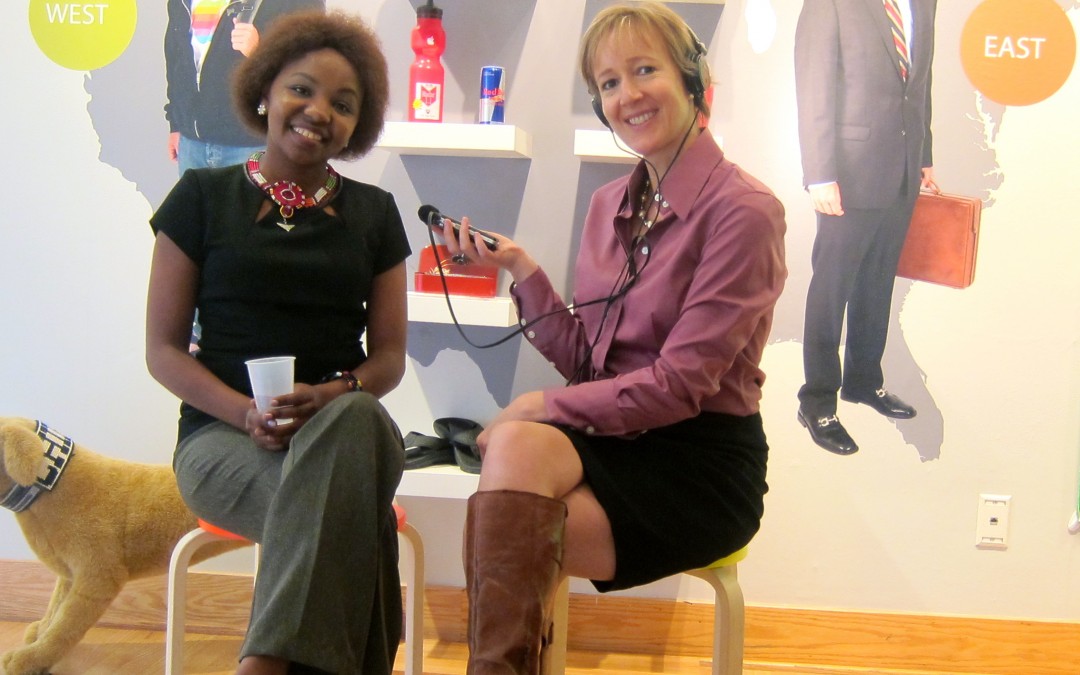
Meet Asal Ibrahim who wants to bring massive deployment of solar power to Jordan; and Serah Kahiu from Kenya who wants to jumpstart the science and tech economy in Africa by developing a network of science museums and labs across the entire continent.
Both have lofty goals, but they talk with such conviction and enthusiasm, it’s hard not to believe that these young women will change the world, at least their little corner of it.
I start by asking Kahiu about the current state of technology in Kenya.
Kahiu: “I use mobile technology in Kenya, it’s HUGE. It’s like magic because you can do transactions, money transactions on your mobile. You can pay someone from wherever in a country: school fees, bills. That one has revolutionized life in Kenya.”
She explains how Facebook is a vital tech tool for small businesses in Kenya.
Kahiu: “You can use your phone for Internet. That has really sparked business because you can advertise your product on Facebook, get someone to pay you through M-pesa and then put stuff on a public transport system and it’s transported to your client. That has made it so easy for people like farmers. You cut out the middleman. The farmer gets all the profit. This is huge, especially for women. The majority of small scale farmers in Kenya are women, so that has improved standards of living for many women in rural areas.”
We discuss her grand vision of creating a network of hands-on science and tech centers across Africa, starting in Juja, Kenya, a university town she describes as having “the same vibe as Silicon Valley.”
Kahiu:“We need to embrace more technology because 60% of Africans and youth in Kenya are under 35. We have a bulge of youth who’re not employed. Science and technology is the last frontier for job creation. We must prepare people for that. We import 80% of whatever we’re using. Why do we import? Why not make it in Kenya?
“If the governments of Africa invest in science and technology and put it on its pedestal as an accelerator of development, youth are encouraged to understand science better, and more importantly, to start companies.”
van Diggelen: “So you feel it needs an entrepreneurship spirit kick-started?”
Kahiu: “Yes, kick-started! There’s a need for that entrepreneurship. They’re learning theory, theory, theory.”
van Diggelen: “So commercializing these ideas?”
Kahiu: “It’s very hard…That’s what I want to do. I’ll sit in the gap between the education system and the industry and help people to see the possibilities that there are in science, technology, engineering and math.”
“Every Kenyan child that is being born deserves to know and understand technology. We don’t have a choice. If the world is accelerating the way it is doing, we’ll be left so far behind, we won’t even see the dust. I’m serious.”
“Science and technology should answer your problems. So, I meet people where they are and then we walk together …People care about drinking water, safer roads and availability of healthy foods for their kids. So these are their needs. So I’ll walk with my people from that point and we’ll walk towards particle physics…flying to the moon, or Mars…who knows? (laughter)”
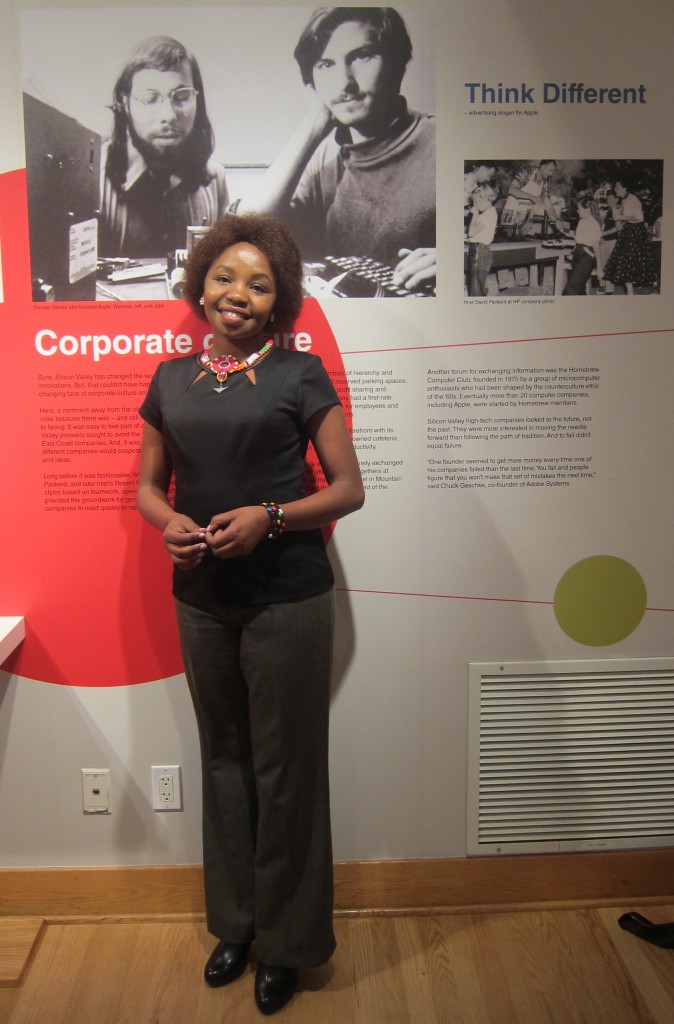
(This interview took place at the Los Altos History Museum, which is currently featuring an interactive Silicon Valley exhibit, now through April 2015)
Asal Ibrahim is a 24 year-old student from Amman, Jordan. She’s been working at a (Vista Solar) solar company in Silicon Valley, soaking up the “can do” attitude.
Ibrahim is enthusiastic about the state of technology in Jordan today, but admits there are many opportunities for improvement.
I asked her how Silicon Valley’s tech obsessed culture compares to that of Jordan.
Ibrahim: “It’s very similar. Everyone is obsessed with technology: holding a smart phone, interacting on social media, using it in almost every aspect of life. On an infrastructure level it needs to be improved: transportation, education is employing technology a lot…we need to improve it way more.
“You can find anything from high tech schools to poor schools in Jordan. We have schools that are winning international competitions like Intel Science Fair or Microsoft Imagine Cup and compete worldwide with their Robotech, with their programming skills, website software. Some schools are more advanced than some universities in Jordan. We’re still lacking equipped labs for example, not only technological advances like IT, but also scientific labs.
“Jordanians are very into technology. They can contribute a lot if they get the chance. We have a lot of international companies that have offices in Jordan, and employ large amount of engineers, like Microsoft, Sony, Yahoo.”
Ibrahim’s goal is to encourage the massive deployment of solar power in Jordan, but she faces an uphill struggle.
“It’s not easy to push this kind of alternate power and challenge the big oil companies. We have to combine all the manpower we have, all the technology, knowledge, NGOs, advocates, to make this happen. It’s a dream that needs to be worked on at a national level.”
Ibrahim was part of a public private partnership that brought 200 Mega Watts of solar power online this year, but she’s determined to keep up the momentum.
“97% of our energy is imported, so if any of surrounding countries that provide us with oil or electricity have bad political situations, which is the case most of the times, we will be out of energy. Renewables are now 2% of energy share. It’s mostly oil now.”
So how has Ibrahim’s month in Silicon Valley inspired her?
“The most special spirit of Silicon Valley is how diverse it is. Having people from all over the world working for the state of technology, for the sake of entrepreneuring, for the sake of innovating, creating new things. How excited people are on the train in the morning – they feel happy, on a mission to accomplish…it has reached me.”
She’s learned an important lesson from her month in Silicon Valley:
Ibrahim: “No idea is bad. If you have a single idea, whether it’s a website, app, any innovation you think can change the face of technology, you should pursue this, because an idea dies if you don’t pursue it.
“It’s all inspiring to me. Everything is possible if you have the persistence and determination to make it happen. The Jordanian culture encourages girls and boys, men to study equally; they’re very encouraged to pursue careers in STEM, to pursue technological and scientific degrees. Being in a male dominated environment in technological companies, can be a bit frightening for girls and women…there is no challenge if you show confidence and if you have a dream to pursue, no one will stand in your way.”
Check back soon for my interview with Sierra Leone’s Fatmata Kamara who wants to bring solar power to rural areas of her country to improve the livelihood of rural communities and help in the fight against Ebola.
Kiva cofounder, Jessica Jackley received a Visionary Award at SVForum in Silicon Valley this month. She joined an impressive roster of former award winners that includes Bill Gates, Elon Musk and Padmasree Warrior.
Jackley took a few moments with me to share tips for aspiring entrepreneurs and some clues about her latest startup, launching this Fall.
She enthuses about Silicon Valley being “an incredibly special pocket of the world” where “people have a great capacity to imagine new futures.”
“So many people here have the resources and skills to make these new stories unfold, become real,” she adds.
Here are some highlights of our conversation.
Tips for aspiring entrepreneurs:
1. Be passionate
Do something you are passionate about and have a vision for.
2. Start small
Remember Kiva began with seven entrepreneurs and a little over $3000. It recently surpassed the $500,000,000 mark in microloans to entrepreneurs around the world, serving almost 2 million Kiva users in 76 countries. The average loan amount is $10.
3. Be excellent
Serve one person, or one community well and build from there. Be thoughtful, intentional and think about the details. Study and absorb what’s unfolding in front of you, and be present.
On her new startup
1. Focus
I’m excited to focus on serving working parents…I’m in the trenches right now and that’s the people I want to serve.
2. The Problem
I hope to consult with companies on their policies, culture that supports or doesn’t support working parents. There’s a lot of room for improvement in existing companies.
3. The Solution
My goal is to make it easier and provide options for working parents to prioritize and design their own work and lives around that. Parenting is one of the most entrepreneurial things that I’ll ever do. There’s so much that maps from my experience into motherhood that I want to share with other people. I want to work at the company level and with individuals to demand what they want.
4. The Context
In Europe, it’s top down, (working parents) are taken care of by institutions. I don’t want to wait for that (policy change) to happen here. It’s the better and faster way to go here, in this (US) culture.
Find out more about other SVForum visionary award winners and check back soon for interviews with Stanford’s Tina Seilig, VC Tim Draper and Jennifer Pahlka, founder of Code for America.
Here come China’s tech giants. Last week, Alibaba and China’s Twitter-like Weibo announced massive IPO plans. Today, in Silicon Valley, China is front and center in the news. Let’s take a closer look at Chinese entrepreneurship in Silicon Valley. How will it change the tech innovation capital of the world? And will a longer term view take hold?
A version of this story aired on BBC’s Tech Tent on March 14, 2014. Listen to the podcast below: @17.35
The latest wave of Chinese immigrants to Silicon Valley is impacting everything from the housing market to the way business is done in the high tech capital of the world.
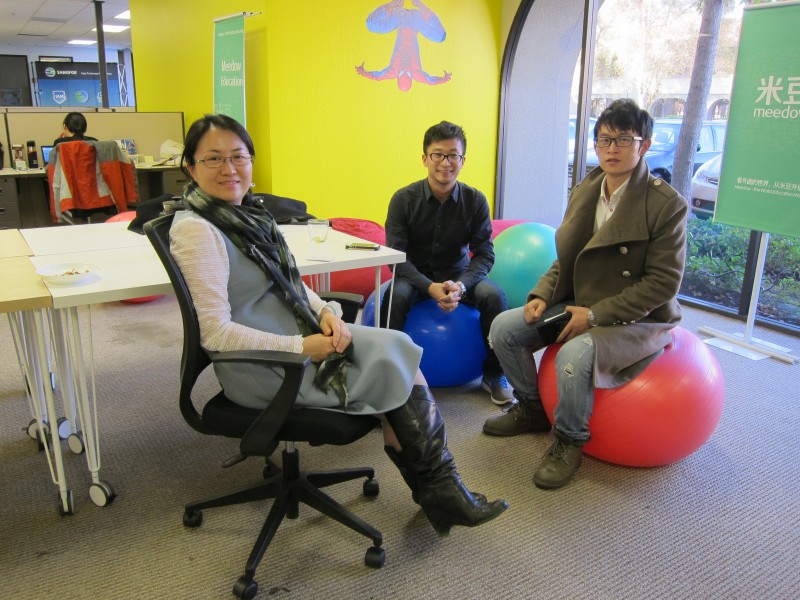
Ching-Lun Lin, student at Carnegie Mellon SV
Image 1 of 10
Banner says "Work harder!"
Stuart Evans, a Brit who arrived in Silicon Valley 30 years ago, has been studying the unique ecosystem of Silicon Valley for decades. Today, he teaches entrepreneurship at Carnegie Mellon Silicon Valley, and says he’s seen a sevenfold increase in student applications from China and South-East Asia in the last year.
Evans: “It’s been like a racehorse that’s been choked back in the stalls and now the gate’s open and the race is away.”
He’s witnessed millions of dollars from Chinese tech giants flooding into Silicon Valley startups; and incubators popping up for entrepreneurs arriving from Chinese tech hubs in Beijing and Shanghai. In Palo Alto, home of Stanford University, the number of home purchases by Chinese nationals has tripled since 2011. A local realtor recently reported that for every seven offers for a home, three of them will be cash offers from Mainland China. As well as teaching, Evans mentors young entrepreneurs at Innospring, a Silicon Valley based incubator that offers advice, funding and partnerships to fledgling Chinese startups and American ones seeking to expand in China. Here’s how he describes his role:
Evans: “A bouncing board to bounce ideas…to critique, to make connections, to suggest better ways to go about doing things.”
Better ways, and American ways. For example, he’s had to help young Chinese entrepreneurs adapt to the strict American legal system and US privacy concerns. Evans recalls telling a Chinese student that he might run into legal liability and privacy issues his new device for a car steering wheel.
Evans: “It seemed at first to hit a raw nerve…’Why not? Why don’t we just do it anyway?’ …was the entrepreneur’s initial response. Yet Evans found that they did eventually come round to an Americanview of the world.
Evans: “When you reason with people and show them the implications, they very quickly respond and come up with inventive solutions.”
Evans points out that there is no work/life balance in Silicon Valley: your work is your life. He says that fits well with the Chinese mindset and intense work ethic. It’s intensely competitive to get into the best schools in China.
Evans: “I’ve had students who would get up at 4 o’clock in the morning to be prepped before they went to school.”
Innospring founder, Eugene Zhang invites me to tour during a visit by a delegation of “20 under 20” college students from Jiangsu province in China.
Zhang: “Innospring is about capturing that positive energy…the big opportunities…the next Google or Baidu…the giants.”
So how are these Chinese entrepreneurs in Silicon Valley changing the way things are done? One of Evans’s entrepreneurs is Nan Zhong, cofounder of startup TIKL, a walkie-talkie app for smartphones. He describes a different mindset in the Chinese culture.
Zhong: “Letting go instant gratification is driven into my head…you go for what’s eventually going to be good for you, not necessarily what makes you happy at the moment.”
That long-term view colors the way Chinese entrepreneurs run their businesses he explains. They focus on growing market share and endure long-term losses to do so.
Zhong: “People take the pain, take the time, take all the hard work to grow an idea all the way to something that’s global.”
This contrasts with the short-term term view of many Silicon Valley startups, which often focus on being acquired or going public within two years. Evans agrees. In his experience, American and Indian entrepreneurs are generally happy to be acquired by companies like Google and Facebook; whereas his Chinese entrepreneurs prefer growth and autonomy, treating their startups like a precious baby.
Evans: “The idea of bringing up a baby and teaching it how to walk and learn as the company progresses is something that fits very well with the Chinese culture.”
Whether that longer term view takes root in Silicon Valley remains to be seen, but some influences already go both ways. Evans recalls the tale of a US colleague working at a startup in China who shocked his colleagues by cleaning up the tea cups on a Friday afternoon, a job typically done by the ‘ladies’ in the office, even the VPs. Gender and hierarchy boundaries were breached.
Evans:“It transformed the culture of the office with just that one act (finger click) and sent a message that this new way of doing things has implications.”
van Diggelen: “Do you think that’s rippling beyond that startup?”
Evans: “Yes, Silicon Valley is culturally diverse, intellectually homogeneous…it’s a heavily networked ecosystem and what works comes to the surface very quickly.” Instead of a clash of cultures at the surface, Evans says there’s a melding; creating what he calls ‘a global mosaic of talent.’ And Innospring is a focal point in that mosaic. Evans has witnessed a change in the way companies grow in Silicon Valley over the last 30 years. He points to the Chinese being an important part of the valley’s technical competency, with their strong math and software education, which increases opportunities for innovative collaboration.
Evans: “Even though they’re from a different culture and a different background, they speak the same language, technically.”
I suggest the melding that goes on in Silicon Valley in terms of innovation and business practices produces a special Asian Fusion, a bit like the fortune cookie, a Japanese-American creation, that’s largely known as “Chinese.”
Evans: “An Asian Fusion fortune cookie, wow (laughter)…at my age I try to steer clear of cookies…but the idea of fusion is something which is part of Silicon Valley’s DNA, it’s in the sharing and pooling of ideas that brings about the innovation in Silicon Valley.”
Find out more about Alison’s other contributions to and appearances on BBC
Electric vehicles made a big impact last week at the 2013 Silicon Valley International Auto Show. Steve Smith, President of the Silicon Valley Auto Dealers Association gave Fresh Dialogues a tour of the electric offerings Sunday from Fiat, General Motors and Ford; and explained that the affluent, well educated Silicon Valley market is particularly open to EVs. This year shows a surge in the number of electric and hybrid vehicles from major players. It’s significant that even Cadillac has announced a hybrid coupe, featuring both lithium-ion battery and a four cylinder gas engine.
Smith confirmed that even consumers not ready to go all-electric are focused on fuel economy statistics this year. The cute new Fiat 500e got an EPA 116 miles per gallon equivalent combined fuel economy rating (122 MPGe city and 108 MPGe highway) and the company estimates fuel costs of $500/year. That would keep your average Hummer driver on the road for, umm, maybe a month?
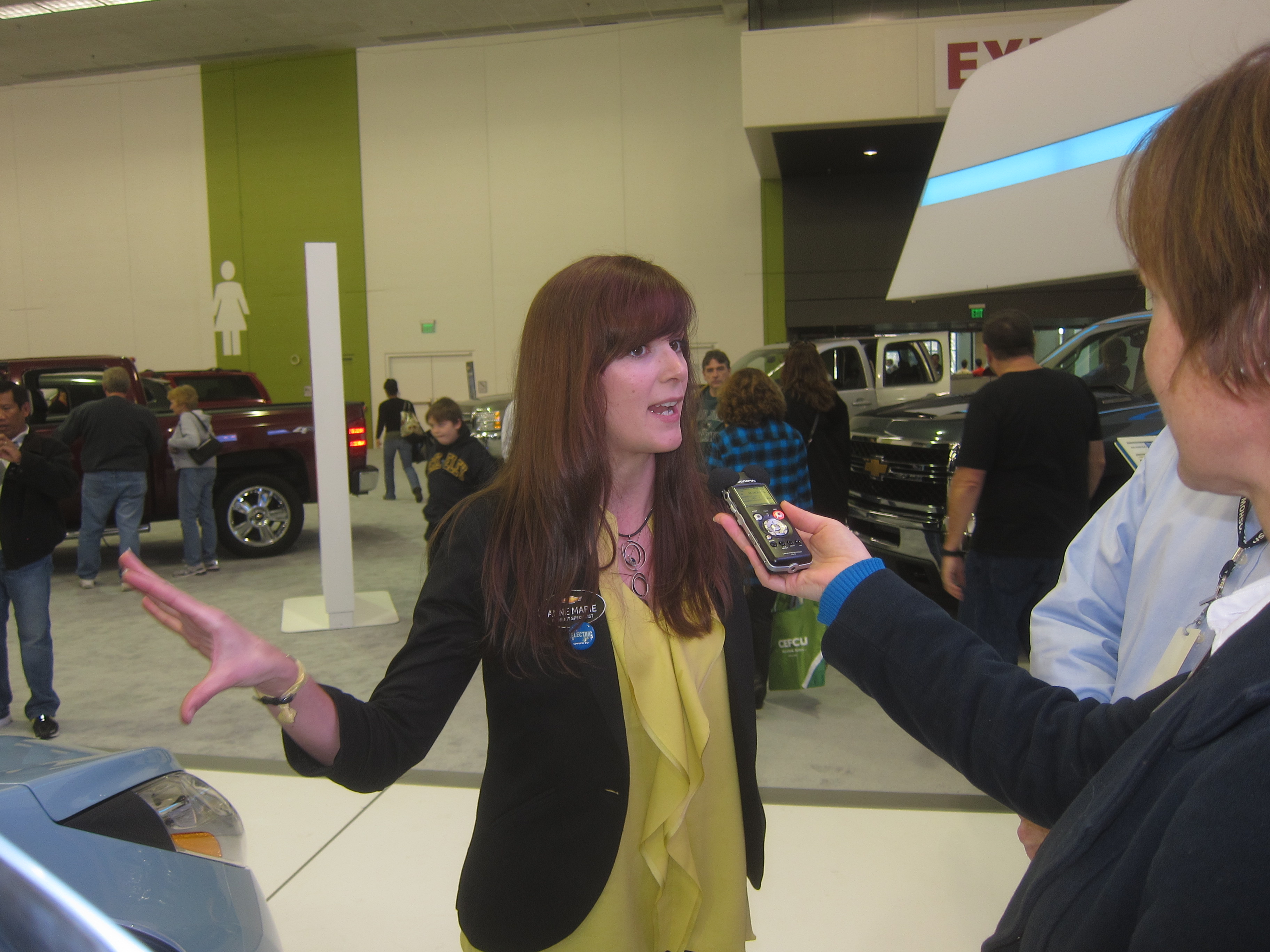
The new Chevy Spark looked cute and compact in powder blue, but spokesperson Anne-Marie Damman confirmed that for now, the 80-mile range EV will only be available in California and Oregon. The reason? They’re the only states with sufficient charging infrastructure in place. Although California’s EV infrastructure leads the way, it’s also suffering growing pains.
Tesla’s all electric Model S was missing from the line up in Silicon Valley, but its Model X made a big splash at this week’s Detroit Auto Show. Check out some of the Silicon Valley Auto Show highlights in the slideshow below.
The all electric Chevy Spark
Image 1 of 17
Anne-Marie Damman: the Chevy Spark will have an 80 mile range and only be available in CA & OR, Alison van Diggelen of Fresh Dialogues
Check back later this month for the full interview with Steve Smith of SVADA on what makes the Silicon Valley Auto Show so unique and why he thinks car sales will spike this year.


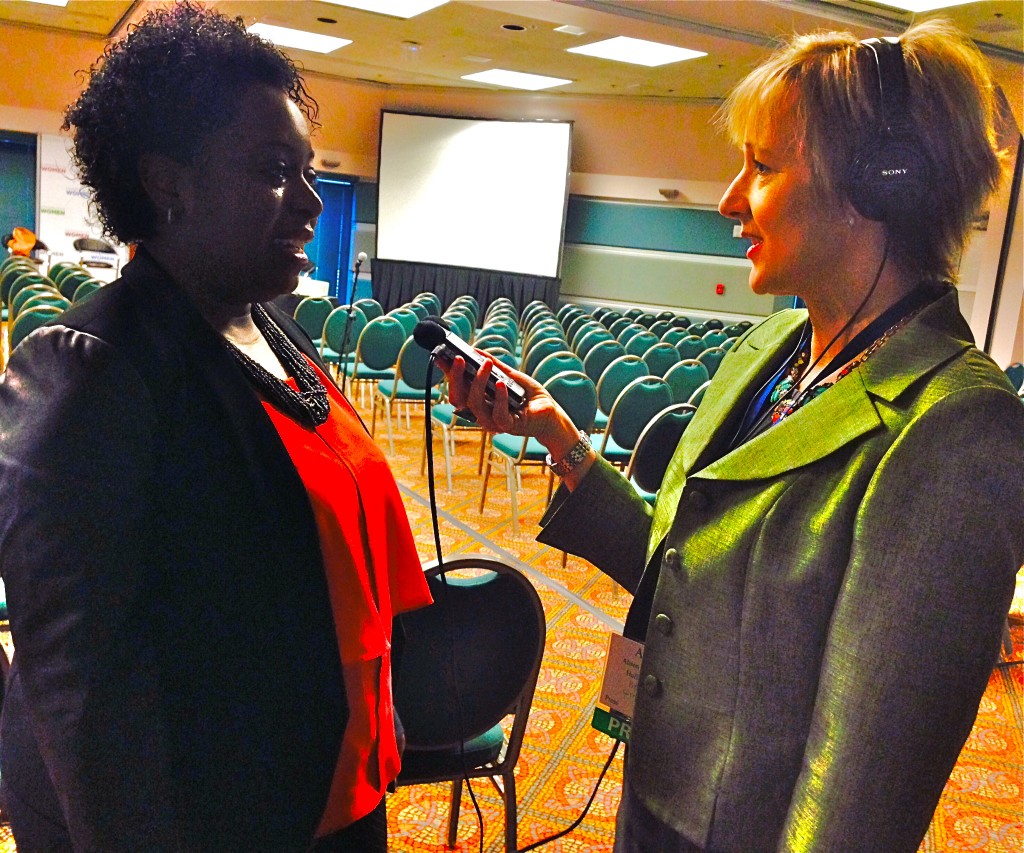 van Diggelen: Ethnic diversity is even worse. The stats for Google are: 1% of their employee workforce is black…17% is female, 83% male. So yes, it’s pretty dire.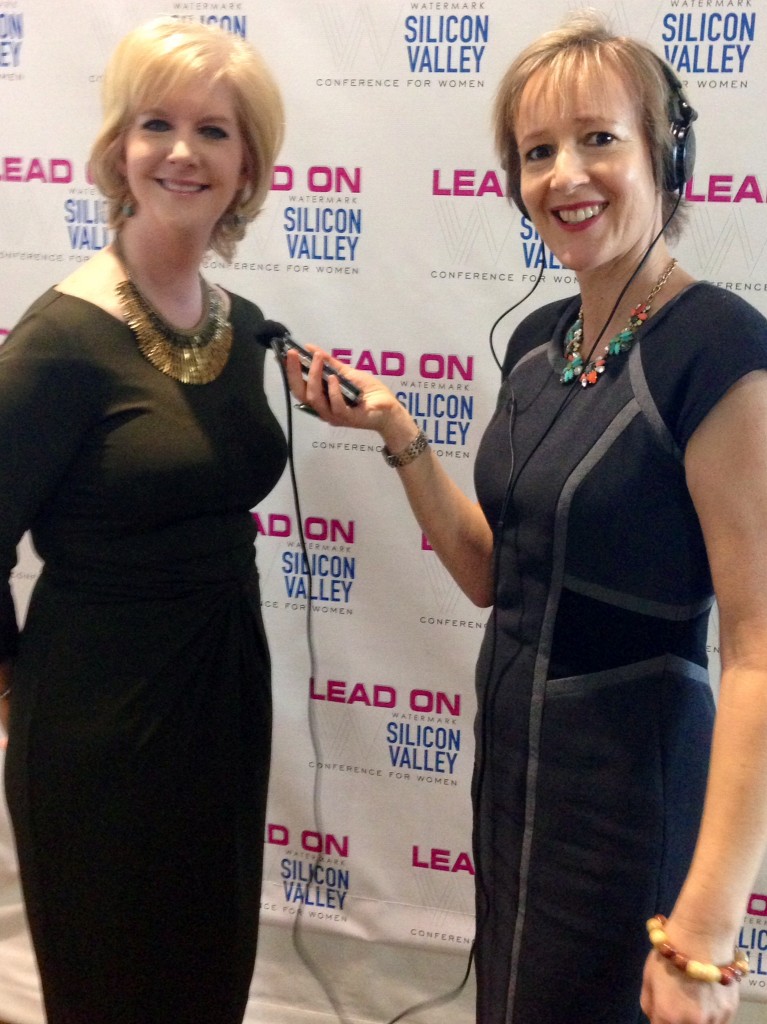

 We discuss her grand vision of creating a network of hands-on science and tech centers across Africa, starting in Juja, Kenya, a university town she describes as having “the same vibe as Silicon Valley.”