Dec 3, 2013 | Electric Vehicles
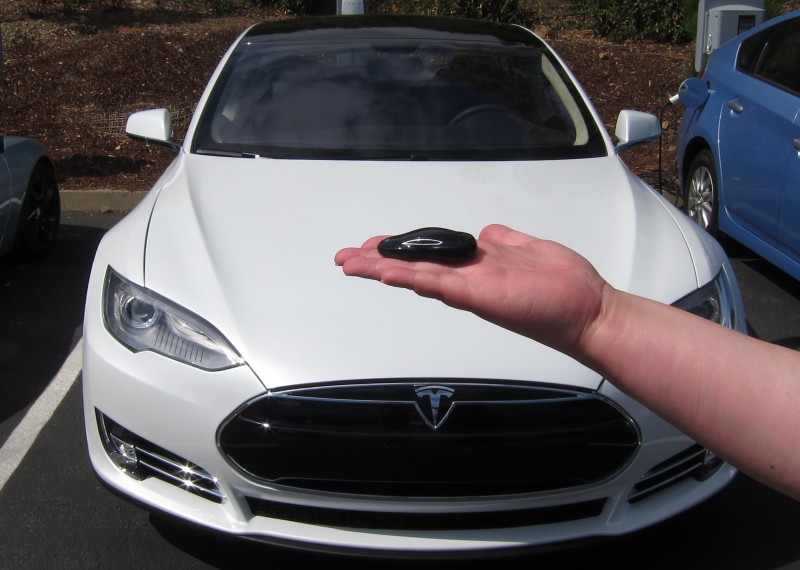
Google’s Director of Energy and Sustainability, Rick Needham describes the company’s fleet of electric vehicles and how it has enabled millions of miles of electric driving (almost 2M and counting). As well as the “usual suspects” like Chevy Volt, Nissan Leaf, and Ford Focus Electric, Google’s electric “Gfleet” includes several Tesla Model S, a favorite due to its range of up to 265 miles. But is that the whole story?
.
Google continues to grow its electric fleet. In 2011, it had 30 electric plug-ins, today it has over 50.
Here’s what Needham had to say about:
1. Google’s focus on the self-driving car
“We view that as a very interesting place to spend some time and effort and come up with a technology solution that can really help. It’s not just the car that’s underutilized; it’s the infrastructure, the roads. If you could enable that to be utilized more effectively… whether that be cars that can travel closer together (in a platoon), cars that travel and you can be doing productive things while they’re moving… There are a lot of opportunities on the environmental side, on the human safety side, on utilization of infrastructure side.” Google’s Rick Needham
This strategy makes a lot of sense, given Google’s ability to integrate Google Maps and traffic conditions to make driving both more efficient and safer.
2. Why it invested in car sharing companies Uber, Sidecar and Relay Rides
“It’s an enormous opportunity. Today the car sharing market is just over $3 Billion (in the US)…That’s just starting out…there quite a roadway, a runway there, to have a much bigger impact…” Google’s Rick Needham
Read more about how the Uber investment offers synergistic opportunities for Google and may help change the future of transportation.
Why it all might be related
Some commentators like Green Car Report’s John Voelcker have speculated that all this might be part of Google’s grand plan to purchase Tesla and use it to launch a driverless car-sharing taxi service sometime early in the 2020s. Tesla’s Elon Musk is good friends with Larry Page and has discussed the potential of driverless cars.
Google’s Clean Energy Struggle
Today, only 34% of the energy Google uses comes from renewable sources like wind and solar power. This is not something to boast about, especially given Apple’s claim to use 100% renewable power, but as Needham explains, he’s chasing a moving target. As the number of Google searches soars and more Google services are adopted, Google’s energy use is growing so fast that it battles to keep up with clean energy sources, despite investing over $1Billion in wind and solar power.
Find out more about Google’s strategy to green its energy supply, green its buildings, and reduce its carbon footprint.
From the archives, here’s an interview with Google’s Parag Chokshi about Google’s Green Dream, which predicts electric vehicles could command a 90% market share by 2030.
Oct 10, 2013 | Green Building, Sustainability
By Alison van Diggelen, host of Fresh Dialogues
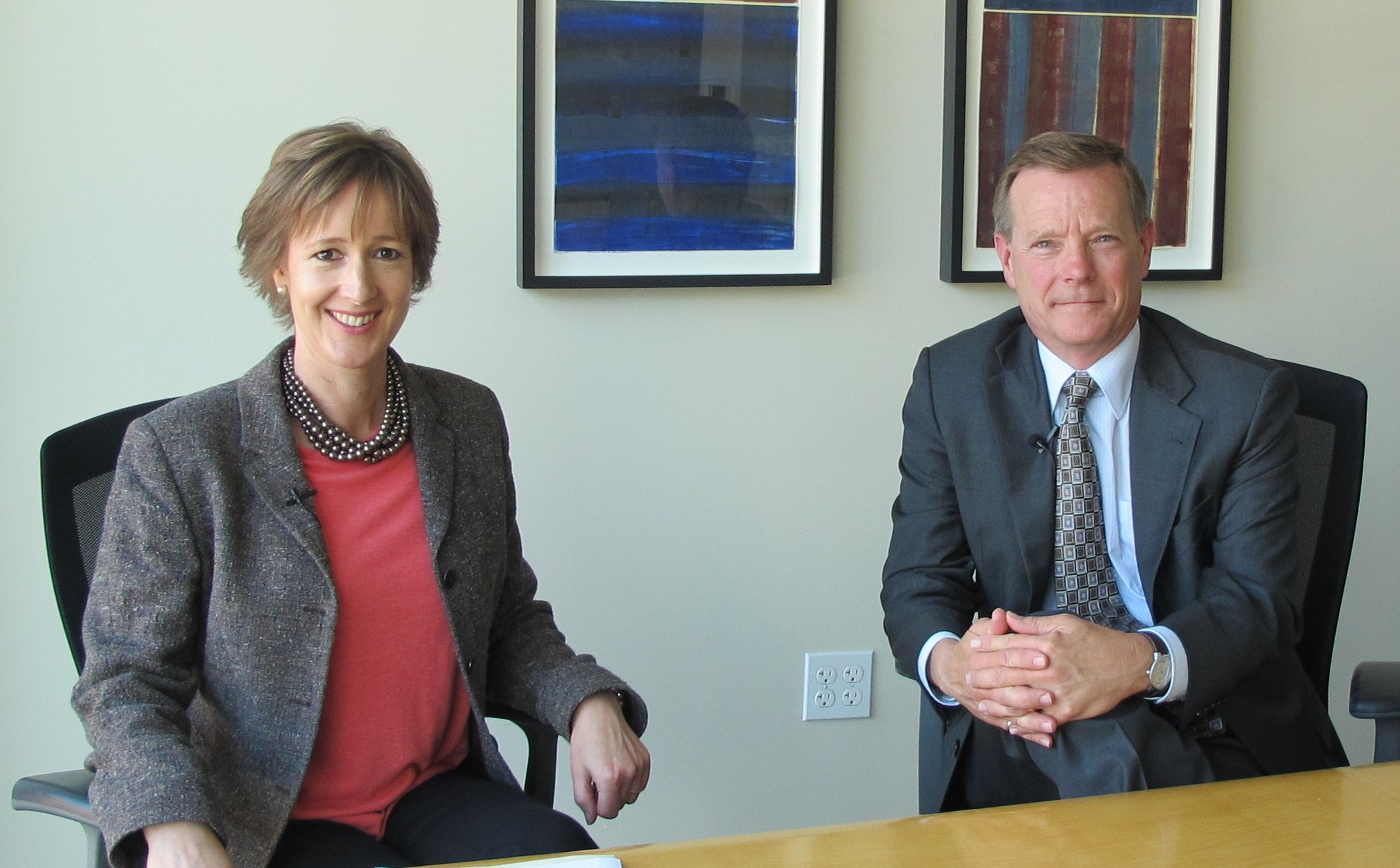
I sat down with Phil Williams of Webcor Builders to find out how the building industry is responding to climate change by quantifying a building’s environmental impact (water, CO2 production, etc) using Natural Capital Accounting (NCA).
“CFOs of major corporations are saying, ‘before it was random acts of greenness,'” says Williams. “Now I can start to measure our environmental impact.”
As he explains it, a global standard of measuring and quantifying a building’s impact can provide owners, renters, architects, and builders with valuable information with which to make key decisions about buying, renting, land use, building materials, energy systems etc.
As well as the World Bank, the Cambridge Programme for Sustainability Leadership and the World Business Council for Sustainable Development, closer to home, Climate Earth in Berkeley is working on the task.
Climate Earth’s White Paper “Valuing Natural Capital” states: “The objective of this project is to develop an estimate of the environmental costs of the greenhouse gas emissions, induced land use changes, and water consumption. For land use change and water consumption, environmental costs are dependent on where the activity takes place, and we developed local cost estimates to account for those differences. Greenhouse gas emissions are a global pollutant, and the costs are roughly indifferent to where the emissions take place, and so a single global number is sufficient to account for those costs.” The paper concluded that the Stern Review’s figure of $110/metric ton of carbon and carbon equivalent is appropriate.
.
.
“NCA takes some of those numeric evaluations – kilograms of CO2, liters of water, hectares of land – and puts them into economic evaluations that large corporations and nimble companies can look at, ” explains Williams. “These are not just environmental metrics, these are just financial metrics.”
He predicts that by the end of 2014, there will be recognized standards in Natural Capital Accounting for construction, apparel and other retail products.
Find out more about the Future of Natural Capital Accounting from the World Forum on NCA which takes place in Edinburgh, Scotland this November.
During our interview, Williams also explains the concept of making buildings “Future Ready” i.e. flexible enough to add solar, and other energy-making, energy-saving components after the building is completed.
“Future ready is a positive approach, it’s not about adding more, it’s not about ultimate flexibility,” says Williams. “It’s about providing the right amount of infrastructure to afford flexibility.”
This is part of a series on the Future of Green Building, sponsored by Webcor Builders. For more in the series, check out these videos and stories
Read more about Green Building stories featuring Meryl Streep, Susan Sarandon and Apple and by checking the Green Building tab above or clicking here
Aug 22, 2013 | Inspiring Women, Just for mothers
Alison van Diggelen, host of Fresh Dialogues
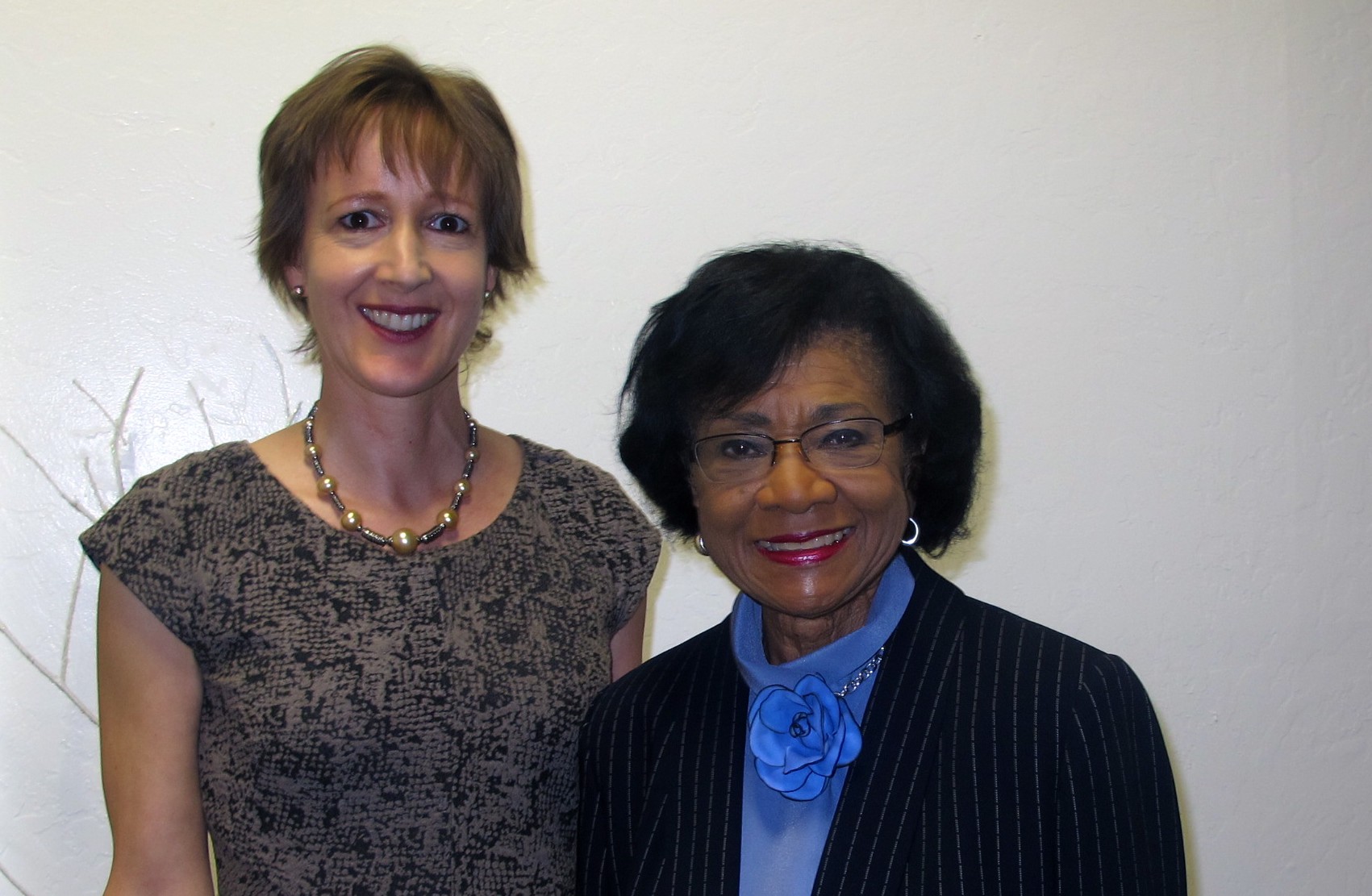
Fidel Castro, Muhammad Ali, Gloria Steinem. These are just a few of the icons that pioneering journalist Belva Davis has interviewed in over fifty years of reporting. This weekend, Davis receives the John F. Hogan Distinguished Service Award from the Radio Television Digital News Association (RTDNA) in Los Angeles.
Davis began her illustrious career in the 1950’s; became the first black woman to anchor the news on the West Coast and was host of KQED’s public affairs program, This Week in Northern California for almost 20 years. She talked to Fresh Dialogues this summer in Los Altos about why she admires PBS Newshour’s history making Judy Woodruff and Gwen Ifill; her memoir; and the need for both curiosity and passion in a successful career. Davis also explains her need to prove herself every day. “Go home if you don’t feel some sense of gratitude for the next day’s possibilities,” she says.
.
.
ALISON VAN DIGGELEN: Hello and welcome to Fresh Dialogues. Today I’m with pioneering journalist, Belva Davis. She has a new book and it’s called Never In My Wildest Dreams. Belva, thank you for joining me today.
BELVA DAVIS: Well thank you. This is a wonderful opportunity.
ALISON VAN DIGGELEN: So let’s talk about those wildest dreams. When did you feel your wildest dreams were coming true?
BELVA DAVIS: Definitely I know when I decided that this reckless course was the one I was going to take, and that is to try to break into television news reporting. And to do that without having an example of anyone that looked even slightly like me who was doing it, I think took quite a commitment, to say I’ll do what’s necessary…
ALISON VAN DIGGELEN: …And a lot of courage. So you really had no role models. Today we talk about role models and we can emulate this person or that. You had no one?
BELVA DAVIS: No one.
ALISON VAN DIGGELEN: If you were to go back to being 30 or 40 years old, what advice would you give yourself?
BELVA DAVIS: I always tell people, if you are not doing…Number one: if you don’t have curiosity about what you’ve chosen to do with your life, and if you don’t have passion for what you say you want to do with your life, you should keep looking.
ALISON VAN DIGGELEN: Right, so passion and curiosity. They’re both really important.
BELVA DAVIS: Right, because one keeps you going, and wanting to know more about what you’re doing. By wanting to know more, then you get better. You don’t just sit there from wherever point you entered whatever arena you’re in. And you have to have passion to give the extra time. You can’t just do something that at 5 o’clock you turn off a key. That just doesn’t work.
ALISON VAN DIGGELEN: And what about today? For young aspiring journalists, who are the good female role models today? Who would you point to and say: she’s got it right. She’s nailing it. Is there anyone you tune into?
BELVA DAVIS: (Laughter) I love everybody…
ALISON VAN DIGGELEN: You don’t want to pick favorites?
BELVA DAVIS: But I do think that the PBS team, you know Judy Woodruff and Gwen Ifill is hard to beat.
ALISON VAN DIGGELEN: Yes
BELVA DAVIS: I wouldn’t put them in the “young girl category” but they’re both really intelligent, smart, good reporters and I admire them.
ALISON VAN DIGGELEN: Yes
BELVA DAVIS: I’ve long…as a young woman…Soledad O’Brien I think has been a brave woman, you know raising her children and taking these really dangerous assignments. So, they’re still out there.
ALISON VAN DIGGELEN: I saw that wonderful interview with you and Judy Woodruff and you said something that really made me pause because there you are, you’ve been doing this for 50 years, and you said “I feel I still have to prove myself every day.”
BELVA DAVIS: Yes…I do.
ALISON VAN DIGGELEN: Talk about that. What is it that’s driving you? You don’t feel that hey, I’ve interviewed Muhammad Ali, I’ve interviewed Fidel Castro, I’ve interviewed…presidents…
BELVA DAVIS: You should go home when you don’t have anybody else you want to interview. You should go home when you can’t feel some sense of gratitude for the next day’s possibilities. The next day’s possibilities are what keeps you going forward. I mean if she (Sheryl Sandberg) talks “leaning in,” that keeps you going. Just realizing what could be, if you just do a little more, push a little harder, give someone else an opportunity.
ALISON VAN DIGGELEN: Wonderful, Belva Davis. We’ll leave it on that note. Thank you so much for taking time for Fresh Dialogues.
BELVA DAVIS: Thank you.
Find out more:
See Fresh Dialogues Interview with PBS’ Charlie Rose on the burning curiosity that got him in trouble as a youth and today drives his “great and glorious life.”
See Fresh Dialogues video: Sheryl Sandberg on why women today should “Lean In.”
Columnist Leonard Pitts on The Hard Truths of Being Black in America
Photo credits: Lina Broydo
Aug 16, 2013 | Inspiring Women, Just for mothers, Silicon Valley Events
Alison van Diggelen, host of Fresh Dialogues
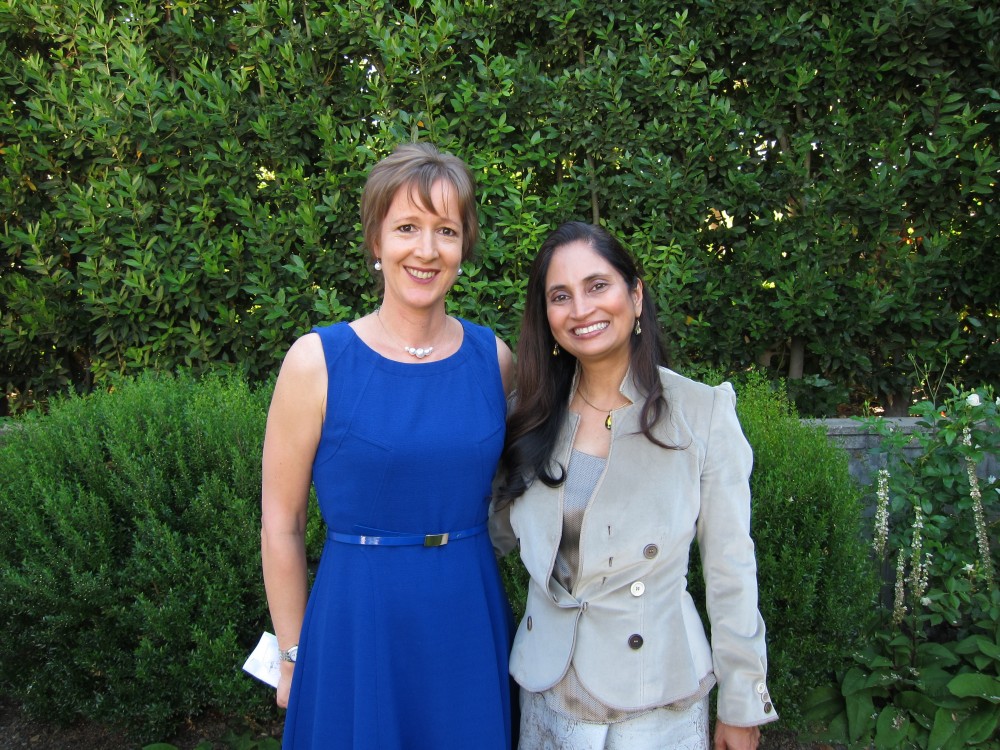
Cisco System’s CTO Padmasree Warrior discusses the “Lean In” Movement, and what lessons she’s learned in her remarkable career. Warrior, an influential Silicon Valley tech leader, on the Forbes List of 100 Most Powerful Women, says women shouldn’t hold themselves back, they should be “out there and leaning in to opportunities.”
.
.
Warrior emphasizes the importance of authenticity in leadership, letting people see “who you truly are.” Of course, being approachable…coaching, mentoring, and brainstorming ideas with your team are also key, she says.
On the question of finding balance in your life, Warrior is blunt. “I don’t like the word ‘balance,’” she says. “To me that somehow conjures up conflict between work and family…as long as we think of these things as conflicting, we will never have happiness. True happiness comes from integration…of work, family, self, community.”
Warrior dedicates Saturday as her digital detox day where she puts down her smartphone and busies herself with family and gardening, painting, cooking, even haiku. Check out her eclectic Twitter feed to learn more.
She told me that letting go of guilt is a vital lesson. “When my son was growing up, I was always guilty, no matter what I did, ” she says. “Make decisions and be happy with the decisions you’ve made. I tell myself in the long run, it’s the love, the quality of relationships that you have with your family, your friends and giving back to the community that matters.”
Here’s a summary of Warrior’s Seven Secrets of Success. Watch the video for all the details.
1. Be authentic, approachable
2. Mentor and coach others
3. Be out there and “lean in” to opportunities
4. Forget “balance” – integrate work, family, self, community
5. Avoid guilt
6. Be happy with your decisions
7. Think long-term and focus on relationship quality
The interview was recorded at SVForum’s Visionary Awards in Silicon Valley, June 26, 2013. Warrior was one of four honorees. Find out more about Warrior and her advice for getting more women in STEM.
Alison van Diggelen asks Fresh Questions and gets Fresh Answers. Find out more about her green interview series. And join the conversation on Facebook.
This is part of a special “Inspiring Women” series at Fresh Dialogues featuring Meryl Streep, Sheryl Sandberg, Jennifer Granholm, Maureen Dowd, and Belva Davis.
Jul 24, 2013 | Electric Vehicles, Green jobs, Inspiring Women, Women in tech
Alison van Diggelen, host of Fresh Dialogues
You might be excused for thinking that the success of Tesla Motors is entirely due to the brilliance of its leader, Elon Musk. OK, perhaps with a wee bit of help from his friend, JB Straubel?
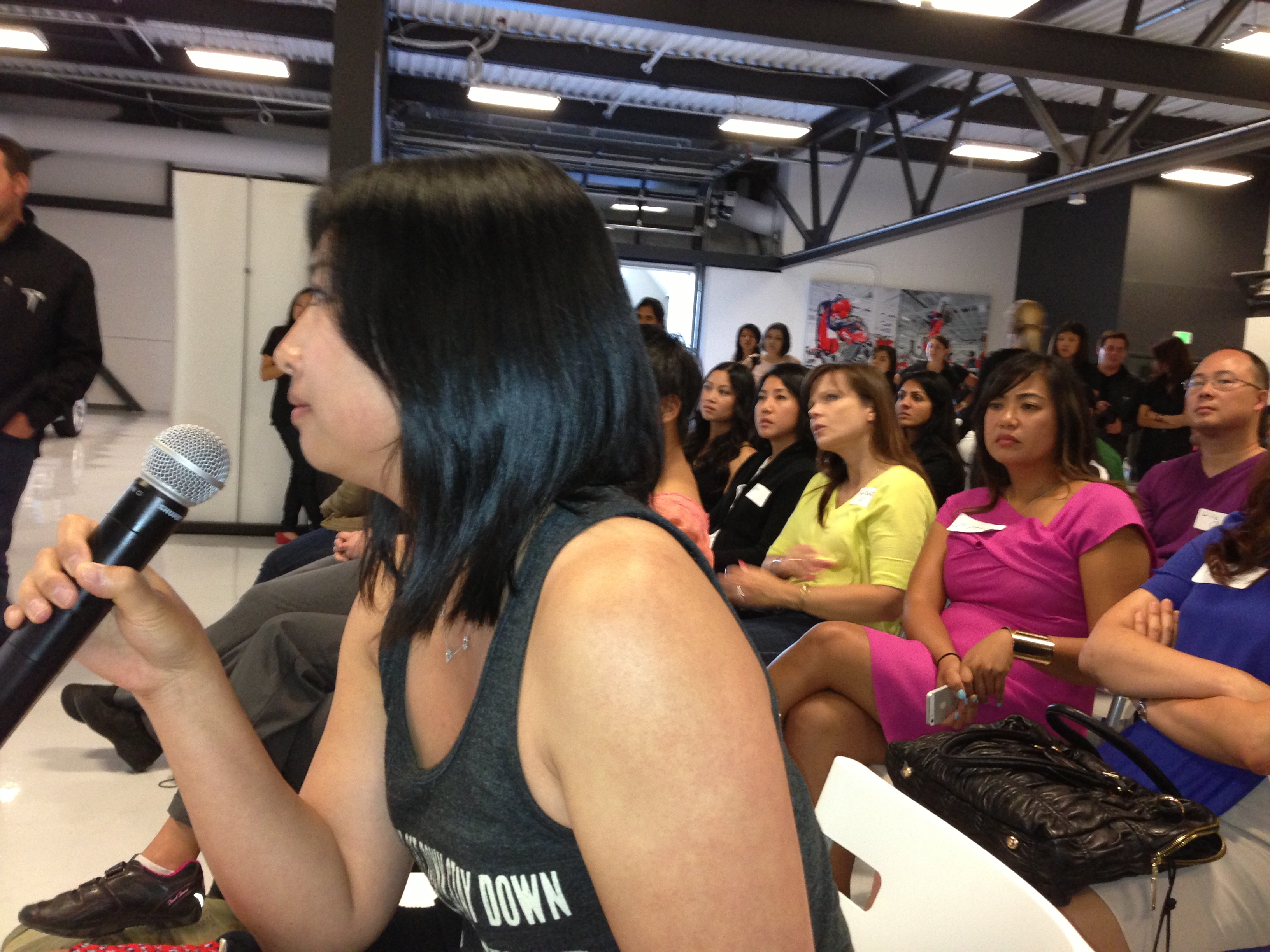
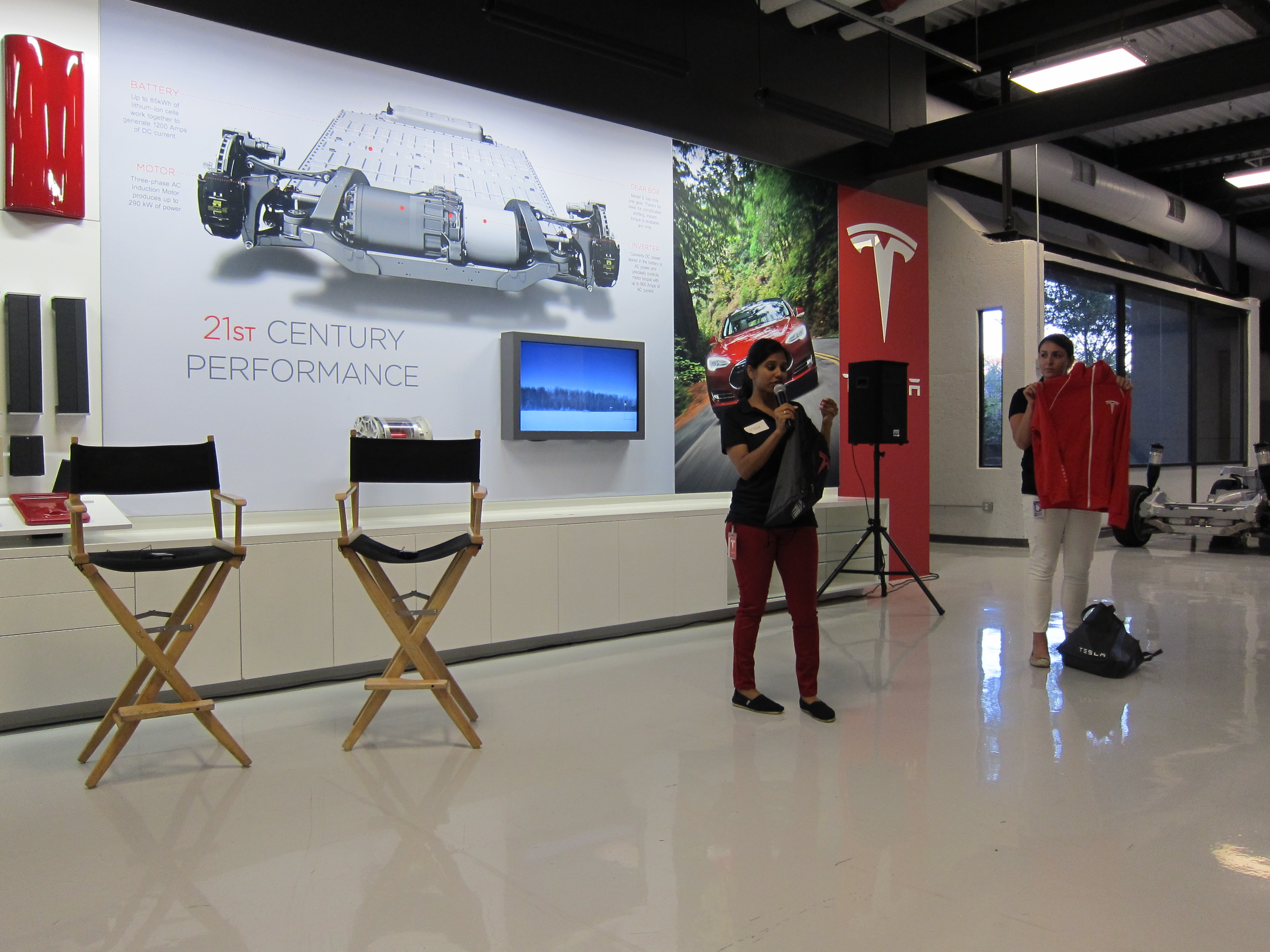
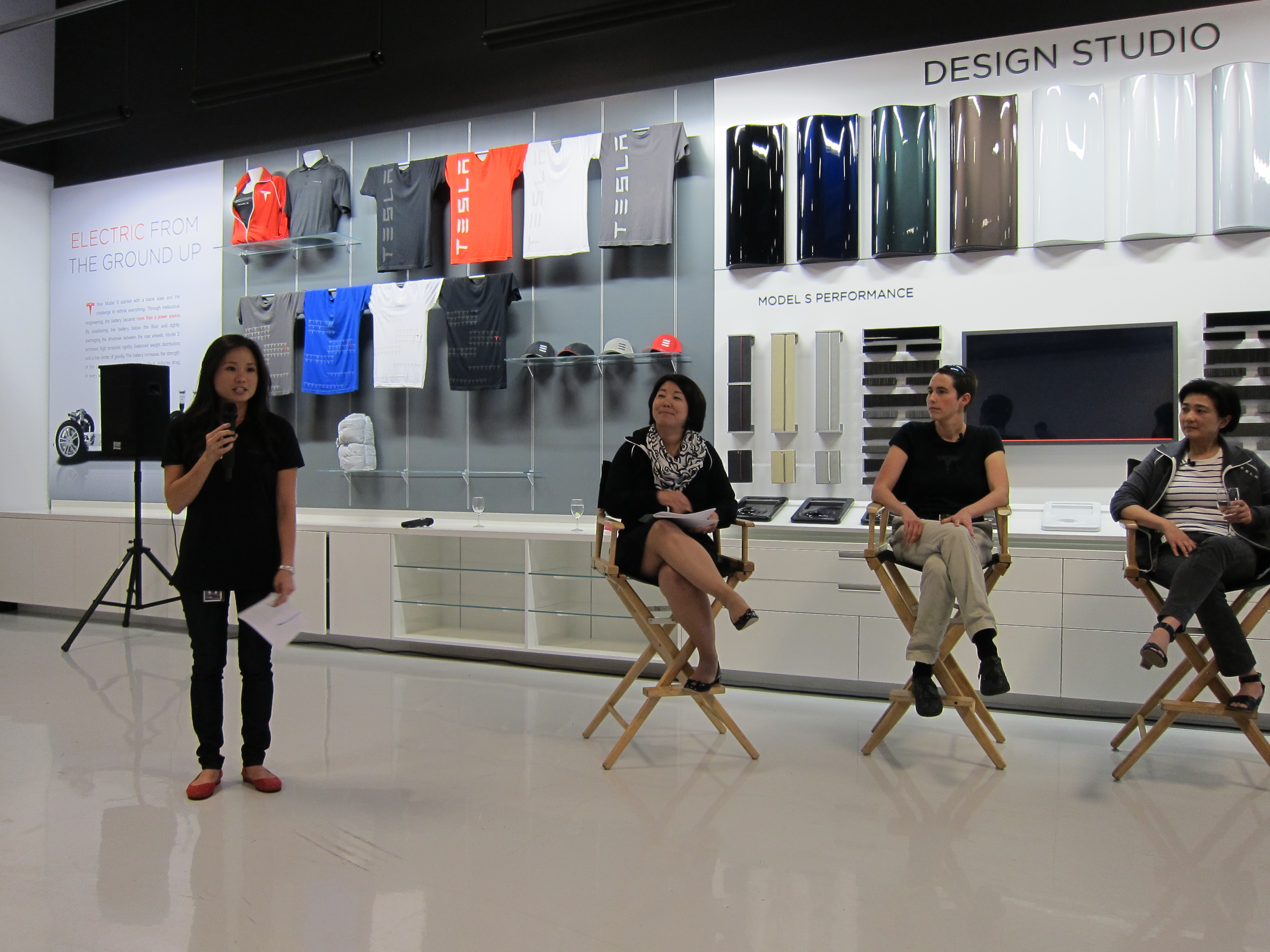
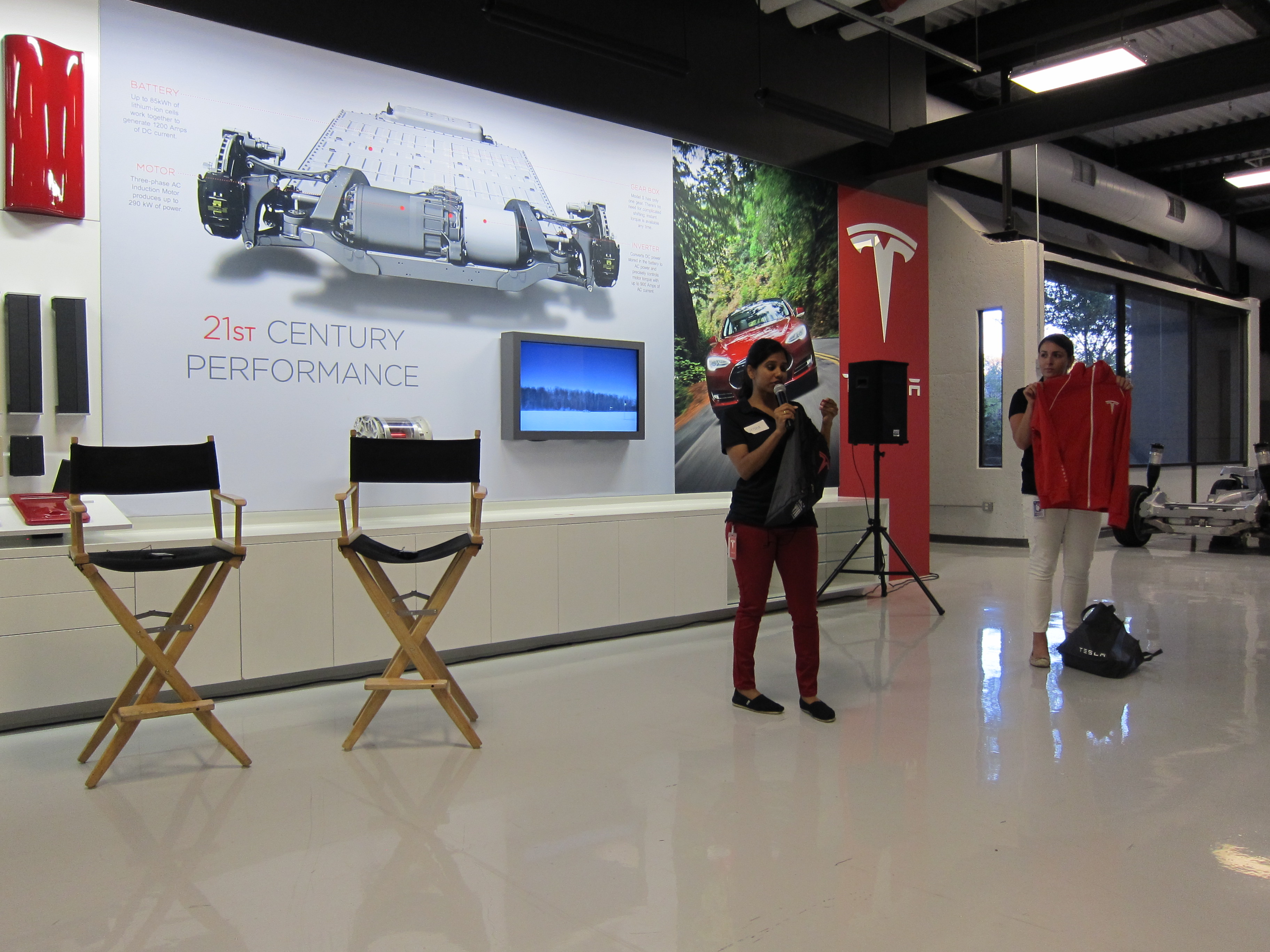
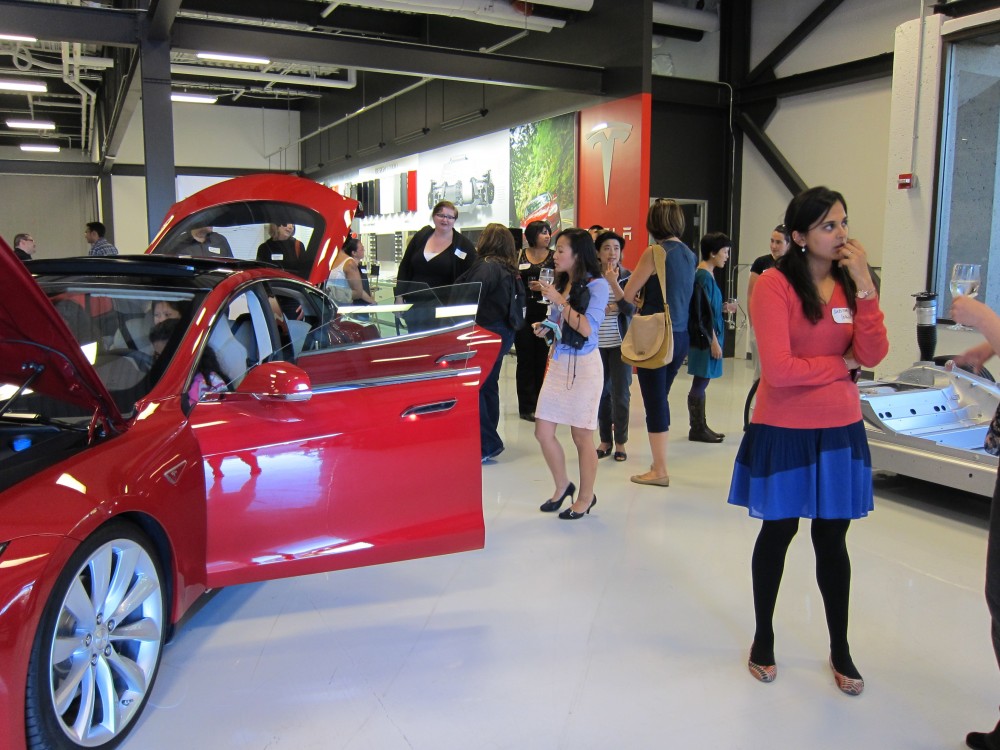
Well, that media delusion was dispelled last week when Tesla threw open the doors of its Palo Alto Headquarters and showed off a panel of top female engineers and leaders. The occasion was the 44th in a series of Bay Area Girl Geek Dinners, a popular women in tech group founded by Angie Chang and managed by the energetic Sukrutha Raman Bhadouria.
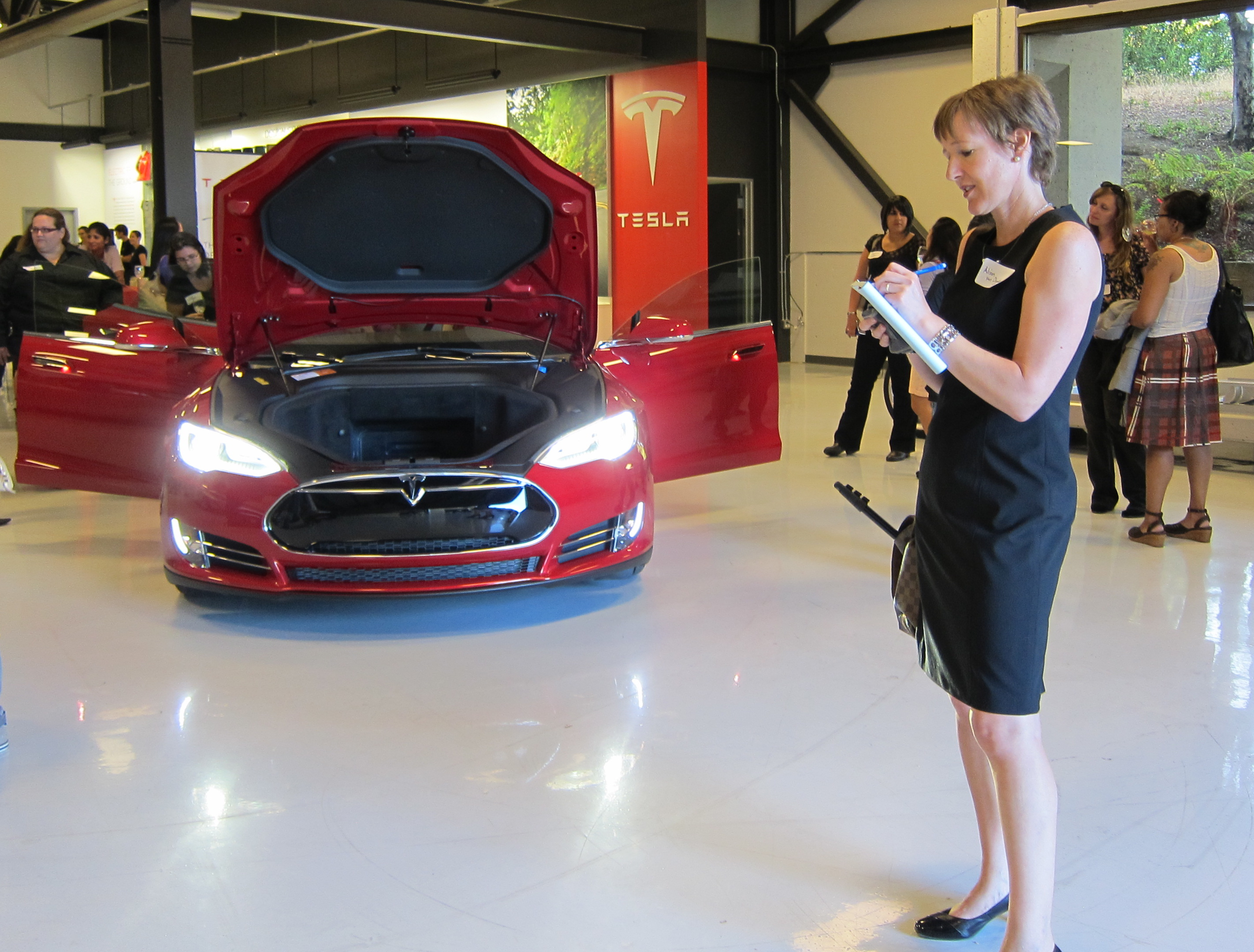
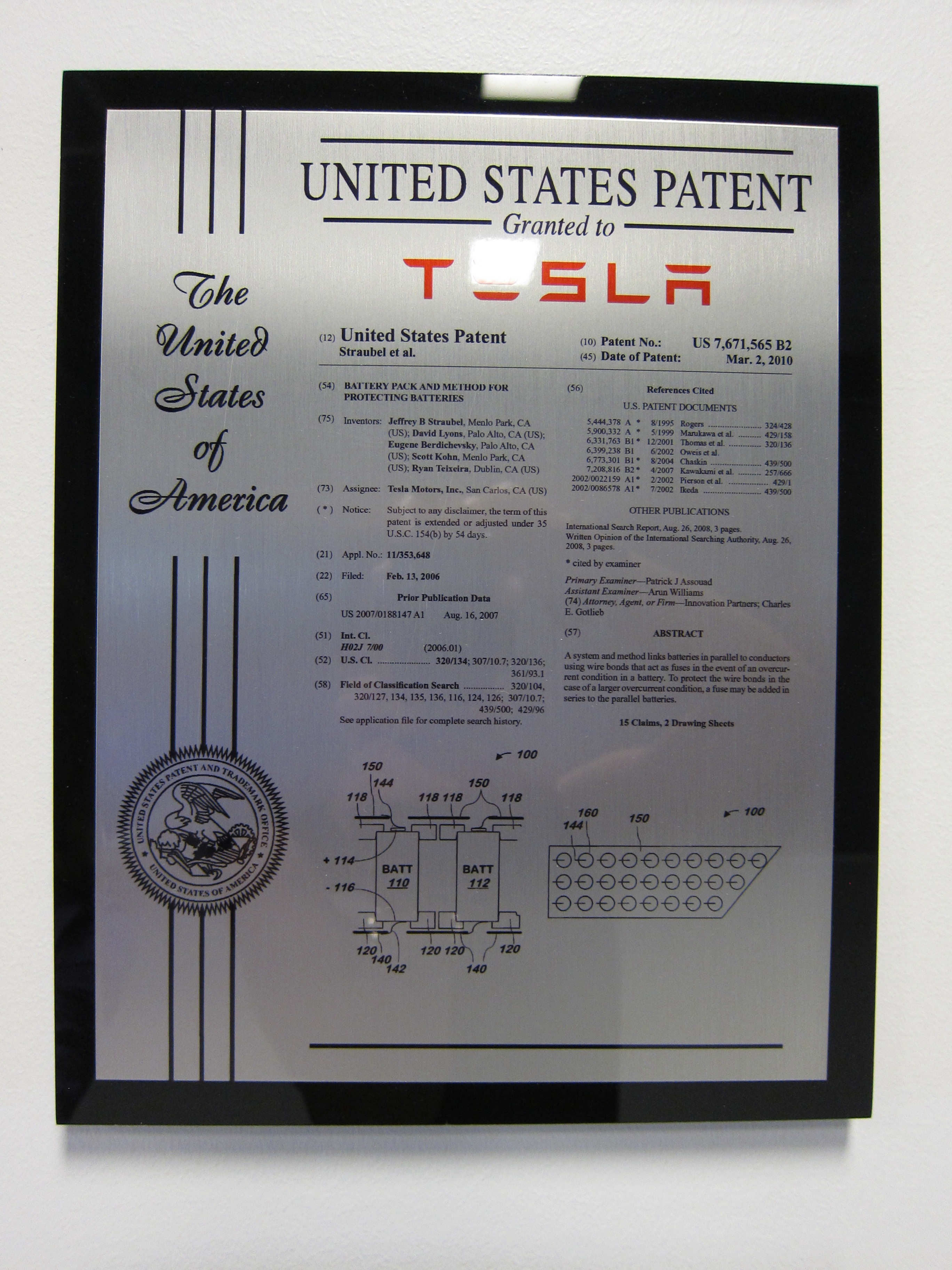
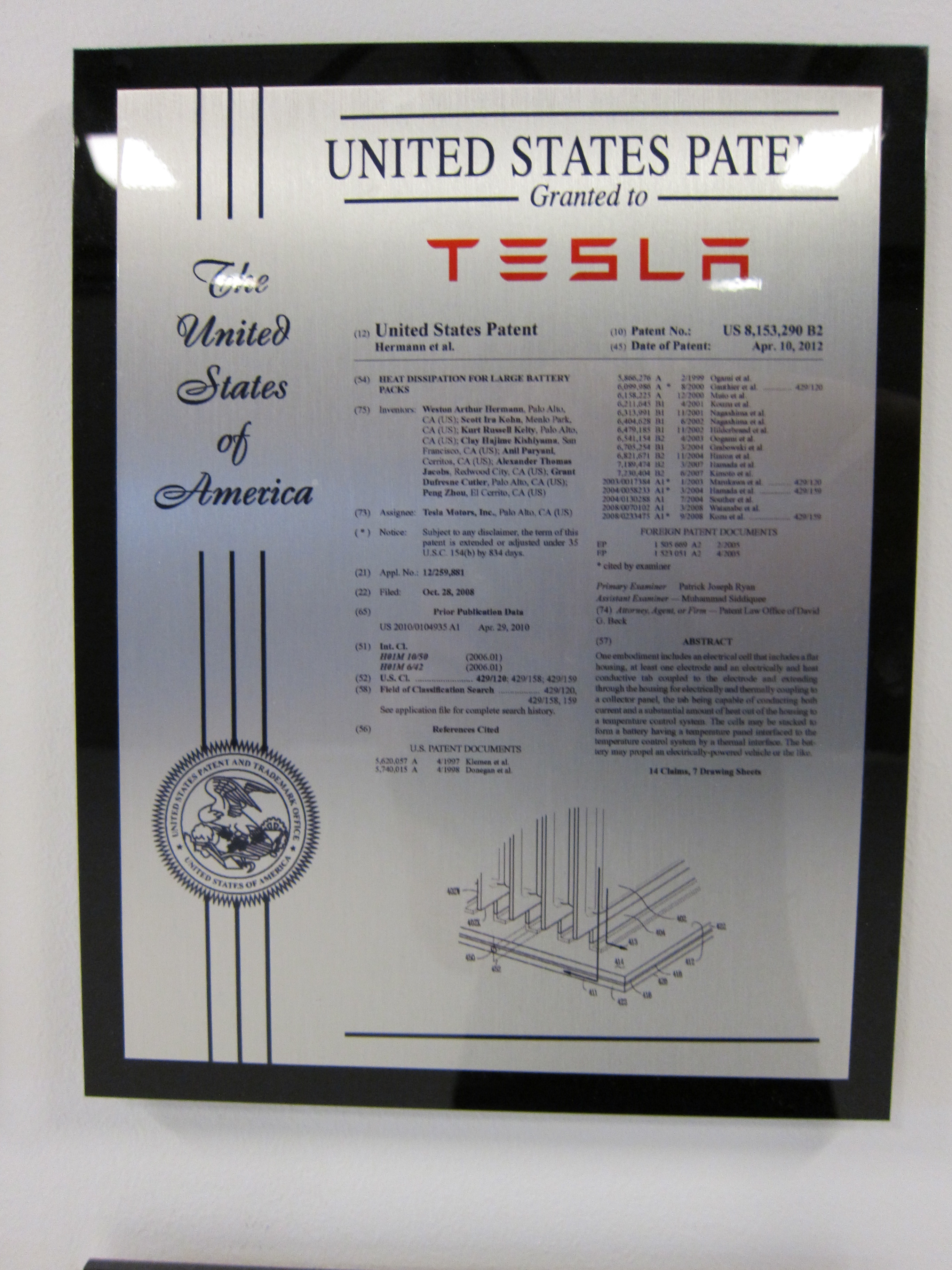
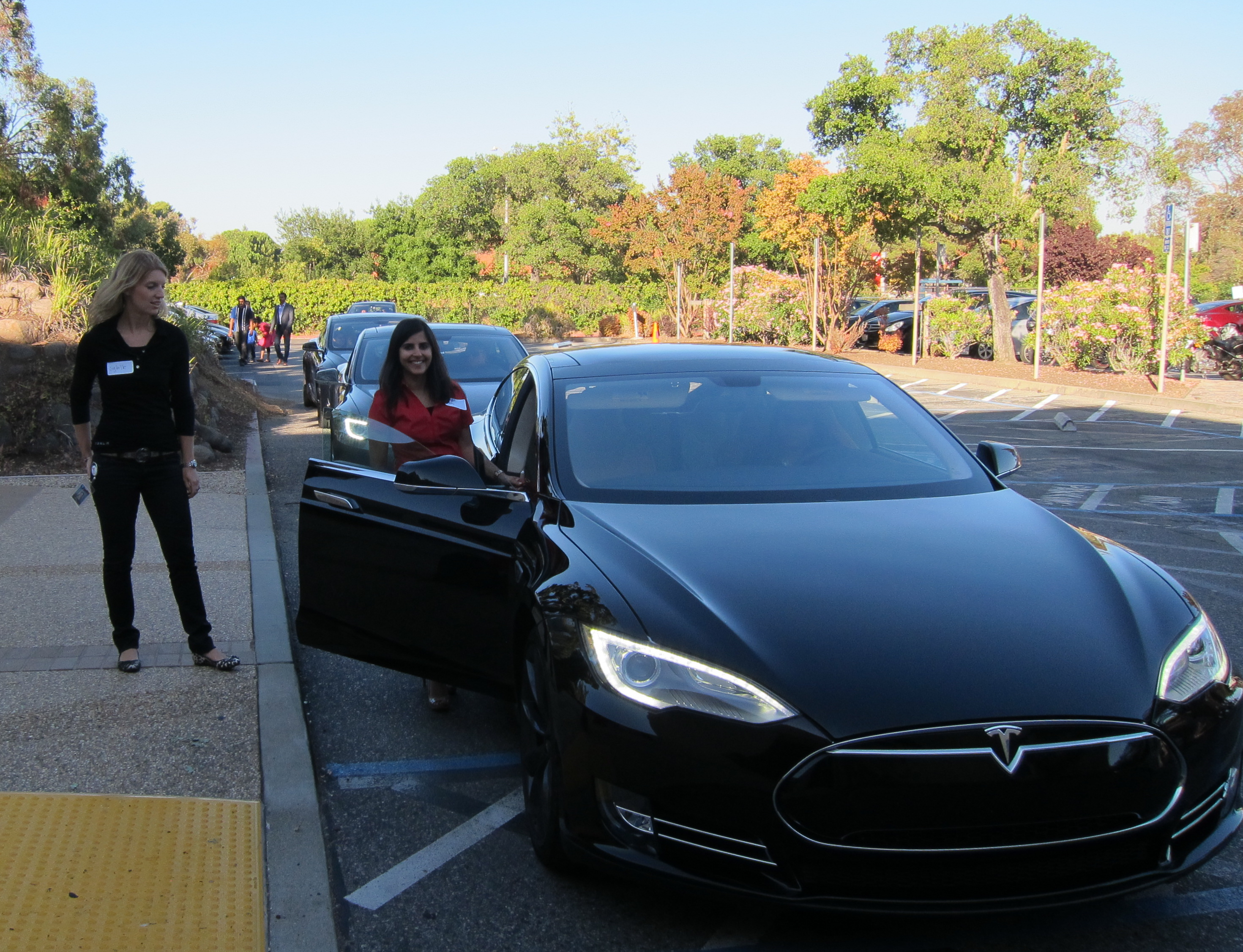
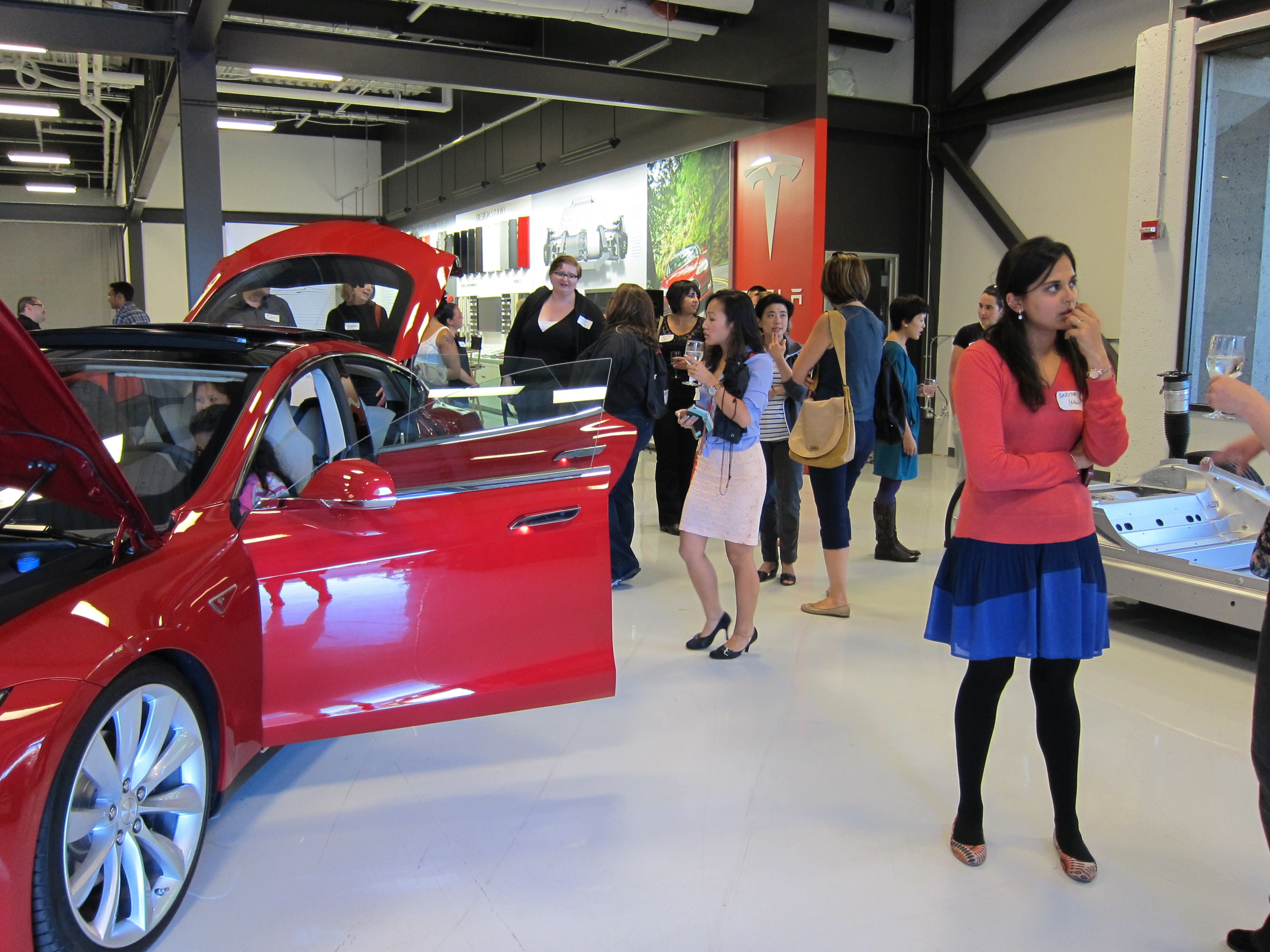
The group of 100 female techies was treated to Tesla Model S rides, product demos, networking with key members of the Tesla team; and a rare view of the Tesla patent wall (see photos below).
But the highlight of the evening was a lively panel of Tesla engineers and executives, including Katie Noble (Systems Integration Engineering Manager), Lauren Fullerton (Electronic Design Engineer), Miriam Vu (Product Manager), and Troy Nergaard (Senior Hardware Development Engineering Manager). Tesla’s Susan Repo (VP, Global Tax) did a solid job moderating the event and exploring:
1. The challenges of working at Tesla
2. Being a woman at Tesla
3. The importance of soft skills at Tesla
4. The legal action that Tesla faces from car dealers in some U.S. states.
We will be posting video excerpts at Fresh Dialogues YouTube Channel shortly. Meantime, here are some quotes:
On Working at Tesla
“You work with aggressive people occasionally, both male and female… Passions are high at Tesla and things can get heated…If someone blows up, you try not to internalize things…(and) appreciate the passion they have for a particular problem.” Katie Noble
“At Tesla, you don’t have time to take the wrong path. As a leader you need to know when to step in.” Troy Nergaard
On Time Pressures at Tesla
“With Tesla moving so quickly, we may not have all the answers right up front before we start moving… We are a very small team in a company that’s trying to do a lot of things, so time is of the essence.” Miriam Vu
On The Types Who Work at Tesla
“There are “car geeks” and there are “green geeks.” Troy Nergaard
The Bay Area Girl Geeks Dinners boasts a membership of over 8,000 and demand for the events – hosted at top Silicon Valley companies like Google, Yahooo and Facebook etc are typically over-subscribed. This Tesla event had 2000 signups for 100 tickets. As a result Chang and Raman Bhadouria have created a lottery sytesm for tickets.