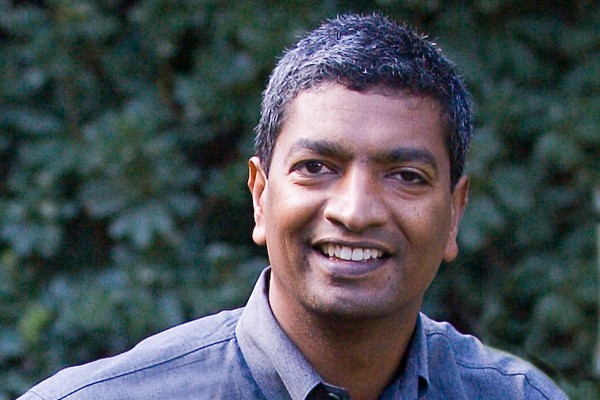
He shares his candid thoughts on why he thinks the venture capital model is broken and delivers a bullish pitch for a $500 Million VC Fund.
On the VC Model and Startups
“I think the venture capital model is fundamentally broken, but for different reasons. It’s not the lack of exits. A series of forces: including open source, the recession – so there’s lots of people available for very low prices and cheaper commercial real estate…You can start a company for a lot less today than ever. Life is good in that sense. ..You really don’t need $2 million to build a prototype…I’m talking about a certain type of company…a web 2.0 content, social network something… I’m not talking about finding a cure for cancer.”
.
Today, President Obama announced his nominee for Supreme Court to replace Justice Stevens. No surprise to Fresh Dialogues readers: it’s Elena Kagan. So what might she mean for the environment and green tech?
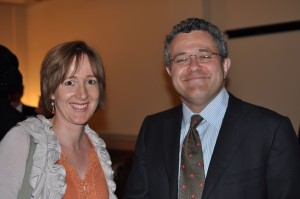
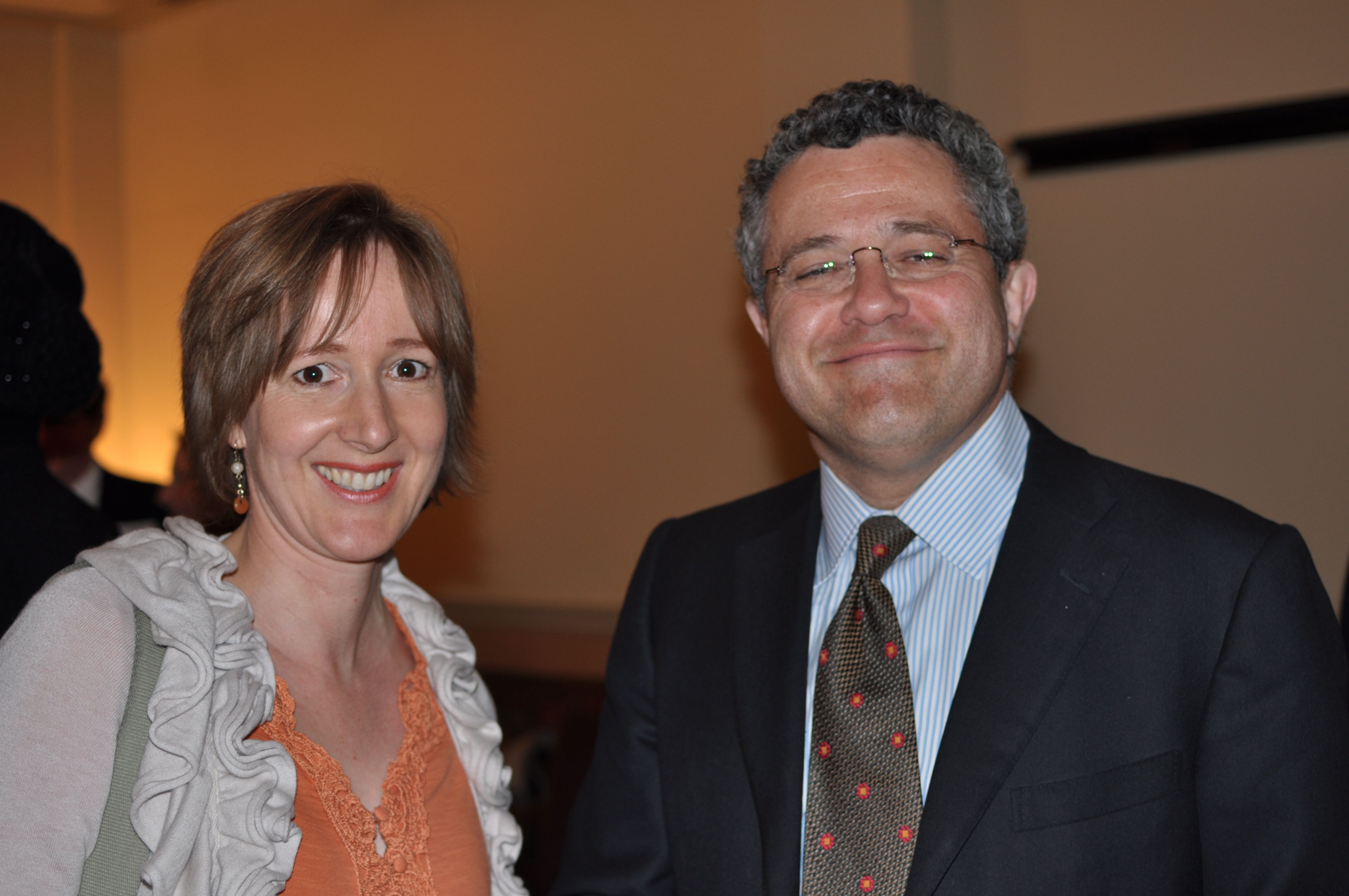
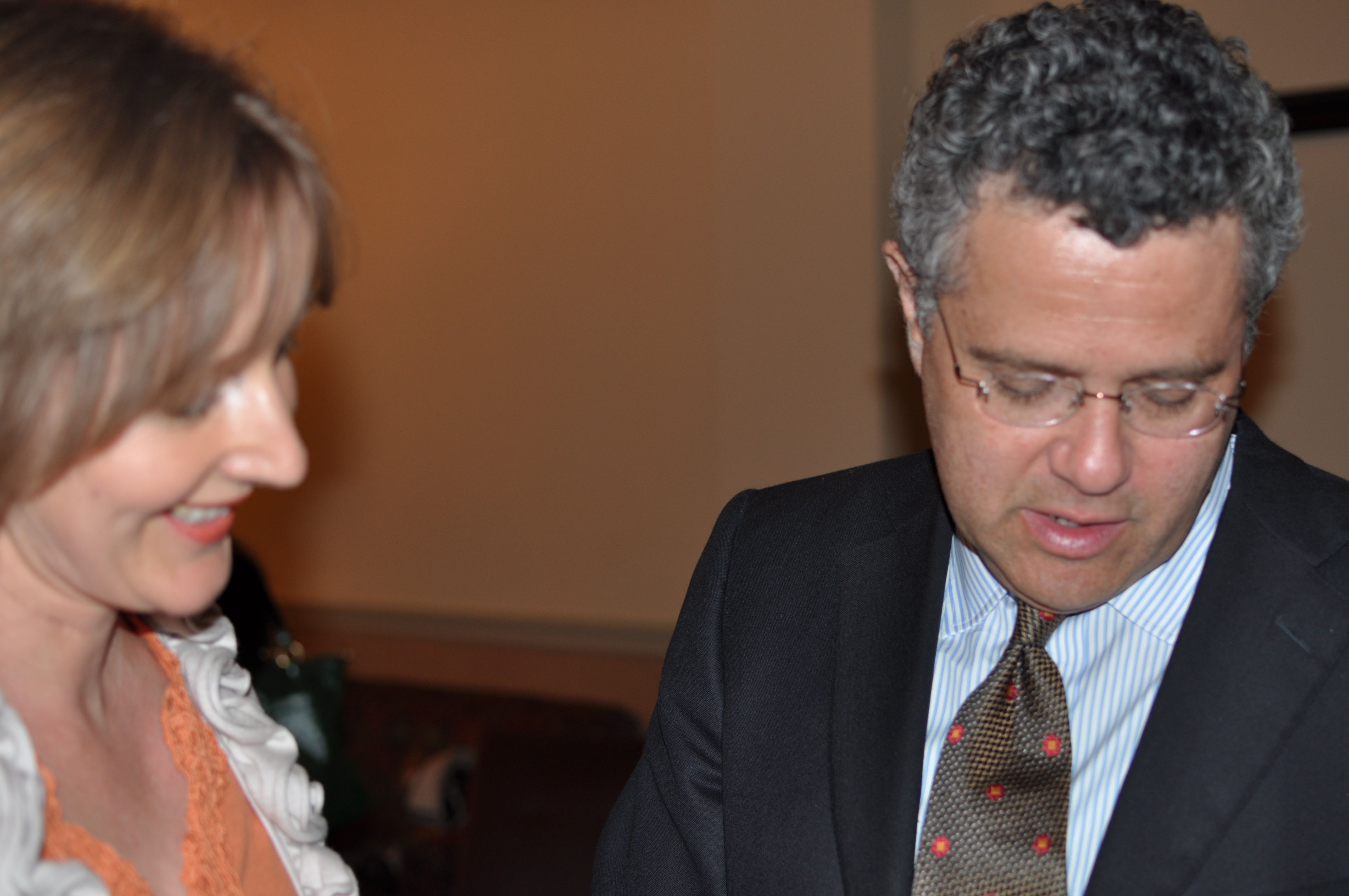
On April 1st, just days before Justice Stevens announced his retirement, I sat down with Jeffrey Toobin to discuss the environmental record of the Supreme Court and the likely pick for Justice Stevens replacement. Toobin didn’t skip a beat: Elena Kagan. In this interview from the Fresh Dialogues archives, Toobin explains why Obama favored Kagan over the other well qualified candidates for the post and speculates about her green credentials.
“She’s former Dean of Harvard Law School (Obama’s alma mater), very much an Obama type person – moderate Democrat, a consensus builder…”
.
Is Elena Kagan an environmentalist?
“My sense is that it’s not an issue that has come across her plate a lot…she’s someone who has written on administration law which tends to mean she’s a believer in the power of the Federal Government to regulate.” Jeffrey Toobin
The interview took place at Dick Henning’s Foothill College Celebrity Forumin Silicon Valley on April 1, 2010. For more Fresh Dialogues interviews with business leaders and experts check out Fresh Dialogues YouTube Channel
For more on Elena Kagan’s green credentials: check out this article at Grist.org
And here is an ARCHIVE of interviews with Paul Krugman, Tom Friedman, KR Sridhar and many others
Fresh Dialogues(TM) is an interview series with a green focus: Fresh Questions, Fresh Answers. This video interview took place at Foothill College Celebrity Forum on April 1, 2010, just one week before Justice Stevens announced his retirement. Check out the new Fresh Dialogues YouTube Channelmore exclusive interviews.
ALISON VAN DIGGELEN:Hello and welcome. Today on Fresh Dialogues: Jeffrey Toobin.
Jeffrey – thank you so much for joining me on Fresh Dialogues. Let’s go on to your specialty: The Supreme Court. In 2009, they decided against environmentalists in a lot of cases…
JEFFREY TOOBIN: Six out of six.
ALISON VAN DIGGELEN: Yes. What are your thoughts on that, moving forward? Is this going to continue…this anti-environmental stance of the Supreme Court?
JEFFREY TOOBIN: I think that the court as currently constituted will likely continue in that direction. I don’t think it’s a particular hostility to the environment per se. I think it is a general sympathy for corporate defendants in all cases, environmental cases being one category of cases where the corporations are the defendants. They are also generally – the conservative majority – fairly hostile to government regulatory efforts…and the environment is one area, not the only area. So if the court stays as it currently is, I think you’ll see a lot more cases like that.
ALISON VAN DIGGELEN: So would you say, it’s moving more pro-business?
JEFFREY TOOBIN: Clearly
ALISON VAN DIGGELEN: And the environment losing out as a result?
JEFFREY TOOBIN: That’s certainly how the environmentalists see it.
ALISON VAN DIGGELEN: And how do you see it?
JEFFREY TOOBIN: Again, not a field of great expertise of mine, but I see who wins the cases and who loses them. And it’s the polluters who keep winning.
ALISON VAN DIGGELEN: And what about the future? Justice Stevens is due to retire shortly…
JEFFREY TOOBIN: He hasn’t said so officially but I think he will retire this Spring.
ALISON VAN DIGGELEN: So how is that going to change things? What are your predictions?
JEFFREY TOOBIN: I think he is a key member of the liberal four on the court, he will likely be replaced by another liberal. So in terms of the outcome of cases in the next few years, probably not a huge impact, but I often like to quote Byron Whitethe late Justice,who said if you change one Justice, you don’t just change one Justice, you change the whole court. If you start to have an energized liberal group of young – by Supreme Court standards -Justices like Sonia Sotomayor, like the next Obama appointee, the wind could start to be at their back. And if Obama gets re-elected, you could see more appointments…so it’s a big deal.
ALISON VAN DIGGELEN: And who is your No. 1 candidate for that appointment?
JEFFREY TOOBIN: Elena Kagan, the Solicitor General, former Dean of Harvard Law School. Very much an Obama type person – moderate Democrat, a consensus builder…
ALISON VAN DIGGELEN: Do you know if she’s an environmentalist?
JEFFREY TOOBIN: I don’t… I just don’t know. My sense is, it’s just not an issue that has come across her plate a lot…she is someone who has written on administration law, which tends to mean she’s a believer in the power of the Federal Government to regulate. But I wouldn’t…
A – I don’t know what she thinks…and B – I don’t…
A is enough. I don’t know what she thinks about these issues…(laughter)
ALISON VAN DIGGELEN: (laughter) OK. Jeffrey Toobin I really appreciate your taking the time for Fresh Dialogues.
JEFFREY TOOBIN: My pleasure. Nice to see you.
For more Fresh Dialogues Video interviews click here
There are countless Silicon Valley wannabes all over the world, from Silicon Wadi in Israel to Silicon Glen in Scotland, but none rival Silicon Valley’s track record. Why is Silicon Valley the premier center of innovation? What is the secret of Silicon Valley’s success?
I joined Morton Grosser, a Silicon Valley venture investor, consultant and inventor in his Menlo Park workshop to discuss the history of Silicon Valley and the key ingredients that allow innovation to flourish here. As a former director of eight high-tech companies and strategy advisor to such stalwarts as Hewlett-Packard, Apple, Kleiner Perkins and many Fortune 100 companies, Grosser (or Mort, as he prefers) provides a unique perspective on what makes Silicon Valley successful.
Why did Silicon Valley grow here?
“Silicon Valley has an extraordinary meritocracy culture…it’s an accident of time and place.”
What is the Vital Ingredient?
“We’ve had a unique surplus of the four things that are necessary for an entrepreneurial culture…a great university or universities, smart young entrepreneurs, a source of capital, but most leave out the most important part:
What you really need is a culture of meritocracy. You need horizontality.”
The Father of Silicon Valley, Fred Terman‘s epiphany
“He noticed that science and engineering seminars were taught by 23-year-old graduate students, because those are the people making the progress…this was anomalous for the industrial world… Terman noticed this 70 years ago and he wrote about it in “Steeples of Excellence.” He said, if you could move this principle out of academia into industry you would have an enormous advantage over many other companies.”
How to build innovation – the Silicon Valley Way
“It’s not just the capital…it’s the intellectual environment, the ambiance, the acceptance, it isn’t merely mentoring it’s accepting…To build a culture that is unique; in which industrial companies would have the same structure, where young people have a voice, where new and creative ideas … flourish.”
On Creativity
“You don’t have to teach children creativity, you just have to get out of their way.”
Want to learn more?
The book “Regional Advantage” by Berkeley’s Dean of the School of Information, AnnaLee Saxenian, compares Route 128 (the Boston innovation hub) with Route 280 (Silicon Valley) and explores the reasons, as Mort puts it, “Why Silicon Valley succeeded and Route 128 did not… It comes down to the difference between horizontality and verticality.” In summary: Boston developed a system dominated by independent, self-sufficient corporations, whereas Silicon Valley developed a decentralized but cooperative industrial system.
Like most ambitious entrepreneurs in Silicon ValleyBloom EnergyCEO KR Sridharwants to change the world. Now where have we heard that line before? It’s the ubiquitous rally cry for thousands of Google/ Facebook/eBay wannabes around the world. But what makes KR Sridhar different?
How about $400 Million in venture capital from the likes of Kleiner Perkins’ John Doerr; a 100-strong team of PhD. rocket scientists (like himself) and top engineers from multiple disciplines who’ve been working secretly for eight years; and a client list that includes Google, eBay, Staples and FedEx. Add to that, enthusiastic backing from Arnold Schwarzenegger, splashy coverage from CBS’s 60 Minutes, and Time Magazine which last December dubbed him one of eight “Tech pioneers who will change your life.”
Yet, it does sound too good to be true. Not surprisingly, the naysayers are aplenty. A skeptical article in the Economist said there were many reasons for questioning the company’s “hype”, including the difficulty of shrinking the fuel cell components, and competition from the likes of GE. In a typically British fashion, it mocked Bloom Energy’s ambitions, referring to “flower power” and “fuel’s gold” in the article.
But if we look back a few years; before KR Sridhar emerged from stealth to become the Steve Jobs of Green Energy – more substantive information emerges. He was quoted in Tom Friedman’sNew York Times column as saying,“We are thrivers. Thrivers are constantly looking for new opportunities to seize and lead and be number one. That is what America is about.” In an exclusive interview at the Bloom Energy headquarters, I asked him to explain this comment, his motivations and why he believes his company really can change the world.Distributed power that is reliable, and affordable are key parts of his strategy.
“This is a mission about changing the world because energy is a passport to a better living. For the rest of the world that does not have access to power, access to electricity, to give them that is empowering them to a better life. So if the solution works and you make it affordable and you can distribute it all over the world then definitely you have changed the world. So … if that’s your goal and you achieve that goal, clearly given the size of the energy market, it’s in trillions not in billions and given how many people you can impact with this kind of stuff, this has to be a prominent company. So, I would say being the number one corporation is an offshoot of achieving your larger mission.” KR Sridhar, CEO Bloom Energy
To check out more exclusive Fresh Dialogues interviews with Tom Friedman, Vinod Khosla, Paul Krugman, and many other leaders click here or use the Search Box to the right.