“When did you see a $10 Billion market grow three orders of magnitude in 20 years?”
(That’s Platshon’s prediction for the growth in the lithium ion cell market as we drive more hybrid cars and new generation Electric Vehicles).
What will attract the attention of venture capitalists?
“We are looking for novelty and creativity…materials, systems, cooling…no one is going to find an execution plan because you are up against Samsung and Panasonic, the gorillas. You gotta do something that is truly novel, truly different and run like hell…cos they’re after you.”
.
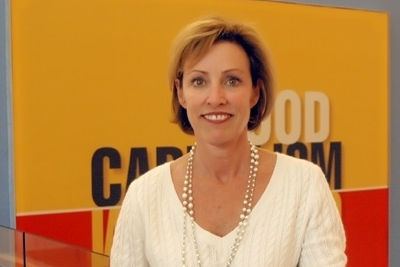
Reid Hoffman’s concept of leveraging the power of entrepreneurship was echoed again this summer when I talked with Lesa Mitchell, VP for Advancing Innovation at the Kauffman Foundation. She shared her enthusiasm that, for the first time, the Federal Government is waking up to the enormous impact entrepreneurship can have on the economy and recently created an Office of Innovation and Entrepreneurship. It has limited staff and funding, but it’s a start. I wonder if it will one day include a department of GREEN entrepreneurship? It’s widely accepted that “picking winners” is not the best use of government resources, however, there is much government can do to create a fertile ecosystem for startups to thrive.
Lesa Mitchell recently testified before Congress and shared some of her top recommendations with me:
1. The need to development world-class commercialization boot camps for university students and faculty and entrepreneurs, to get innovation out of labs and into commercial production – this she says is the “low hanging fruit.”
2. Before giving grants, the government must set rules to encourage transparency, sharing data, resources and outcomes. Mitchell cited Kauffman’s iBridge Network (a Craigslist for innovation) as a suitable model to create a “lens into universities.”
3. A free agency licensing model should be adopted to encourage more rapid commercialization of innovation. This idea has created some controversy, but the Kauffman team should be applauded for not pulling its punches.
For more information on the Kauffman Foundation’s work on entrepreneurship and startup trends click here
June 24 marked the 13th annual SDForum Visionary Awards, a celebration of the innovators and chutzpah that make Silicon Valley unique. Although the four visionaries come from diverse backgrounds, Silicon Valley was the common theme for the evening. The visionaries gave a revealing glimpse into the Silicon Valley State of Mind. What exactly is Silicon Valley? What’s its role in the world?
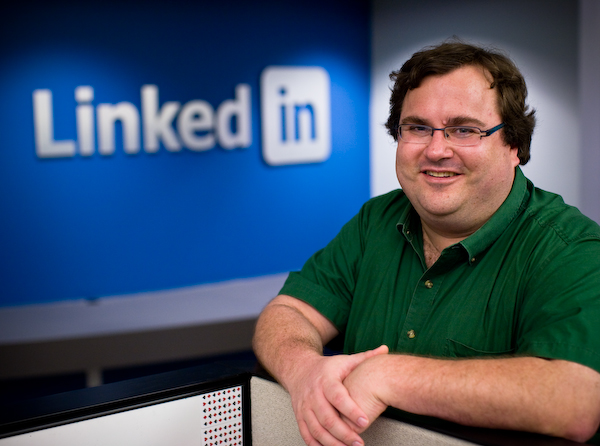
This week, we look at Reid Hoffman’s viewpoint. He’s co-founder of LinkedIn and a renowned innovator in Silicon Valley. He had some strong words to say about the power of entrepreneurship and its ability to jumpstart the economy.
Jeff Weinerof LinkedIn introduced Reid Hoffman as someone with a brilliant strategic mind and ability to invent the future. As well as being Executive Chairman of LinkedIn, Hoffman is also a partner with venture capitalists, Graylock Partners. Pointing to his colleague’s multidisciplinary background (Hoffman studied symbolic systems and philosophy at Stanford and Oxford respectively), Weiner concluded that education provided the building blocks to create an outstanding public thinker and social networking pioneer. Weiner reminded the audience that Hoffman understood the ability of technology to inform and connect people, inspiring him to launch Socialnet (a precursor to LinkedIn) before Facebook and MySpace existed.
Hoffman walked to the podium with some reluctance, saying that listening to the introduction made him “want to run and hide”; yet he started his speech off by grounding us in time and place.
“It’s an enormous privilege to be at this center fulcrum of how we change the world, that we call Silicon Valley,” he said, and posed the powerful question, “What more should we do with that?”
Talking like a true Silicon Valley techie, he suggested not two “answers,” but two “vectors” to his question. And, the visionary he is, Hoffman thinks BIG. First, he recommended leveraging entrepreneurship as a powerful way to get the world economy back on track. Drawing from author, Tom Friedman’s thesis, Hoffman said,
“We live in a world that is increasingly flat and increasingly accelerating. When you have challenges like economic turbulence and uncertainty… entrepreneurship is a really good pattern…we need to make it more available globally.”
Provoking wry laughter from the crowd, he pointed out that there is no entrepreneurs’ lobby in Washington DC, and implied there should be one to encourage entrepreneurship as part of the stimulus package, both here in the U.S. and around the world.
His second “vector” or call to action was: how can we take business models to the non-profit sector? Drawing from his work at Kiva.org and Endeavor.org, he suggested hybrid models of self-sustaining nonprofits that can help spread entrepreneurship and create high impact change.
“I love to play at the heart of what we do best in Silicon Valley,” said Hoffman. “To take risks, develop technologies and use financing and inspire entrepreneurship to create a lever by which we move the world.”
Guy Kawasaki, the renowned Apple evangelist shares his top tips on how to become a great evangelist and how to leverage your success. This segment is part of a longer interview which took place in front of an audience of over 500 on July 7, 2010 at UC Santa Cruz Extension, and introduced my upcoming course in Green Entrepreneurship. First up: I asked Guy for TIPS ON EVANGELIZING
“The starting point for a great evangelist is to have a great product….” e.g. the Apple iPad: how hard could that be? Guy Kawasaki
“The thing that has made me successful is that – unlike a lot of people – I’m willing to grind it out.” ie long hours, hard work. Guy Kawasaki
On leveraging your success
“With a psych(ology) degree and a marketing background (diamonds), I’m living proof that you can fool most of the people all the time. I’m also living proof if you do one thing right (evangelize the Mac) – you can live off your reputation for decades.” Guy Kawasaki
Please check back soon for more interview segments with Guy on social media, increasing your followers on Twitter ( to 200,000+) and other wisdom from the author of The Art of The Startand 8 other books on business and entrepreneurship.
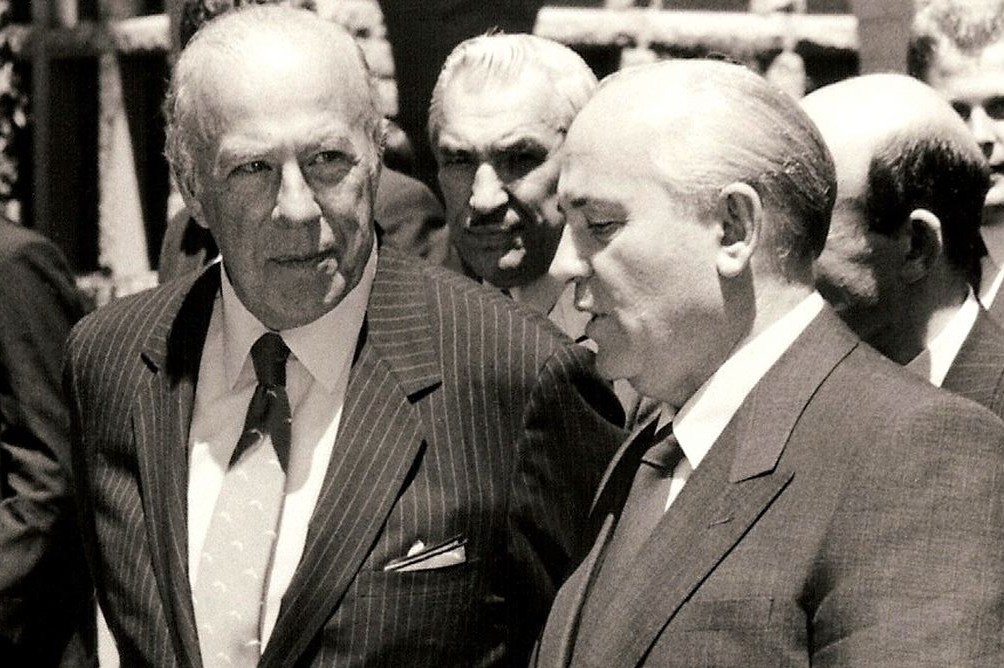
Former U.S. Secretary of State, George Shultzdelivered an eloquent summary of the facts surrounding AB 32(California’s answer to global warming) at the Silicon Valley Energy Summit at Stanford University on June 25. Shultz, a Distinguished Fellow at the Hoover Instituteand Advisory Council Chair at the Precourt Energy Efficiency Center, was billed as a Moderator/ Provocateur at the event, and despite his 89 years, he rose to the challenge and then some. In concluding remarks, he said it would be “an unmitigated disaster” if the measure to suspend AB 32 passes in the November election.
He was moderating a panel which included Lawrence Goulder, Director of environmental and Energy Policy at Stanford; Kevin Kennedy, Assistant Executive Office, Office of Climate Change, California Air Resources Board (CARB) and Peter Miller, Senior Scientist, Natural Resources Defense Council. Check back for more details on each soon.
“The emission of carbon imposes a cost on society…you have to recognize that cost…” George Shultz
“If we’re going to level the playing field…we want a system that’s number one: effective… and number two: creates as little drag as possible or even gives a slight lift to the economy.” George Shultz