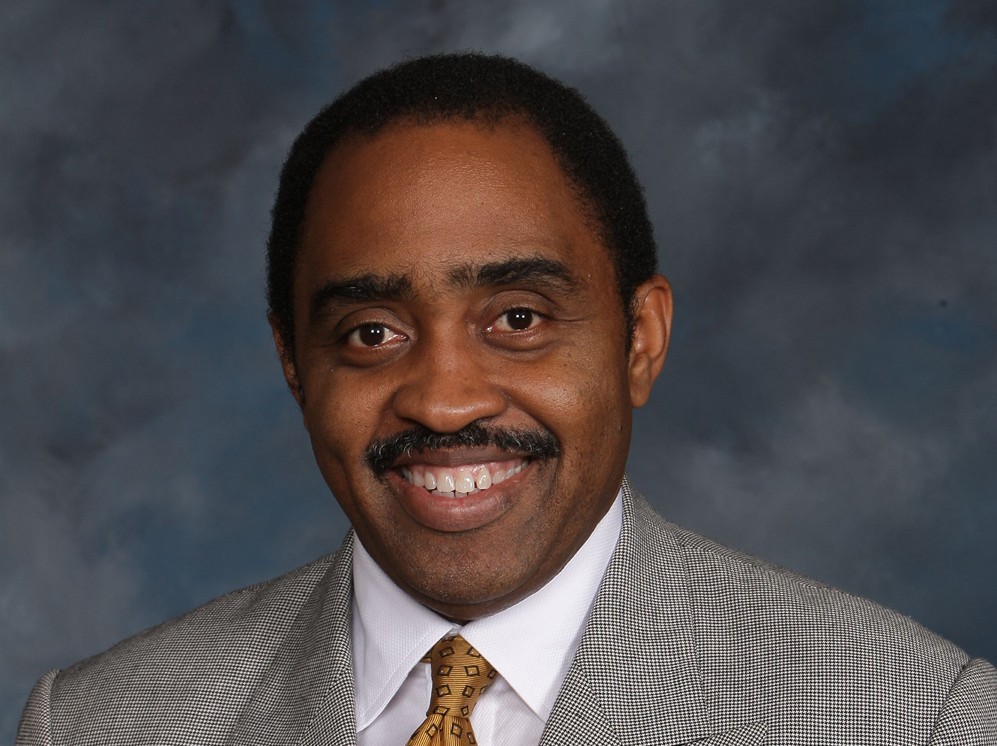
Last week, I sat down with Emmett Carson, President and CEO of the Silicon Valley Community Foundation. In a wide ranging conversation on green jobs, the Obama White House, education and financial literacy, we focused in on the role of the $1.7 Billion Foundation in addressing the immediate job crisis in Silicon Valley. How should coalitions of green minded people come together to create a green jobs mecca in the Bay Area? How do you jump start a green jobs explosion? According to Emmett, it’s all about forging informed dialogues between powerful coalitions.
On Creating a Green Jobs Mecca
“There has to be a group of people who are going to make some strategic investments…There are coalitions of green folk who are already meeting… where government officials can help, where foundations folk can help and be attuned and listen to what they say they need and where there opportunities will be. So that you start to say to the community colleges, ‘here are the kinds of jobs to train people for.’ What are the jobs that are going to stay around for a ten year cycle? This is the more thoughtful, longer term thinking that we need all of our public leaders to engage in…if we’re really going to have that green jobs explosion.”
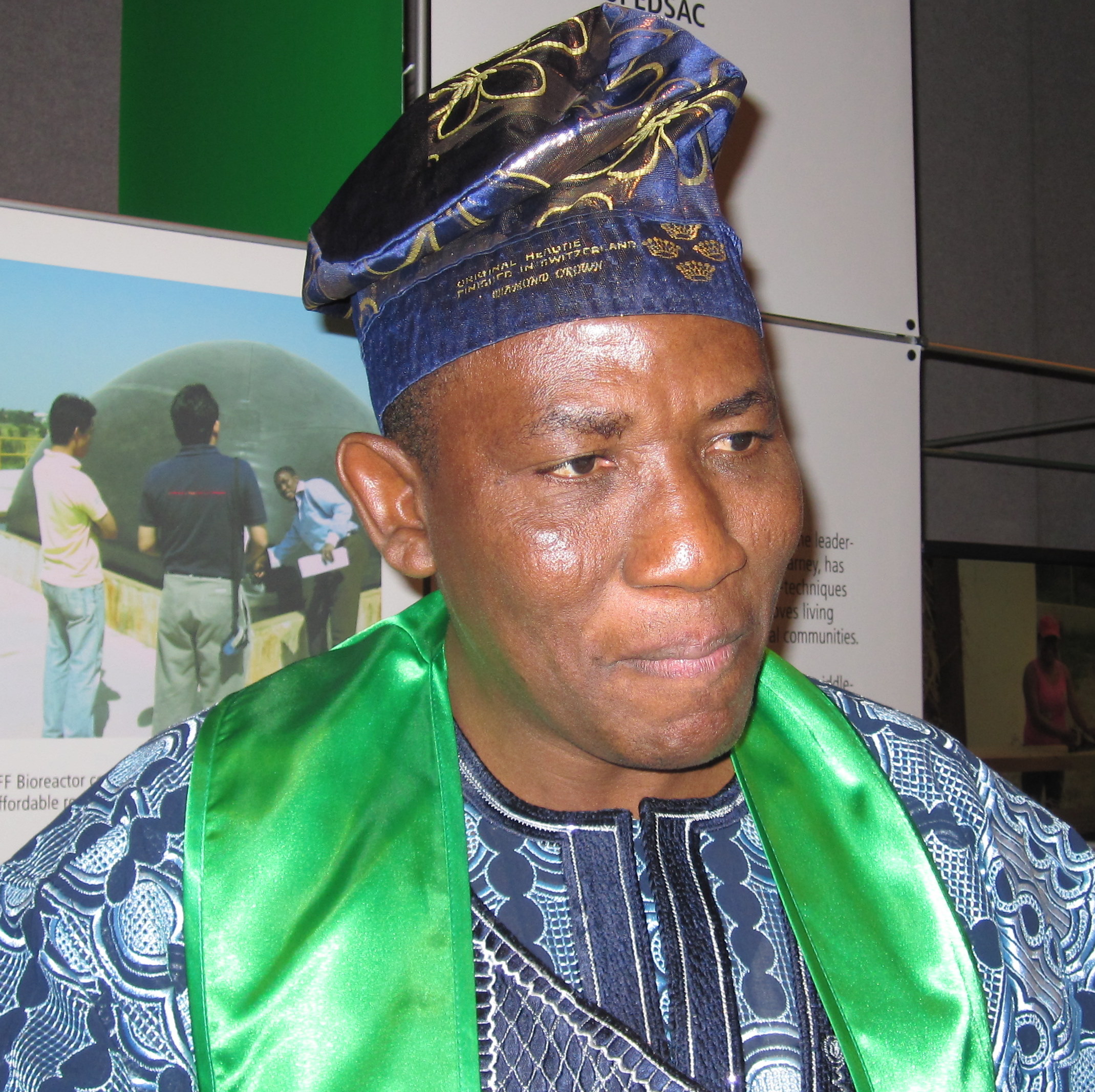
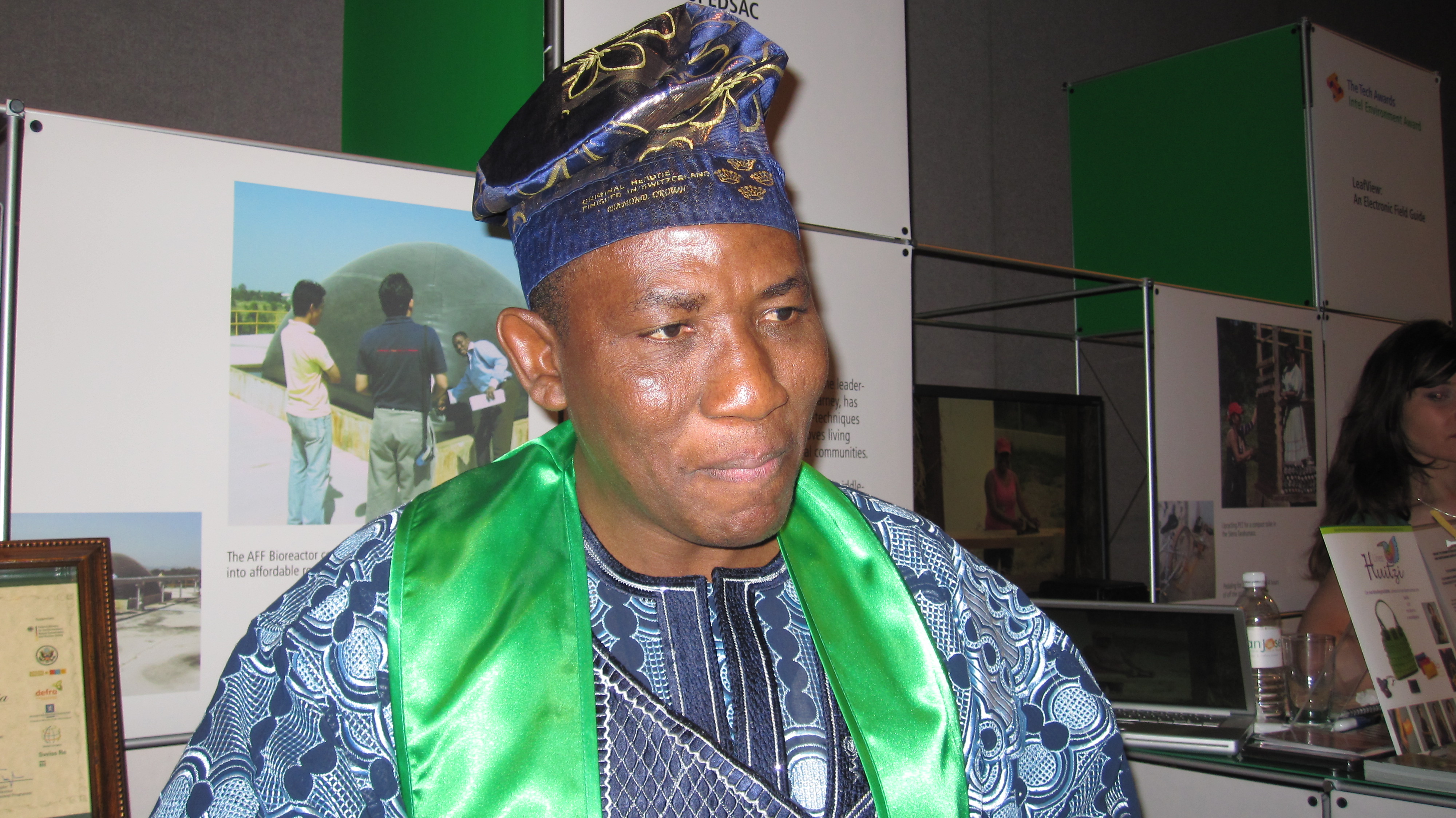
The catchy title “Cows to Kilowatts” certainly won the attention of the crowds at the 2009 Tech Awards Galain Silicon Valley, but the project won accolades for more than mere words. Dr. Joseph Adelegan, an Ashoka Fellowis a charismatic engineer who has found an effective way to harness the energy from slaughterhouse waste and won the $50,000 Intel Environment Award . He and his team at the Nigeria based Global Network for Environment and Economic Development Research, are creating cooking gas and electricity from effluent that might otherwise lead to harmful pollution.
What does the Tech Award mean to Dr. Adelegan?
“We’ve received several awards… so it’s not really receiving the award… but the opportunity to network, to meet great minds in Silicon Valley… see people who’ve gone through the same as you’ve gone through…We’ve seen scientists and inventors, visited Microsoft and Intel..we’ve seen people doing some encouraging things…Sometimes you think you are crazy doing this type of stuff, but you see that people are as crazy as you. You have to be crazy to be creative….” (We agreed there were LOTS of crazy creative people in Silicon Valley)
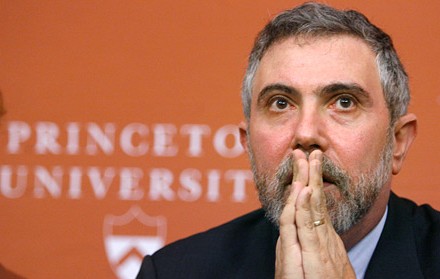
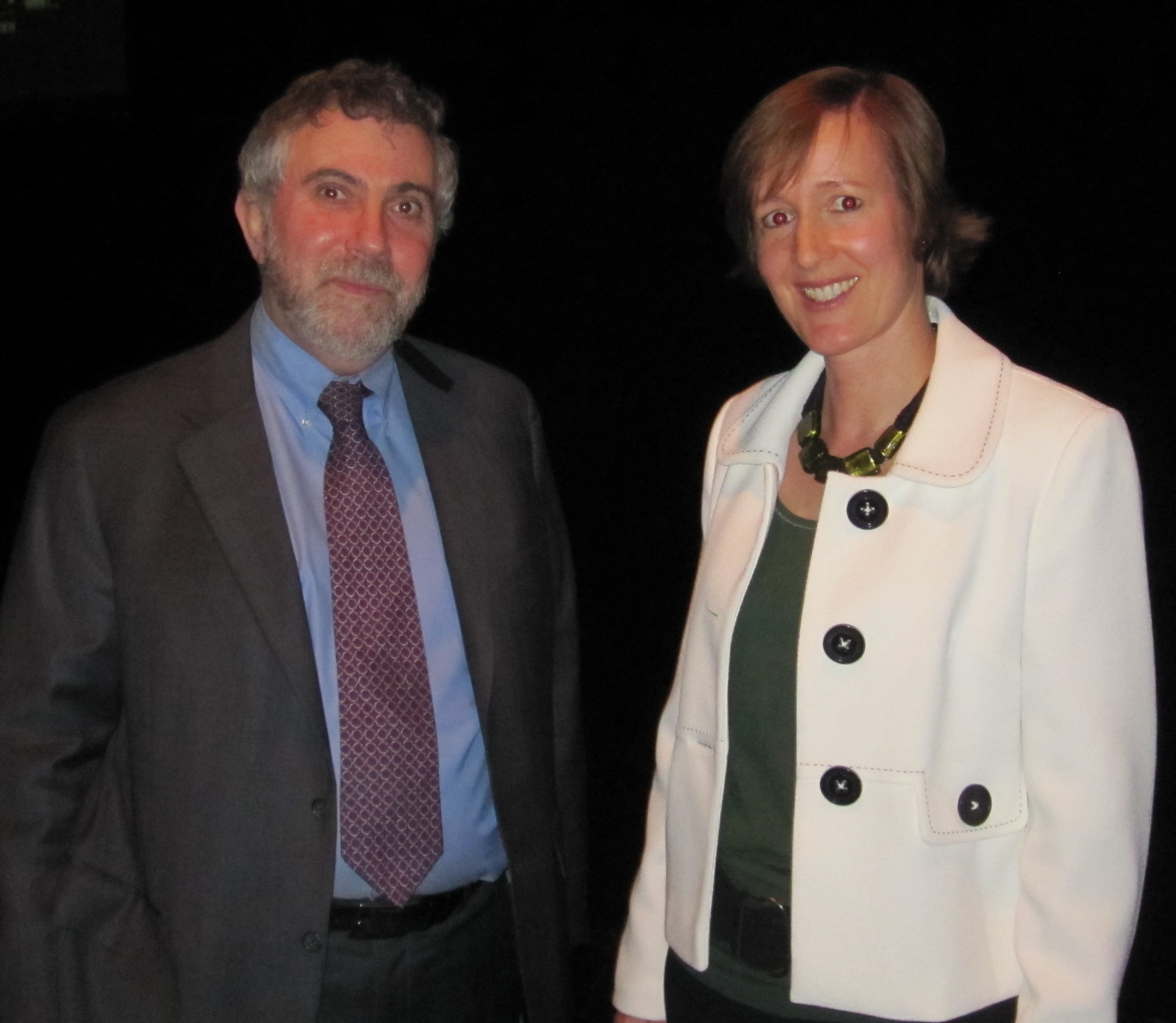
As delegates gather in Copenhagen this week to thrash out a global treaty on climate change, the shrill from skeptics intensifies. It’s useful to listen to wisdom from Nobel Prize winning economist, Paul Krugman. In a recent interview, I asked Paul the question on many lips: Will climate legislation kill the economy?
“If history is any guide… it’s just not a big deal,” says Krugman, citing the example of acid rain legislationwhich many people also said would kill the economy. “Dealing with it was cheaper than most estimates had suggested,” he says. “Given the incentives; the private sector found ways to generate a whole lot less acid rain.”
Krugman thinks the same will be true of carbon limits and has already explained his preference for cap and trade in a previous Fresh Dialogues segment.
We also discuss the power of his New York Timescolumn and his influence on the Obama Administration. “We’re speaking across the transom…when I argue with them in my column this is a serious discussion…people in the administration do call me…it’s no longer this sort of Cold War as it was during the Bush years.”
And how does he view his role? “I’m trying to make this progressive moment in American history a success,” says Krugman.
But why not take a position within the administration to be more effective?
“I’m never going to be an insider type. You have to do bureaucratic maneuvering, be pretty good at being polite… reasonably organized…,” says the Pulitzer prize- winning columnist. “I’m none of those things. I can move into a pristine office and within three days it will look like a grenade went off.”
This exclusive interview with Nobel Prize winner, Paul Krugman was recorded in Silicon Valley. Dr. Krugman was in town to deliver a lecture as part of the Foothill College Celebrity Forum Series. This segment is titled: Will Climate Legislation Kill the Economy? Click here for video
Alison van Diggelen: Paul thank you very much for joining me today on Fresh Dialogues.
Paul Krugman: OK. Good to be doing this.
Alison: Now some people are saying, climate legislation is going to kill the economy. What do you say to that Paul?
Paul: Well, a lot of people have done serious work in trying to figure this out. Now, to some extent it will be unknown territory: we don’t know what happens when you set the price of carbon significantly higher than it is now, but the economy has got a lot of flexibility. We have precedent. We had the problem of acid rain and we introduced a cap and trade system – SO2 permits – and a lot of people said it was going to kill the economy…terrible stuff. In fact it turned out that dealing with it was cheaper than most estimates had suggested before hand. Given the incentives, the private sector found ways to generate a whole lot less acid rain.
So current estimates are that if we did something like the legislation that the House has already passed, that ten years from now it would be maybe one third of a percentage point off GDP. And 40 years from now, when the constraints would be much stiffer, it would be something like 2% off GDP, relative to what it would otherwise have been. So if you think about what it would do to the growth rate, it’s minimal. We don ‘t know if these numbers are right, but if history is any guide, they’re probably too pessimistic. It’s just not a big deal.
Alison: Let’s talk about your column, Paul… Now you didn’t pull any punches with the Bush administration. You talked last night about the Bush White House being evil and stupid. What is your characterization of the Obama White House?
Paul: Oh, they’re good guys and they’re smart but just not as forceful as I’d like. It’s a world of difference. When I argue with them in my column this is a serious discussion. We really are in effect speaking across the transom here…
Alison: Is it really a dialogue, are you hearing back from them?
.
Paul: Ben Bernanke doesn’t call me up but is aware of what I’m writing… people in the administration do call me. I’m never going to be an insider type but at this point I do have genuine contact with both the White House and with congressional leadership. It’s no longer this sort of Cold War as it was during the Bush Years.
Alison: Some people describe your writing as having a missionary zeal. Where does that come from Paul. Can you trace that back?
Paul: Oh. Gosh…I have to say that during the Bush Years, if you didn’t feel passionate that we had to change things, there was something wrong with you…
Alison: You didn’t have a pulse?
Paul: Right. So..before that, I was in fact a pretty cool…uh…
Alison: A cool dude…?
Paul: A pretty cool technocratic sort of writer. I had some fun but I wasn’t crusading. So that is what changed it. And now, I’m trying to make this progressive moment in American history a success. So that’s where I’m pushing.
Alison: So you feel the missionary zeal is gone now, or is it just redirected?
Paul: It’s not the same. There was the sheer.. OMG what a horrible thing…we need to alert people as to what’s going on…I’m still trying to get stuff to happen…it’s less doom laden maybe than it was in the Bush years. But stuff has to happen….I’m still pretty passionate about the column.
Alison: And do you feel you’re more effective as a columnist than inside the government?
Paul: Oh yeah! That’s a personal….you have to know who you are…know what you’re good at. I’m not a…being an effective government official, you have to do bureaucratic maneuvering, be pretty good at being polite at the appropriate moment… you have to be reasonably organized…I’m none of those things.
Alison: An honest man.
Paul: I can move into a pristine office and within three days it will look like a grenade went off.
Alison: [laughter]
Paul: You really don’t want me doing that sort of thing.
Alison: Right. Paul Krugman, thank you so much for taking the time. I really appreciate it.
Paul: Thank you so much.
For more exclusive interviews with leaders, such as Tom Friedman, Maureen Dowd and Charlie Roseclick here
On November 17, I attended the CleanTech OpenAwards Gala at the Masonic Center in San Francisco and enjoyed keynotes from Lesa Mitchellfrom the Kaufman Foundation, Bill Weihl, Google’s Energy Czar and Nancy Pfund, of DBL Investors.
Minutes after his company was picked as the National Award Winner. I sat down with Scott Hublou, co-founder of EcoFactor. His three-year-old start-up has created an energy management systemfor the home that uses weather data to optimize heating and cooling. Scott claims savings of between 20 to 30% are achievable. Sounds pretty attractive in this tough economy, and the judges thought so too.
How did the CleanTech Open and its mentoring help you?
“It forces deep thinking around various different business models. Because there are actual deadlines, it’s kinda like being back in school again where you have to have deliverables… You’re presenting to your peers and potential investors, so you always want to make a good impression… think about sustainability, and good market strategies.”