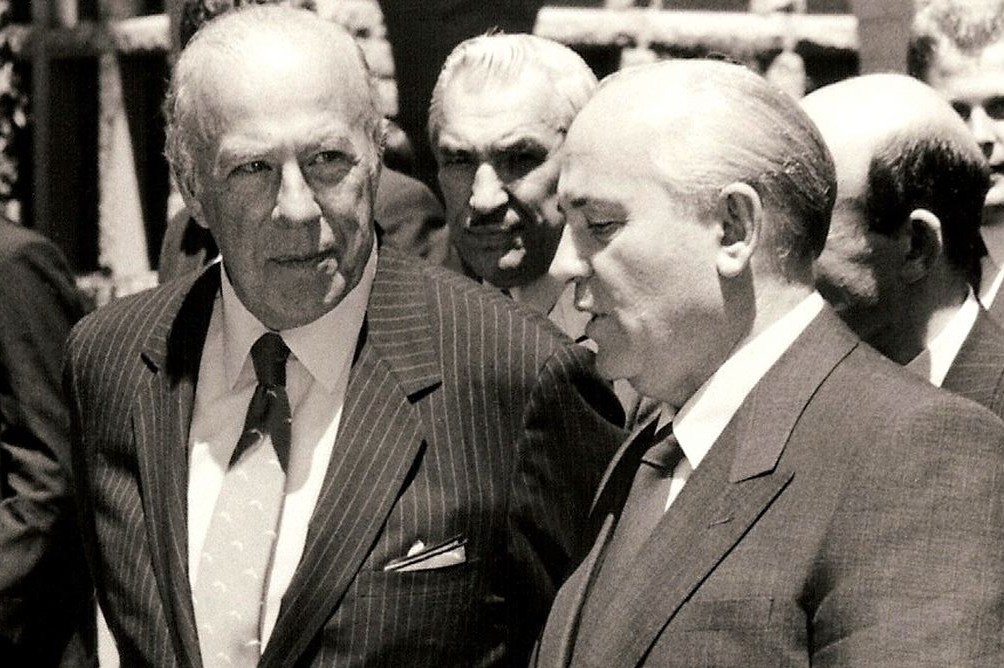
Former U.S. Secretary of State, George Shultzdelivered an eloquent summary of the facts surrounding AB 32(California’s answer to global warming) at the Silicon Valley Energy Summit at Stanford University on June 25. Shultz, a Distinguished Fellow at the Hoover Instituteand Advisory Council Chair at the Precourt Energy Efficiency Center, was billed as a Moderator/ Provocateur at the event, and despite his 89 years, he rose to the challenge and then some. In concluding remarks, he said it would be “an unmitigated disaster” if the measure to suspend AB 32 passes in the November election.
He was moderating a panel which included Lawrence Goulder, Director of environmental and Energy Policy at Stanford; Kevin Kennedy, Assistant Executive Office, Office of Climate Change, California Air Resources Board (CARB) and Peter Miller, Senior Scientist, Natural Resources Defense Council. Check back for more details on each soon.
“The emission of carbon imposes a cost on society…you have to recognize that cost…” George Shultz
“If we’re going to level the playing field…we want a system that’s number one: effective… and number two: creates as little drag as possible or even gives a slight lift to the economy.” George Shultz
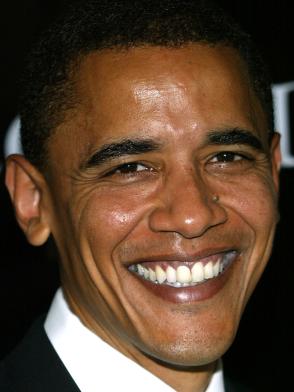
Last night, President Obama addressed the nation for the first time from the Oval office. His subject: the BP oil spill disaster. Although some say he was “vapid”, Obama seized the opportunity to call for a clean energy future and end our addiction to fossil fuels. He underlined China’s massive investment in clean energy jobs and industries (subtext: just like the Space Race in the 50’s & 60’s, the race for Clean Energy has begun, and the U.S. is falling behind); and reminded us that we send almost ONE BILLION DOLLARS EACH DAY to foreign countries for their oil.
“The tragedy unfolding on our coast is the most painful and powerful reminder yet that the time to embrace a clean energy future is now. Now is the moment for this generation to embark on a national mission to unleash America’s innovation and seize control of our own destiny.” President Obama.
.
In this week’s Fresh Dialogues, we look at the advice gleaned recently from a panel of clean tech experts in Silicon Valley. If the Obama administration is serious about unleashing America’s innovation and creating a clean energy future, it would do well to take note.
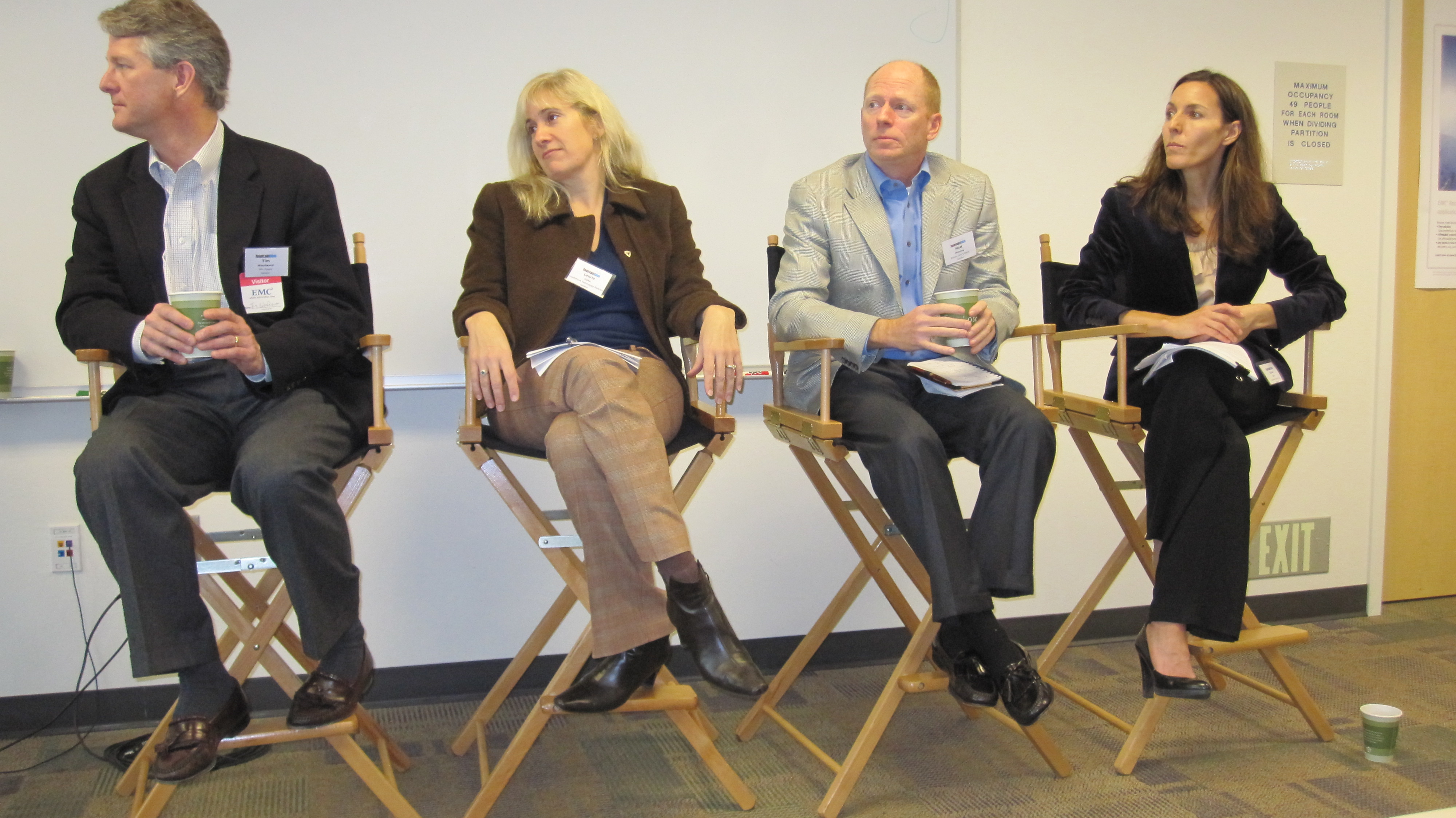
From the Fresh Dialogues archives: The Obama administration ought to have sent an envoy to the FountainBlueState of Clean Green Conference this year. A panel of Silicon Valley clean tech experts had much to share on this question: how can Obama better jumpstart the clean tech economy?
Tim Woodward, Managing Director, Nth Power said the government needs to create market demand, and recommends that every government building should have solar power and be retrofitted for energy efficiency; but he warned,
“There’s a little too much of a ‘large check mandate’ in the Federal Government that picks technologies and stifles innovation at lower levels: figure out how to get smaller dollars into the innovation engine of smaller companies.”
“I look at the pricing and incentivizing through market pricing. We’re still subsidizing imported oil without putting the investment into alternative energies…I think we should put a tax on imported oil and use it to help pay off some of the defense spending we’re using to protect the transmission of that oil. We need to forge ahead with cap and trade legislation… until we have a price on carbon it’s hard for the markets to plan and have any certainty.”
.
Elise Zoli, Partner and Chair, Energy Practice, Goodwin Procter said that the Department of Energy needs to improve the low commercialization rate of national labs and is excited about a new national initiative to create virtual access to all the labs’ technology… “so you can see the technology, acquire it and begin to commercialize it.”
“The DoE has a fantastic lab structure, producing some really innovative technologies… (we need to ) leave them there and help them – through public/private partnerships – and take that technology out of the labs…”
But
“There are things they (the DoE) do terribly and being a bank is one of them.”
.
And Elise has one last piece of advice if you have a green energy technology you think the Feds can use, contact Richard Kidd at the Federal Energy Management Program: ”Richard Kidd will not know you exist unless you call him…send an email to Richard’s team and use my name!”
Other panelists included Dan Adler, President, California Clean Energy Fund, and Matt Maloney, Head of Relationship Management, Silicon Valley Bank. The interview was recorded at Fountain Blue’s Conference on January 29, 2010.
This week, we explore the progress of Novacem, the London based “green cement” manufacturer. On April 22nd, 2010, the company received an appropriate Earth Day honor: Novacem was named a Top 10 Emerging Technologyby MIT’s Technology Review Magazine.
“The annual TR10 spotlights the emerging technologies we find most exciting. These are the innovations most likely to alter industries, fields of research, and even the way we live and work,” said Jason Pontin, editor in chief and publisher of Technology Review magazine. “We celebrate the innovators making these accomplishments possible and look forward to their continued advancement within their respective fields.”
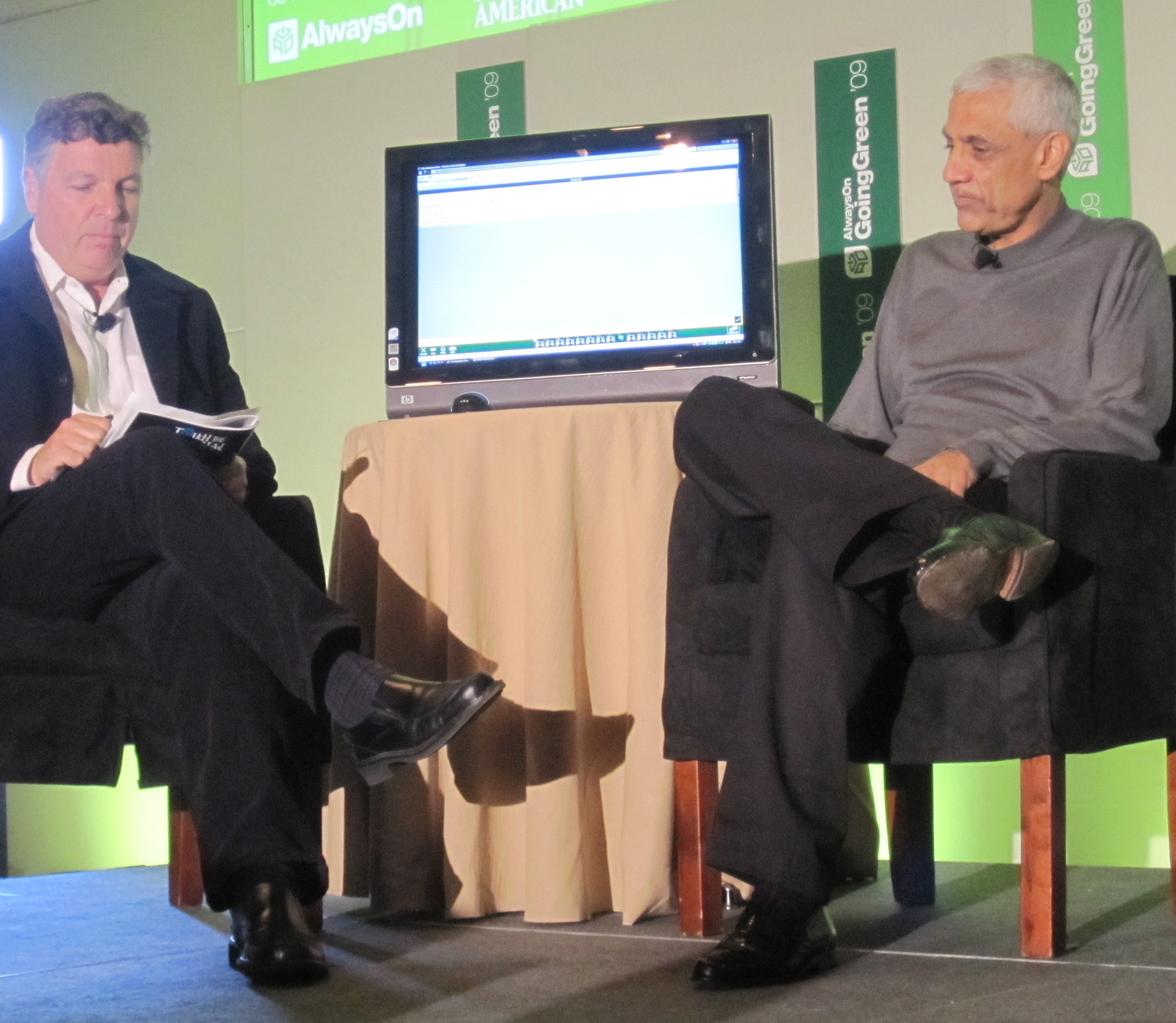
I caught up with Novacem’s Chairman, Stuart Evans at the AlwaysOn GoingGreen Conference in Sausalito last year to explore the company’s “secret sauce” and how it plans to compete with Khosla’s “favorite child,” Los Gatos based Calera. Here is the newly released video of our conversation.
.
At the conference last year, Vinod Khosla, the green investment guru, was asked to name the company with the greatest chance of becoming the next Green Microsoft while onstage at the GoingGreen Conferencein Sausalito. He declined to name his “favorite child” but did praise Calera, the green cement maker he’s backing; and spoke about the huge potential growth in this sector. Since cement production creates 2.5 billion tons of CO2 annually, representing 5% of manmade sources, it offers great potential in both climate change impact and market opportunity.
Stuart Evans, Chairman of Novacem, shares Vinod’s bullishness about the market for green cement. This British entrepreneur has assembled a team from Imperial College, London (he dubs it the MIT of the UK) and claims to have invented a carbon negative cement.
How does Novacem technology differ from Calera’s?
“The big play at Calera is that they want to go next to power stations to absorb the carbon dioxide there (carbon sequestration)… We’re making cement without a carbonate based feedstock. Vinod was talking about his materials being used in aggregate applications; we’re really replacing Portland Cement…we’re in the same space, we’re not head to head…we’re possibly even complementary. Besides, in a 2.5 billion (volume/ $150Billion) market, there are room for a couple of players…”
“Our cement doesn’t emit carbon dioxide, it absorbs carbon dioxide. We start with the material magnesium silicate (not calcium carbonate)… they have no carbon in them, so right there we’ve got a stunning advantage. We only work at 800 degrees centigrade (compared to Portland Cement which requires 1400 degrees) so the energy sources we can use include biomass fuels which have a much greener footprint. ..We add a magic sauce to it (a mineral additive) which means that the cement absorbs carbon dioxide rather rapidly.”
The importance of team
“The team is everything; money is important but the team is even more important.”
On Vinod Khosla’s expertise
“We are tremendously flattered that Vinod is following our lead and investing in green cement.” (A display of typical British humor here)
For more Fresh Dialogues interviews and transcript with Vinod Khosla, click here
The interview was recorded at the GoingGreen Conference, Sausalito on September 15, 2009. The background sound you hear is nautical ‘music’ from buoys, as container ships make their way under the Golden Gate Bridge.
For more info on Green Cement, check out these links
Vinod Khosla recently announced a new member of his Khosla Ventures team: none other than former British Prime Minister, Tony Blair, who has been a vocal proponent of action to combat climate change. According to reports, Blair will be a paid advisor and will add his eloquence and global connections to Khosla’s plans to change the world through cleantech investments.
“I’m absolutely thrilled, honored and delighted to team up with Vinod and the people he has working for him,” Blair said before taking the stage for a “fireside chat” with executives from six companies in Khosla Ventures’ vast portfolio. “Vinod is one of the most creative, dynamic and extraordinary people I’ve ever met in my life… the answers to climate change and energy security lies in the technological innovations. I am thrilled to play whatever small part I can.”
Chances are, Blair will play much more than a “small part” in keeping global warming and the need for cleantech innovation front and center. His eloquence and British accent will no doubt help. But he’ll be keeping his distance from his fellow Brits at BP who have created an environmental disaster.
Here is an interview from the Fresh Dialogues archives which explores Vinod’s motivations for investing in Bloom Energy, future predictions and his concern about cleantech bubbles.
He shares his candid thoughts on why he thinks the venture capital model is broken and delivers a bullish pitch for a $500 Million VC Fund.
On the VC Model and Startups
“I think the venture capital model is fundamentally broken, but for different reasons. It’s not the lack of exits. A series of forces: including open source, the recession – so there’s lots of people available for very low prices and cheaper commercial real estate…You can start a company for a lot less today than ever. Life is good in that sense. ..You really don’t need $2 million to build a prototype…I’m talking about a certain type of company…a web 2.0 content, social network something… I’m not talking about finding a cure for cancer.”
.