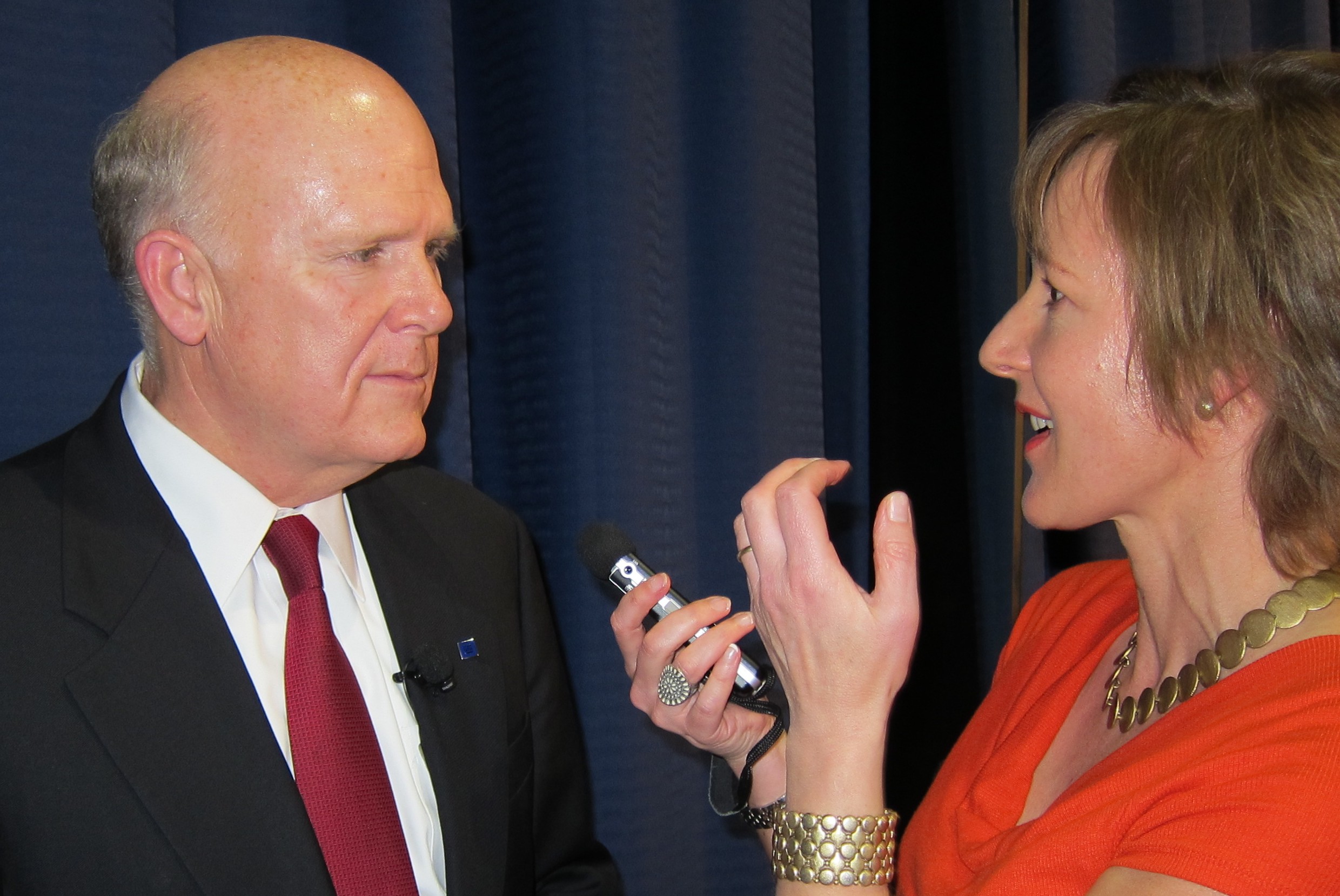
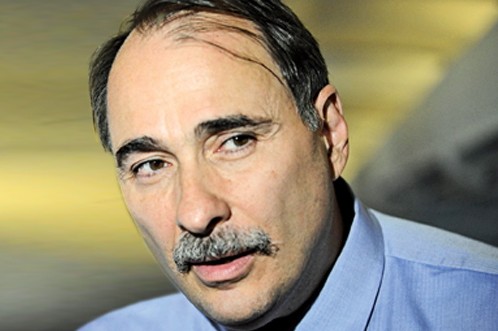
Dan Akerson, CEO of General Motors spoke with Fresh Dialogues last night in San Francisco about the five week suspension of Chevy Volt production; the future of what he described as GM’s “statement car” and his surprisingly candid views on climate change.
Arguing that GM matches production to inventory, he said, “It’s foolhardy to produce beyond demand.” As of February 2012, Volt inventory was 6,300 units, enough to last at least 5 months at current sales volumes. Last month 1,023 Volts were sold, up from 603 units in January, making the 2012 goal of 45,000 sales appear a huge stretch. Akerson complained about the media’s laser focus on the Chevy Volt. Despite it being less than half of one percent of GM’s annual car production, it gets all the attention. He noted that no one batted an eye when production of the Chevy Cruze (GM’s top selling car) was halted for two weeks.
So what’s the future of the Volt? A spring relaunch will feature new generation Volts, with improved emissions levels, which now qualify for HOV lane stickers in California – a key factor, since one in four Volts are sold in the Golden State. He believes that this will help stimulate demand and quoted a recent study that found the average commuter saves 36 minutes a day by using carpools. Time is money. But is it worth $40,000? He confirmed that small shipments of the new Volt had already been made and the car will be available soon in California showrooms.
Akerson also described the new ad campaign which will be, in his words “more interesting.”
And the facts about Global Warming? Fresh Dialogues had to ask.
“We’re doing the right thing for the company at the right time. We will leave it up to the consumer how they interpret that.” Akerson said.
But his position on climate change is clear. During a Commonwealth Club interview, he confessed that he “believes” in Global Warming, adding “Several GM executives say ‘you don’t say that in public.’ Well, this may surprise you but my underwear doesn’t have GM stamped on it…I am an individual and I do have my own convictions.”
Good to know.
Here’s the amusing video segment from the Commonwealth Club
.
.
Read transcripts, see photos and check out our ARCHIVES featuring exclusive interviews with Tom Friedman, Paul Krugman, Vinod Khosla and many more green experts and visionaries…
andjoin the conversation at our Fresh Dialogues Facebook Page
Fresh Dialogues is delighted to announce that it is now a regular contributor to KQED’s Climate Watch, a multimedia initiative focusing on climate science and policy issues in California. Fresh Dialogues stories will focus on the intersection of clean tech and climate change.
Here is our first story for the NPR affiliate.
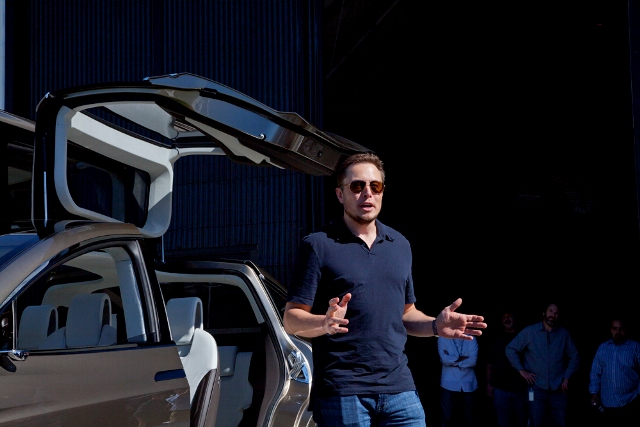
On February 8th, Tesla Motors CEO, Elon Musk, unveiled the company’s latest electric car: The Model X. Probably the sleekest and sexiest SUV you’ve ever seen, and also the priciest. But what’s most remarkable — beyond the falcon wings — is that the car will be manufactured here in the Golden State, at the former NUMMI plant in Fremont.
Why did Tesla choose to locate its headquarters and manufacturing in the high-priced San Francisco Bay Area? Was it linked to the state’s ambitious clean energy targets and policies? The new rules approved last month by the California Air Resources Board require automakers to produce 1.4 million zero-emission cars for the California market by 2025, and are part of the aggressive goal of reducing the state’s emissions 80% by 2050.
Tesla spokesperson Khobi Brooklyn eschewed policy explanations and told me, “We wanted to build our cars in California, not only creating jobs in the U.S., but also California specifically.” She cited Silicon Valley as “an incredibly rich pool of talent” and said that purchasing an existing car manufacturing facility saved money and time in preparing for car production. I’ve no doubt the California sales tax rebates on capital equipment purchasing (estimated at $20 Million) helped too.
California’s Governor Jerry Brown attended the Model X unveiling, and basked in the Tesla limelight. He was obviously delighted to be part of some good news from the Golden State for a change. “We can work our way out of our mess with creativity, openness and the kind of spirit that’s willing to take risks,” he said to the rowdy audience of Tesla groupies.
Here is a transcript of my interview with David Axelrod on January 27, 2012 re. Solyndra, 2012 Energy Policy and President Obama’s State of the Union speech. Video here
ALISON VAN DIGGELEN: Hello and welcome to Fresh Dialogues. Today I’ll be talking with David Axelrod. President Obama’s Chief Political Strategist. David, thank you for joining me today on Fresh Dialogues
DAVID AXELROD: Happy to be here.
ALISON VAN DIGGELEN: Good. Now Obama has started his first (2012) Campaign ad with a defense of his clean energy policy. Why did Obama choose to start with green?
DAVID AXELROD: The ad that it was responding to was an ad sponsored by a SuperPAC… sponsored by the Koch brothers… two oil billionaires … and it was an attack particularly on the Solyndra issue but it was really an attack on the whole green energy initiative of the president’s. And we’re proud of that initiative…we’re proud that we’re on par to double renewable energy during the course of his first term. He believes very strongly that we need to command the clean energy technology of the future and that as a country we need to be encouraging the development of clean energy technology or we’re going to see that go to other parts of the world.
ALISON VAN DIGGELEN: You mention Solyndra specifically. Solyndra seems to be a thorn in the side of Obama. It keeps coming up. How does he intend to remove the thorn?
DAVID AXELROD: All you can do is be open and candid about it. We knew when made investments in clean energy technology that some would do well and others would not. That’s the nature of this…these are speculative investments. And that’s the reason why they needed some nudging from the government in order to blossom…You can look at Solyndra or you can look at the fact that when we started, the US had about 2% of the advanced battery manufacturing for electric cars. We’re on course to get to 40% by the middle of this decade.
ALISON VAN DIGGELEN: That’s impressive.
DAVID AXELROD: That wouldn’t have happened without the investments we’ve made. We’ve seen real growth in solar and in wind energy and so these are investments that are paying off for the country. I’m very certain that we’re going to look back at the seeds that were planted during this period and we will say that it has made a big difference for the country in a positive way.
ALISON VAN DIGGELEN: What percentage of the program’s investment went to Solyndra?
DAVID AXELROD: There were forty under this specific program, so it was a small percentage of the entire program. It was a program… that was begun under the Bush Administration and we accelerated that program because we do believe that we are in a real competition for the clean energy technology of the future and we as a country have a great interest in developing alternative energy and home grown domestic energy and renewable energy. These were investments that made sense. Some will pay great dividends, others unfortunately will not.
ALISON VAN DIGGELEN: Yes.
DAVID AXELROD: Plainly, we have to have our eye on the future and really encourage and develop renewable sources of energy. It’s good for the planet, it’s good for the economy, it’ll create great jobs…high end manufacturing jobs. This is going to continue being a thrust for us. We’re not going to back off.
ALISON VAN DIGGELEN: Thanks for joining us.
The interview took place backstage at Foothill College’s Celebrity Forum on January 27, 2012. Check back soon for more with David Axelrod:
On Michelle Obama’s influence on green policy
Read transcripts, see photos and check out our ARCHIVES featuring exclusive interviews with Tom Friedman, Paul Krugman, Vinod Khosla and many more green experts and visionaries…
and join the conversation at our Fresh Dialogues Facebook Page
“The ad that it was responding to was an ad sponsored by a SuperPAC…sponsored by the Koch brothers… two oil billionaires … and it was an attack particularly on the Solyndra issue but it was really an attack on the whole green energy initiative of the president’s. We’re proud of that initiative…we’re proud that we’re on par to double renewable energy during the course of his first term. He believes very strongly that we need to command the clean energy technology of the future and that as a country we need to be encouraging the development of clean energy technology or we’re going to see that go to other parts of the world.”
Solyndra appears to have become a thorn in the side of Obama. How does he intend to remove the thorn?
“All you can do is be open and candid about it. We knew when made investments in clean energy technology that some would do well and others would not. That’s the nature of this…these are speculative investments. And that’s the reason why they needed some nudging from the government in order to blossom…We’ve seen real growth in solar and wind energy and so these are investments that are paying off for the country. I’m very certain that we’re going to look back at the seeds that were planted during this period and we will say that it has made a big difference for the country in a positive way.”
.
.
What percentage of the program’s investment went to Solyndra?
“There were forty under this specific program, so it was a small percentage of the entire program. It was a program… that was begun under the Bush Administration and we accelerated that program because we do believe that we are in a real competition for the clean energy technology of the future and we as a country have a great interest in developing alternative energy and home grown domestic energy and renewable energy. These were investments that made sense. Some will pay great dividends, others unfortunately will not.”
Note: in a recent report at ClimateProgress, Stephen Lacey confirmed that Solyndra’s loan guarantee amounted to 1.3% of the DoE’s total loan portfolio.
On the importance of clean energy technology
“We have our eye on the future and really encourage and develop renewable sources of energy. It’s good for the planet, it’s good for the economy, it’ll create great jobs…high end manufacturing jobs.”
On the future
“This is going to continue being a thrust for us. We’re not going to back off.”
The interview took place backstage at Foothill College’s Celebrity Forum on January 27, 2012. Check back soon for more with David Axelrod:
On Michelle Obama’s influence on green policy
On The First Lady’s organic garden at the White House
Read transcripts, see photos and check out our ARCHIVES featuring exclusive interviews with Tom Friedman, Paul Krugman, Vinod Khosla and many more green experts and visionaries…
and join the conversation at our Fresh Dialogues Facebook Page