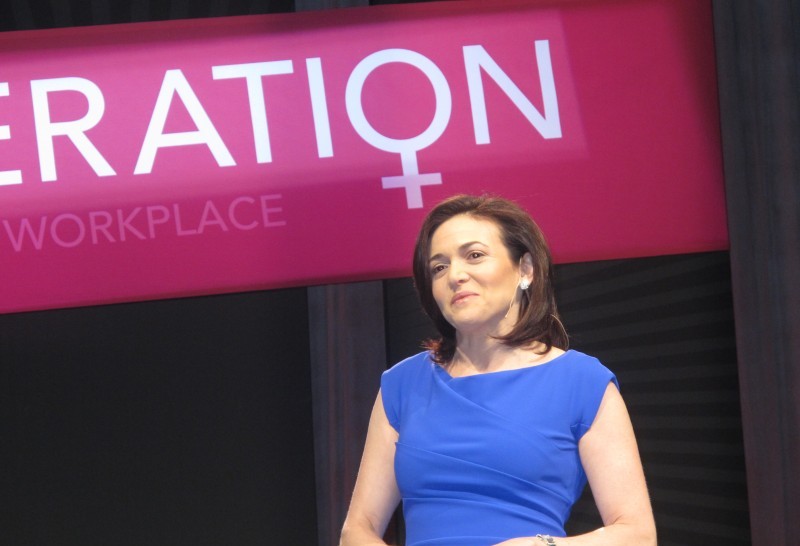
Sandberg asks: Have you ever called a little girl “bossy”? Or seen it happen? Next time you witness it, she says, “Walk up to that person, whether you know them or not, big smile on your face, and say, ‘your daughter’s not bossy, your daughter has executive leadership skills.'”
2. Change male/female expectations
Have you ever been asked ‘should you be working?’ Sandberg points out that this is a question women often get asked, never men. She says, “We need to help our sons nurture, we need to help our husbands be good fathers, and we need to have equal expectations (for both sexes).”
. 3. Create equality at home
Sandberg points out that worldwide, women do the great majority of the child care and the housework; and since most women are working full time, they have two jobs while men have one. She even shares evidence of the correlation between husbands doing laundry and sex.
“We are never ever going to get to equality in the workplace until we get to equality in the home.” Sheryl Sandberg. 4. Ask: what would you do if you weren’t afraid?
“Would you reach for? Would you reach to be CEO, would you lead something you’re not leading? I want you to think of just one thing you would do.” Sheryl Sandberg. 5. Bring an honest conversation about gender to work and home.
“Together we are going to break through the stagnation for women in leadership and together we are going to create a better world.” Sheryl Sandberg.
So, are you convinced?
I’m certainly impressed with the simplicity of Sandberg’s message and the way she delivers it logically, calmly, and with humor. She refrains from being whiny or strident and is using her powerful platform effectively. Sandberg makes a strong case for more women in the workforce increasing each company’s, (even each country’s) productivity, but I fear that most women I know are too busy struggling with the juggle to join her Lean In Movement in droves.
Nevertheless, I find it hard to resist her fourth call to action: what would you do if you weren’t afraid? I can think of at least one thing…Can you?
Sandberg addressed an audience of 4000 businesswomen at the Moscone Center in San Francisco, PBWC Conference on May 23, 2013. Read more about her speech and the audience reaction. And learn more here about her Lean In book and movement
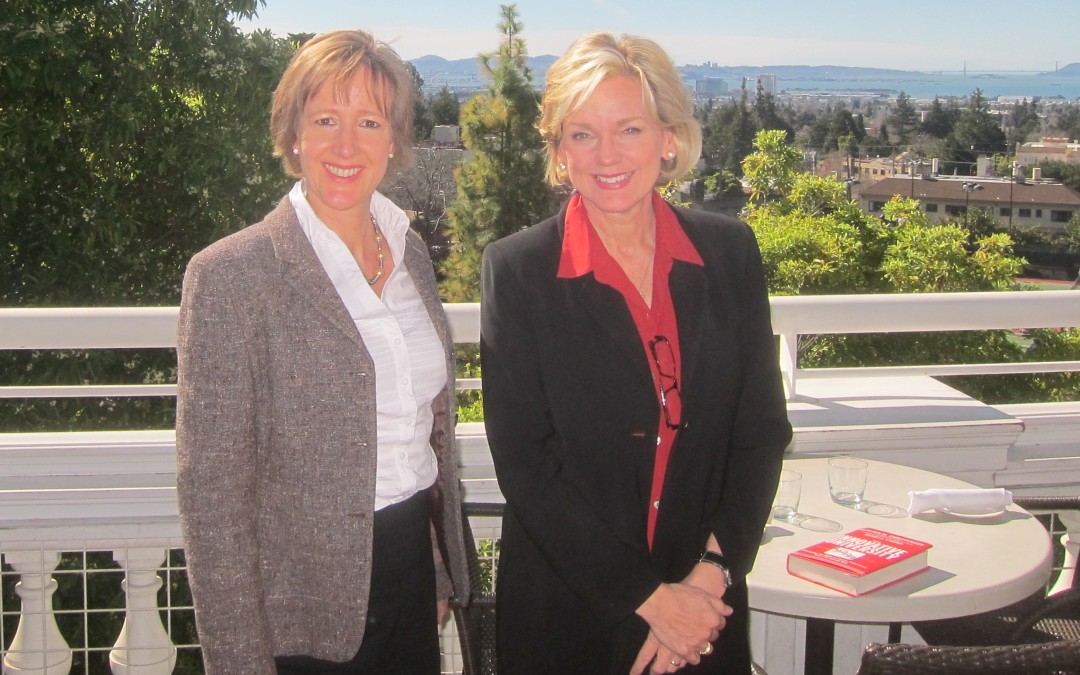
Let’s face it, President Obama is struggling to get anything through Congress right now, never mind a national energy policy, but here’s a big idea from Berkeley’s Jennifer Granholm to create more clean energy and clean jobs… from the bottom up.
You may remember Jennifer Granholm as the Governor of Michigan (2003-2011), the TV host of “The War Room” or the passionate speechmaker at the DNC 2012; but perhaps her most lasting contribution to the world will be this big idea: a Clean Energy Race to the Top.
Leveraging her experience in Michigan, where she attempted to transform the state’s “rustbelt” image to “greenbelt” by investing heavily in clean energy and green jobs, she’s seen the strategy’s economic impact and is eager to keep the momentum going. This time, on a national basis.
.
.
Modeled after the Education Race to the Top (RTT), her clean energy idea is to offer a pot of money to incentivize all 50 states to compete and raise their clean energy standards to 80% by 2030. Just think: The Amazing Race for Clean Energy.
Her budget? A cool $4.5 Billion. By her calculations, that’s less than one tenth of 1% of Federal funding (and close to the RTT budget for education), nevertheless in today’s economy, funding prospects look grim.
Granholm’s Clean Energy Race to the Top sounds like a smart idea, but in these times of brutal belt tightening and sequestration, securing that funding looks like mission impossible. It will be fascinating to watch the debate unfold here and at her TED talk; and see if she gets any traction for it during this congress.
It might not be perfect time for a Clean Energy Race to the Top, but don’t expect the idea to wither and die. Granholm may be keeping a relatively low profile as a law professor at UC Berkeley these days, but if there’s another Clinton (or Obama) in the White House in 2016 or beyond (I’m talking Hillary or Michelle), we may see Granholm taking a cabinet role. She’s earning her stripes for a position as Energy Secretary, and that could one day make her big idea a reality.
This Fresh Dialogues interview took place at the Claremont Hotel, Berkeley on February 21, 2013
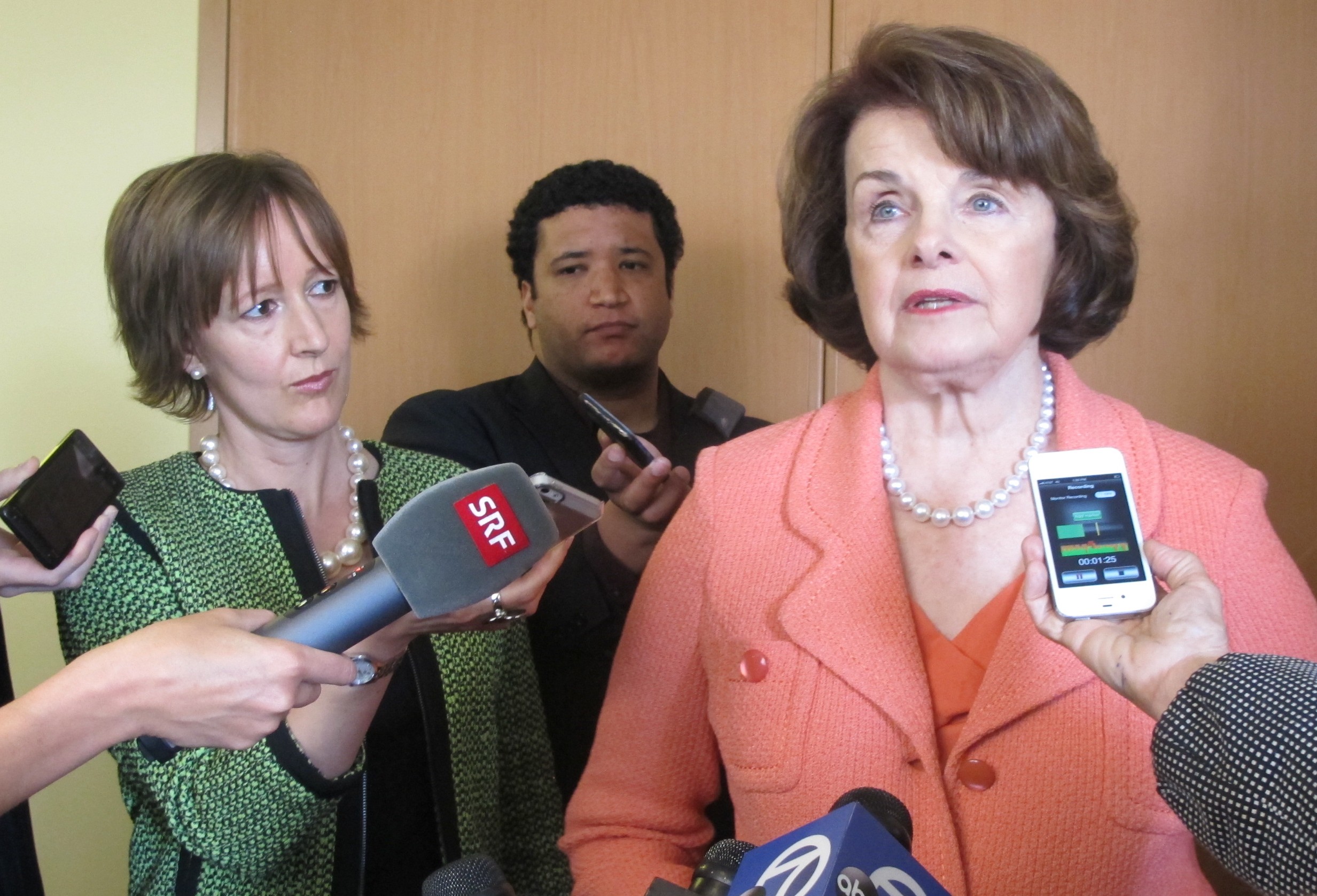
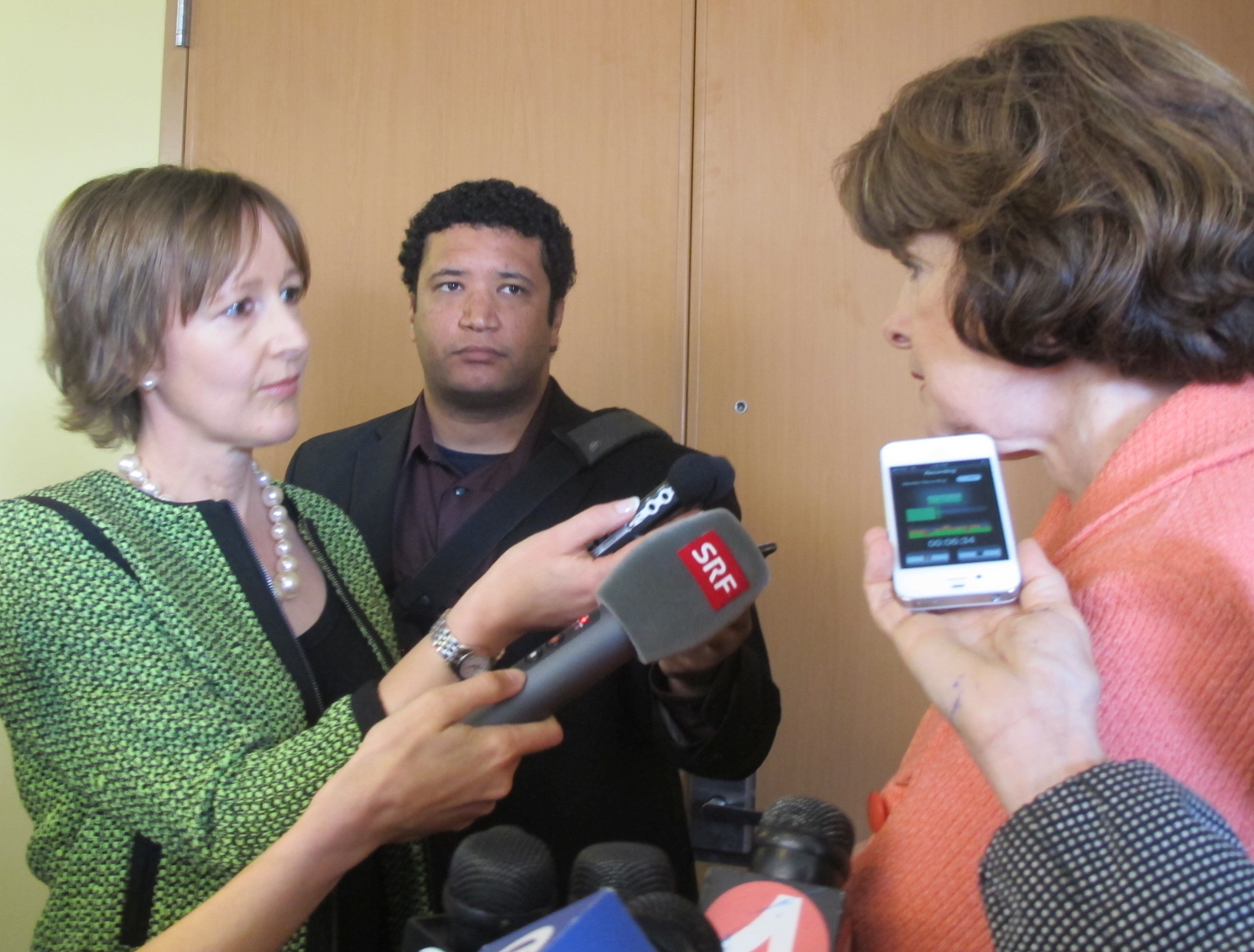
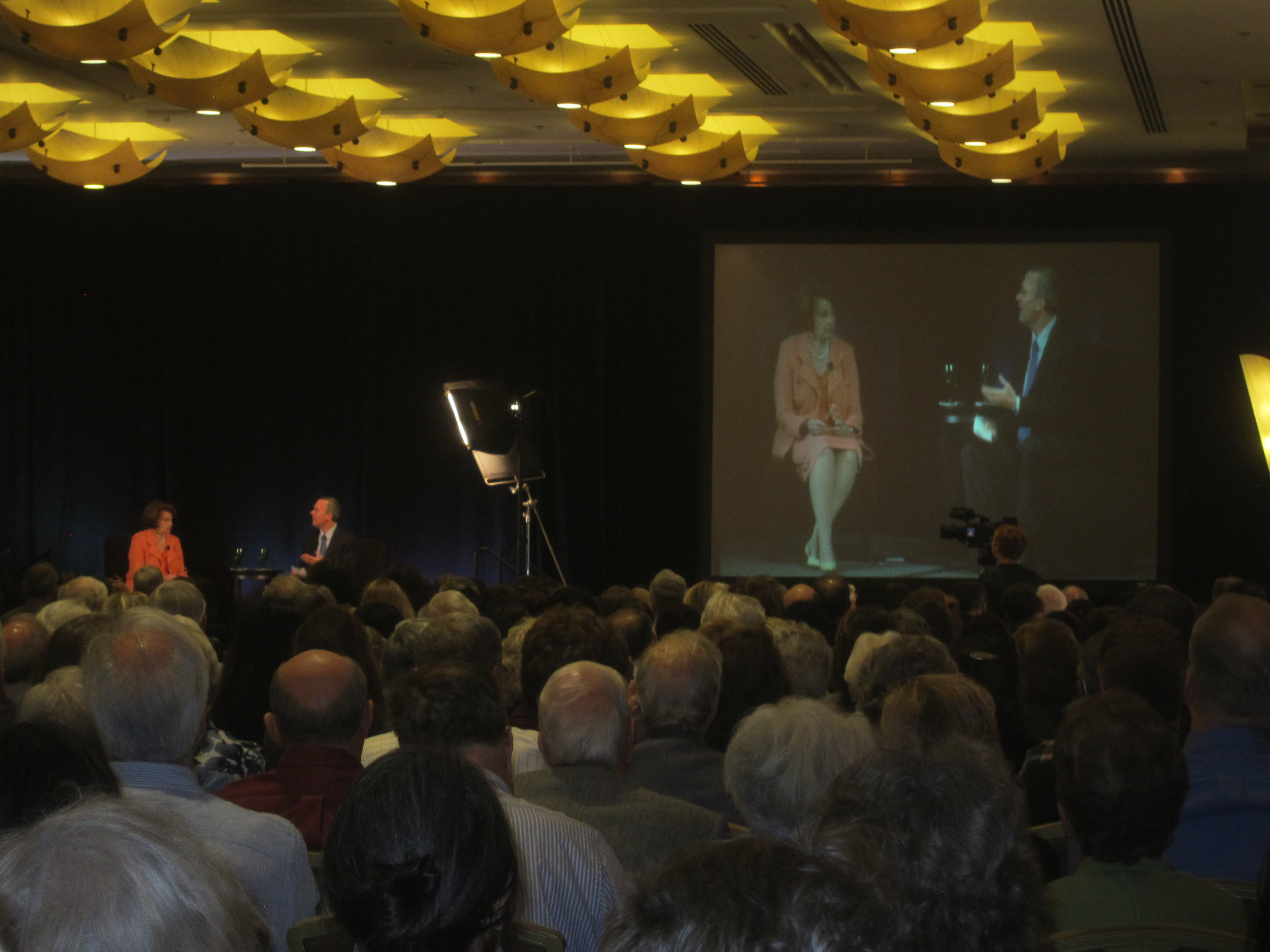
Senator Dianne Feinstein shared her plans to introduce a new “carbon fee” bill, during a press conference Wednesday in downtown San Francisco.
“I think a carbon fee is growing in popularity,” said Feinstein, after an appearance at the Commonwealth Club. Her plans follow President Obama’s SOTU call for “market based solutions to climate change,” and a growing consensus among experts in favor of using the taxation system to control carbon dioxide emissions.
She referred to her colleague, Senator Barbara Boxer’s recent bill (co-sponsored by Sen. Bernie Sanders), which proposed a “carbon fee and dividend scheme” that would tax carbon emitters, such as coalmines, at the source. Here’s the rationale:
By increasing the price of fossil fuel in the market…
It levels the playing field between carbon-based fuels and renewable fuels, such as wind and solar, making renewables more competitive and attractive to consumers and investors.
A portion of the “dividend” (the carbon “fee” proceeds) would be refunded to US residents.
Similar schemes have been implemented in British Columbia, Sweden and Ireland with some success. The aim is to encourage consumers to see the true cost of their energy choices. The fee represents some of the externalities of choosing fossil fuel, such as particulate pollution and greenhouse gases, which contribute to climate change.
Feinstein’s proposal was short on details, but she confirmed, “It’s my intention to introduce a fee of $10 a ton and we’ll see what happens to it.”
The Boxer-Sanders proposal is for a tax (or “fee”) of $20 per ton of carbon. Presumably Feinstein feels it’ll be more palatable to start at a lower level and gradually phase in a higher tax over several years.
Feinstein acknowledged that with other issues stealing center stage (notably saber-rattling in North Korea and the ongoing domestic gun control debate), climate change is not currently on the government’s “high priority list,” so it’s hard to predict what progress the government will achieve.
Nevertheless, Feinstein was vocal on the topic of climate change and bullish about renewable energy during an earlier interview with the Commonwealth Club’s Greg Dalton:
“People don’t really understand. They think the earth is immutable. They think we can’t destroy it, that it’s here to stay. It’s not so… As we fill the atmosphere with pollutants: methane, carbon dioxide, other things…it warms the earth. And it begins with animal habitat disappearing, the ocean beginning to rise, more violent hurricanes, tornadoes…drought is more prevalent.”
“What’s going to be the ultimate change is weather. People see weather, they see the devastation and so eventually people are going to come around to support restrictions on carbon dioxide, maybe a fee on the use of carbon to replace our deficit, our debt. A $20 fee (per ton of carbon or methane equivalent) is like $1.2 Trillion in revenue over 10 years. If you just take half that: $600 Billion.”
“I wouldn’t say there’s much (support in the Senate) but I would say this: people are coming to realize now… climate change is getting worse. Actually since 2008, ‘good energy’ has doubled. Electric cars are being more prevalent, hybrids are being more prevalent. People are saving money. Good things are happening. The question is: can we really bite the bullet and make the decision that we’re going to save the planet?”
On the Keystone Pipeline
“I’m told the area in Alberta (Canada) is bigger than the state of Florida, I’m told it’s a forested area which they mow down and begin to dig the huge giant lakes which they pour chemicals in to produce this form of tar sands oil. The earth is defaced forever.”
“Now we have to make up our minds: do we want to deface large portions of our earth forever? I don’t think so because we’re making progress on clean energy and that ought to really be where we go.”
“Some people say if the pipeline isn’t built north-south through the center of our country, they’re only going to do it east to west and send it to China. That’s not a good argument.”
Feinstein urged the audience to read the latest article on tar sands from National Geographic.
On California’s Monterey Shale Reserves
“I don’t think candidly that it’s all that necessary. There will be no oil drilling off the coast of California, if Senator Boxer and I prevail, and we have so far. My emphasis would be on clean energy: the wind farms, the solar facilities and there’s so much research going on on different forms of fuel. Leave those fossil fuels alone because they pollute the atmosphere.” Read more on the country’s largest shale oil resource from KQED.
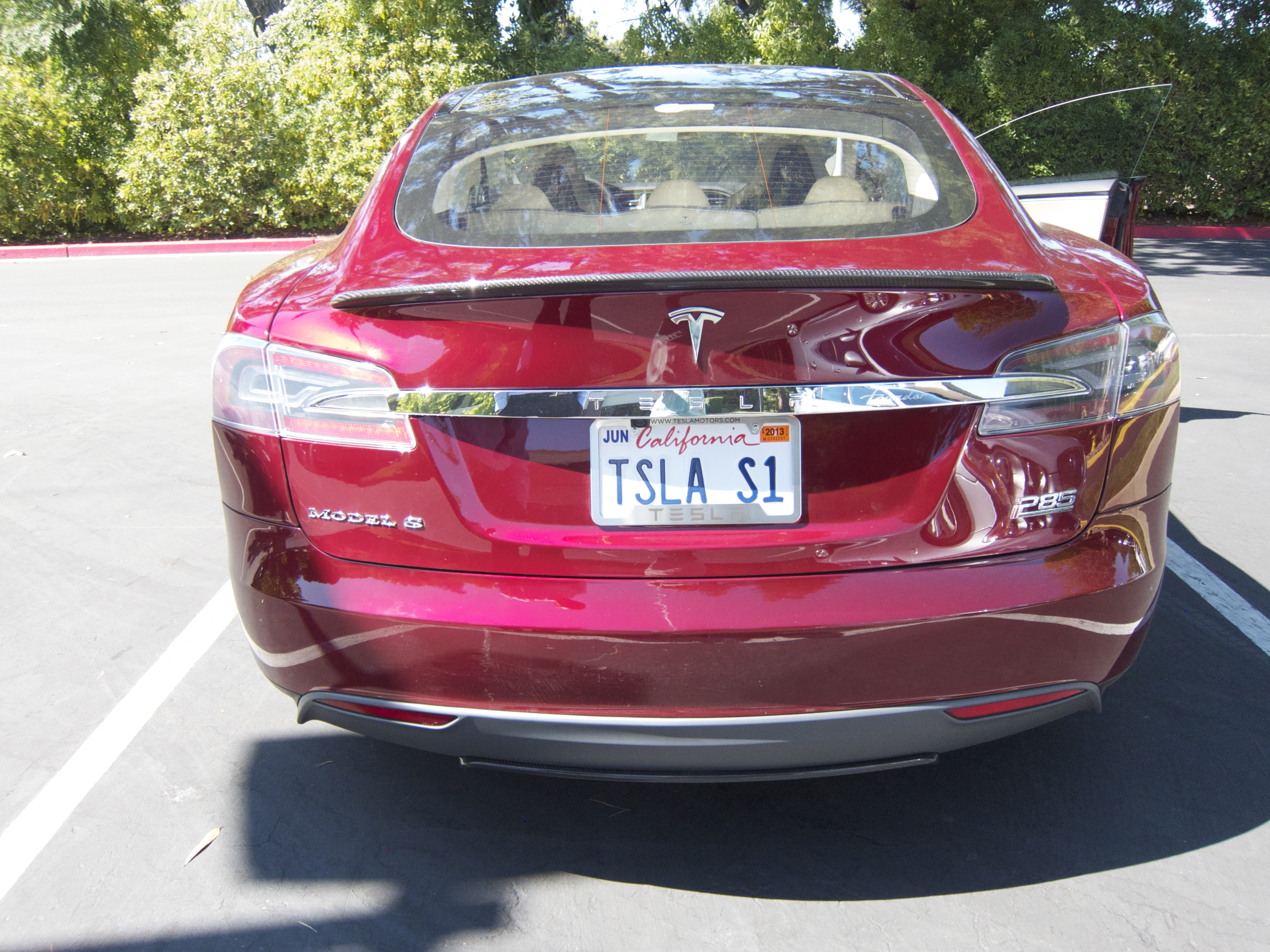
Photo by Alison van Diggelen
On Tesla’s Model S
“I sat on one (a Tesla Model S) out at the Tesla Fremont plant. I kind of dented the fender. But anyway…” (laughter)
Feinstein drives a Lexus hybrid
On California’s water shortages
“We’re on our way to a much drier climate…the Sierra Nevada snowpack’s drying up and it’s very serious…The key is: we need to store more water from the wet years and hold it for the dry years and this environmentalists don’t like. It may mean raising a couple of dams (eg Shasta)…I do believe that the time is now to have a storage water bond. The most important thing we can do for our state is to hold water from the wet years for the dry years and we should get that done (or) we’re going to lose our agriculture… I live in Washington now for a lot of the time and I can tell you the crops grown in California taste much better than most places in the world.”
On subsidies to oil and gas
“I think the day has come for subsidies to go for industries other than startups like some of the clean energy…solar. As you know, everything is “cut cut cut” back there (DC) right now. With sequestration cutting another $85 Billion before the beginning of the fiscal year and the amount goes up. So there’s going to be cut after cut after cut. And they’re big cuts. So I think we need to look at tax reform and we need to look at all those deductions and remove a lot of them and we also need to look at our entitlements programs.”
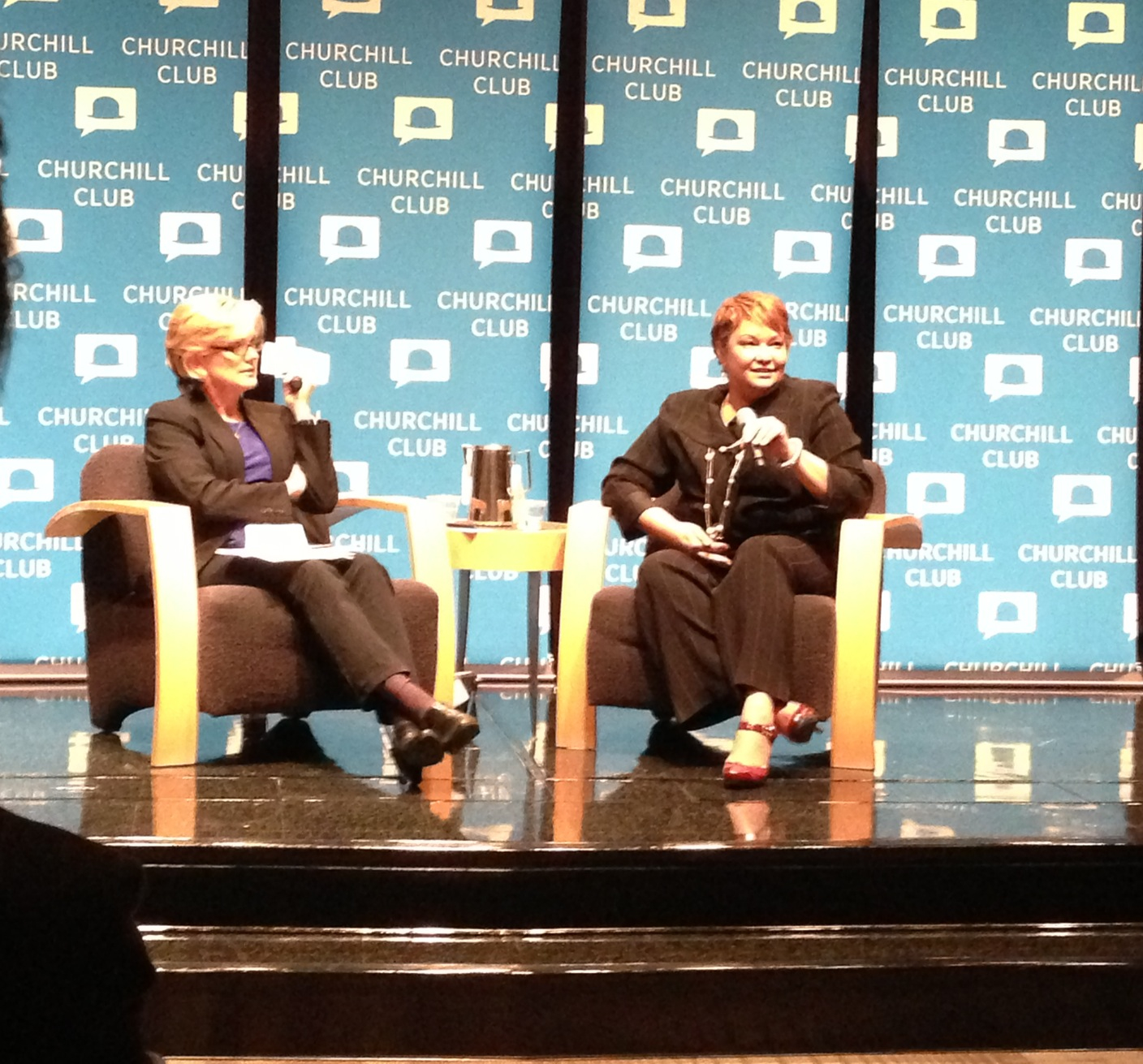
Environmental policy was front and center Tuesday evening at the Churchill Club in Silicon Valley as EPA Administrator, Lisa Jackson took the stage with former Michigan Governor, Jennifer Granholm. Fracking and the proposed Keystone pipeline were hot topics during the lively discussion.
In December, Jackson announced that she will leave her post after four tumultuous years in DC and didn’t rule out running for elected office. Speculation is rife about her running for Governor of New Jersey.
On Fracking
“It can and should be done safely..I’m enough of a scientist to say: the verdict is not in yet. We need more data.”
On the Keystone Pipeline
“I will be gone (from the EPA) before a decision is made. A revised environmental impact study will be done, then public feedback, then President Obama will decide ‘if it’s in the national interest’. This will take into account pollution, groundwater, and the economic perspective. It’s too soon in the process to say (if it will get the green light).
A Price on Carbon?
“The current climate doesn’t lead me to believe there will be a national law soon. But that doesn’t preclude state action (such as California’s), and the private sector, where important progress can be made.”
Jennifer Granholm, who was a strong advocate for cleantech during her eight year tenure as Governor of Michigan added, “The Federal Government could offer a pot of money to incentives states to take action and stimulate progress from the bottom up.” She likened her idea to the “Race to the Top” program for education.
On Green Innovation and the Role of the EPA
“The EPA can level the playing field by setting emissions standards and goals which stimulate the private sector to compete and beat them. It often costs less than EPA estimates, due to private sector innovation. But the private sector needs uniform and not patchwork standards…”
“The EPA works for all the American people, not special interests…it’s not a zero sum game. For it to succeed no one needs to lose. There are win/win strategies. Regulations need to be enforced. The work we do is vital and sacred.”
On Science and Climate Change
“I am a scientist and at the EPA we have more scientists than any other Federal agency except NASA…We face a roll-back in the Clean Air Act. Be aware that consensus is enough – unanimity is not required or you’ll miss the window for action.”
There was a vocal climate change skeptic in the audience whom Jackson addressed directly saying he wasn’t representative of the majority of Americans.
On her Greatest Achievements at the EPA
“The endangerment finding made pollution actionable…and we raised fuel efficiency standards.”
As Dana Hull explains in the Mercury News, during Jackson’s tenure, the EPA finalized its endangerment finding which authorizes it to take reasonable efforts to reduce greenhouse gases.
The event was hosted at the Microsoft Campus in Mountain View by Rob Bernard, the company’s green czar.
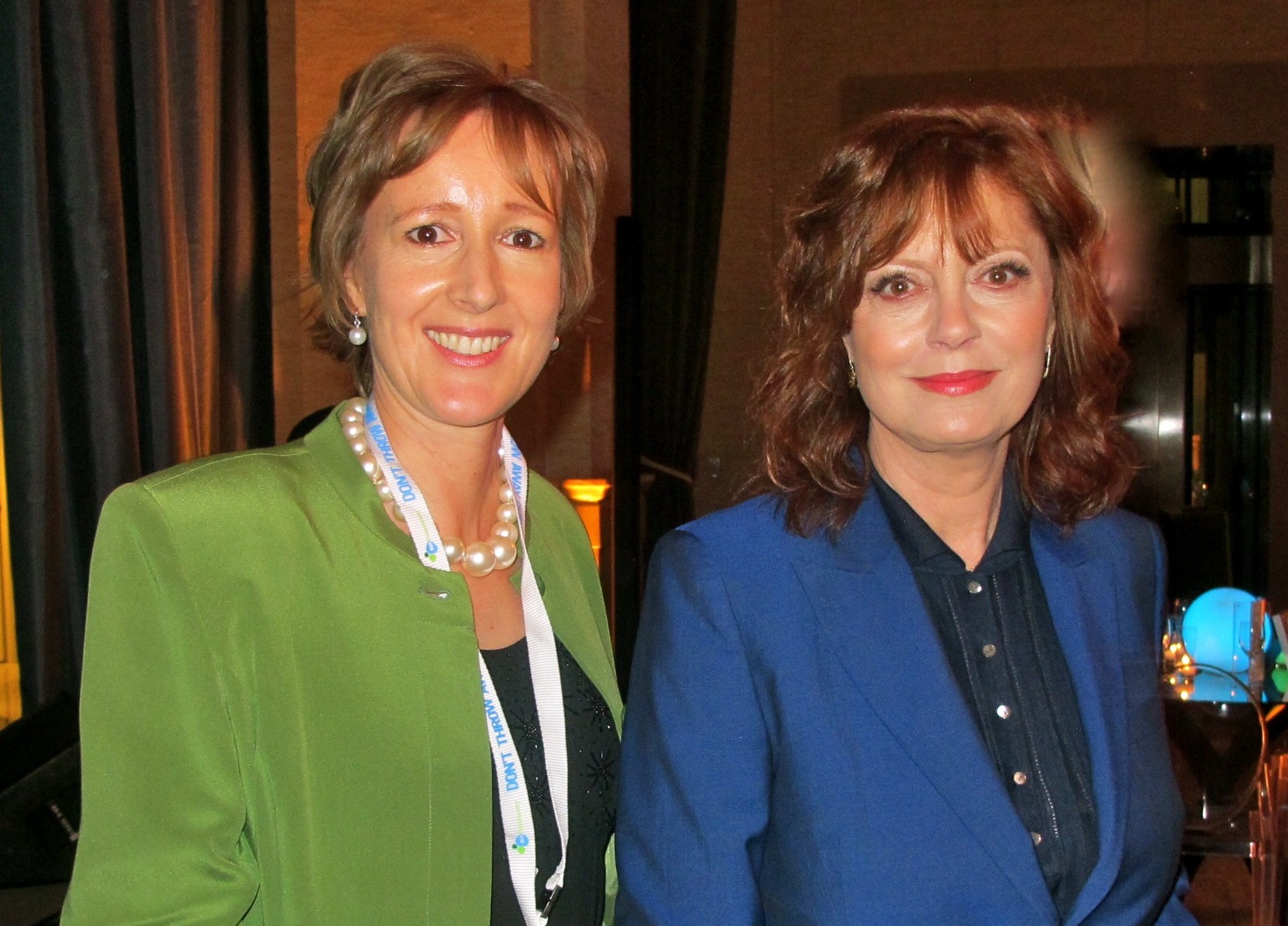
“We are a community of change agents,” said Sarandon. “Bringing about the world we want for our children.”
In a video tribute at the Bently Reserve, Will.i.am enthused about healthy design being a human right, and thanked Bill McDonough for inspiring him. “It’s my mission…to create products that after we use them have a new beginning,” said the popular singer songwriter, and quipped, pointing first at himself then at Bill McDonough: “Will.i.am…Bill.i.am.”
The newly crowned “Bill.i.am” came on stage to great applause and was obviously amused by his tributes. He announced his upcoming book, “The Upcycle” (a tome on upcycling to be released in 2013) and what he called “his baby,” a Bill Clinton inspired solution to homelessness in Haiti and beyond.
“What if we could design a house that could be built by children and their parents in a day without tools?” said McDonough, who is well known for his visionary zeal. He showed the audience a model of a simple one room home, made of ‘upcycled’ plastic no doubt. He dreams that these homes could be shipped in flatpacks to earthquake and storm damaged areas, wherever there is a need around the world.
“What if we could do (for building) what Muhammad Yunus did for banking?” said McDonough, alluding to the microfinance guru who received the Nobel Peace Prize for his work alleviating poverty in Bangladesh.
Perhaps McDonough has a similar award in mind? He’s won many awards in the green design field (including three Presidential Awards for Sustainable Development and Design), and has taken some criticism, but one thing is for certain, he’s never been short on grand vision. Witness the 6-hour long Monticello Dialogues.
He may yet succeed in taking Cradle to Cradle mainstream and making the world a healthier and greener place. With allies like Meryl Streep, Susan Sarandon and Will.i.am who can doubt him?
Click here to see highlights of Fresh Dialogues exclusive interview with Meryl Streep at the event.
The video was recorded at the Cradle to Cradle Products Innovation Institute Gala, the Bently Reserve, San Francisco on Wednesday November 14, 2012.
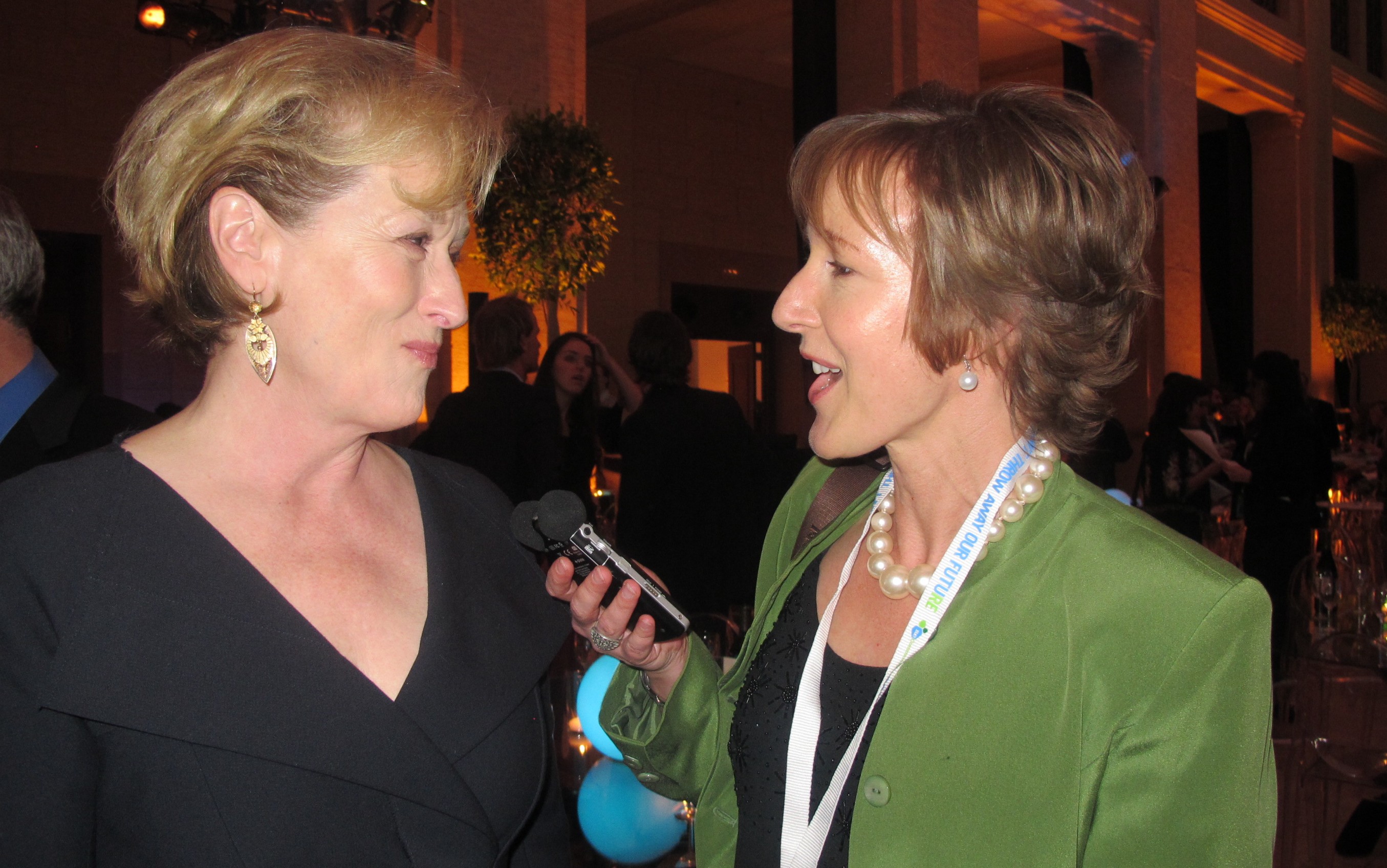
We were delighted when Meryl Streep agreed to a Fresh Dialogues interview last month in San Francisco. We had a lively conversation about why she’s become an activist for the environment.
Meryl was charming and generous, but I left the interview feeling that I’d just talked with Margaret Thatcher’s younger sister. Perhaps my British accent sparked the Queen of accents channeling her inner Iron Lady?
Interview highlights
Why should we care for the environment?
We’re all part of the ecosystem. We’re all connected. You can’t go around in a bubble…
Unlike so many environmental messages which are negative: “don’t this…don’t that!” Bill approaches things in a positive, restorative, beneficial way…with a focus on abundance. His mantra is a beautiful thing: “Designing a safe, healthy and delightful world for the love of all children, for all species, for all time.”
He’s a fervent optimist. His cup is never half empty or even half full. It’s always full of water and air. We were both profoundly affected by similar things: Silent Spring (the book by Rachel Carson) and concern for the impact of toxins on children. He’s the consummate multi-tasker. He leaves me breathless.
On the roots of her environmental consciousness
It all goes back to being a mother. That’s the most invested relationship. You pay attention, perhaps for the first time. What is going in your child’s mouth? What’s her environment like? What will the future be?
In 1989 Streep cofounded “Mothers and Others” to raise awareness of toxic pesticides used in food production.
How did Julia Child influence her? Click here for more interview highlights.
Check out the video of Meryl Streep’s hilarious tribute to Bill McDonough.