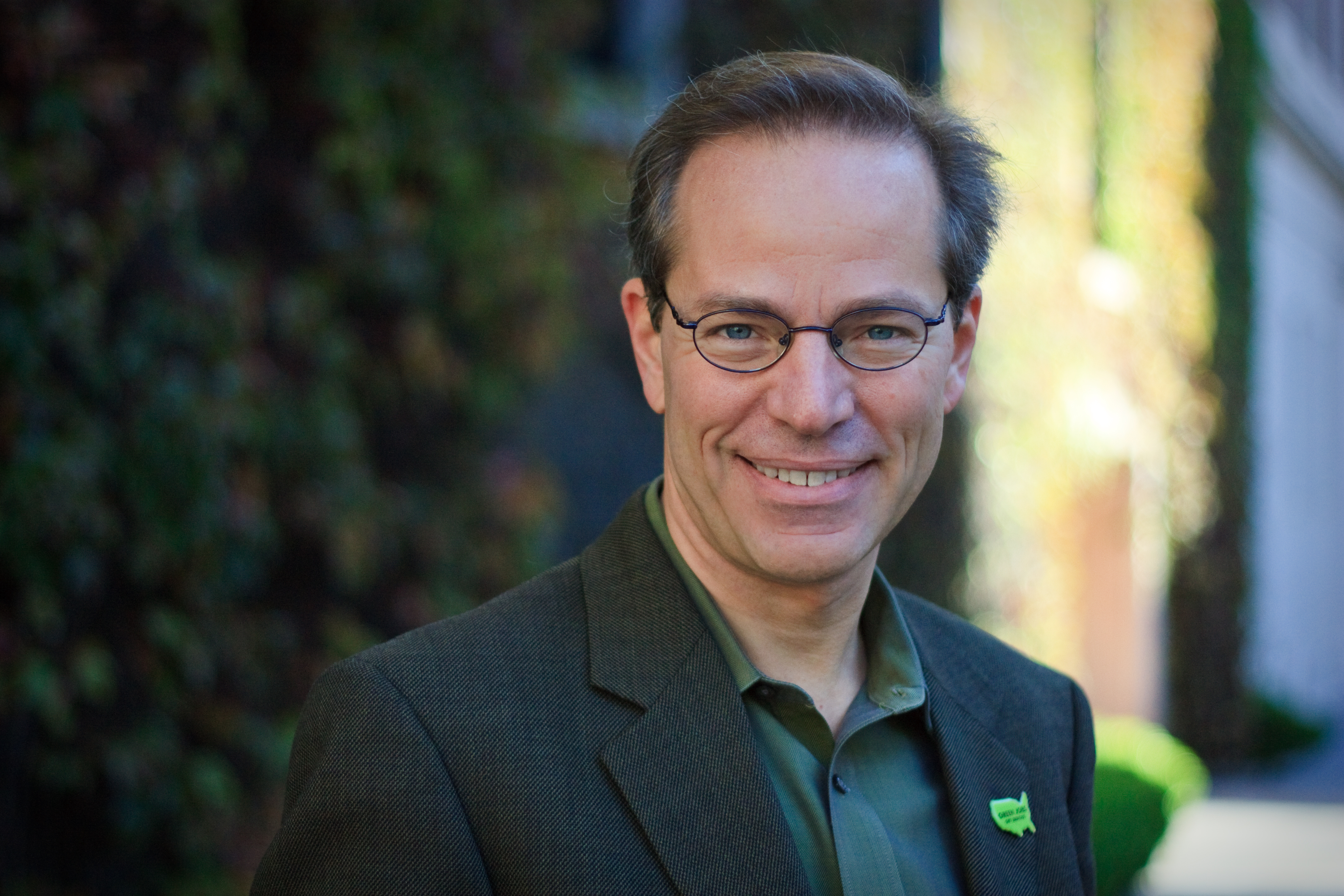
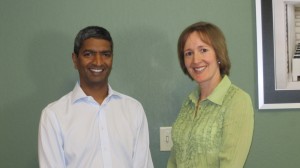
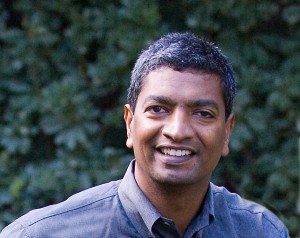
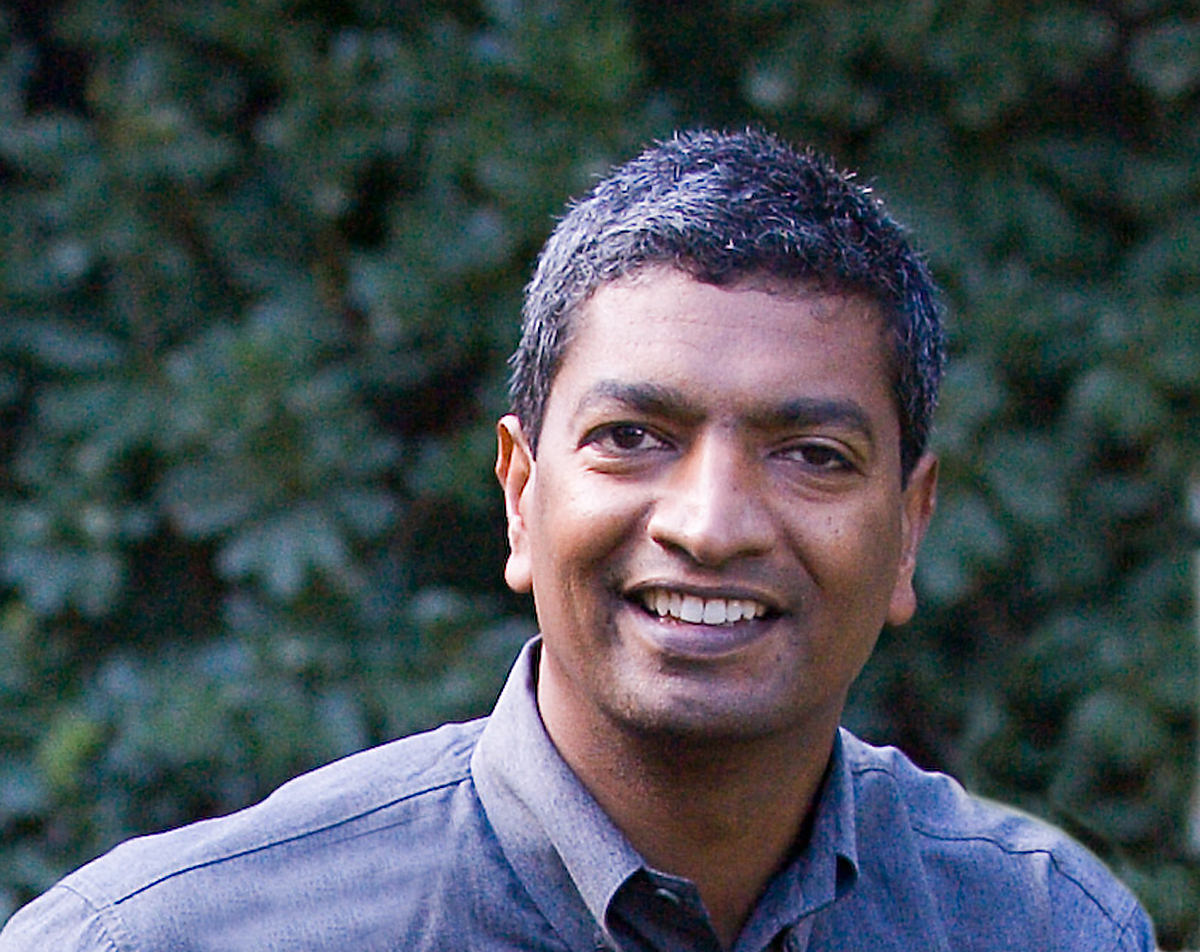
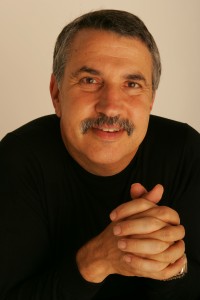
Silicon Valley’s Kevin Suracehas just achieved Rock Star status – of the Green Biz variety. The CEO of Serious Materials was picked as Entrepreneur of the Year by Inc. Magazineand joined Time Magazine‘s list of Tech Pioneers Who Will Change Your Life, along with another Silicon Valley Green Rock Star: Bloom Energy’sKR Sridhar. It’s an incongruous status for someone from the mundane world of building products, but Kevin is being described as ‘savior of the world’, ‘the Larry Ellison of green’ and has even turned down an invitation to the White House. He knows he’ll be invited back.
In an exclusive Fresh Dialogues interview recordedbefore the accolades descended, Kevin revealed his motivations for waging war on climate change and the lessons learned in building a green company. He discussed the influence of Al Gore’s An Inconvenient Truthin helping create a market for green products; how Serious Materials changed its focus; and whether consumers are willing to pay a premium for green. Kevin outlined how his company uses new media to get its message out and what the future holds for this rapidly expanding company.
On Kevin’s motivations for wanting to help save the planet
“When you have children, you start to think what world are you leaving them? I think that affects everybody.”
When did he focus on energy saving products at Serious Materials?
“If I sat here and said in 2002 I had the great vision to design energy saving building materials – there was no market in 2002 – people would think I was nuts. By 2005, the climate issue had come to the front of minds: on scientists’ minds, at the United Nations, in the world. By ’06, we began coming out with energy efficient windows… ”
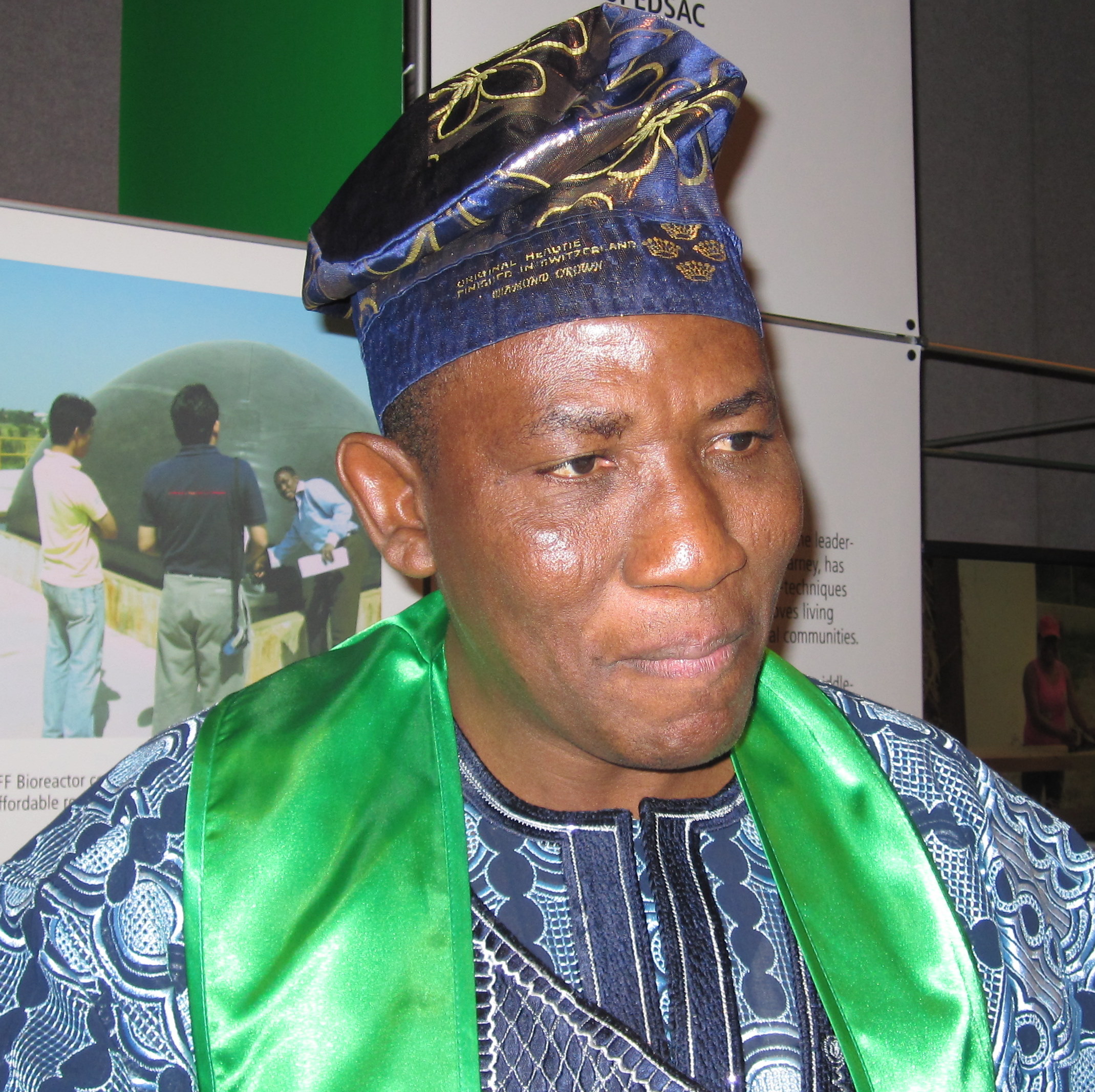
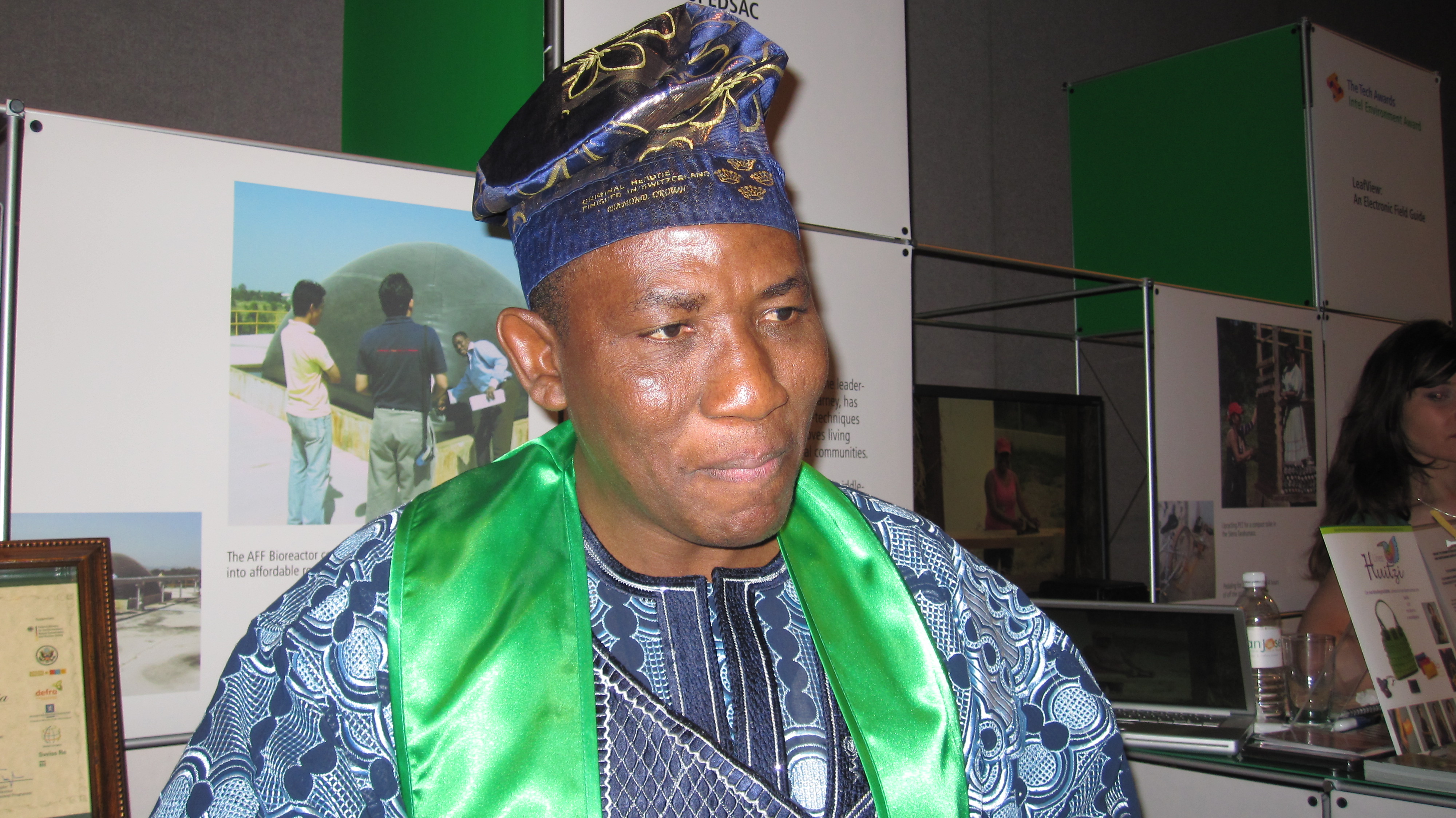
The catchy title “Cows to Kilowatts” certainly won the attention of the crowds at the 2009 Tech Awards Galain Silicon Valley, but the project won accolades for more than mere words. Dr. Joseph Adelegan, an Ashoka Fellowis a charismatic engineer who has found an effective way to harness the energy from slaughterhouse waste and won the $50,000 Intel Environment Award . He and his team at the Nigeria based Global Network for Environment and Economic Development Research, are creating cooking gas and electricity from effluent that might otherwise lead to harmful pollution.
What does the Tech Award mean to Dr. Adelegan?
“We’ve received several awards… so it’s not really receiving the award… but the opportunity to network, to meet great minds in Silicon Valley… see people who’ve gone through the same as you’ve gone through…We’ve seen scientists and inventors, visited Microsoft and Intel..we’ve seen people doing some encouraging things…Sometimes you think you are crazy doing this type of stuff, but you see that people are as crazy as you. You have to be crazy to be creative….” (We agreed there were LOTS of crazy creative people in Silicon Valley)
On November 17, I attended the CleanTech OpenAwards Gala at the Masonic Center in San Francisco and enjoyed keynotes from Lesa Mitchellfrom the Kaufman Foundation, Bill Weihl, Google’s Energy Czar and Nancy Pfund, of DBL Investors.
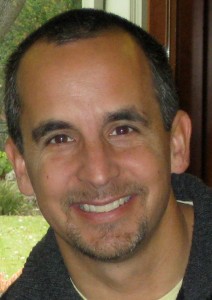
Minutes after his company was picked as the National Award Winner. I sat down with Scott Hublou, co-founder of EcoFactor. His three-year-old start-up has created an energy management systemfor the home that uses weather data to optimize heating and cooling. Scott claims savings of between 20 to 30% are achievable. Sounds pretty attractive in this tough economy, and the judges thought so too.
How did the CleanTech Open and its mentoring help you?
“It forces deep thinking around various different business models. Because there are actual deadlines, it’s kinda like being back in school again where you have to have deliverables… You’re presenting to your peers and potential investors, so you always want to make a good impression… think about sustainability, and good market strategies.”
This is a transcript of Part Two of my interview with Bloom Energy CEO, KR Sridhar. The interview was recorded on September 30, 2009 at the Bloom Energy headquarters in Silicon Valley, California. To listen to the interview and read the original post, click here.
We join the conversation as we are discussing the pricing of the Bloom Box.
Alison van Diggelen: KR, thank you for joining me today on Fresh Dialogues.
KR Sridhar: You’re welcome.
Alison: I appreciate your taking the time. So let’s talk about how affordable it (the Bloom Box) might be…I’ve read that $10,000 is a target…
KR: Don’t use any numbers.
Alison: Is this all speculation?
KR: That’s all speculation. So all that I can simply tell you is: if it needs mass market adoption, it needs to be affordable. And affordability is already set in the marketplace because today you buy electrons and you pay a certain price. If I offer you all the advantages of the kind of device I’m talking about, and you have to pay the same price you’re paying your local utility, then it’s affordable to you. So that goal is there. Our goal is clearly to make it affordable; if it’s not affordable, it’ll be the niche market, it’ll be a Tesla…
Alison: Right. And your goal is to make it absolutely affordable?
Alison: A Honda Civic? I like that analogy. That’s great. Let’s talk about barriers to entry. You’re notoriously in stealth mode. Are there high barriers to entry to this? How many Ph.D.s do you have working on it?
KR: Absolutely – very high barriers to entry. The high barriers to entry come (from) – it’s a very complex interdisciplinary field; it requires knowledge not just in one area, in a significant number of engineering, science, material science disciplines…and the development of all the technology, the process know-how is fairly complex…and a significant amount of capital – and I can’t give you the number – that needs to be invested over a long period of time, to get it to where it needs to be. Those become the barriers to entry. But clearly, it’s a huge enough market that other people will try.
Alison: And how many Ph.D.s do you have on your team, working on this problem?
KR: Let’s say it’s in the hundred range.
Alison: It’s in the hundred? And I assume, this being Silicon Valley, people from around the world.
KR: Around the world.
Alison: You’re getting the best talent on this problem and they’re presumably all sworn to secrecy…
KR: They’re the best in what they do and that’s why they’re here.
Alison: You filed your first patent in 2003 and I understand there was one filed last year?
KR: Mmm-hmm.
Alison: Can you describe the trends from 2003 to now? You’re obviously a very patient man and you’ve talked about your motivations, but can you talk about the whole trajectory? In 2003, when you filed that patent, did you think that by September 2009, you’d be in production?
KR: We’d roughly laid out this timeline in our very first series of fundraising from our investors. For a project of this timescale, we’re probably within two, three quarters of the original projection…and again you need to understand that this is the kind of product that nobody has built before and an industry to support it doesn’t exist…So we’re not just building a company, we’re building all the support infrastructure that needs to be around us. So, given that caveat, if you accept that as the give-or-take, we’re on plan.
Alison: So there must be growing enthusiasm and excitement in this building?
KR: Absolutely. The big thing is the entire Bloom Team, from employees, to investors to board members to everybody else, are real believers in what we do and real believers in the mission of the company. So that alone creates the enthusiasm.
Alison: I bet. You’ve said ‘we want our products to speak before we speak.’ What do you mean by that?
KR: There’s been enough hype of people coming and saying ‘this is what we will do’ …a lot of them have not come to fruition…That doesn’t mean that they did something wrong. It’s just a very difficult problem to solve or somebody would have solved this a long time ago. And for us, we just didn’t want to add to that hype of coming and saying, ‘this is what it’ll do.’
We first wanted to be sure it works…It’s not just that it works, it can be made affordable. It can make a difference. You’re creating a business, you’re creating an industry, so it needs to work, it needs to be a quality product that has reliability, that people will buy. It needs to be the kind of product that makes a difference in somebody’s life to want to buy it. It can be…affordable – there’s a value proposition to it – and at that affordability rate, the business can be successful because it’s making a profit.
Alison: Well KR Sridhar, it’s been a pleasure. Thank you for joining me today on Fresh Dialogues.
KR: Thank you.
For more Fresh Dialogues with KR Sridhar, click here
For more Fresh Dialogues with Venture Capitalist, Vinod Khosla, click here
Bloom Energyhas been in stealth mode since 2003 and little has been released about the fuel cell company’s technology and timeline. KR Sridhar, CEO of Bloom Energy agreed to sit down with me to discuss the company’s technology and team. We explore the importance of the Bloom Box affordability; as well as the company’s timeline. KR also explains why he doesn’t want to add to the hypesurrounding the company. This is Part Two of my interview which was recorded on September 30, 2009. Here’s the transcript and check back next week for Tom Friedman’sviews on Bloom Energy
To check out the Part One post summaryclick here, and to read the Part One Transcriptclick here
I caught up with Pulitzer Prize winner, Tom Friedman, at the Foothill CollegeCelebrity Forumlecture series last month, where he delivered a spirited argument for why the United States must embrace a green economy. In this second part of our interview, we explore his part in driving the green agenda. This January, he took part in a congressional hearingon green tech and economic recovery, sponsored by US Senator,Barbara Boxer. We discuss his role in that; how he deals with critics; and why he enjoys daiquiris with New York Times colleague, Maureen Dowd.
I use my platform as a journalist to drive this agenda that I see as important… I see a lot of things that are very exciting happening – exploding really – on a kind of small scale, but they haven’t yet reached critical mass and when you’re talking about changing the climate, you are talking about critical mass. It hasn’t yet been translated into policy at scale.