Fresh Dialogues is delighted to announce that it is now a regular contributor to KQED’s Climate Watch, a multimedia initiative focusing on climate science and policy issues in California. Fresh Dialogues stories will focus on the intersection of clean tech and climate change.
Here is our first story for the NPR affiliate.
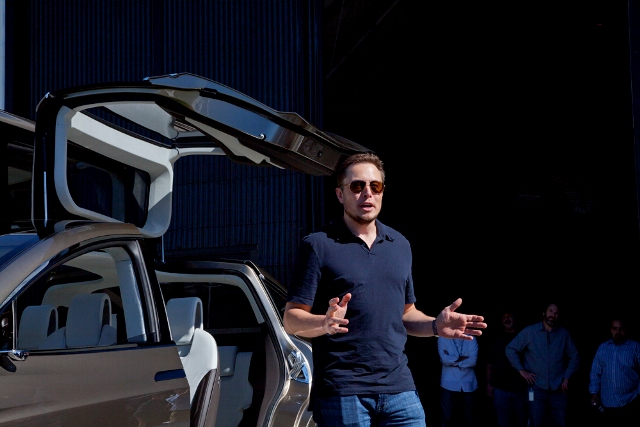
On February 8th, Tesla Motors CEO, Elon Musk, unveiled the company’s latest electric car: The Model X. Probably the sleekest and sexiest SUV you’ve ever seen, and also the priciest. But what’s most remarkable — beyond the falcon wings — is that the car will be manufactured here in the Golden State, at the former NUMMI plant in Fremont.
Why did Tesla choose to locate its headquarters and manufacturing in the high-priced San Francisco Bay Area? Was it linked to the state’s ambitious clean energy targets and policies? The new rules approved last month by the California Air Resources Board require automakers to produce 1.4 million zero-emission cars for the California market by 2025, and are part of the aggressive goal of reducing the state’s emissions 80% by 2050.
Tesla spokesperson Khobi Brooklyn eschewed policy explanations and told me, “We wanted to build our cars in California, not only creating jobs in the U.S., but also California specifically.” She cited Silicon Valley as “an incredibly rich pool of talent” and said that purchasing an existing car manufacturing facility saved money and time in preparing for car production. I’ve no doubt the California sales tax rebates on capital equipment purchasing (estimated at $20 Million) helped too.
California’s Governor Jerry Brown attended the Model X unveiling, and basked in the Tesla limelight. He was obviously delighted to be part of some good news from the Golden State for a change. “We can work our way out of our mess with creativity, openness and the kind of spirit that’s willing to take risks,” he said to the rowdy audience of Tesla groupies.
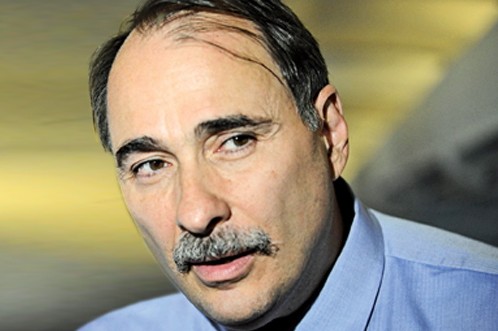
Here is a transcript of my interview with David Axelrod on January 27, 2012 re. Solyndra, 2012 Energy Policy and President Obama’s State of the Union speech. Video here
ALISON VAN DIGGELEN: Hello and welcome to Fresh Dialogues. Today I’ll be talking with David Axelrod. President Obama’s Chief Political Strategist. David, thank you for joining me today on Fresh Dialogues
DAVID AXELROD: Happy to be here.
ALISON VAN DIGGELEN: Good. Now Obama has started his first (2012) Campaign ad with a defense of his clean energy policy. Why did Obama choose to start with green?
DAVID AXELROD: The ad that it was responding to was an ad sponsored by a SuperPAC… sponsored by the Koch brothers… two oil billionaires … and it was an attack particularly on the Solyndra issue but it was really an attack on the whole green energy initiative of the president’s. And we’re proud of that initiative…we’re proud that we’re on par to double renewable energy during the course of his first term. He believes very strongly that we need to command the clean energy technology of the future and that as a country we need to be encouraging the development of clean energy technology or we’re going to see that go to other parts of the world.
ALISON VAN DIGGELEN: You mention Solyndra specifically. Solyndra seems to be a thorn in the side of Obama. It keeps coming up. How does he intend to remove the thorn?
DAVID AXELROD: All you can do is be open and candid about it. We knew when made investments in clean energy technology that some would do well and others would not. That’s the nature of this…these are speculative investments. And that’s the reason why they needed some nudging from the government in order to blossom…You can look at Solyndra or you can look at the fact that when we started, the US had about 2% of the advanced battery manufacturing for electric cars. We’re on course to get to 40% by the middle of this decade.
ALISON VAN DIGGELEN: That’s impressive.
DAVID AXELROD: That wouldn’t have happened without the investments we’ve made. We’ve seen real growth in solar and in wind energy and so these are investments that are paying off for the country. I’m very certain that we’re going to look back at the seeds that were planted during this period and we will say that it has made a big difference for the country in a positive way.
ALISON VAN DIGGELEN: What percentage of the program’s investment went to Solyndra?
DAVID AXELROD: There were forty under this specific program, so it was a small percentage of the entire program. It was a program… that was begun under the Bush Administration and we accelerated that program because we do believe that we are in a real competition for the clean energy technology of the future and we as a country have a great interest in developing alternative energy and home grown domestic energy and renewable energy. These were investments that made sense. Some will pay great dividends, others unfortunately will not.
ALISON VAN DIGGELEN: Yes.
DAVID AXELROD: Plainly, we have to have our eye on the future and really encourage and develop renewable sources of energy. It’s good for the planet, it’s good for the economy, it’ll create great jobs…high end manufacturing jobs. This is going to continue being a thrust for us. We’re not going to back off.
ALISON VAN DIGGELEN: Thanks for joining us.
The interview took place backstage at Foothill College’s Celebrity Forum on January 27, 2012. Check back soon for more with David Axelrod:
On Michelle Obama’s influence on green policy
Read transcripts, see photos and check out our ARCHIVES featuring exclusive interviews with Tom Friedman, Paul Krugman, Vinod Khosla and many more green experts and visionaries…
and join the conversation at our Fresh Dialogues Facebook Page
Here are video highlights from the SVLG Game Changers 2012 Conference which took place in Silicon Valley, September 13, 2011.
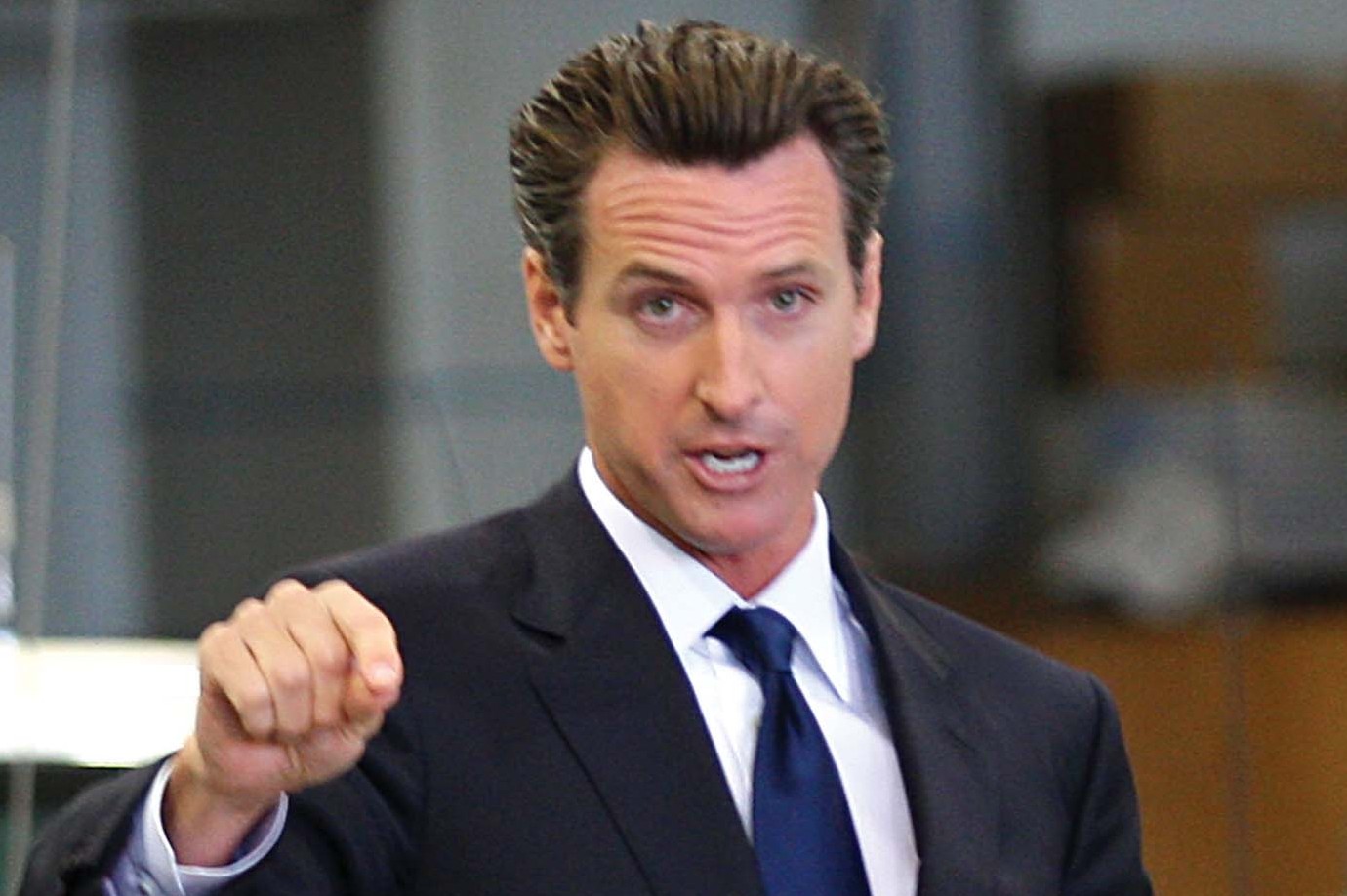
Gavin Newsom, CA Lieutenant Governor was on fire as he talked about California’s struggling economy and political disfunction: “We’ve been flat lining for 30 years…we have to wake up!”
California State Senator, Joe Simitian echoed his frustration with polarized politics and called for a popular public uprising. Striking a more optimistic viewpoint, the charismatic Shai Agassi, CEO of Better Place, the EV infrastructure, battery replacement company shared his vision for making the San Francisco Bay Area a model for the future of electric vehicles to “show Detroit…DC the way to go.”
Weili Dai, the intriguing cofounder of Marvell, the fabless semiconductor company, reiterated the need for cooperation with China, despite several calls for taking a more aggressive stance to protect and nurture America’s deteriorating manufacturing base.
This interview was recorded in Silicon Valley on Sept 13, 2011. With thanks to the SVLG and SV Community Foundation for front row seats. See video at the Fresh Dialogues Channel here
Here is an exclusive Fresh Dialogues interview with Marvell’s VP, Weili Dai – she gives tips to women in business. Number one: believe in yourself
Read transcripts, see photos and check out our ARCHIVES featuring exclusive interviews with Tom Friedman, Paul Krugman, Vinod Khosla and many more…
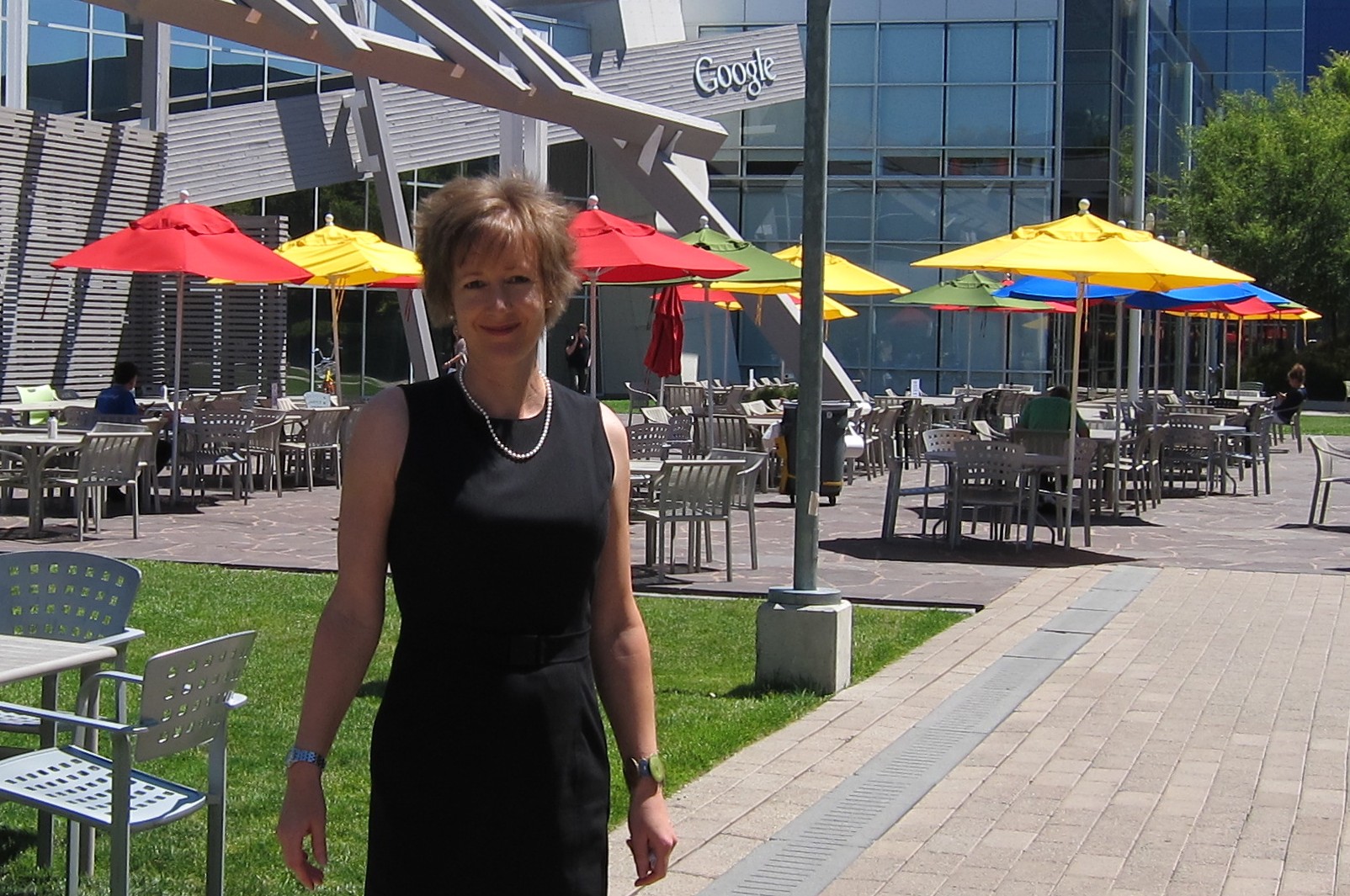
Google’s infamous Don’t Be Evilmantra has inspired some remarkable projects, including the newly launched Google Ideas, but it’s Google’s Green Dream that caught my attention this week.
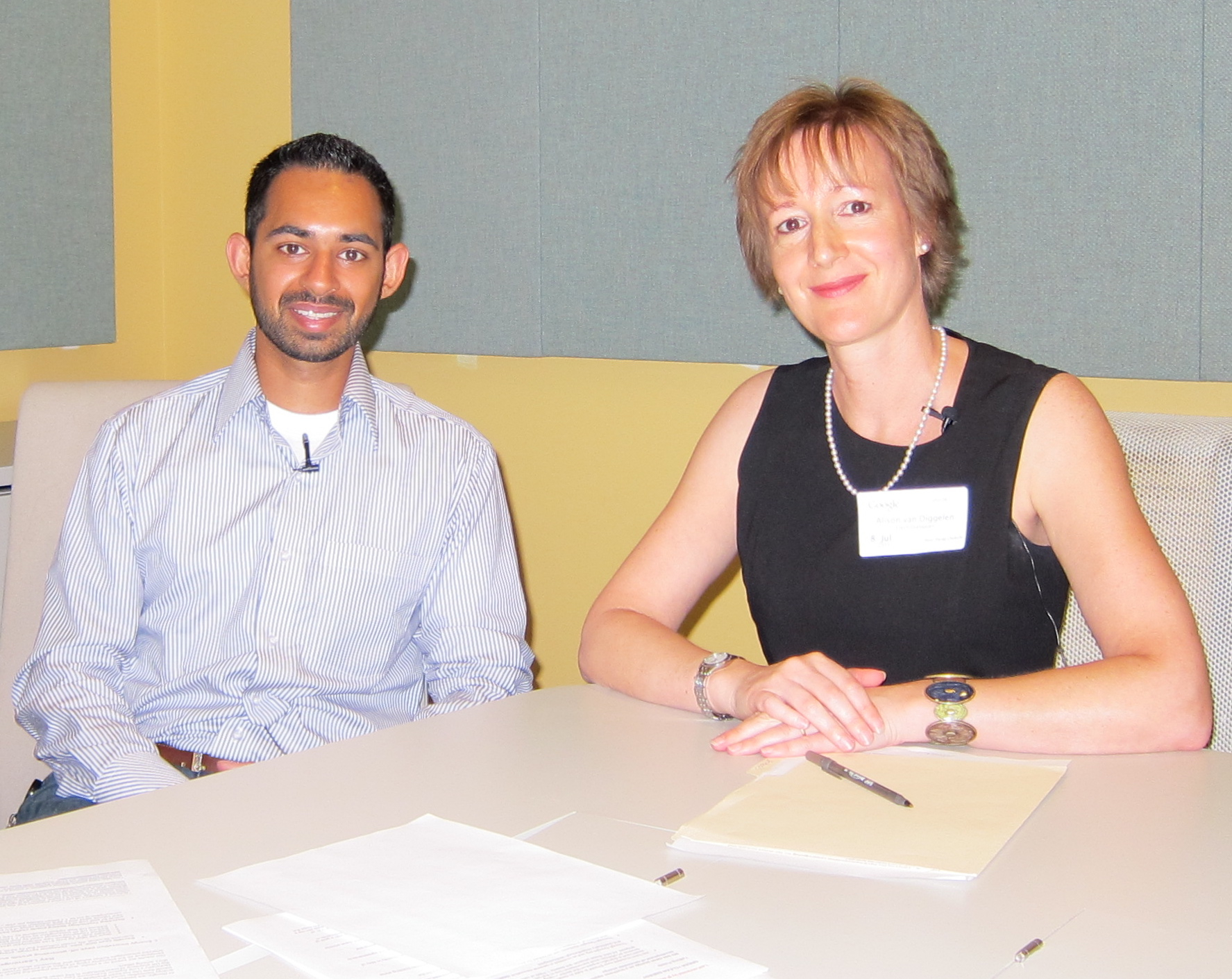
On Friday, I sat down with Parag Chokshi, Clean Energy Public Affairs Manager, at Google’s Mountain View Headquarters. We discussed Google’s recently published report, The Impact of Clean Energy Innovationwhich paints a picture of green nirvana in the US economy and energy market – if green investment and government incentives spur rapid innovation. And it’s a big IF, based on some rather optimistic assumptions, that’s why we’re calling it Google’s Green Dream.
Among the report’s predictions… By 2030, clean energy innovation will:
– boost US economic growth by $155-$244 Billion in GDP/year
– create over one million new jobs
– help electric vehicles command a 90% market share (small cars and trucks)
– save households almost $1000/year in energy bills
– reduce US oil consumption by over 1 B barrels/ year and greenhouse gases by 13-20%
The report concludes that if investment and incentives are delayed five years, the opportunity cost will be $2-3 Trillion.
Is this a realistic Green Dream by Google’s Green Czar Bill Weihl and his team? Or naive wishful thinking? Chokshi acknowledges that Google is examining some “aggressive scenarios” but underlines that the report’s purpose is to stimulate debate on how to get to this Green Dream; and to spur more investment by both the public and private sector. In this Fresh Dialogues VIDEO, Chokshi outlines the dramatic improvements in battery technology that are crucial to increasing the adoption of electric vehicles, but declined to confirm whether Google is investing its considerable financial and engineering muscle in the already crowded race to build a better EV battery. We can only speculate.
TRANSCRIPT of Google Interview with Parag Chokshi, Clean Energy Pubic Affairs Manager. Recorded on Friday July 8, 2011. The interview has been edited for length. Highlights here.
Alison van Diggelen: Today, we’re at the Google Headquarters in Mountain View California. I’m here with Parag Chokshi, and he is Pubic Affairs Manager of Clean Energy at Google.
(Parag) You have an audacious goal at Google: to make renewable energy less costly than coal. …
Parag Chokshi: That’s right.
Alison: How is that target going and can you talk on that target?
Parag: Sure…there are a lot of initiatives that we do in support of that goal. There’s an internal effort – an engineering effort – that focuses on solar thermal technology, so that’s another piece of getting to that goal. And of course there’s the Energy innovation study that we published just last week. We’re really trying to provide some data on the long-term impact of investment by the public and the private sector in an effort to spur more investment and to get other folks involved toward getting to that goal.
There are a lot of pieces to it: an internal engineering team, the investments we’re making and then some efforts in the policy and advocacy space.
Alison: What were some of the most exciting conclusions that the report made?
Today, we’re presenting the third in our new Lesson Plan Seriesbased on Fresh Dialogues interviews. The series is compiled by Lisa Lubliner, our new Fresh Dialogues Education Expert.
In 2010, Fresh Dialogues produced a video featuring Mark Platshon, a venture capitalist at Vantage Point Capital Partners, one of the leading investors in battery and energy storage innovation. Mark gave a good overview of energy storage, its limits and potential; and explained what venture capitalists are looking for in new storage technologies. Let’s call the VIDEO Batteries 101.
“Throw a dart at (two elements on) the periodic table and you can make a battery out of it…a potato and a penny can make a battery…unfortunately we have a very limited periodic table…(and remember) Moore’s Law doesn’t apply to chemistry!” VC, Mark Platshon
To find out more about batteries and explore a step by step lesson plan about batteries – check out the lesson plan link below:
Why are batteries important to us?
How do batteries work?
How are lithium ion batteries superior to alkaline ones?
How can battery efficiency be improved?
How does battery innovation impact electric cars and the transport sector?
For more videos and interviews with Green Visionary and NYT columnist, Tom Friedman; Nobel Prize winning economist, Paul Krugman; Oceanographer and Titanic discoverer, Robert Ballard et al…check out Fresh Dialogues archives


 Fresh Dialogues is delighted to announce that it is now a regular contributor to KQED’s Climate Watch, a multimedia initiative focusing on climate science and policy issues in California. Fresh Dialogues stories will focus on the intersection of clean tech and climate change.