This year, California became the 6th state in the U.S. to make it legal to sell marijuana for recreational use. The BBC World Service asked me to explore an all-female startup that’s hoping to become a global power house for “high tea.” Amanda Jones and Jen Chapin, the Kikoko cofounders say that their marijuana-infused teas can help with sleep, pain, mood and even sex. I interviewed an enthusiastic fan at a Silicon Valley high tea party who raved about her spectacular orgasms! But is it addictive and what are the risks? My report aired today on the BBC’s Health Check.
Here’s a transcript of my report (edited for length and clarity):
BBC Health Check Host, Claudia Hammond: On New Year’s Day, California became the 6th state in the U.S. to legalize marijuana for recreational use. With an estimated potential market of $7Bn, it’s big business and queues soon formed outside dispensaries, with people keen to buy not just marijuana in tobacco and oils, but in brownies and even gummy bears. Now you can go to a “high tea” where the tea bags contain more than just tea leaves. So we sent reporter Alison van Diggelen along to ask what impact marijuana can have on our health?
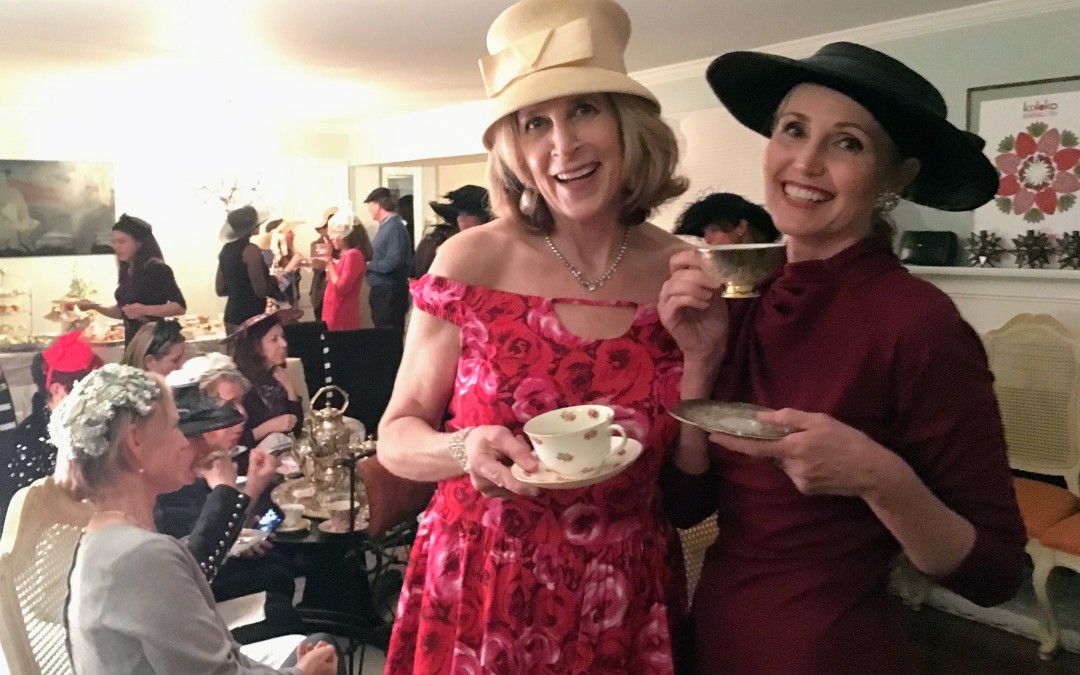
Alison van Diggelen: Here in an affluent suburb of Silicon Valley, women in fancy hats are enjoying a little tea party. The product – Kikoko – offers you “high” tea: tea bags with microdoses of marijuana that can give you a buzz and more. Here’s Amanda Jones, one of the cofounders of Kikoko….
Amanda Jones: This is not your mother’s Earl Grey tea…however it’s good for your mother. My mother does it almost every day, she’s 82. What we offer is a cannabis infused herbal tea, very low dose… “Ritz with a twist” is what we call it. It’s very refined, all organic, top-shelf herbs, blended for the particular ailments we’re trying to treat.
Alison van Diggelen: Amanda, and her all-female team, say their tea blends can help with: sleep, pain, mood and even sex….The teas have between 3 and 10 mg of THC. THC – or Tetra-hydro-cannabinol – is what gets people high. At elevated doses it’s also been linked to anxiety and an increased risk of mental health problems. The other key substance in marijuana is Cannabidiol, or CBD – sometimes recommended to help with pain or inflammation. A small trial recently conducted at the Institute of Psychiatry in London found this substance acts as an anti-psychotic and might counteract some of the negative effects of THC.
Several Kikoko clients enthused about the tea’s healing powers – including Tara Kaplinski, a lawyer who started drinking the tea for pain relief and to get a good night’s sleep…
Tara Kaplinski: I was taking a lot of ibuprofen for a wrist injury and I started to get pain in my solar plexus…so I went to the doctor and they said you can’t take Aleve (Naproxen)…you can’t take ibuprofen. So if you can’t take anything, then this is perfect. It does do the job, at least for me. It’s like a superfood…the health benefits are amazing…it’s better than having a beer, you’re not going to gain weight from it, be hungover in the morning…You’re not going to get frustrated with your children. I think it’s a healthier alternative.
Alison van Diggelen: Tracy O’Reilly – not her real name – is also a fan, but for quite different reasons. She’s a 55 year-old pharmacologist with expertise in toxicology.
Tracy O’Reilly: I took this “sensuali-tea” and it absolutely changed my life… I really had tremendous orgasms and I just felt wonderful afterwards and it lingered; giving me a pleasure that I didn’t think was possible post-menopause…
Alison van Diggelen: With the same partner?
Tracy O’Reilly: Yes! With the same partner. [laughter] Even the next day, I’ll feel very much like a woman who’s quite happy, put it that way…
Alison van Diggelen: Any negative effects at all for you?
Tracy O’Reilly: I limit my driving…I drink it at night and I don’t drive. It’s not a good idea especially if you’re new. I had never tried marijuana, but when I found out about this low dose tea and there’s so much science behind it…There’s been tons of clinical trials done. I was against cannabis when it was not legal, but now it’s legal I think it’s going to benefit a lot of people and probably save us some healthcare dollars…
Alison van Diggelen: Beyond California, 28 other states already allow the medical use of marijuana. Some surveys show that opioid use and mainstream medicine prescriptions have fallen in those states, as Americans seek more affordable alternatives for their ailments. But do medical researchers have conclusive evidence of its efficacy? I met with Professor Westley Clark, an expert in psychotic substances and behavioral health at Santa Clara University.
Professor Westley Clark: We know it does produce analgesia, pain relief…Do we have enough science to say 80% of people will have this result? We don’t! We need more evidence. Remember, that marijuana is a Schedule 1 drug, scientists have to go through extra hoops because it’s “illegal.”
Alison van Diggelen: He means it’s illegal at the Federal level and consequently, that that has been a huge barrier for researchers. So just how safe is it? And what about addiction and overdosing?
Professor Westley Clark: Marijuana can be addictive. It has low addiction potential, there are people who develop dependent syndrome, people who take it daily. It’s a small number. Can someone say marijuana is absolutely safe? No one’s going to say that, if they’re being honest. Is it safe for most people most of the time? Yes. There’s no credible evidence that you can overdose on marijuana.
Alison van Diggelen: As for other risks, Professor Clark reminds us that tea – and other marijuana edibles – avoid the impact that smoking a joint or vaping has on the heart and lungs. But he cautions…
Professor Westley Clark: Be wary of something that’s being marketed as “good for all that ails you.” Usually it isn’t… It’s a psychoactive substance, with psychoactive properties…you need to be careful. If you have an adverse reaction, you need to stop, and put yourself in a safe place or go you may need to go to an emergency room.
Alison van Diggelen: What’s his advice to those concerned about it triggering psychosis?
Professor Westley Clark: Some people might have a psychotic experience: paranoia, delusions. But when the effect of the marijuana wears off, it’s gone. There are people more vulnerable – it’s a minority of people – particularly people younger, under 18, they may be more predisposed, they’re more vulnerable. Their psychotic state may be longer in duration and the marijuana might help precipitate their first episode of psychosis. It doesn’t happen to most people. The younger you are, the more vulnerable you are…(or) if the THC content is much higher than you’re used to…If you have a family history of psychosis or severe trauma you might be more vulnerable.
Alison van Diggelen: What about people with bipolar, depression or who’re schizophrenic already?
Professor Westley Clark: They really should not use marijuana.
Alison van Diggelen: Professor Clark points out that 24 Million Americans currently use marijuana on a regular basis and many people want it legalized, just like other popular psychoactive substances like alcohol or tobacco.
Professor Westley Clark: We need more research and less mythology and less hysteria so we can educate the public with good science. We don’t need to continue to perpetuate “reefer madness”, and create upheaval in society where we’re incarcerating large groups of people based on fictions and myths.
Alison van Diggelen: What’s your advice to ladies considering high tea?
Professor Westley Clark: If they’re adults and have no history of severe psychological problems, that’s up to them. The route of administration will probably allow them to have a more positive experience, because it’s slow… If you take too much, say you drink all the teapot, you may have adverse consequences.
Alison van Diggelen: Would you try it yourself?
Professor Westley Clark: Nah…I’m a little old for that…[laughter]
Fade out Atmos…Tea pouring, laughter at the party.
Our delivery date was scheduled two weeks ago, then cancelled abruptly without explanation. This week, delivery was again scheduled but we still held our breath…
On arrival at the new Tesla Delivery Center in Fremont, California this morning, the staff were all smiles. Savannah, the friendly barista was waiting to make us a complementary cappuccino or even a “Ludicrous Latte.” That’s 4 shots of espresso.
We didn’t need it!
We waited for over 20 minutes and received regular updates from Sean, our friendly Tesla guide (a former Verizon salesman) and Joe (a former barman). We wondered: is the car really here? What are they doing back there? There were no Model 3s in sight. Not even one to spare for the showroom floor.
There were about a half dozen others waiting, the majority for Model S delivery. One couple told us it’s the first non-Mercedes they’ve bought in over a dozen years.
Here’s the moment of truth. For my techie husband, it was the best Christmas present he could imagine. I was prepared to be underwhelmed but was genuinely impressed by the quality of this car. I was expecting a cheaper, tinny version of the Tesla Model S, but this car shows some real innovative flare (from its sleek lines, to the elegant door handles to the newly designed heating/cooling system and the new charging plug and cable). The new dash interface is intuitive and sleek.
Tesla Model 3 Naming
Below: I wonder how Tesla knows its customers preferences?
It’s show time
The question is: how long before Frank lets me get behind the wheel?
As the flood of #MeToo stories continue to inundate our media with horrific stories of sexual assault and harassment, Alison van Diggelen was relieved to cover an uplifting story of women empowerment on assignment for the BBC World Service. California-based Rising International was conceived in response to the draconian sexual apartheid of the Taliban. One brave woman in Afghanistan asked herself: what would I do if I was not afraid? And one energetic woman in Santa Cruz was inspired to create a local uprising and launch a global movement.
“She felt they were saying to her: you’re less than a human being because you’re a woman! Jamila Hashimi is her name…she’s my hero. The Taliban had declared women under house arrest, so they were not allowed to leave their homes…to learn to read or write. She started a secret school… even though she knew of teachers who’d been killed on the streets… She inspired me to get involved. We started in Afghanistan with Jamila creating a craft project and now 27 countries later we’re working with Jamilas all over the world.” Carmel Jud, Founder of Rising International
Photo: Djide Koffa, a soulful singer from Cameroon, volunteers for Rising International
Or listen to the special extended length Fresh Dialogues segment below:
.
..
.
Here’s a transcript of our conversation and a longer version of the BBC report (edited for length and clarity):
BBC Host, Fergus Nicoll: Being abused, being trafficked – having little or no access to education – are not, you might think, the best preconditions for business success. But one group of marginalized women in California is turning adversity on its head. They’re selling handmade goods – made by women living in the poorest and most dangerous places in the world – and it’s doing well. Alison tell us about the Rising Home Party.
Alison van Diggelen: That’s right Fergus – I recently attended one of these parties. Friends and family gathered in a home in Silicon Valley to buy arts and crafts from around the world. These events are a key part of Rising International’s strategy. They aim to help end poverty from the comfort of your living room and empower what they call, “a global sisterhood of survivor entrepreneurs.”
Here’s the report:
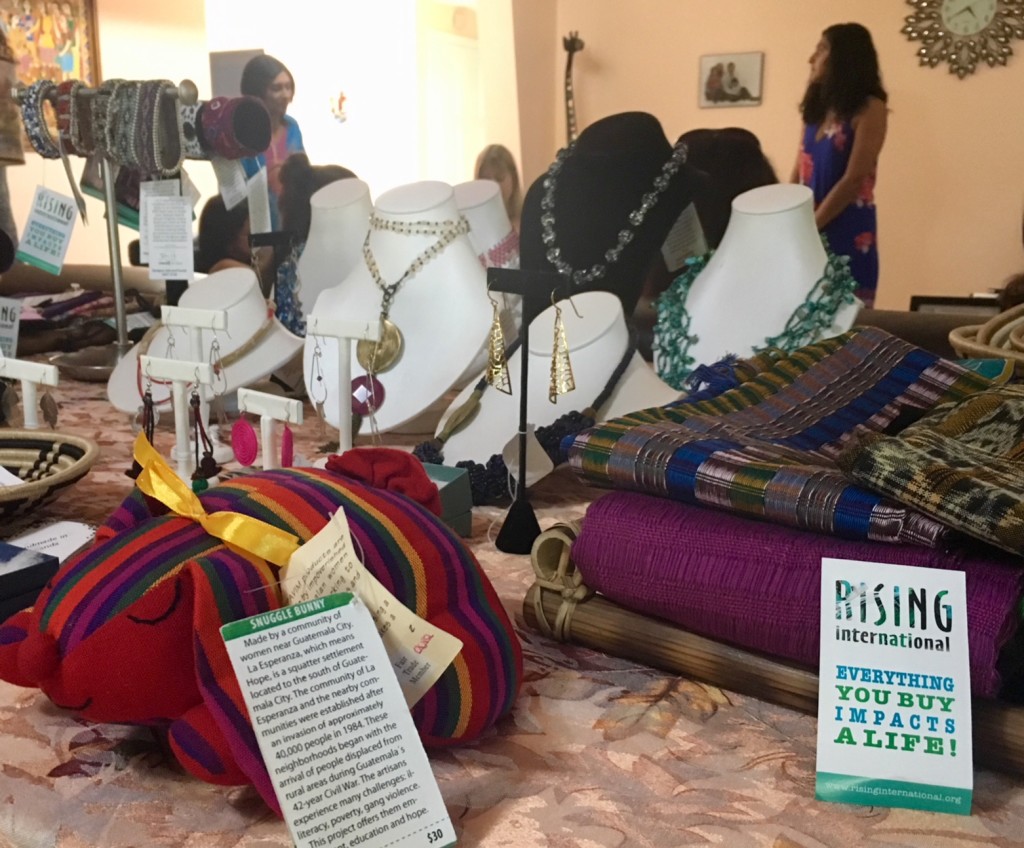
Alison van Diggelen: Dining room tables are covered with boutique-quality gifts, handcrafted by women survivors of war, gender-based violence, and human trafficking. Each item comes with a tag telling the story of the artisan, giving her a voice in the world. Carmel Jud, who founded Rising International 15 years ago, told me what inspired her:
Carmel Jud:I got to meet a woman who shared her story: she woke up to a radio broadcast… the Taliban had taken over and declared women under house arrest, so they were not allowed to leave their homes, weren’t allowed to learn to read or write. She felt they were saying to her: you’re less than a human being because you’re a woman! Jamila Hashimi is her name…she’s my hero. She started a secret school… she was sneaking girls into her basement even though she knew of teachers who’d been hung, killed on the streets… She inspired me to get involved. We started in Afghanistan with Jamila creating a craft project and now 27 countries later we’re working with Jamilas all over the world.
Alison van Diggelen: How does the organization choose its projects?
Carmel Jud:We go where it’s the hardest to be alive as a woman…the DR Congo where rape is used as a war tactic… We look to see: where’s that happening the most and how can we tell their story? We always find they’re making something beautiful even in the midst of tragedy…It’s almost like the craft is the messenger.
Photo: Carmel Jud, Rising Intl Founder explains her vision as Devin Gonzales looks on.
Alison van Diggelen: But Rising International is not a charity like Oxfam. Its business model is based on the intimate home party model, popularized by Avon, Tupperware and Pampered Chef. What makes it different from other non-profits – like Ten Thousand Villages – is that the people selling the goods are in duress or marginalized themselves. Rising International trains economically vulnerable women to run their own home party businesses. Some are human trafficking survivors. They earn an income selling crafts for their 4500 global sisters. One day they hope to reach one million vulnerable women…
Carmel Jud: We’re inviting women who’re suffering here into our economic empowerment program. We even go into homeless shelters here to train the women to be “Rising Entrepreneurs” and they learn to sell the beautiful things that are made by the global entrepreneurs. Imagine that every time a woman in a shelter sells a scarf she’s helping someone in another continent rise above poverty while she rises above poverty.
Alison van Diggelen: Devin Gonzales is a 21-year-old single mother from Watsonville, an agricultural community on the edge of Silicon Valley. She now works as a rep for Rising International, and gets 20% of the gross sales from the crafts she sells.
Devin Gonzales: I was born into a home where there was a lot of abuse, drugs, and I was put into the foster care system. I was moved around a lot: Santa Cruz, San Jose…Salinas. I got trained to become a Rising Rep where I could host home parties and sell these crafts that women have made all over the world. I absolutely feel a connection with these women. Women are really being beaten and broken down and the “human” is being taken out of them so they feel like they don’t have any worth. When I see women fighting for women they’ve never even met…It’s so powerful for me. I feel like I’m best friends with that girl in the basement who’s waiting for someone to rescue her…
Alison van Diggelen: She could be talking about Catie Hart, who’s now part of the Rising International team. She was trafficked and made to work in a strip club in SF for seven years. Now, with the organization’s help, she’s an educator for social workers and community groups to teach how trafficking works and how to break free.
Catie Hart: 10 years ago, my life was in the gutter. I was so traumatized. I didn’t have any skills. Here I am 10 years later, living a life that’s full of joy, connection and happiness.
Alison van Diggelen: I ask one of the home party attendees, Shannon McElyea what she bought…
Shannon McElyea: Today I bought a Safe and Sound bracelet. These are for protecting against human trafficking, made by human trafficking survivors who’re easing into making a living…they come out of poverty and homelessness.
Alison van Diggelen: The non profit recently showcased a short film (a joint venture between Impact Creative and Oculus, VR for Good) that documented the entrepreneur-survivors in Haiti “connecting” and interacting digitally with Silicon Valley. Virtual Reality (VR) is being described as “an empathy machine” and it seems to be working for Devin Gonzales:
Devin Gonzales:When I hear these women’s stories…the ambition, the courage inside of them. I would do anything in the world to support them, it’s contagious…. They’re breaking doors down, their education, their children. That’s all it takes: awareness, support and education.
Alison van Diggelen: Back at the party, I talk to 18 year-old Shreya Roy who’s trying out the VR goggles…
Shreya Roy: There’s a woman standing in the forest talking about how she became a representative for RI and she sells scarves from Haiti…and they just transitioned to Haiti and it’s the women making the crafts as their little children play on the side….The money she makes helps her…they craft it from their hands, they’re using things in nature like leaves and they incorporate that into their art.
Atmos: African singing, guitar…
Alison van Diggelen: Djide Koffa (Pron: Gina), a singer from Cameroon volunteers her time to support Rising International. What motivates her to be involved?
Djide Koffa: Women’s rights are human rights, and that’s so true, because life starts with us, it’s that simple…(laughter)
Djide Koffa soaring, singing and fade out…
END
Continue listening to the BBC podcast hear our discussion on Rising International, the challenges of Artificial Intelligence and Tesla’s money woes.
Why did Virgin’s Richard Branson decide to invest in Hyperloop One, the futuristic transport system that seeks to shrink journey times (like LA to San Francisco, London to Glasgow) to less than one hour? On assignment for the BBC World Service, Alison van Diggelen sat down with Branson in San Francisco to explore his vision for the Hyperloop, as well as Virgin Galactic, One Web and supersonic travel around the world.
Branson is still reeling from the deadly hurricanes that destroyed his island paradise, and he’s calling for a Marshall Plan to aid sustainable recovery in the Caribbean region. He told me he’s energized by the “climate skeptic in the White House.”
“When you’ve got 99% of scientists saying the world is heating up, the world is heating up. Yes, you’ve got a climate skeptic in the White House but most sane people – most rational people – know that we have a problem. It’s sad to have someone like that in such a position of power and therefore all of us have just to work that much harder to rectify any damage that he does.” Richard Branson, Founder of Virgin Group
Photo: Richard Branson in conversation with Alison van Diggelen for the BBC World Service. San Francisco, October, 2017. Credit: Lewis van Diggelen
Here’s a transcript of the segment (plus some bonus material), edited for length and clarity:
The BBC’s Gareth Mitchell: First, a futuristic plan to transport us in supersonic tube trains. This is a concept called the Hyperloop and now one of the world’s richest people is investing in it. Virgin Group founder, Richard Branson has just done a deal with one of the companies developing the technology, Hyperloop One. Alison van Diggelen, our reporter in Silicon Valley has been speaking to Richard Branson. The conversation begins with Branson’s other great interest: space. Not just Virgin Galactic, but plans to improve connectivity for citizens back here on earth.
Alison van Diggelen:What makes Virgin Galactic distinct from what Jeff Bezos is doing with Blue Origin and Elon Musk with SpaceX?
Richard Branson: With Virgin Galactic our principal reason for being is to help this beautiful earth that we live on. Space can help people back here on earth…One of the things we’re going to be doing through a company we’re involved in called One Web is put an array of 2,000 satellites around the earth. That’ll be the biggest array of satellites in space and they can help connect the 4 Billion people who’re not connected today. If you’re not connected, and you can’t get Internet or wifi; it’s difficult for you to start businesses and help your children get educated in remote places….
Alison van Diggelen: What’s the timeline on that?
Richard Branson: One Web should be up and running in about 2 ½ years time (first launches are due to start in 2-3 months). Virgin Galactic’s mission is taking people into space, making them astronauts, and giving them an incredible experience and a chance to look back on this beautiful earth. Next year (2018) should be the year for Virgin Galactic, the year that VSS Unity goes into space, the year I go into space and we start taking people into space. Because Virgin Galactic – unlike what Jeff Bezos and Elon Musk’s are doing – is shaped like an airplane, like a spaceship (they’ve gone for big rockets) – it can go into space, it can come back, it can land again and we can grow it. So one day we can do point to point travel…
Photo: Richard Branson shows off Virgin Galactic’s VSS Unity. Credit: Jack Brockway
Alison van Diggelen: What does that mean? Rocket speeds around earth?
Richard Branson: We could potentially (laughter) send people into orbit at 18,500 mph which would mean you could go anywhere on earth in 45 minutes. Realistically, our bodies won’t cope with that so we most likely would send people into sub-orbital flight, traveling at more like 4,000 mph which would mean London to Australia in 3-4 hours, instead of 18 hours currently, so still a big step forward: much faster than Concorde was and still tremendously exciting.
Alison van Diggelen:What are the tech challenges to making that happen?
Richard Branson: The advantage we have today is something called carbon fiber and that is an awful lot lighter than metal – which is what Concorde was built with. That can also be used in the building of engines. A plane can be an awful lot lighter. The technology on supersonic engine power has moved ahead dramatically since Concorde. Unlike Concorde, which was built by British and French governments, and really never made any money, we think we can actually build planes to go supersonically that would be economically viable as well. Of course, as a private company they have to be economically viable…
Richard Branson: 20 years ago, BR existed in Britain and it was pretty dire to say the least…most government run companies are not great, so we said to the government we’d be willing to take over the West coast main line and we also promised we’d transform it. There were 8.5 million ppl using it then. We brought in the Pendolino train and this year we’ll have approx. 40 m people using it, but we’re restricted to ~130 mph – whereas our trains could be going 160 mph – because the track isn’t good enough. So we’ve been looking for technology that will transport people at much greater speeds. The exciting thing about Hyperloop is that if we could get a straight line between London and Edinburgh or London and Glasgow, we could transport people in about 45 minutes. That would open up the cities more than anything and the idea of being able to get into a pod…the pod could literally come to your office or your home, pick you up, go down a tunnel…the pod will connect to our system and then it takes off and 45 minutes later, a grandmother in Glasgow could find herself in London, the pod carrying on and taking her to see her grandchildren somewhere in London: A lot easier than the 4.5 hours it takes currently on trains.
Photo: Virgin Hyperloop One team: Giegel, Branson, Pishevar. Credit: Virgin.com
Alison van Diggelen:What’s your timeline on that? My mother is 85 and she has grandchildren in London…
Richard Branson: I’m a little younger than her and am determined that it will happen in my lifetime. I will try to make sure it happens in her lifetime. Obviously we have got to have discussions with the government, they are building a high speed line but I think this could be compatible with that – and could be separate from that: Great Britain needs a lot more capacity. Obviously it’s not just for Great Britain…We are talking to countries all over the world…
Gareth Mitchell: That’s Richard Branson, talking to countries all over the world, and also to Alison van Diggelen. Let’s talk to Bill Thompson.
Bill Thompson: I really wish I could believe the Hyperloop is something I’ll see in my lifetime. The idea is a very interesting one: vacuum tube, high acceleration, low friction. There are enormous engineering challenges. I do think that talking it up as if it’s just around the corner is too much of a distraction from solving the real problems of urban transportation. Getting permissions…sorting out the safety problems will take a lot more work. What happens if the power goes down when you’re traveling at several hundred kilometers per hour in a steel tube? I’m pleased to see it being talked about but I’m certainly not holding my breath.
Note: Virgin Hyperloop One was previously known as Hyperloop One and before that: Hyperloop Technologies. It’s distinct from rival: Hyperloop Transportation Technologies or HTT. Confused? Don’t be! Find out more here.
“When I first learned of Sidewalk Talk, I was having a depressive episode…I was struggling in my business…online marketing: it’s lonely, it’s isolating and I saw this beautiful project on Facebook and I just lit up! It’s been a year now…I find myself being more articulate, connecting with people, being more compassionate, I’m a better mother, daughter, friend. I’m less reactive…It’s truly been life changing.” Myisha T, Oakland team leader for Sidewalk Talk
Right now, there’s a lot happening to increase our anxiety levels: The mass shooting in Las Vegas; devastating tropical storms, growing terrorism in Europe, Brexit fears…. Plus, the Trump administration seems intent on ratcheting up the conflict with North Korea; clamping down on immigration; and attempting to roll back action on climate change and rights to contraception. Here in Silicon Valley, the California fires on our doorstep are clogging the air with smoke and fear.
With reasons for mental distress growing, support can sometimes seem elusive. In Silicon Valley, there’s a critical shortage of qualified therapists and getting an appointment can take weeks or even months. Calling a helpline might seem daunting – but imagine pulling up a chair on the street where you live and sharing your anxieties with an empathetic listener?
Here’s a transcript of the program, featuring a longer version of my report (edited for length and clarity):
BBC Health Check Host, Claudia Hammond: In today’s world, it can sometimes feel difficult to connect with people….Social media means that technically, we’re better connected than ever, but even if we’re surrounded by people – real or virtual – it can feel as if no one is really listening. In Oakland, near San Francisco, a group has come up with a solution, and a low tech one at that. You don’t even have to call a helpline. Instead you see the sign in the street that says “free listening” and you pull up a chair and share your anxieties about the world with an empathetic listener. Alison van Diggelen reports from California on a project that offers free listening.
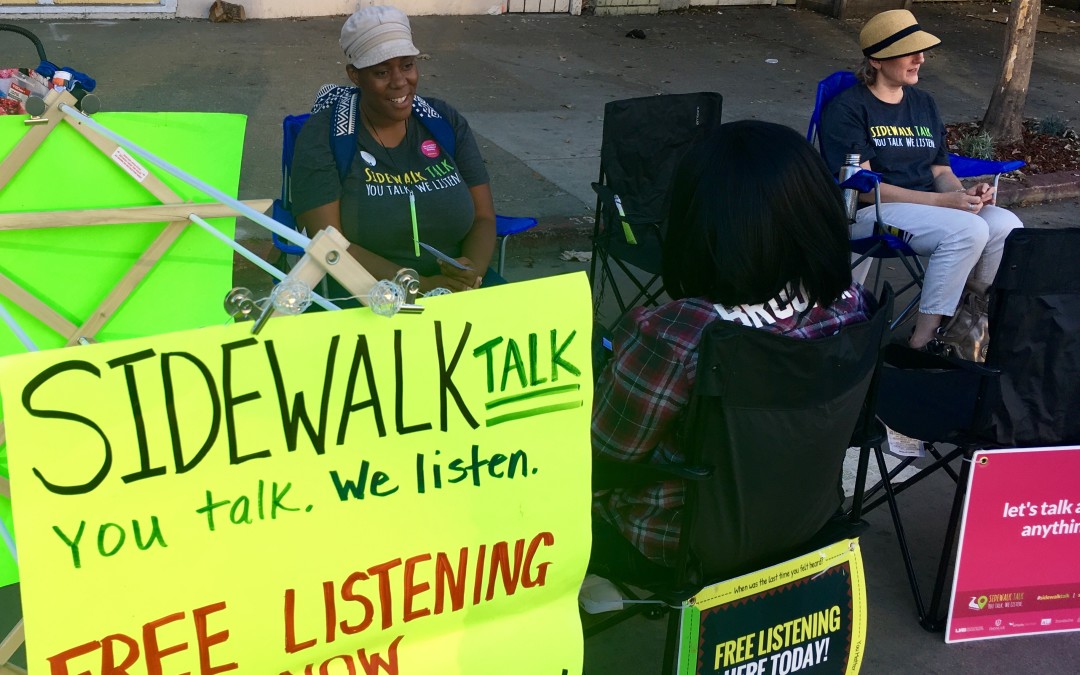
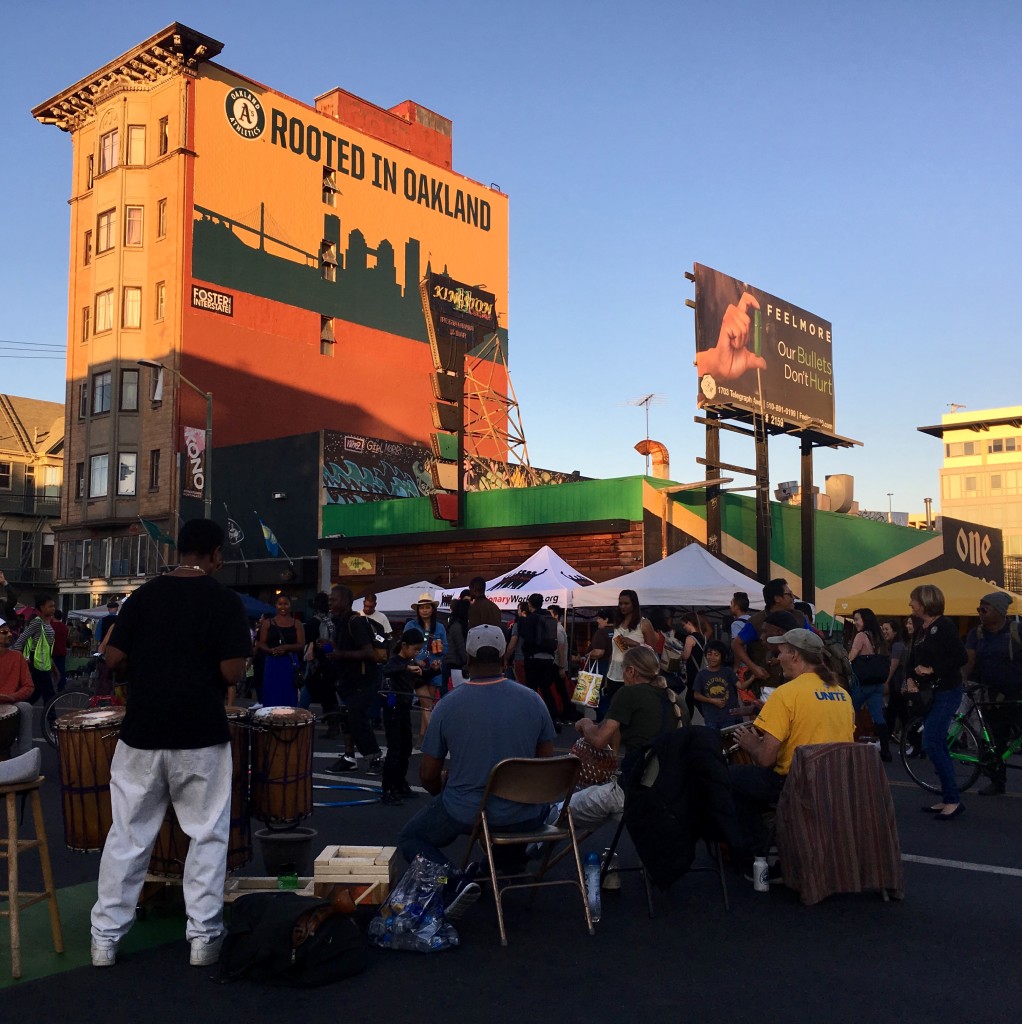
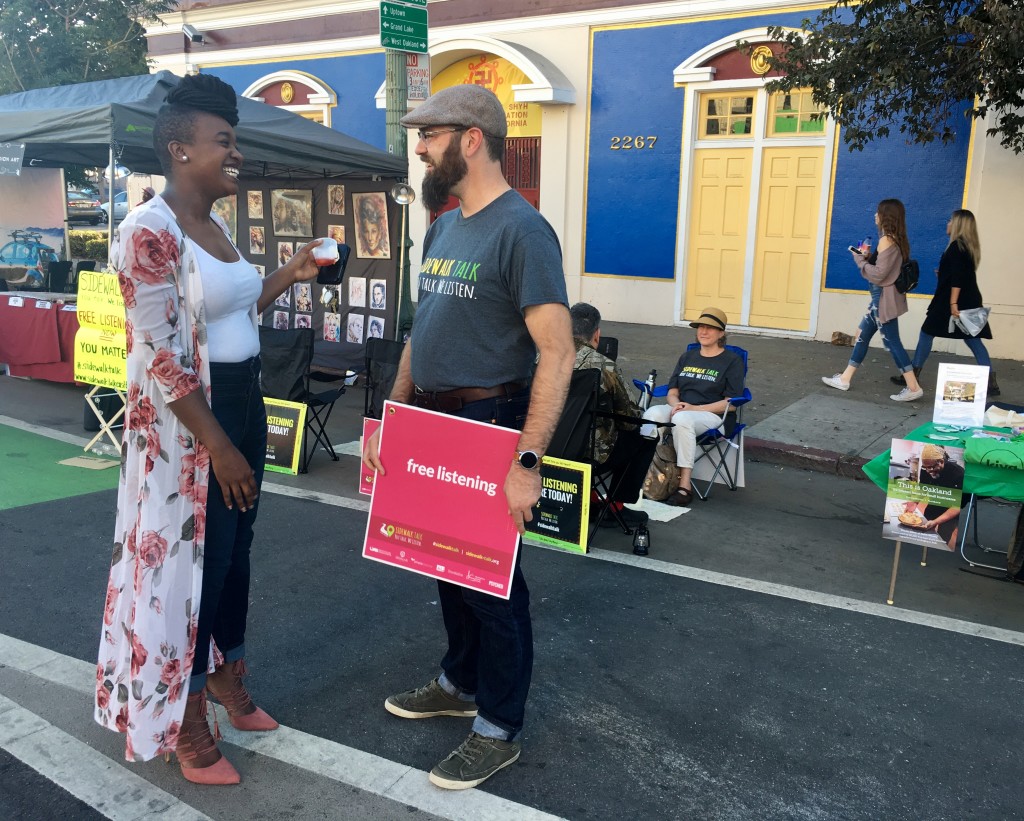
Alison van Diggelen: I’m here on Telegraph Avenue in downtown Oakland where Sidewalk Talk volunteers are setting up chairs on the sidewalk. They’re inviting passers-by to take a seat and just talk. The aim is simply to share their story, feel a human connection and perhaps find power in their voice…
Myisha T (Oakland team leader): Hey…free listening…would you like to be listened to today? Come on over, I want to talk to you about something. We’re Sidewalk Talk…we’re a community listening project.
First Friday in downtown Oakland offers an excellent opportunity for Sidewalk Talk volunteers to connect with the community.
Alison van Diggelen: About one in eight of the people she approaches agrees to sit down and talk…Tonight she has two volunteers to help out with deep, active listening.
Myisha, the Beatles sang about “All the lonely people.” Do you see that in the streets here in Oakland?
Myisha T: Yes, absolutely. A lot of people are lonely and when they find out you just want to listen to them are actually shocked. They’re like: wait, what? You really want to connect, no strings attached, no money, it’s not therapy?
There’s a lot of loneliness on the streets, a lot of disconnection..as soon as you sit down…two minutes in you just get connected and you can see the whole body language change, it gets more relaxed…you’ll lean into one another and it’s almost like that loneliness subsides.
Alison van Diggelen: Jessica Anderson, who’s a student advisor at Stanford University, is intrigued and takes a seat opposite a volunteer, Aaron Culich. How does she feel after 10 minutes of talking, with reflective listening by Aaron?
Jessica Anderson talks with Sidewalk Talk volunteer, Aaron Culich on Telegraph Avenue in Oakland.
Jessica Anderson: It added a new color to my happiness. Now there’s the presence of gratefulness. That reflection piece, helping me think about how things are better than I thought they were. There’s more room for introspection and connectedness. Those hormones that go off in your brain when you feel connected? That, that, that’s what just happened. (laughter)
Alison van Diggelen: so you’d recommend this to others?
Jessica Anderson: Yes absolutely…
Alison van Diggelen: About an hour later, I speak with 25 year old Amy Jones (not her real name) who tells me she experienced sexual and physical abuse in her childhood and was suicidal last year. The posters catch her eye, but she doesn’t sit down…
Amy Jones: A year ago, I wasn’t feeling heard and feeling supported by my peers, by my family, by anybody…it’s a really isolating thing and it’s hard to reach out. When there’s an opportunity to just sit down and talk anonymously, it’s a lot less threatening and if I had this a year ago, I probably wouldn’t have considered suicide….
Alison van Diggelen: Amy takes one of Myisha’s fliers and the two women talk intensely for a few minutes…
Amy Jones: I know what it feels like to be in that situation of being unheard…it just kinda builds inside you…you feel like you’re going to be shamed for talking about it. People veer away from it. If you’re happy, people want to be around you. So you put on the face but then you go home and you feel so empty inside. Having an opportunity to get things off of your chest releases that pressure. Because when you don’t, that’s when you explode and that’s when bad things happen…
Alison van Diggelen: Although 50% of volunteers have a background in therapy, Sidewalk Talk is all about deep listening and doesn’t involve therapy or offering solutions. Here’s Myisha:
Myisha T: Sometimes solutions aren’t the solution. Sometimes someone being heard is the solution. Fixing it can stop them finding who they really are.
Alison van Diggelen: So they need to find their own solution?
Myisha T: When you really start to hear yourself, you really do find your own solution. And get your inner conflicts resolved.
Alison van Diggelen:Myisha describes a gay man she listened to here in Oakland. He told her:
Myisha T:Wow, I’ve never had anyone listen to me. I’m always the listener…I’m never sharing how I feel with other people. Just by sitting here and having you listen to me, I hear the power in my own voice…I’m empowered now because I can hear myself…
Alison van Diggelen: Before their conversation he was focused on listening and “fixing” his friends and not asking for the support he needed. SideWalk Talk volunteers find that when people feel heard they move hopelessness to opportunity. It happened to Myisha herself.
Myisha T: When I first learned of Sidewalk Talk, I was having a depressive episode…I was struggling in my business…online marketing it’s lonely, it’s isolating and I saw this beautiful project on FB and I just lit up! It’s been a year now…I find myself being more articulate, connecting with people, being more compassionate, I’m a better mother, daughter, friend. I’m less reactive…It’s truly been life changing…
Alison van Diggelen: Psychotherapist, Traci Ruble feels SideWalk Talk has changed her life too. She launched the nonprofit in 2015 after seeing an uptick in gun violence in the United States …I visited her at her office in Palo Alto.
Traci Ruble: I felt a real pull to want to know what’s happening in our society. I kept having fantasies of putting my psychotherapy chair on the sidewalk as a different kind of protest, to say: what’s going on?
.
.
.
.
.
.
.
.
.
.
.
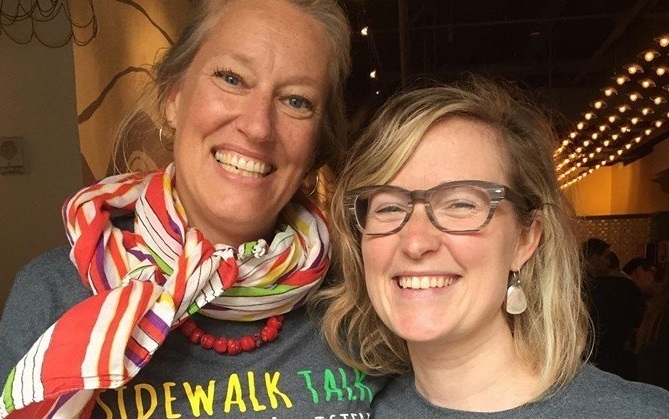
Traci Ruble (left) was concerned at the uptick in gun violence and fantasized about setting up her therapist chair in the street. She founded Sidewalk Talk in 2015
Alison van Diggelen: Traci persuaded 28 colleagues to set up “listening chairs” all over San Francisco…In almost three years, the project has expanded to 29 cities in 10 countries. Their global team of 1000 listeners has reached over 10,000 people to date and referred over 300 people to low cost or free mental health services. Although she’s convinced it’s making a difference, Traci laments that our so called “social media” can make people even more lonely and deprived.
Ruble Ruble: We need to have a daily dose of face to face human contact. We need this as much as we need air! We need to be touched, hear someone’s tone of voice, see the reflection of their face in their own eyes, and really feel someone. It’s very hard to do in text. We’re not getting the nutrients we need ….
Would a text message be enough to soothe a baby? Would a Facebook post be enough to soothe a baby? We have all those same biological impulses inside of us. We need all that to be well, to be healthy.
Alison van Diggelen: Traci believes that with anxiety levels and disconnection growing, this kind of contact is more important than ever.
Traci Ruble: When you think about mass shootings. I do think when we can de-humanize anybody then that sets us up to be able to engage in aggressive behavior. Everything about SideWalk talk is humanizing ppl again. It’s hard to aggress against humanity when you know that every single person passing you by on the sidewalk has this beautiful, amazing story inside of them.
Fade in atmos of Oakland street scene, drumming…
Alison van Diggelen: Back in Oakland, Amy Jones says she’s serious about volunteering for Sidewalk Talk and Myisha T couldn’t be more delighted. This listening project is incredibly infectious: Those who feel helped are inspired to get involved…
Myisha T: My number one reason for being here is just connecting…genuine human connection.

 Several Kikoko clients enthused about the tea’s healing powers – including Tara Kaplinski, a lawyer who started drinking the tea for pain relief and to get a good night’s sleep…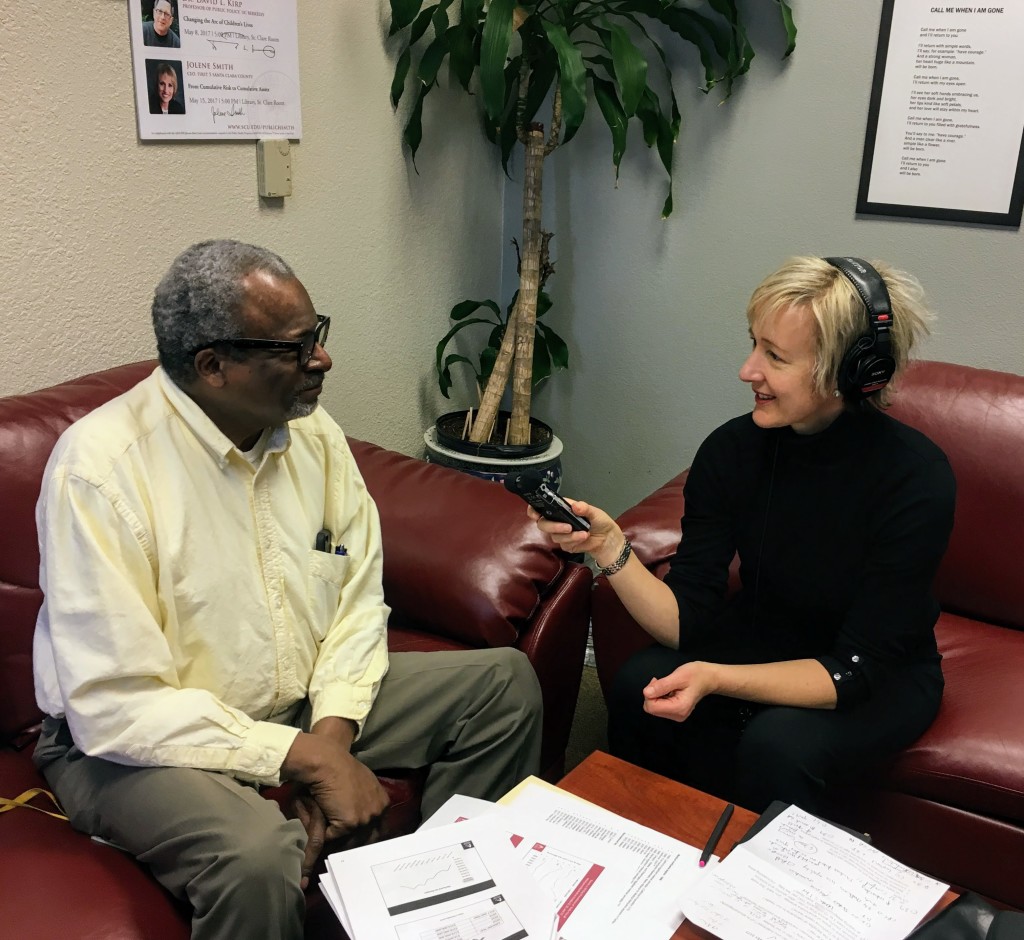

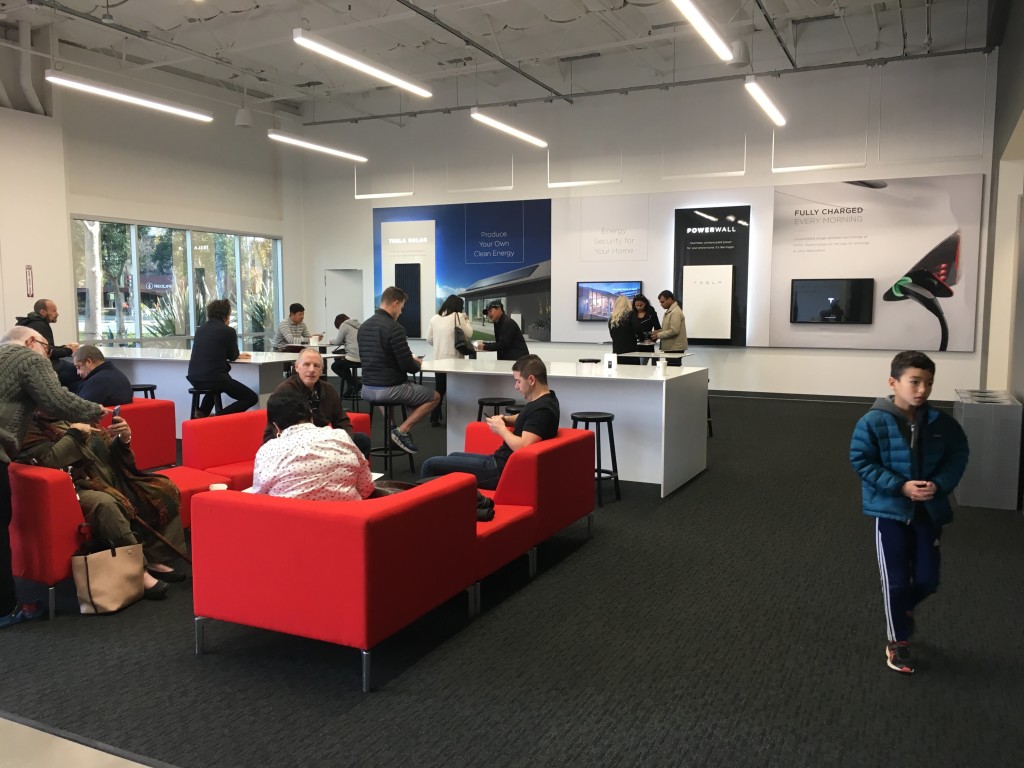
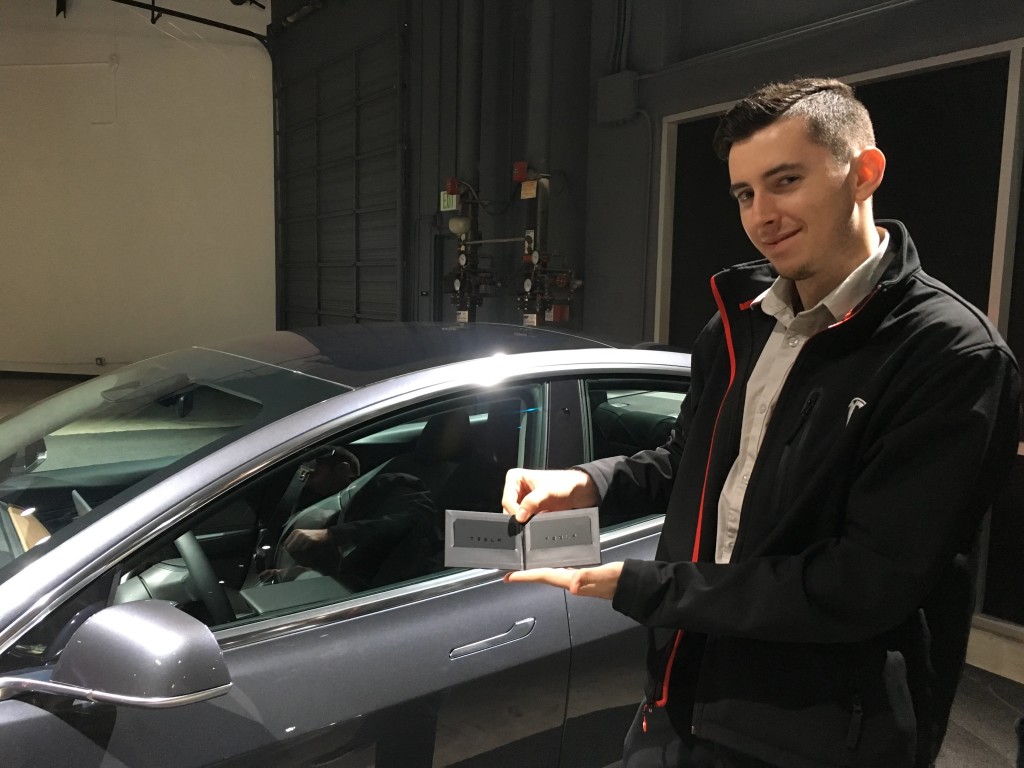

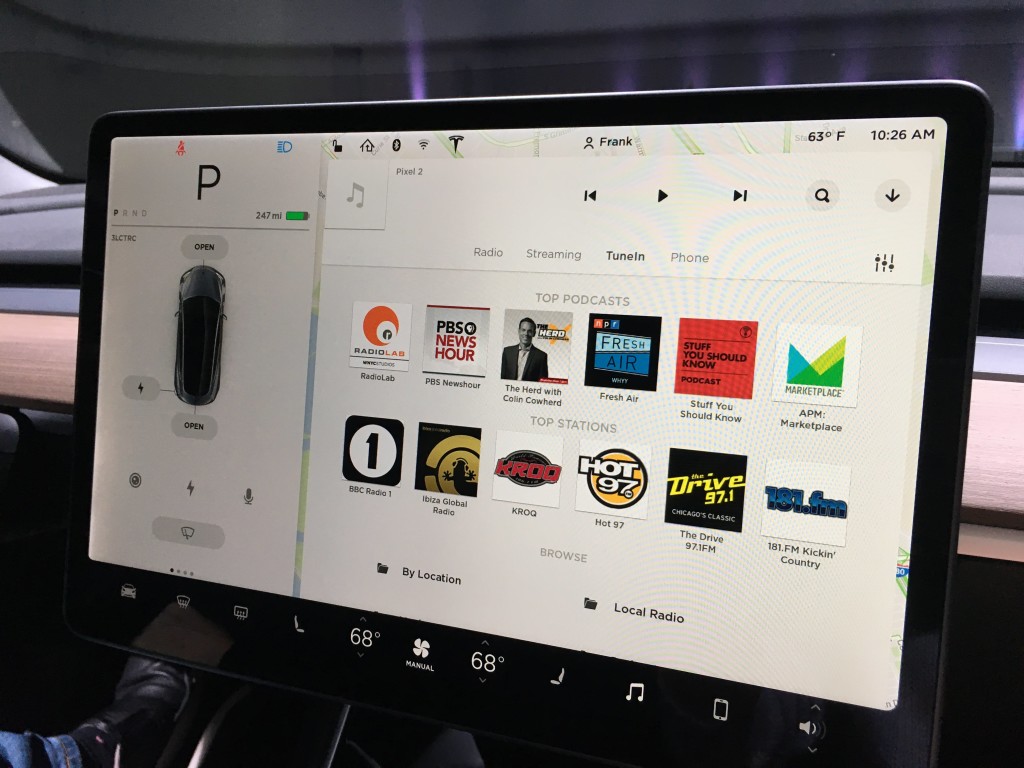
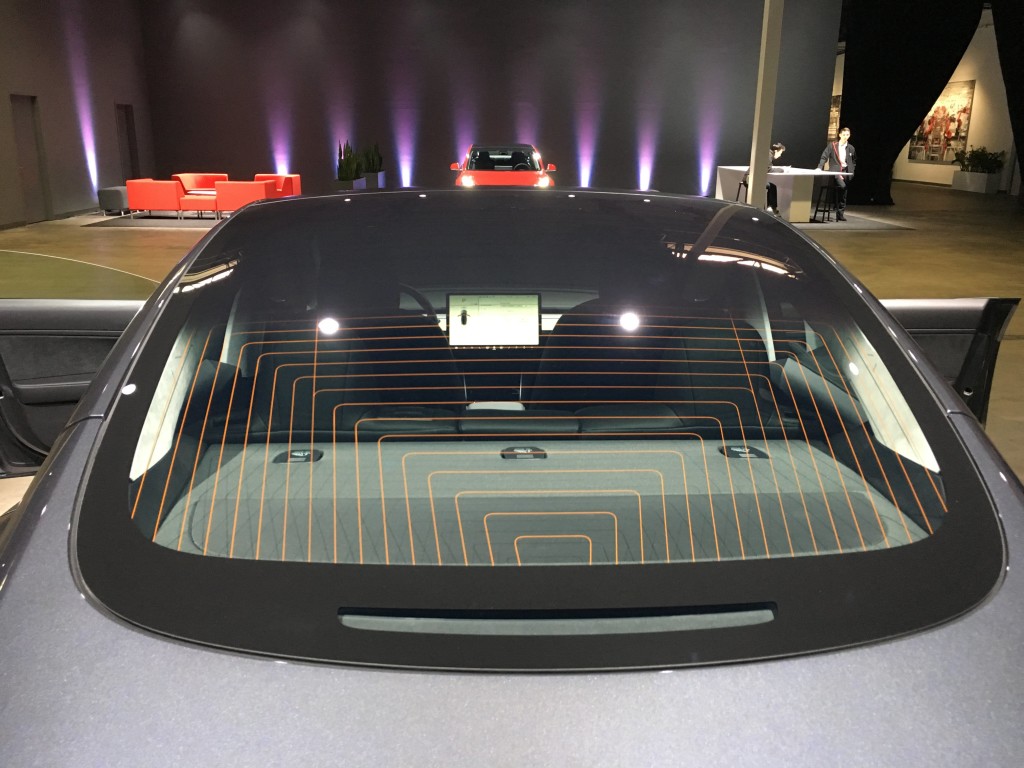
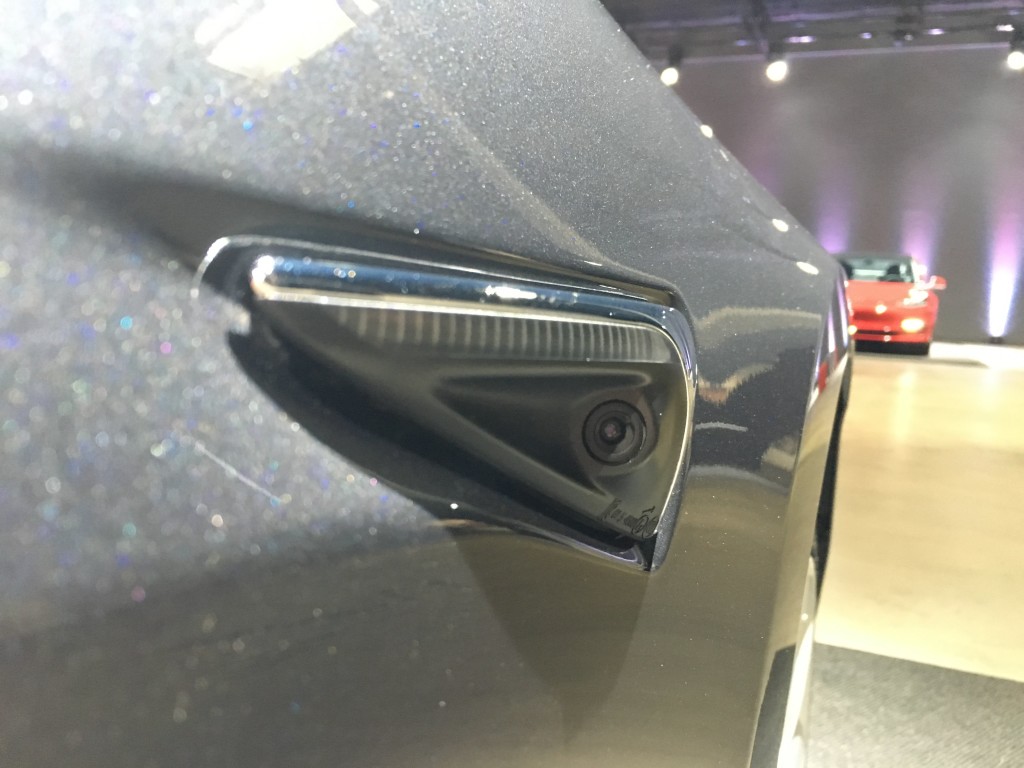
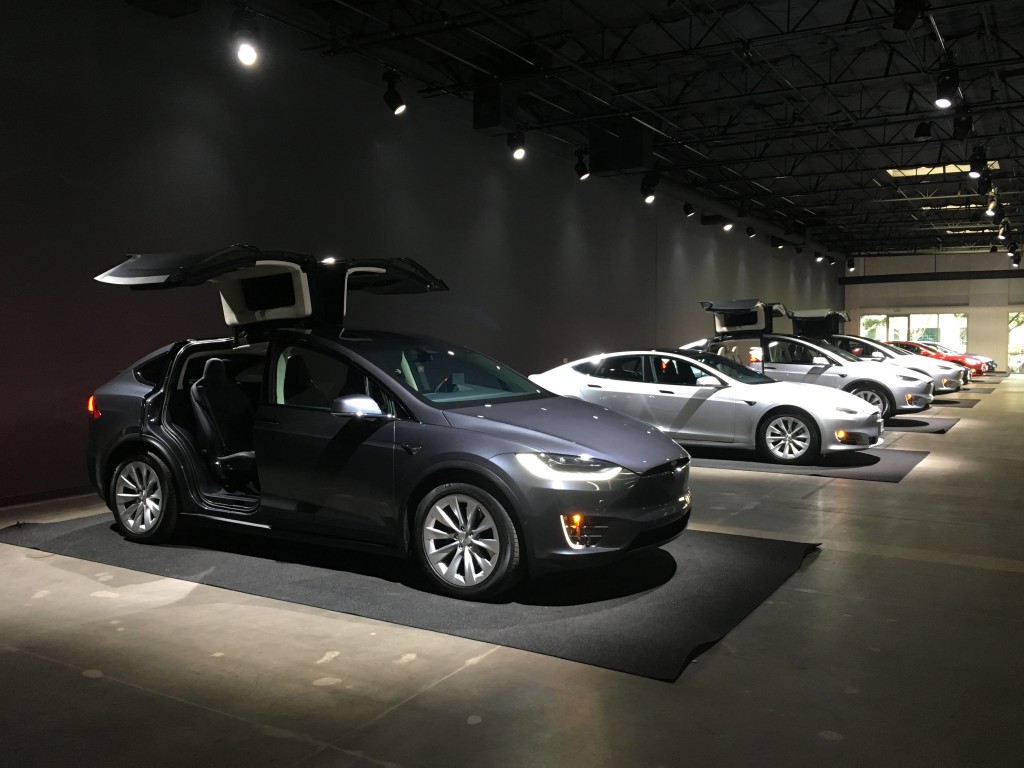
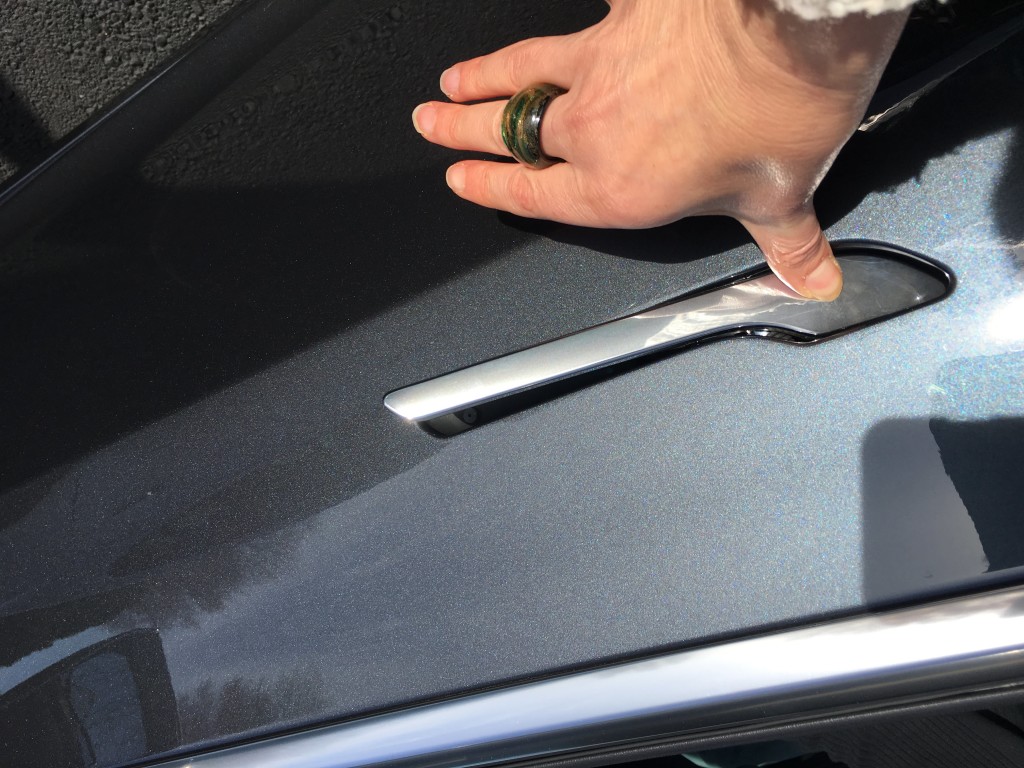
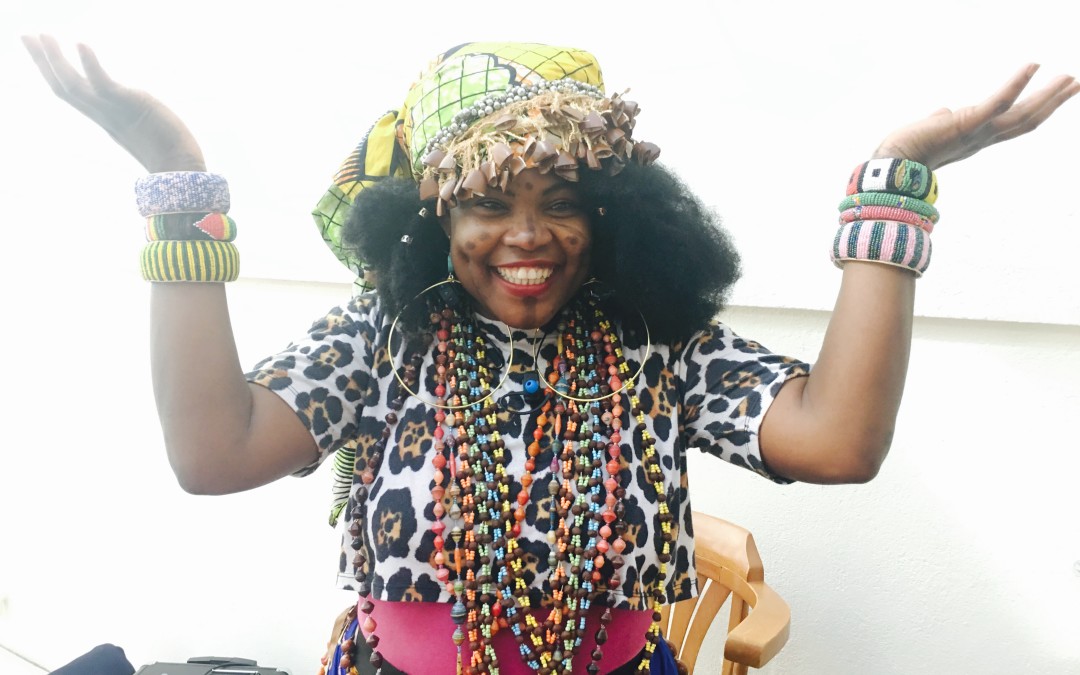
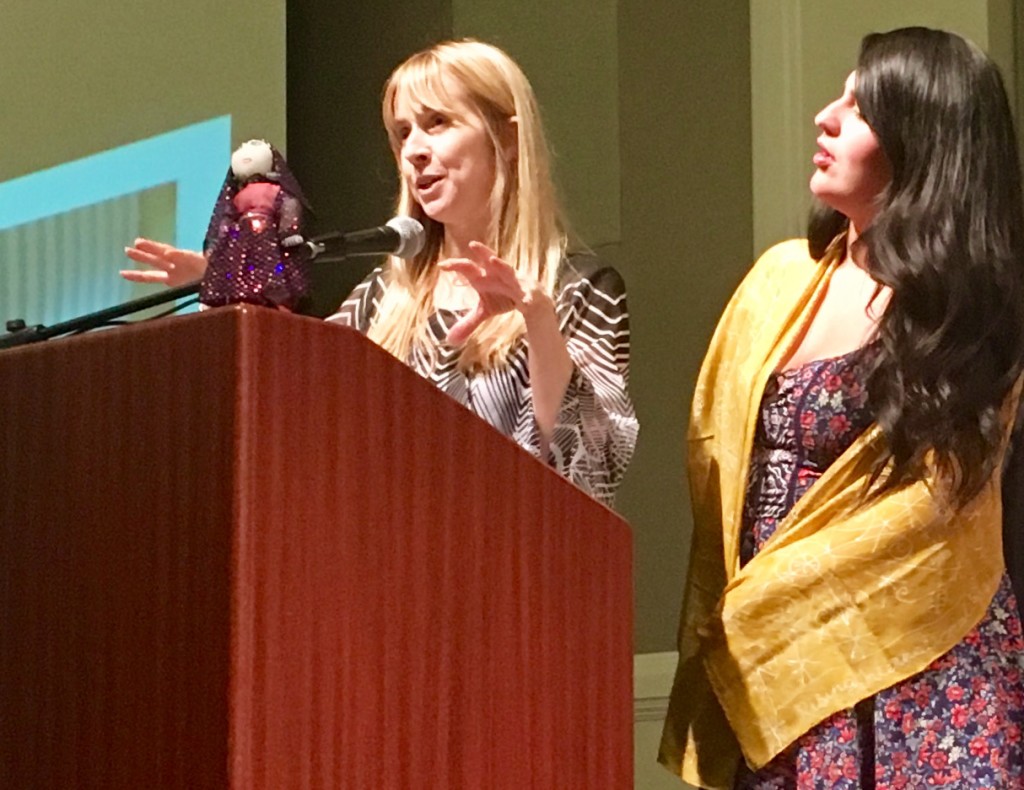 Photo: Carmel Jud, Rising Intl Founder explains her vision as Devin Gonzales looks on.
  Alison van Diggelen: The non profit recently showcased a short film (a joint venture between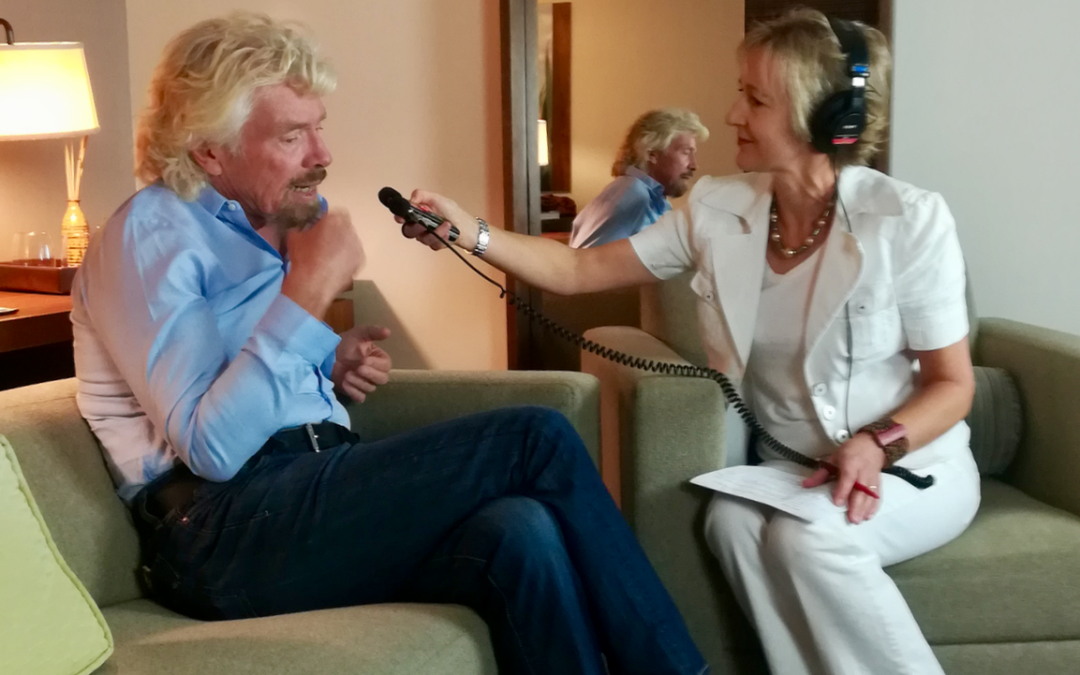


 .
.

