Have you ever considered the benefits of fasting, but feared the challenges? Here in Silicon Valley, Sumaya Kazi is the poster child for intermittent fasting, a new trend in weight control that’s popular among the tech set. Intermittent fasting involves abstaining from food anywhere from sixteen hours to several days – with “normal” eating resumed in between. Enthusiasts say the health benefits extend far beyond weight loss. The BBC’s Health Check team sent Alison van Diggelen to explore the evidence.
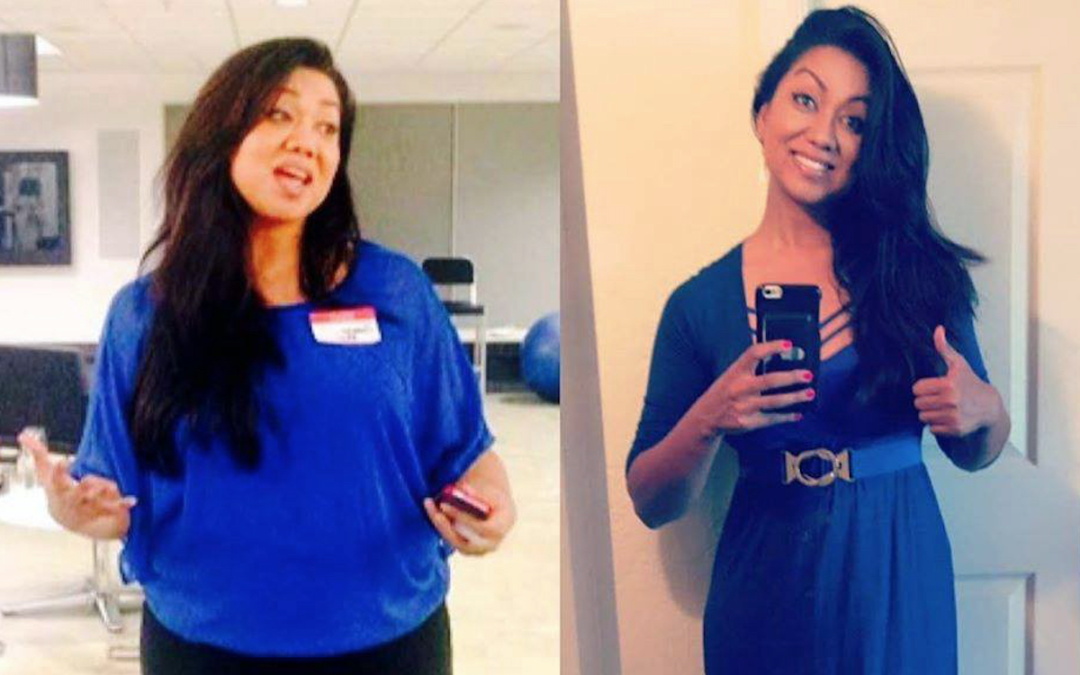
“The effects were almost immediate for me: the weight started melting off really early on… I lost about 50 lbs over the first 7 1/2 months.” Sumaya Kazi
Here’s a transcript of my report (edited for length and clarity):
Alison van Diggelen: When 36-year old Sumaya Kazi launched her tech startup in 2010, the long hours, constant traveling and too much eating-out made her pack on the pounds. At over 200 lbs (90 kg), she tried to lose weight by exercising compulsively, trying weightloss groups, and doing weekly meal planning.
Sumaya Kazi: None of them stuck with me or showed me enough progress to stick with it. None of them felt like a lifestyle. When I found IF, it absolutely did for me.
Alison van Diggelen: For Kazi, fasting offered quick results:
Sumaya Kazi: The effects were almost immediate for me: the weight started melting off really early on, to my surprise, because I wasn’t working out at the time. I lost about 50 lbs over the first 7 1/2 months.
Alison van Diggelen: It was a BBC television documentary about fasting that convinced her to give it a try. Research from Johns Hopkins University in animals and humans suggested that fasting could enhance brain function and might evenhelp protect against cancer, strokes and degenerative diseases like Alzheimer’s.
Fasting advocates claim it can reduce weight, improve blood sugar,can “re-set” the metabolism, boosts the immunesystem andcan even slow down aging. So what was Kazi’s personal experience?
Sumaya Kazi: I no longer had issues with high blood pressure. I was pre-diabetic early on and no longer have those issues. I no longer have issues of sleep apnea. Also I have more energy, I’m more productive, I feel more focused, I feel food tastes better.
Alison van Diggelen: So what does it involve? Kazi points out that the most popular form of intermittent fasting – or IF – is called “16-8.” That’s 16 hours of fasting followed by 8 hours of eating. Simply cutting out breakfast and eating an early dinner can accomplish that.
But Kazi prefers “alternate day” fasting. For her, Monday, Wednesday and Friday are fast days. The other days she calls “feast days.” This being Silicon Valley, she frames it in binary terms:
Sumaya Kazi:It’s almost like an on-off switch: I know when I should be eating, I know when I should be feasting. It keeps it simple for me. IF isn’t a magic pill. It works when you put it to work. It’s not a diet, it’s not about WHAT you eat, it’s about WHEN you eat. …
Alison van Diggelen: But how does it compare to other weight loss regimens? And are its claims backed up by research?
A professor of nutrition at the University of Illinois at Chicago recently completed a fasting study with 28 obese patients and found that – like traditional diets – the 16-8 fast could offer an effective method for losing weight – but cautioned that longer-term, large-scale controlled trials are needed.
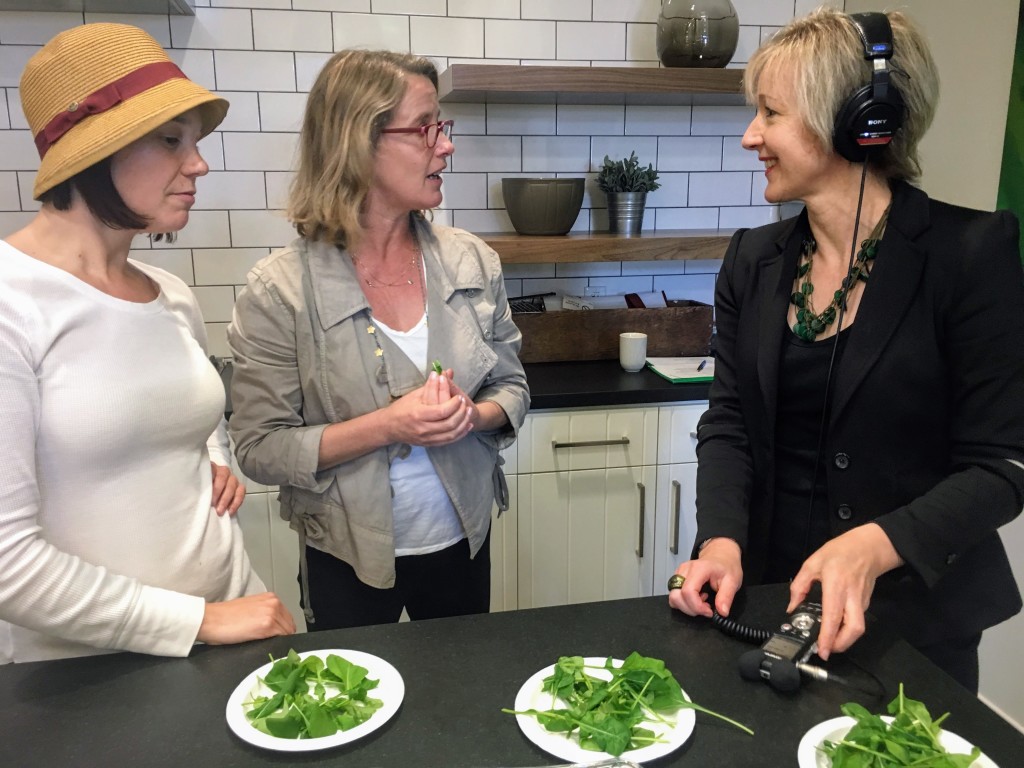
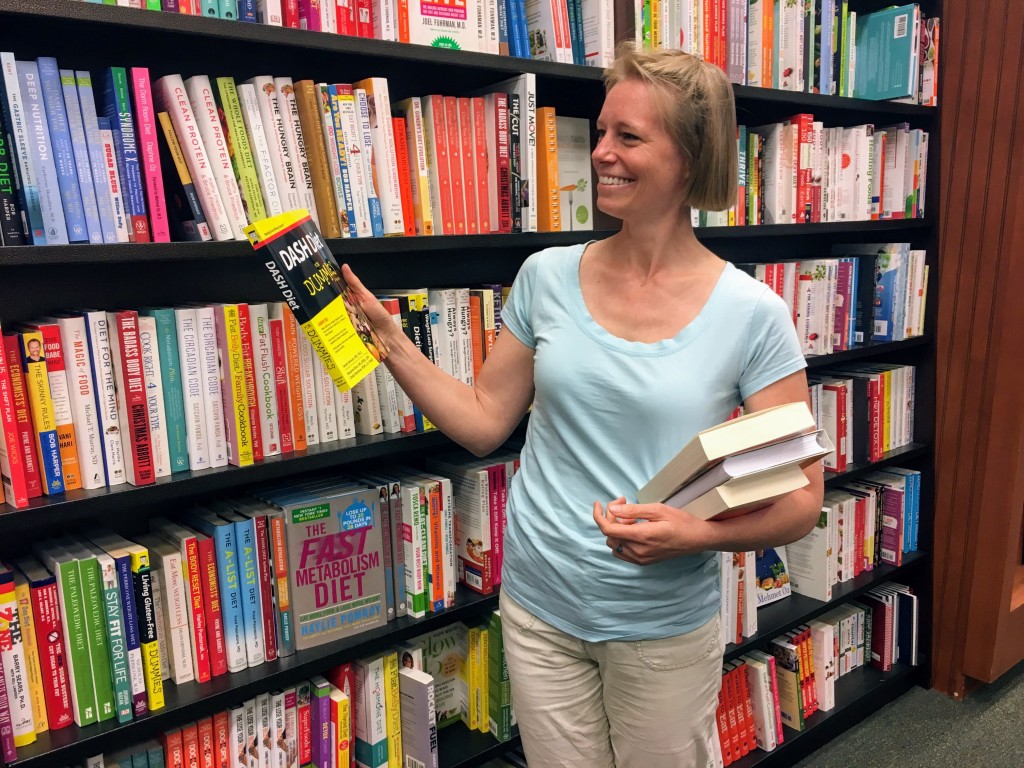
Santa Clara University Prof Heidi Lidtke, Nutritionist explains fasting for the BBC. Photo by Alison van Diggelen, Fresh Dialogues
I went to a coffee shop in a local bookstore to chat with a nutrition expert, Professor Heidi Lidtke.
Alison van Diggelen: Heidi and I assess the vast array of diet books on the bookstore walls. It’s quite overwhelming.
Heidi Lidtke: What I tell my students is: we should eat real food, mostly plants, not too much and we should enjoy what we eat.
Heidi is an adjunct professor at Santa Clara University in Silicon Valley.
Heidi Lidtke: The most exciting research has been done in yeast and it shows that cancer in yeast can be totally stopped…the yeast cells are healthy and the cancer cells die after chemo and fasting. But it’s yeast and humans are NOT yeast. I don’t know how we can translate single cell organisms (yeast) to multi cell organisms – humans.
Alison van Diggelen:So it would be a stretch to say IF can cure cancer?
Heidi Lidtke:There are a lot of studies in rats and mice…It has cured and totally reversed diabetes in rats, not humans…But it’s not totally transferable, right?
Alison van Diggelen: What about studies on humans and diabetes?
Heidi Lidtke: There have been some studies on some of precursors, sugar levels and insulin levels – those can go down in the first couple of months of IF. But all human studies have been small – 35 people….it’s hard to say 35 Turkish people are the same as 35 Americans… It’s hard to extrapolate from the research.
Alison van Diggelen:What would be required to convince scientists, to show this causal connection?
Heidi Lidtke: There would need to be multiple studies in multiple population groups…We’re in the process of doing that, but it takes time.
Alison van Diggelen: But Lidtke remains skeptical, especially about the cancer claimswhich could influence people when they’re feeling vulnerable.
Heidi Lidtke: My initial reaction? Interesting…I have concerns for some people at risk…people are forgoing scientifically validated treatment…that people are going to fast instead of getting chemo…I have concerns.
Alison van Diggelen: Lidtke also points out that fasting is not for everyone – and could be dangerous for those with eating disorders (like anorexia or bulimia). And she recommends discussing it witha doctor before trying it.
Heidi Lidtke: For someone who’s got disordered eating it just feeds into that and gives them a framework.
Alison van Diggelen: So how does IF compare to other diets?
Heidi Lidtke: The research on IF is really slim and then research comparisons are even slimmer. It’s hard to do comparisons. The diet that works is the one you stick to. If you’re able to stick and keep the weight off, then that’s the one that works.
Alison van Diggelen: Lidtke emphasizes that there’s no diet that works for everyone and scientific research is limited, but she does single out the “DASH” diet which has been studied by the National Institutes of Health and is recommended by the US Dept of Agriculture in its nutrition guidelines. It’s rich in fruits, vegetables, whole grains, and low-fat dairy foods; and limited in sweetened foods and drinks, red meat, and fatsand has been proven to reduce blood pressure and hypertension, even without weight loss.
So, after hearing all the caveats, foranyone still keen to try fasting, Sumaya Kazi has three top tips….
Sumaya Kazi:
Look at IF as an experiment – It’s really better to approach it as something that you’re trying on for size…Feel free to experiment with the different schedules.
Give it some time. The first couple of days, you’ll likely be hangry, mad about starting. It’s about getting into the habit. Give it a fighting chance, push through and understand why you’re feeling what you’re feeling. After 2 weeks it’s going to start feeling like something you can actually do.
Sparkling water will be your best friend…carbonated water can help you feel full on fast days.
Alison van Diggelen: A small study in the US recently showed that fasting caused some people to experience lower blood pressure and improvements in processing sugar. But downsides like headaches, drowsiness and increased thirst were also reported. The bottom line is this: Despite Sumaya Kazi’s impressive transformation, to say that intermittent fasting is an enduring answer for everyone’s weight loss and general health: larger, longer-term studies are needed.
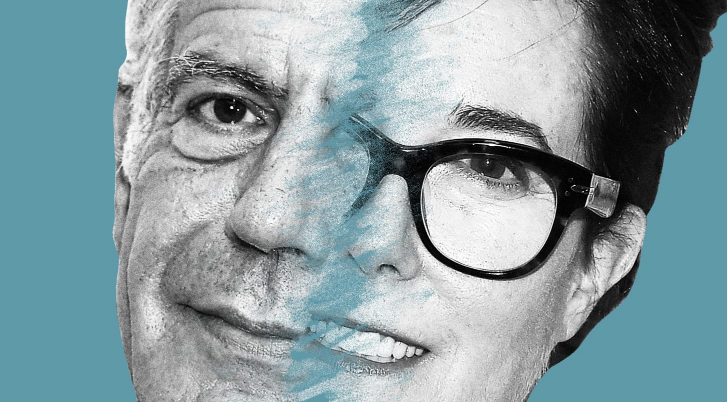
With the tragic news of Anthony Bourdain and Kate Spade’s recent deaths by suicide, the spotlight is on suicide this month. The latest trends are chilling: The suicide rate in the United States has grown by over 25% since 1999, according to the CDC. Alison van Diggelen’s latest report for the BBC’s Health Check couldn’t be more timely. She was asked to explore the role that barbershops can play as a conduit to getting vulnerable men the help they need. Alison found that the potential for reaching vulnerable people is enormous. This hopeful story could equally apply to hair salons, sports clubs, bars, cafes, places of worship… even sidewalks. Wherever two people have a chance to talk, there’s an opportunity to help save a life.
[Photo credit: Elizabeth Brockway, The Daily Beast]
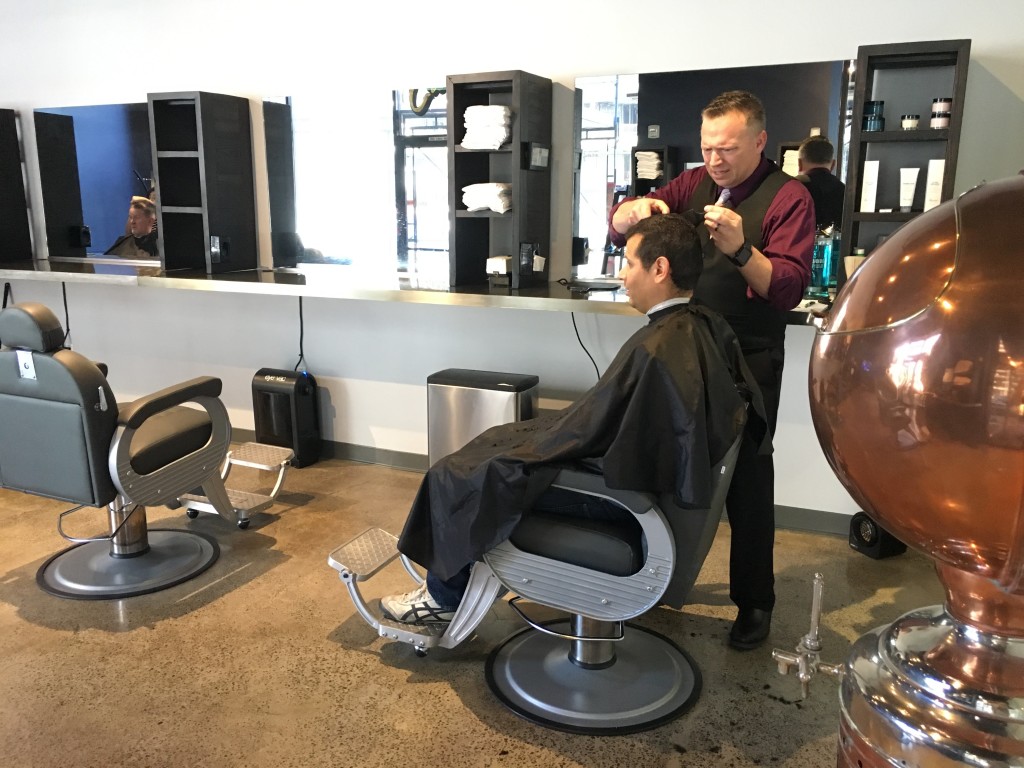
“It’s not just a cut, it’s more of a confessional…their sanctuary to unload a lot of their intimate feelings. We hold those relationships in high regard. These individuals can trust us that it’s not going to go any further than the chair.” Dan Dixon, owner of Crewners Barber Shop in Silicon Valley, California
Here’s a transcript of the original report (edited for length and clarity):
BBC Health Check host, Claudia Hammond: In many parts of the world, men feel reluctant to seek help for their mental health. So in Silicon Valley, California, there’s a barbershop that’s become a safe space for men to talk about more private things in life, while they have a haircut. For Health Check, Alison van Diggelen has been to a barbershop to see how it’s done…
Alison van Diggelen:Here in downtown San Jose, Crewners Barber Shop is a popular place for men to shed some hair, as well as some of their troubles. The owner, Dan Dixon, is dapperly dressed in burgundy shirt, black waistcoat and white tie. He’s a warm and friendly chap who sees his regulars about once a month. Over the years, he’s built a lot of trust. Dixon and his barbers have become confidantes to many men. Their clients tell them when they’re planning to leave their spouses, when there’s a death in the family and more…
Dan Dixon: There are people who’ve felt this is their place, their sanctuary to unload a lot of their intimate feelings… A gentleman who’d not yet come out to his family…he wanted to go through a sex change. He confided that in me prior to mentioning it to his family. We hold those relationships in high regard. These individuals can trust us that it’s not going to go any further than the chair.
Alison van Diggelen: His barbershop is a safe place to talk, for anyone at all.
Dan Dixon: It’s not just a cut, it’s more of a confessional. What’s funny right now is Alex is cutting the hair of one of our Catholic priests here in downtown San Jose. So Alex is currently giving his confessional to his priest. (laughter) It’s a great environment…I try to lend a bit of my background…I’m older, I’m 49. I try to be the open ear and the soft spoken one and lend what I’ve gone through…
Alison van Diggelen: I talk to James Ursin, one of Dixon’s long time clients. James, have you shared intimate stuff about you, your family?
James Ursin: Of course! And he has too. When you live in such a competitive atmosphere of Silicon Valley: high cost of living, job opportunities…I like to run things by him. He’ll sometimes open up…you have a relationship you see once a month. You have to be honest with them, they’re holding scissors next to your neck! (laughter) Part of that goes back to trust.
James Ursin: Sometimes just talking out my problems to him he doesn’t even need to respond. I can usually answer them myself. Maybe I bring up questions I wouldn’t bring up with my wife, or my business partner. An ear to listen to…It’s important – barbers is a lost art, an amazing profession. It’s not just about cutting hair…
Alison van Diggelen: This intimate bond between barbers and their clients is something that doctors sought to leverage in a recent six-month study of 52 barber shops across Los Angeles. Cardiologist Ron Victor and his team discovered that barbers could act as a conduit to getting men the healthcare interventions they need. The study’s focus was blood pressure and by bringing pharmacists into barber shops, they helped reduce the blood pressure of 300 men by a significant percentage. Independent experts called the study “a home run in high-touch medicine.”
Does Victor believe this method could be used for other healthcare issues? It’s possible he says, but he points out that blood pressure tests involve a simple cuff around the arm and are quick and easy to administer. Mental health screening is a sensitive issue, he says, and would require more time and expertise. Victor mentions however, that black barber shops – the focus of his study – would be a good place to address mental health issues as most have a back room where a mental health worker could meet privately with customers.
A British charity, the Lions Barber Collective is focused on suicide prevention. Its barber shop members encourage customers to talk openly and are trained to identify signs of depression. They connect customers with the Samaritans, a volunteer group that offers a 24-hour helpline and free counseling for people in distress.
Mego Lien: The barbershop collaboration is a fantastic idea! Middle aged men have a much lower chance of reaching out to mental health professionals. It’s really about going to where men are at and relying on existing relationships…
Alison van Diggelen: In Silicon Valley, the suicide rate rises in men over 45 years-old. Lien’s team aims to help vulnerable groups, including teenage men. They’ve reached middle-aged men via targeted public service announcements on sports radio; and they reach teenagers at school.
Mego Lien: It’s not just the mental health professionals in schools, the teachers, the coaches, the bus drivers and the janitors ideally would all be trained in recognizing the warning signs and speaking to someone who might be thinking of suicide. It’s about: Who are the individuals in the community who’re interacting with the people you’re trying to reach?
Alison van Diggelen: Lien recommends talking directly to people you’re concerned about; and using the word “suicide” and not vague phrases like “harming yourself.”
Mego Lien: Research shows that if you’re able to breach the topic of suicide genuinely and empathetically that lowers people’s anxiety around the topic. There’s a lot of stigma…more likely to open up to you and talk about what’s going on with them.
Alison van Diggelen: She points out that warning signs aren’t always verbal…
Mego Lien: …they might be behavioral, like stockpiling pills or dangerous weapons…they could be physical like stomach aches, headaches or chronic pain that can’t be explained. The starting point is to look out for these warning signs…start having rapport building conversations, list a few of the signs you’re noticing…
Alison van Diggelen: What’s the best way to get help for a loved one?
Mego Lien: We recommend…taking them to a therapist who can help them…or sit with a loved one and dialing the number for the suicide prevention hotline and supporting them while they make the call and have that conversation. Provide mental health resources and get their good faith commitment that they’re going to seek help.
Alison van Diggelen: Lien points out that easy access to guns is a big issue in the United States. Her wish list for effective suicide prevention has three components:
Mego Lien: A lot of community members trained who can recognize warning signs. Strong mental health systems that can take people who need treatment; and less access to deadly means like firearms. [CDC reports confirm that about half of U.S. suicides use guns]
Alison van Diggelen: She emphasizes that the media has an important role to play to avoid sensationalizing suicide and to help to lift its stigma…
Mego Lien: Research has shown media can contribute to contagion …In terms of do’s and don’ts: the word “Commit” makes people think about committing a crime or a sin. We prefer the language someone “died by suicide.” It’s more neutral and less stigmatizing.
Fade in: Atmos of barber shop
Alison van Diggelen: Back in the barbershop, I ask Dan Dixon if he’d embrace a suicide awareness and prevention program like the Lions Barber Collective in Britain…
Dan Dixon: I know it would work for me and my staff. Barber shops in the U.S. are more along lines of pub…a clubhouse type setting where it’s more about the masculine camaraderie…my staff, we would be open to that.
Plenty, a Silicon Valley company, plans to revolutionize farming by bringing it indoors and dramatically reducing water use. It has ambitious plans to replicate its warehouse farms in Japan, China and across Europe. BBC Click’s Alison van Diggelen explores: the veracity of its technology; its environmental claims; its use of AI and automation; and how it plans to disrupt the agricultural industry.
Here’s a transcript of the original (lengthier) report:
Plenty’s Patrick Mahoney (inside warehouse, sounds of farm fans, air-conditioning, beeps) : What you see is a cathedral like room – in which there are rows of towers on which our plants grow. This lush abundant overload of beautiful greens that we’re growing indoors here.
van Diggelen: Climate change is exacerbating food shortages by delivering more extreme temperatures, storms and severe droughts. Can technology help grow food more efficiently, using a fraction of the land and water of traditional agriculture? Matt Bernard, the CEO of Plenty, an indoor farming company in Silicon Valley believes it can. He grew up on a cherry farm in Wisconsin and says that fixing the water industry has been a driving force for him ever since. Barnard says that today’s agriculture industry uses about 80% of global water consumption and could use a “heck of a lot less.” His solution is “vertical farming” – massive indoor warehouses with powerful LEDs, and a super-efficient watering system. It uses just 1% of the water needed for a traditional field, he says.
Barnard: In the size of a couple of football fields we can grow 200 to 1000 acres. If you look at a football pitch – say FC Barcelona – we can grow what would grow on that field in the space of one net. That’s how land efficient it is. We get to grow all year long, without seasonality. [because we give the plants the perfect environment, they’re growing much faster than they do out in the field.
van Diggelen: Unlike rivals like, that grow produce on massive trays, Plenty’s plants grow out of 20-feet long poles and are fed with nutrient-rich water. Such soil-free systems, called hydroponics, have been around for decades, but recent tech advances have enabled a brave new world of indoor farming, on a scale that’s unprecedented. The temperature, humidity, and light is controlled by sensors and electronics, a system known as the Internet of Things or “IoT.” Here’s Bernard:
Bernard: We wouldn’t exist if it wouldn’t be for things like LED lights, if they hadn’t come down in cost by 98% over the last 7-8 yrs and the efficiency hadn’t improved.
van Diggelen: What other tech breakthroughs and cost curve reductions have been key?
Bernard: IoT sensors were too expensive 5 years ago, and weren’t practical enough – they were relatively dumb. Today the story is very different, camera tech and software technology make cameras as effective as possible. That tech and its cost effectiveness are critical to computer vision – a technology we need to run an effective farm.
van Diggelen: Can you break that down? What’s computer vision?
Bernard: The pairing of camera and vision tech with machine learning. Developing algorithms to allow machines to learn from the information they gather over time from what’s happening on the farm. Machine Learning was a couple of orders of magnitude more expensive only five years ago and also not effective enough to make use of in a farm.
van Diggelen: How does that make you better farmers?
Bernard: In the field, even in greenhouse, you don’t control all the inputs.
We end up with a giant optimization problem and we need to ask the machines to help if we want to learn and move as fast as possible.
van Diggelen: The sensors and software can spot plant problems before they’re obvious to a human he says. So, instead of using pesticides, this monitoring means ladybugs are its only pest control.
Many companies are vying for a slice of this fresh produce pie. And several have withered on the vine as they strive for economic viability. But with over 200 million dollars, Plenty is the best funded enterprise in the field. With funding and scaling expertise from Softbank’s Vision Fund, Amazon’s Jeff Bezos and former Google Chairman, Eric Schmidt, Plenty has an aggressive plan to build its intensive farms close to major world cities. Providing local produce is key to its business model.
Barnard points out that the average lettuce travels about 2000 miles from field to grocery store in the U.S. The company aims to increase food nutrition and prolong shelf-life by what he describes as “collapsing the time from farms to tables, from weeks to minutes.”
In SF, the company’s focus is R&D, but it’ll start delivering produce this year from its first warehouse farm in Seattle. This 100,000 sf facility will powered entirely by renewable energy. But, like many tech dreams, marinated in Silicon Valley’s Kool Aid, is this all more hype than substance?
Jon Foley is the Executive Director of the California Academy of Sciences. I caught up with him on the phone….
Foley: They use an enormous amount of resources to build the infrastructure to make these indoor farms. They use an enormous amount of energy to power them…to replace the sun and use indoor LED lighting. But we didn’t run out of sun!
The only benefits is maybe for water but food miles and food transportation isn’t really a huge problem for the environment. The biggest emissions of GHG from agriculture are not due to food miles, it’s things like deforestation, and too many cattle burping methane.
van Diggelen: Foley points out that many crops like wheat and corn just won’t grow indoors. They need heat and wind to develop stalks.
Foley: You see lots of vegetable greens: lettuce, arugula…you’re basically growing garnish.
van Diggelen: Foley also questions scalability…
Foley: Are we going to truly make a dent in global land-use that cost vastly more than farmland in Kansas? They’re not a silver bullet. They’re not really addressing the biggest problems we face feeding the world sustainably, it’ll be expensive and I doubt it’ll be reaching the world’s poorest billion.
van Diggelen: Another existential challenge is a pests outbreak. Due to the intensive nature of the farm, just one infestation could be catastrophic. Right now, the Plenty team is paranoid about pests. Workers and visitors must wear overalls and rubber boots disinfected in special shoe baths. A powerful ceiling fan is set up to remove any unwanted pests like Spider Mites.
Although the company plans to focus first on the U.S. market, another agriculture expert, Professor Heiman Lieth of UC Davis suggests the biggest opportunity might be in China where there’s a shortage of safe fresh produce, and government incentives for “green jobs” and subsidized renewable energy sources. The United Arab Emirates also offers a fertile venue with cheap power and affluent consumer demand.
But will consumers love the product enough to pay a premium?
Atmos: lettuce breaking sniffing…
(Lettuce container opening)
Keller: This was harvested ten minutes ago….We measure the size (tape measure unrolling). It’s ~9 cm – within accepted range. It meets the arugula profile…We’re on track…
van Diggelen: At this futuristic farm, even the taste testing is tech centered. The distinct taste, smell, even the size of each sample crop is tested twice a day and inputed to a computer program that features colorful pie-charts. Human and machine analysis creates a quick reaction-loop inside the warehouse to ensure a consistent taste and quality.
My mouth was watering by the time I met the taste experts, in Plenty’s white-tiled kitchen. Chief taste testers, Christine Keller and Leta Soza offered me what looked like baby spinach, but was in fact the sweetest, spiciest arugula I’ve ever tasted.
Keller (sniffing): We break it…We put our faces in the product and we take little sniffs so you detect every smell in there: Fresh cut grass, a very spicy wasabi…When we’re done, we roll it up into a little ball (Crunching, chewing…)
Keller: Our data teams and our plant science teams continue to improve the product because we know all the environmental controls going in and the sensory things coming out. It’s remarkable. It’s not been done.
Keller: We’re each filling out 3-digit codes for where the product came from, which room, (what farm, if you will) so we can track it back to all of the computer science that’s telling us the exact recipe that went in there.
Soza: (Typing andform filling): that’s slightly more than a four on the sweet actually – wasabi’s beautiful and so is bitter. Let’s send that off so farm ops can have the data and press on. (Laughter)
van Diggelen:It’s certainly a brave new vision for farming. But Plenty needs to scale up and surmount the cost challenges it faces, and keep growing tastier products than conventional farms, with a fraction of the water. It also needs to find markets where the demand and the price is “just right.” Only then will they flourish as well as their leafy green produce. Right now, it looks like a very tall order.
Listen to the BBC podcast or to the player above to hear a lively discussion of this report and some insights from Click’s Bill Thompson.
This week’s report addresses gun violence in the United States. Many of us have been inspired by the fearless survivors of the Florida High School shooting on Valentine’s Day. Powerful speeches by teenagers, Emma Gonzalez and David Hogg have changed the conversation and I applaud them and the March For Our Lives Movement for their bravery and tenacity in their mission to reduce gun violence through sensible gun policies.
Hundreds of thousands of people took to the streets in DC, and hundreds of cities in the United States and around the world. Here are voices from the March for Our Lives in San Jose, California and a clip from my BBC report which aired on Business Matters on March 27th.
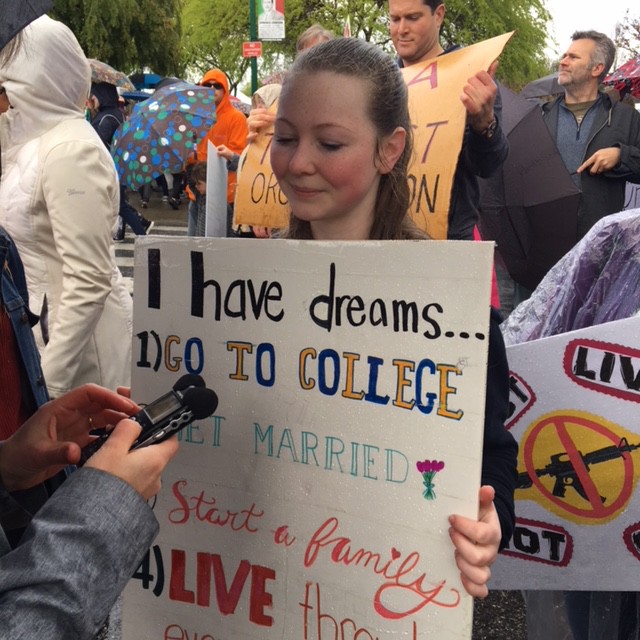
I’m here because I don’t want to be afraid to go to school. I don’t want to say ‘I love you’ to my mom, ‘I hope I see you after school.’ Ashley Wilson, 15-year-old high school student who took part in the March for Our Lives in Silicon Valley, California on March 24, 2018. (photographed above by Shannon McElyea)
Listen to the Fresh Dialogues podcast on iTunes or below:
.
Here are some highlights from the podcast
First, I spoke with MacKenzie Mossing a 24 year-old resident of Silicon Valley, California.
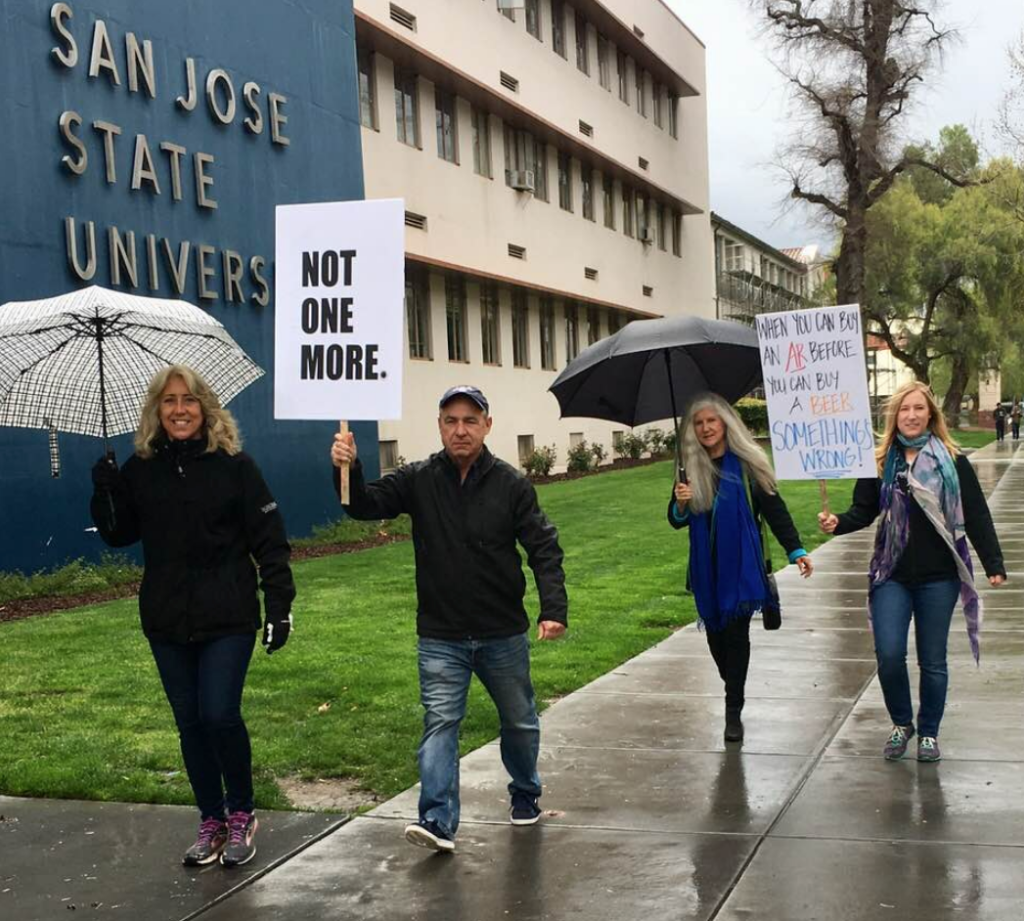
Mackenzie Mossing: I’m here because I think our system is really broken when kids have to fear going to school, when I have to fear going to music concerts, when you can buy an AR 15 before you can buy a beer.
Alison van Diggelen: Do you have a message for the NRA Leadership?
Mackenzie Mossing: Why is your right to own a gun bigger than my right to live?
Alison van Diggelen: Do you have a message for Emma Gonzalez?
Mackenzie Mossing: You are a true inspiration. Keep doing what you’re doing. We need more people like you to invoke change in the world.
Ashley Wilson: Enough is enough. School shootings should not happen…I’d like to see much less school shootings, shootings in general….(and) gun control.
Alison van Diggelen: What role do you feel businesses should play in this? Companies likeDelta Airlines and several banks have stopped their incentives for NRA members. Do you agree with that and what more can companies do?
Ashley Wilson: I completely agree with that and I think more companies should join in.
Alison van Diggelen: Do you have a message for teens in Florida who’re taking to the streets in DC today?
Ashley Wilson: Know that the rest of the nation is with you, the rest of the world…We stand with you.
Alison van Diggelen: I asked 18 year-old Jacob Seichrist, a graduate of Branham High School in San Jose, and marketing manager, Chris Mossing, about the role of businesses in changing gun control policies.
Jacob Seichrist: I’m hoping these movements are getting out there to parts of America that are on the fence. They can see how important this is…we’ve had so many shootings already this year, it’s crazy to me.
Jacob Seichrist: I think that that’s important. These brands and companies are making their statements, picking the side they want to support. Sometimes that’s going to be the way to convince people who’re on that fence…when they see that the companies that they use are on that side. It’s not just some vocal minority, it’s really real and a powerful thing. When companies do it, for some people, it’ll be a trigger of: “Wow, this is a real thing, this is something important…maybe it’s something I should look into…”
If I were a CMO (Chief Marketing Officer) of a large brand, I’d be paying a lot of attention to what’s happening today in the streets of the United States. Millennials are looking for brands to be on the right side of social issues, whether it’s clean food, environmental policies or in this case: gun control.Chris Mossing, Silicon Valley marketing manager
My live report on the BBC World Service was cut due to breaking world news, but in the last five minutes of the program, I highlighted the March For Our Lives and what it could mean for businesses and brands.
I hope you enjoy this week’s podcast. Please share your comments here or on Facebook and subscribe to our podcast on iTunes.
Find out more:
What do Amal Clooney and Rick Steves have to say about gun violence in the United States?
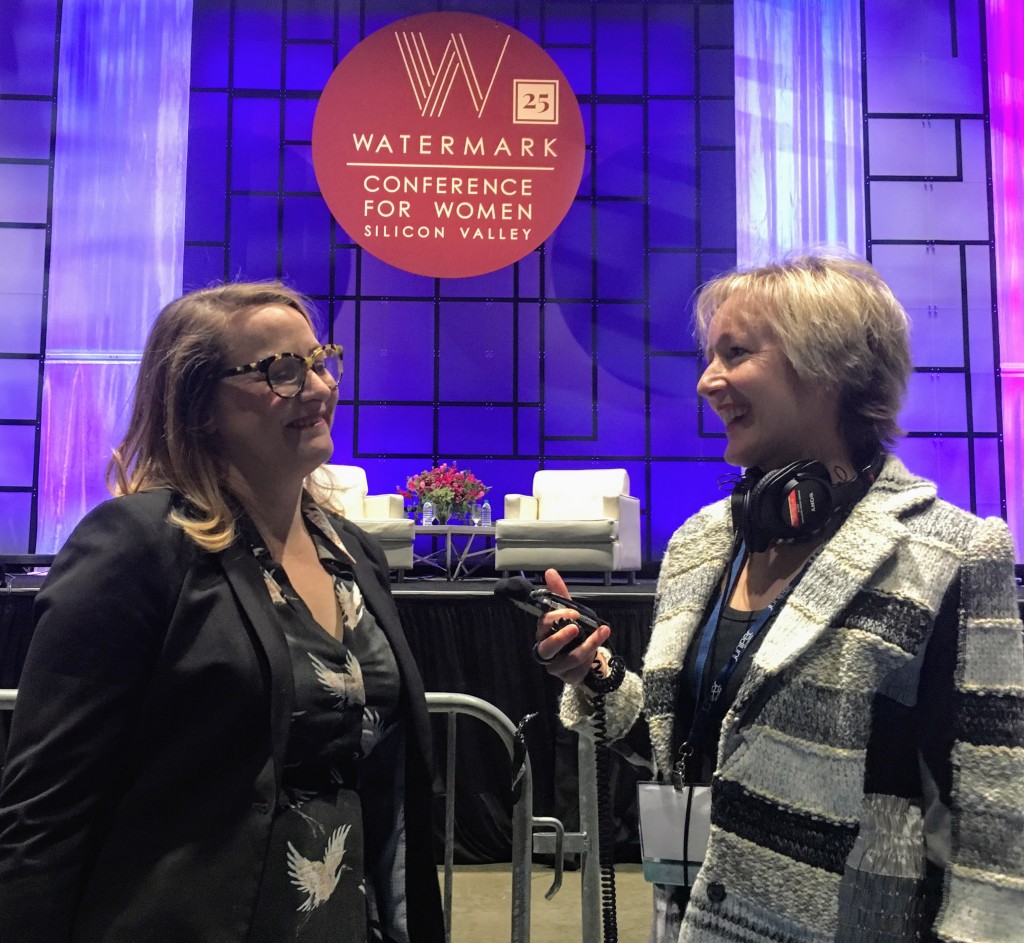
Amal Clooney, Emma Gonzales, Rick Steves. These are just a few of the influential people who’re standing up to gun violence since the Florida high school massacre on February 14th. Amal Clooney addressed an audience of 6500 women at the Watermark Conference for Women in Silicon Valley just a few days after the mass shooting. Here’s what she said about outspoken high school students, like Emma Gonzalez:
“I’m just blown away by these students. They’re doing an amazing job at turning a tragedy into advocacy. I’m in awe of how courageous they are and how effective they are…To stand face to face with the President, a Senator, the NRA and ask tough questions. They are determined for change to come and they are our best hope. I’ve heard theories about violence in films, mental health issues…but these exist in other countries and this is the only country where this kind of problem exists. The difference is guns!”
This week’s Fresh Dialogues podcast brings together my recent interviews on this topic from the BBC, the Commonwealth Club and the Watermark Conference for Women. It seeks to answer the following questions:
Who is Emma Gonzalez and why could she represent a turning point in gun control?
Why does Amal Clooney care about gun violence and what’s she doing?
What can you do? Travel guru and businessman Rick Steves has one powerful idea.
Listen to the Fresh Dialogues podcast here or play it below:
.
1. Who is Emma Gonzalez and why could she represent a turning point in gun control?
Emma Gonzales was one of the dozens of students and teachers at Marjory Stoneman Douglas High School in Florida who survived the massacre of 17 of their friends on February 14th. While most of us would have been terrorized and cowed by the horrific gun violence, just three days later, Emma Gonzales took to the podium at a Florida rally, where she directed her anger at President Trump and other politicians for accepting donations from the National Rifle Association. If you haven’t yet watched her passionate and articulate speech, I recommend you watch right now. She’s got over 1 million followers on Twitter and is using that as a platform to share information about the upcoming March for Our Lives on March 24th.
Emma Gonzalez: “Every single person up here today, all these people should be home grieving. But instead we are up here standing together because if all our government and President can do is send thoughts and prayers, then it’s time for victims to be the change that we need to see…They say that tougher gun laws do not decrease gun violence. We call BS!”
2. Why does Amal Clooney care about gun violence and what’s she doing?
AmalClooney was a keynote speaker at the Watermark Conference for Women on February 23rd. She was interviewed onstage by NPR’s Kelly McEvers, who asked her why she and George Clooney just committed $500,000 to the #NeverAgain movement to end gun violence. Here’s what she said:
Amal Clooney: “I’m just blown away by these students. They’re doing an amazing job at turning a tragedy into advocacy. I’m in awe of how courageous they are and how effective they are…at 16 years old… To stand face to face with the President, a Senator, the NRA and ask tough questions. They are determined for change to come and they are our best hope. As someone who didn’t grow up in the US, I’ve always thought of it as this great country providing an example to others. The idea that children are scared to go to school, that bullet proof backpacks are sold out, and they have to go through live shooter drills and the solution now is to start arming teachers!”
“I’ve heard theories about violence in films, mental health issues…but these exist in other countries and this is the only country where this kind of problem exists. The difference is guns!” (applause)
She added that her children are very likely to go to school here in the United States and so that’s why this is very personal for her. One day the wee Clooneys’ lives may depend on real change happening and a reduction in the proliferation of guns in this country.
I asked Kelly McEvers – from her front row perspective as NPR host – why these Florida teens are making such a big impact. Here’s what she said:
Kelly McEvers: “This time something has snapped…Instagram is the difference (and Twitter). They’re trolling the trolls as no one has ever done…We in the mainstream media are listening, because these kids, they get a survivor’s pass – they sheltered in a cupboard for four hours…People are desperate for something to happen. For a long time elected officials have been able to take money from people…No one’s tried to call them on it. And now they are. So, are businesses going to rethink who they do business with? Are politicians going to rethink who they take money from? That’s the bigger thing that could come out of this. Not just policy.”
Kelly hosts an NPR podcast called Embedded and says she’d like to be embedded with the young students like Emma Gonzalez to watch this new movement taking root.
3. What can you do? Travel guru and businessman Rick Steves has one powerful idea
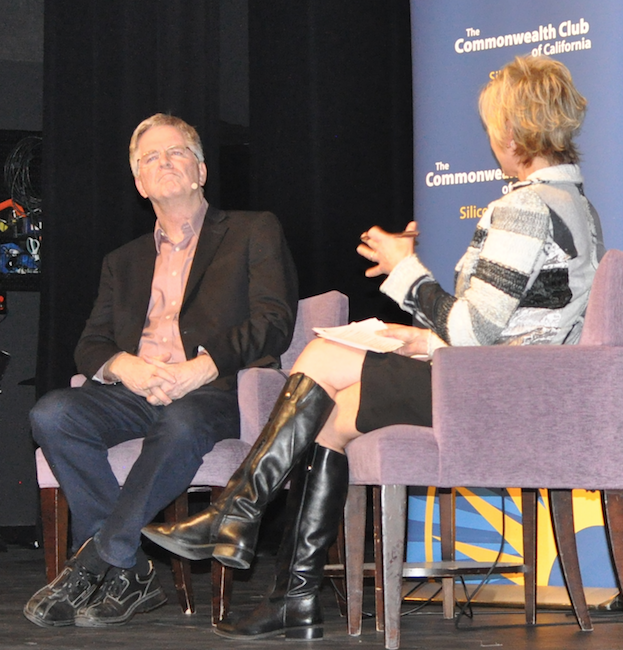
On February 17th, a few hours after Gonzales addressed the nation, I interviewed America’s beloved travel guru and PBS personality, Rick Steves at the Commonwealth Club of California. He leads a multi-million dollar travel business and yet he was willing to risk alienating some of his fans (and impacting his business) by speaking freely and forcefully against the NRA. Here’s a link to the full interview podcast. Listen @58:42 when I ask him about Europe’s sensible gun laws and Emma Gonzales’s speech.
Rick Steves: “I would like us to have Europe’s standards when it comes to guns…The American people need to step up and vote….We need to do more than thoughts and prayers…we’ve got to un-elect people who get money from the NRA and elect people who proudly don’t.”
Dick’s Sporting Goods was one of the first companies to take a stand against the NRA. The CEO comments echo what Rick Steves told me:
“We need to do more than thoughts and prayers…we’ve got to un-elect people who get money from the NRA.”
I discussed all this live on the BBC World Service on Monday. The BBC’s Fergus Nicoll asked me to share highlights of my Rick Steves interview in the context of America’s upcoming midterm elections. You can listen to the full discussion at the BBC World Service, starting at 12:58 in the podcast.

 Dan Dixon: