With less than three weeks until the election, it’s a nerve wracking time here in the United States. Some call it a battle for the soul of the nation. Certainly the stakes could not be higher. This election will determine the future of the United States and in some respects, the world.
As a journalist, I strive to be balanced, and talk about the facts of any situation. I try not to air my personal preferences on the BBC. But this election year, I’m not pulling any punches about what an immoral and polarizing president Donald Trump has been. His dangerous impacts on civil rights, the environment and our standing in the world have and will have far reaching consequences. Another four years is unthinkable.
For these reasons, I’m backing the Biden-Harris ticket and joined the Vote Forward campaign to send handwritten letters to unregistered voters in swing states. Our goal is to convince silent voices that their vote matters and we’re urging them to take part and vote on November 3rd.
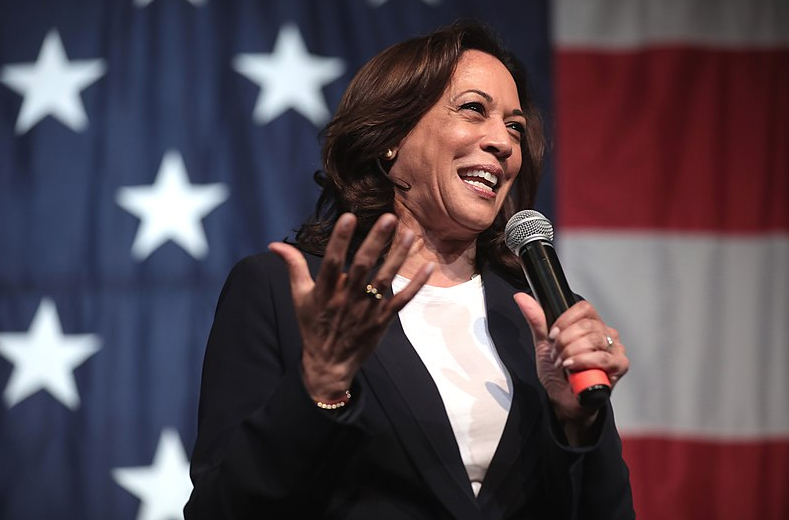
For all those afraid to speak up and speak out, Kamala Harris is a profound inspiration. This quote resonates for me and I hope it does for you:
“You are powerful and your voice matters. You’re going to walk into many rooms in your life where you may be the only one who looks like you. But remember that you are not alone. We are all in that room with you, applauding you. Cheering your voice. So you use that voice and be strong.” Kamala Harris
Kamala’s words helped me speak out during my last BBC World Service appearance when I called Trump xenophobic and described his immigration policy “a lose-lose” for America. Find out below what I meant by that.
I had a lively conversation about immigration and innovation with the BBC’s Rahul Tandon and Andy Xie, an influential Chinese economist, based in Shanghai. Andy shared some insights about the Chinese education system that may surprise you.
Here is a transcript of our discussion, (edited for length and clarity).
Rahul Tandon: Alison, when you talk to people about the election, and the issues that are going to decide who people are going to vote for, where does immigration figure in that?
Alison van Diggelen: Immigration is an important issue, especially in Silicon Valley. There was a lot of backlash when Trump clamped down on H1B visas for skilled workers in Silicon Valley. A lot of tech CEOs spoke up and said it’s going to have a net effect of reducing jobs for American workers. To Andy’s point about people feeling unwelcome in America, Trump has been explicit and implicit about his xenophobic attitude, because he knows that it plays to his base.
I think this is going to be a double whammy for America: The first loss is the immigrant innovation benefit that’s given America its competitive edge and has led to (the creation and dominance of) Silicon Valley.
The second loss is that it energizes Trump’s base and helps him potentially get re-elected. So I think Trump’s immigration policy is a lose-lose for America.
Rahul Tandon: A lot of Indians will tell you that Silicon Valley is made up of a lot of Indians. A lot of these big companies’ bosses did come from India (eg Google’s Sundar Pichai). Do you think these conversations are different if you went to a state like Texas?
Alison van Diggelen: Yes, it’s possible. Silicon Valley does face competition from Austin in Texas. It’s seen as the upstart to Silicon Valley. But what’s coming from Trump is this general feeling of: you’re not welcome if you’re an immigrant. It’s like shooting the country’s economic powerhouses in the foot.
Rahul Tandon: Andy, do you think some of the president’s rhetoric will put some Chinese students off going to the United States?
Andy Xie: Oh, yeah! The issue in China is that you have to decide very early if you want to go abroad for college education.
Rahul Tandon: How early?
Andy Xie: In primary school you have to decide if you want to compete in the local college entry examinations or go abroad. Usually the preferred location is the US. So now a lot of parents are saying: maybe UK, maybe Australia? But still, the US has a lot more top universities than anywhere else. The Chinese system is very rigid… What’s going on is a huge problem for hundreds of thousands of people in China.
Rahul Tandon: Alison, we know there’s a high unemployment rate in the US, is that heightening the debate about immigration? Are we hearing more Americans saying: there are just not enough jobs here, what the president is talking about makes sense, we can’t let more people in.
Alison van Diggelen: Certainly his base believes that, they’ll believe anything he says. But the facts that the BBC’s Manuela Saragosa reported, from the experts, show the opposite. Trump and his supporters are blind to the facts, just like they’re blind to the science of climate change. The fact is that more than 60% of those working in computer, math and science in Silicon Valley are foreign born, and that’s not a coincidence. Silicon Valley needs that skilled workforce in order to do what they do.
I’m excited to share my latest BBC report with you and introduce a remarkable woman who changed the way I see the world. When I heard my report on the BBC World Service last week, I was moved to tears. A lot has happened since I filed it in early August…
Animals help us reconnect to a wise and ancient part of ourselves that naturally knows how to find balance and alignment. A good deal of our resilience to stress and change comes from our self care practices.
Animals show us how powerfully soothing it can be to just sit and breathe together. Sit close to your pet and focus on your breath and his or hers for a few breaths. Give your dog or cat a light pet. Put your other hand on your heart and soothe your inner human animal. Now, think about what human relationships of yours might benefit from such a gentle and wordless check in. Beth Killough, Psychotherapist
In July, it seemed that things could hardly be worse here in Northern California. Covid rates started to tick up and with that came another round of tighter lock downs and restrictions. And then a freak lightning storm sparked dozens of fires. Overnight we had friends who faced evacuation, and others unable to go outside, as air quality spiked far beyond Beijing levels. Overnight, my 95 year-old friend had to evacuate and find refuge with her little dog, Buddy. Overnight, we all became experts at analyzing Purple Air, the air quality app where anything over 400 is classed as an “emergency condition” for public health. One morning, I woke to see one Bay Area monitor at 666 on the scale of 0 to 500.
The things that had become the “new normal” were suddenly out of reach: simple things like taking a walk in the nearby park to relieve cabin fever, doing yoga class on the lawn of the local fairgrounds, and eating outside at our favorite dog-friendly restaurant. Now we all have to dig even deeper to find silver linings and nurture some optimism for a better day.
Did you know that one in three Americans are showing symptoms of depression? It’s likely even higher than that. A close friend who’s a therapist tells me she’s never been busier. We’re all taking one day, one hour at a time. That’s why we could all do with a Beth Killough in our lives. She’s a deeply insightful person who suggests we need a toolbox of choices to help us deal with stress and anxiety. Here’s her story:
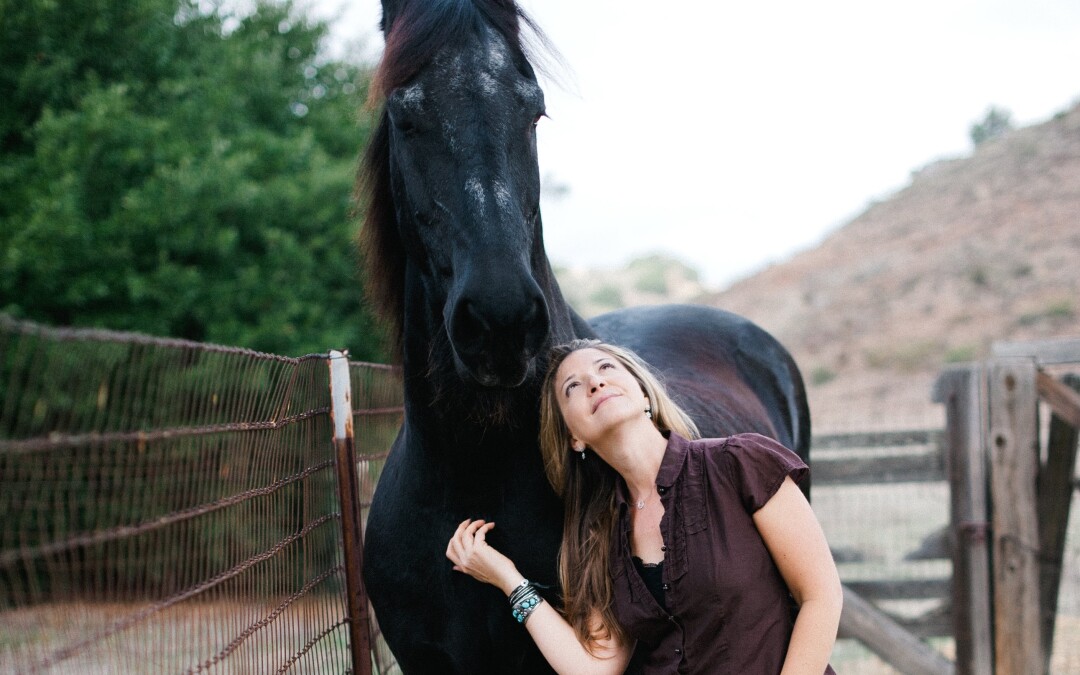
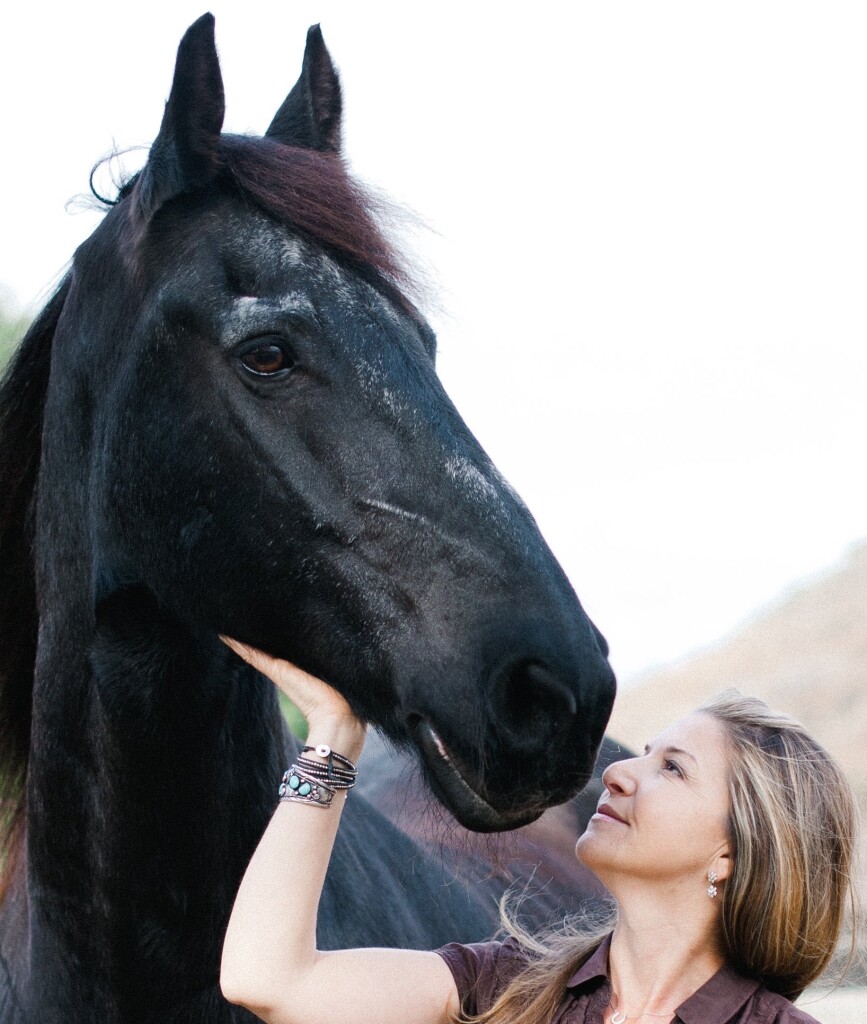
Seven years ago, Beth bought a ranch and let go of her traditional office-based talk therapy practice. Now she uses her psychology insights and her barn full of horses to teach resilience, radical self care and leadership skills. She helps her clients tune into their own instincts and pivot to new projects and passions. Thinking her wisdom could hardly be more timely, I talked to my BBC editor in London about making her the focus of my latest report.
You might think that equine therapy –– working with horses to improve your resilience and well being –– is a niche thing, something for the affluent or the physically impaired. But Beth explains that some of the techniques are easy to practice at home and timely for this time of high anxiety and Covid related stress. They might even help you navigate this challenging time more easily and pivot to more joyful relationships and a sustainable career path.
Here’s a transcript of my report for BBC Health Check, including some bonus material that didn’t make the final cut:
Alison: Beth Killough works on her Northern California ranch and has seen a spike in clients looking for help for anxiety, trauma and loneliness since the pandemic began. Today her client is a 50 year-old woman named Michelle and they’re in the barn with Riva, a brown mare with a black mane and tail.
Beth: Notice as you brush her, she gives you feedback. She’s telling you…
Michelle: I can’t tell. I’m not sure what her feedback is…
Beth: If I stop talking and you start observing, it’ll help you tune in…
Michelle: Yes…with my dog it’s so incredibly obvious. If you stop, he’ll buck my hand to keep going.
Beth: Right as I stopped talking, she started licking and chewing which is her nervous system going into a relaxed state. She also took some steps forward. What is she showing you?
Michelle: I’m going to adjust so you’re doing (brushing) where I want you to be.
Alison: Beth Killough has been working with horses for four decades. She pivoted her traditional talk therapy practice to equine therapy when she bought the ranch 7 years ago. She examined equine research that showed physiological healing in people with PTSD and decided that you don’t have to be in trauma to benefit from working with horses.
Beth: If you look at where you are. Just pause. You got yourself in a little tight spot there! Did you feel it?
Michelle: Umm no.
Beth: The more focused you are picking up on her, the less focused you’ll be on your own pressure. This is a safe horse… However, you’re in between a thousand pound animal and a wall! So where are the places in your life you get in a tight spot without even realizing how you got there?
Michelle: Ummm..
Alison: The healing power of horses dates back to the ancient Greeks who used them for therapeutic purposes. In modern times, equine therapy still has its skeptics but anecdotal evidence is now being supported by growing clinical research.
Ellen Kaye Gehrke runs an integrative health program at National University in San Diego. She has been researching the human-animal bond for 15 years and her latest peer reviewed research examined the treatment of PTSD in nine war veterans. It showed remarkable results.
Ellen: We were at a conference a couple of years ago and a bunch of public health people came up to us and said: What pill are giving those people? The effect is like a drug.
Alison: Kaye Gehrke works with small groups of war veterans, some of whom have lost hope and are suicidal. Her eight week programs help them build connection with the horses through grooming, and interactive activities. More recently she has them saddle up and ride.
Ellen: We wanted to get the veterans up on the horses, not to go galloping away but just to have some movement.
We did notice there was quite a bit of difference…Their spirit, their physical carriage, the way they stood, the openness around their faces. The main point of my program is the heart connection.
Alison: What does Kaye Gehrke mean by “the heart connection”?
It relates to heart rate variability (HRV), the variation in the time between consecutive heartbeats. A normal, healthy heart does not tick evenly like a metronome, but instead, there is constant variation. In general, the higher the variation at rest, the fitter you are and the greater your ability to handle stress.
Professor Michael Myers, chair of health sciences and a research physiologist at National University has found that being with horses improves your HRV.
Mike: Horses are prey animals so they’re constantly alerted to their surroundings and that seems to trigger some response in humans: The response we see is documentable…
We use a technique…It’s basically reflection based bio-optical imaging. Photoplethysmogram or PPG for short. We’re able to measure the heartbeats of the subject. Something around horses changes the heartbeat variation. When the heart is beating the same, that’s stress. It’s fight or flight response, when you’re running from the tiger.
What’s really good is this: a couple of short beats then a long beat. Horses seem to have that effect….
Alison: Myers was surprised to measure an almost immediate physiological effect in the war veterans.
Myers: Within the first visit, within three hours, their heart rate variability has changed in a positive way.
Ellen: Their heart rate variability improved the first day but their self report took four weeks for them to have confidence…We could see they were getting better, but they were still in these messages of self destruct…By the fourth week, they started changing their self report about how they were feeling: less agitated, less irritable, more joyful. Their psychology was lagged, compared to their physiology.
Alison: Beth Killough has found that the practices used for PTSD treatment can benefit her clients. In sessions of two to four hours, they are introduced to the horses in the pasture, choose a horse and spend time interacting and grooming it. Killough helps them reflect on every interaction, allowing them to become aware of patterns in their own behavior and tune into their own thoughts and actions, both at home and at work.
Back in the barn, Killough explains how horses deal with new challenges…
Beth: When something new enters, the horses experience and respond by circling up and moving their bodies until the pressure releases. Then they’ll circle back and examine…
They’re taking care of themselves 100% of the time, it’s radical self care and it’s safety in numbers.
If we go into a freeze state or try to think our way through it, it makes it worse.
Beth: If you get scared and reactive, you have to ask yourself: what do I need right now? You’re not going to go galloping off, letting the cortisol and adrenaline release…
That’s why you can’t sleep. It’s coursing through you and hasn’t anywhere to get out. So when we don’t know what to do to take care of ourselves. We get into habits where we do something relational…
Alison: … like fighting with a family member
Beth: What we need to do first is take care of ourselves.
We need to build a bucket, a toolbox of choices: Things you can do when you feel that way. You can’t think of these things when you’re in the panic.
Alison: Killough recommends we move our bodies: go on a walk in nature, get a punching bag, find outlets to physically express yourself.
Beth: A lot of our anxiety symptoms are caused by not giving ourselves little moments. We deprive ourselves of it, so we’re thirsty for it.
It’s first pressure, then tension, then stress, then pain, then anxiety. There’s a sequence.
There’s some unlayering that will happen… The smells, the textures you noticed: That’s the vibrant part of our humanity we miss out on when we’re focused on our thoughts, our worries, other people, and either the past or the future.
Those are the things most distracting…Did that make sense?
Michelle: Yeah…
Alison: Of course, we don’t all have access to horses. Can our pets improve our mental health, and our adaptability to change? Killough recommends learning self care from our pets. For example: shifting our mindset about walking our dogs. Instead of a chore, consider it from your dog’s perspective. Could it be an exhilarating adventure that sparks curiosity, playfulness, and joy? Switch off autopilot, and consider it your resilience practice. You and your dog are two mammals venturing into the world together….
Here’s Beth Killough with one last thought:
Beth: Animals help us reconnect to a wise and ancient part of ourselves that naturally knows how to find balance and alignment. A good deal of our resilience to stress and change comes from our self care practices.
Animals show us how powerfully soothing it can be to just sit and breathe together. Sit close to your pet and focus on your breath and his or hers for a few breaths. Give your dog or cat a light pet. Put your other hand on your heart and soothe your inner human animal. Now, think about what human relationships of yours might benefit from such a gentle and wordless check in.
Why is Trump accusing China of hacking biotech companies, and threatening to ban TikTok? Smart policy or Red Scare tactics to distract us from his fatal response to the pandemic ?
Last month, Donald Trump finally started wearing a mask and doling out some good advice on Covid. Is it too little, too late?
I was invited to join the BBC World Service program Business Matters to discuss the latest reversal from the White House, as well as breaking business news and analysis.
“Trump only started wearing a mask last week, which is unconscionable. And he’s been spreading misinformation on the number of cases and cures…”
Here are highlights from my conversation with the BBC’s effervescent Rahul Tandon in London, and outspoken business advisor Simon Littlewood in Singapore. The transcript has been edited for length and clarity.
Rahul Tandon: Alison, where you are in Silicon Valley, this rising tension between China and the US… What do people make of it? Is there a lot of support for the president and Mike Pompeo’s strong stance?
Alison van Diggelen: This is a political move, this is distracting action from our president’s mess up of the response to the Covid virus. I applaud their call to come together to fight a common enemy. But they’re forgetting that the biggest threat humanity faces is Covid-19.
There is a race going on, it’s like a new space race to find a reliable vaccine. It’s even more intense than the space race: the first country to get there will get a humanitarian reward of saving lives and also an economic reward. There will be a massive reward by allowing a swift return to business as usual, and a huge boost in consumer confidence.
This Trump White House action is a distracting political move. It feels a bit like the Red Scare of the Cold War Era.
Simon Littlewood: I agree. That’s exactly what it is. I’d echo Alison’s comments. There clearly are serious domestic issues in the U.S. and the president would do well to concentrate on them.
Rahul Tandon: I want to come back to Alison: we’re talking about China trying to hack information when it comes to Coronavirus vaccines and treatments. That’s just like the old world of espionage. It’s something that’s always gone on and now we’re looking at the stakes in a new tech world?
Alison van Diggelen: That’s right. Last week’s Twitter hack showed that even tech companies in the heart of Silicon Valley, with some of the smartest minds in the world and savvy programmers, are not immune to cyber criminals. I think it’s very likely that Americans are doing the same in China. Every major super power is trying to hack in and see what the other countries are doing. It’s just like the space race.
Rahul Tandon: There we go. We have two of the finest minds in the world with us here on Business Matters today. (Thanks Rahul!)
Simon Littlewood: Hopefully un-hacked!
Rahul Tandon: I was very certain about Alison. But Simon, we’ll need to give you another 40 minutes to see how you perform during the rest of the program…
Trump: We’re asking Americans to wear a mask…imploring young Americans to avoid packed bars, and other indoor gatherings. Be safe and be smart.
Rahul Tandon: Are Americans being safe and smart? Are people wearing masks?
Alison van Diggelen: I’m holding my breath hearing the president. He only started wearing a mask last week, which is unconscionable. And he’s been spreading misinformation on the number of cases and cures.
I’m glad to hear that he’s finally pushing the right message –– congratulations to whoever persuaded him! But his White House has been undermining the clear scientific evidence from Anthony Fauci who’s probably the best qualified to educate the world on what needs to be done.
It’s a little late, but I’m glad he’s doing the right thing finally. I hope he uses his Twitter account to spread the right message: Wearing a mask is the most effective thing people can do, as well as sheltering at home and minimizing exposure to others.
We also discuss:
The Green Recovery: Fergus Nicoll’s interview with Tim Smith, the founder of the Eden Project about changing attitudes to nature, localism and the environment, as a result of the pandemic.
What can be done to tackle the growing problem of fake news during the coronavirus pandemic?
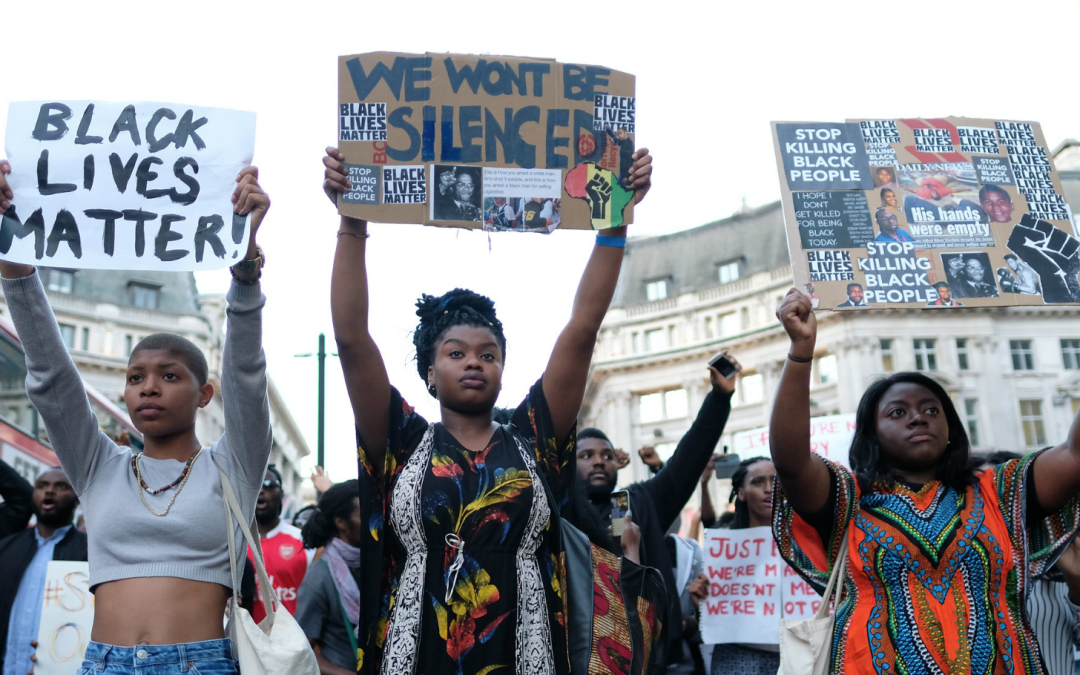
Last week, as demonstrations and outrage continued across America, I received an invitation that made me very nervous: I was invited to join a live BBC World Service program to discuss the view from California. I felt ill-equipped to contribute. What could I say that would be valuable to the dialogue? This is a challenging time to opine on the tinder box that is America, particularly if you’re a white immigrant. But I did my homework, listened to a lot of diverse commentary and read widely.
I can’t claim to have all the answers (who does?) but in preparing for the program, I did some personal growth. I changed from from feeling tongue-tied and unworthy, to fired up about speaking out. How? My research taught me three important things (see below).
Or listen to the Fresh Dialogues podcast below which features highlights of our discussion and more about what I discovered.
.
We began by discussing Trump’s executive order introducing police reforms, and then listened to the insightful perspective of Philip McHarris. A researcher at Yale University, McHarris is a vocal member of the Community Resource Hub for Safety and Accountability. He makes some excellent points about the need to prioritize education and economic opportunity for the black community, and has written a provocative New York Times Opinion piece that concludes: “We need to reimagine public safety in ways that shrink and eventually abolish police and prisons.”
I agree with his call to reimagine public safety, but it’s hard to imagine that abolishing police and prisons will ever be a wise idea. What do you think?
BBC transcript (edited for length and clarity).
Philip McHarris: Police are largely arresting people, and putting people in jail and ruining lives and communities, when people need resources and opportunities, and not a prison cell and policing.
Defunding police means shifting resources away from policing and getting at the underlying causes like not having quality schools, employment options, housing healthcare. The communities that are the safest don’t have the most police but they have the most resources. Because of specific decisions and political inaction, housing policies have created legacies of racial and economic inequality. People often are forced into survival economies which are then criminalized.
So the first step is funding community resources and institutions. The other side is developing alternative emergency response systems where police –– who have guns and a license to kill with immunity –– are not showing up when people need a wellness check, a mental health intervention or domestic violence support.
Jamie Robertson: Alison, this idea of defunding the police…is it getting traction? The idea of withdrawing the police and replacing areas of police enforcement with social workers?
Alison van Diggelen:There is support for defunding police and looking at the root causes (of police brutality). The fact is: We all have bias. It’s what we do with it and how we manage our first impulses (that matters most).
The police force needs to build new protocols and new partnerships, as Philip said, with social workers and psychologists. It needs to invest more in anger management and de-escalating violence, rather than inciting violence. And perhaps making Malcolm Gladwell’s book Talking to Strangers mandatory for police officers?
This pandemic has exacerbated the tinder box of despair and rage in America. Perhaps America also needs to face its horrific history of slavery. That legacy continues today. We need to borrow practices from South Africa and Rwanda and hold Truth and Reconciliation hearings.
Here are the three things I learned in preparing for the BBC program:
Speak out: As influential psychologist and author Adam Grant says:
“Just as sexism is not only a ‘women’s issue,’ racism is not only a ‘black issue.’ In social movements, research has repeatedly shown that when majority groups stay quiet, they inadvertently license the oppression of marginalized groups.” Adam Grant
So, no matter who you are or where you’re from, this is time for speaking out against injustice and inequality. It’s also a time for mindful listening, reading purposefully and amplifying the voices from the black community.
“Let’s not excuse violence, or rationalize it, or participate in it. If we want our criminal justice system, and American society at large, to operate on a higher ethical code, then we have to model that code ourselves.” Barack Obama
It’s a version of Michelle Obama’s powerful mantra: “When they go low, we go high.” Here’s her full explanation of the mantra:
“‘Going high’ doesn’t mean you don’t feel the hurt, or you’re not entitled to an emotion. It means that your response has to reflect the solution. It shouldn’t come from a place of anger or vengefulness. Anger may feel good in the moment, but it’s not going to move the ball forward,” Michelle Obama.
3. Champion what works
The United States has a appalling history of slavery; but it’s not the only country that’s ever dealt with systemic racism. Think about the last century of German and Rwandan history. And in South Africa, racism wasn’t just systemic during the Apartheid era, it was an integral part of the constitution and the law of the land. Many people predicted a bloodbath when apartheid ended, but instead Nelson Mandela helped to make a peaceful transition. The country’s Truth and Reconciliation Hearings were an integral part of this.
My fellow BBC contributor, Barrett Holmes Pitner writes eloquently about what we can learn from other countries and concludes:
“Rwanda, Germany, and South Africa have reckoned with their troubled past to make a better future, but America has long preferred to ignore the past, and proclaim the inevitability of progress. America today must define and confront the Original Sin of slavery.” BBC contributor Barrett Holmes Pitner.
Here are some other insightful perspectives worth reading:
“Everyone deserves dignity at the end of life,” Isabel Stenzel Byrnes, bereavement counsellor and hospice care worker.
This week’s podcast is a deeply personal story of how the Covid-19 pandemic impacted my family. A shorter version aired this week on the BBC World Service program, Health Check. I dedicate it to my beloved mother, to those fearful for vulnerable family members, and to anyone who’s lost a loved one recently. And I offer sincere thanks to Isabel, Laura and Mary who shared their poignant and hard earned wisdom about dealing with death.
Listen to the full story at the Fresh Dialogues podcast or below:
.
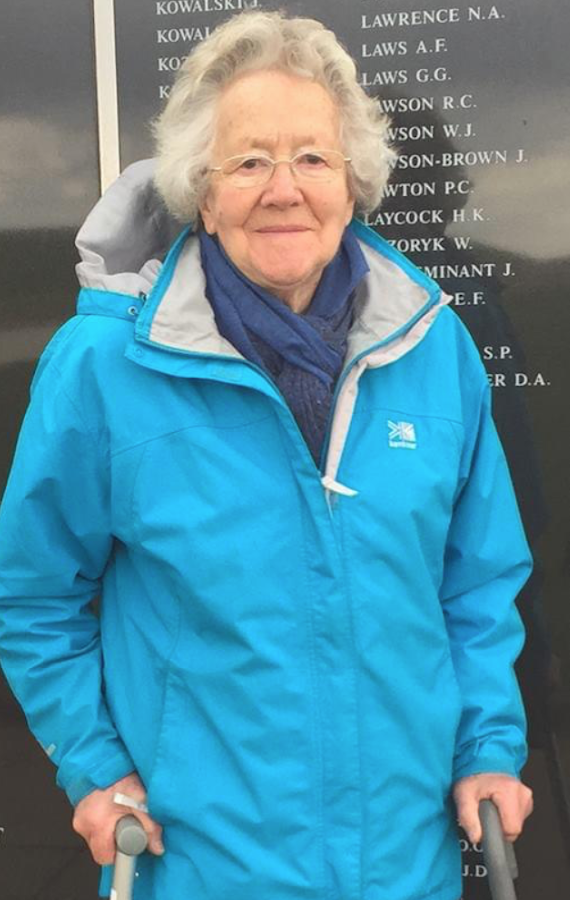
The Covid-19 pandemic has forced me to have a deeply uncomfortable conversation with my sisters. The topic? Our mother’s death. Despite warnings not to visit the elderly, my younger sister drove 500 miles from Kent to Scotland to visit our mother. A puzzling phone conversation convinced her that our 88 year-old mum needed help, urgently. So we made a pact one night: if mum did catch Covid, we’d keep her at home, come hell or high water. The thought of our sociable mum lying alone in a hospital bed, struggling for breath with no one holding her hand, broke our hearts.
Just a few hours later, I woke to the news that hell had arrived. Mum fell during the night and broke her pelvis. My sister watched, impotent, pleading as the ambulance crew –– decked out in full body protection –– stretchered her away. Grimacing in pain, she grasped at my sister’s hand, “Don’t worry, I’ll be OK,” she said. “You know I’m a tough old woman.”
We feared that would be the last time we’d see her alive.
To make matters worse, I’m 5,000 miles away from Scotland, sheltering in California, where I’ve lived for more than two decades.
Earlier this year, the BBC’s Health Check asked me to explore a watershed moment in American healthcare: For the first time since the 1970s more Americans are dying at home than in hospital. My first reaction was: Nope, I can’t go there. Like many of us, I feared facing death.
But now it hit home for me, like an avalanche of mother-daughter worry. Witnessing the isolation of Covid hospital patients in painful technicolor online –– and the inability of loved ones to say goodbye –– has brought it all into sharp focus.
So whyare the majority of Americans now choosing to die at home, and not in hospital? Do they miss out on specialist care and pain relief? What is “a good death,” and what will be the lasting impact of Covid on all this?
“Medicine historically has said: We’ll throw everything we can at a person to keep them alive and is not necessarily what people want,” she says.
Today about 80% of Americans say they want to die at home– or at least not in hospital.
In response, hospice care has grown rapidly over the last 10 years. The modern-day hospice movement was started in the UK in the late 1960s by a former nurse, Dame Cicely Saunders, who wanted to focus on the relief of symptoms like pain, whilst attending to their emotional and spiritual needs away from a hospital environment.
According to the National Hospice and Palliative Care Organization, the number of hospice patients on Medicare– the federal health insurance program for over 65 year-olds – has grown from 44% in 2012 to 50% in 2018. In the US, unlike the UK, in-facility hospice care is the exception, not the rule. So most American hospice workers provide care in patients’ homes.
“Everyone deserves dignity at the end of life,” she says. “Death is the ultimate equalizer. It doesn’t matter if you’re rich or poor, black or white, American or from another country. We will all die. So one of the philosophies of hospice care is to give everyone a death with love, support, presence, understanding and dignity. We want to honor the life they lived, and exit this world with grace and support.”
Stenzel Byrnes points out that unlike being in hospital, where unfamiliar surroundings and staff on constant rotation, and unexpected tests in the wee hours which can cause anxiety, dying at home can give people more calm and control.
“It’s different at home with a handful of close caregivers … who know your life story… can share stories and laugh. You can be understood and known at the end of life by the people surrounding you,” Stenzel Byrnes adds.
But, she cautions, there’s a risk of romanticizing death at home. It’s not always calm and predictable.
“Death is hard hard work for the patient and carers, and the family members,” Stenzel Byrnes points out. “It’s a long process of making peace….it can still be something that most of us will fight against. As Dylan Thomas said, most of us will not go gently into that good night. People die the way they lived. If people were defiant, and angry, hostile to other people, they’re probably going to be that way in the end.”
Hospice care can provide all the pain medication patients need in their dying days at home, but unlike in hospitals, it’s rarely 24/7, so family members can face a heavy burden.
Since 1982 Medicarehas paid for hospice care services – providing their doctors say they have less than 6 months to live and they decline curative treatments like chemotherapy and ventilators – this can save patients exorbitant hospital bills. Instead of trying to prolong life at all costs, Mission Hospice’s Mary Matthieson explains that her team focuses on the quality of life, an approach she calls: “Cabernet over chemo.”
But dying at home isn’t just about saving money – it’s also driven by educational and cultural factors.
Influential doctors like Atul Gawande –– and Britain’s Rachel Clarke –– have helped shiftattention towards palliative care, as well as “death positive” movements like Death Cafes, where people are encouraged to meet for tea and discuss death – and online awareness sites like “The Conversation”, help to reduce the cultural taboo around death.
So does Stanford’s Laura Carstensen believe that Covid-19 has jolted the worldinto considering the option of dying at home?
“I’ve already said to my husband: If I had Covid and having difficulty breathing: don’t take me to the hospital,” she says. “A lot of people are saying that – do NOT take me to hospital. It’s the last place I want to go at the end of my life. We’re doing ourselves and other people a favor by talking openly and we’re obliged to help people we care about get what they want.”
The forced isolation of Covid patients is necessary to protect the wider community, but it’s troubling to think of patients dying alone.
“It’s even worse than that,” says Laura Carstensen. “Medical professionals are incredibly stressed themselves, overburdened. It’s hard to imagine that people have time to sit and hold the hand of someone. There’s every reason to think that a lot people are ending up in their very last minutes of life are very much alone.”
Isabel Stenzel Byrnes is also a bereavement expert – and worries that the speed of the virus doesn’t allow anticipatory grief.
“I’m very concerned that bereavement will have added regret, guilt and what we call counterfactual thinking: I would’ve, should’ve done something differently,” she says. “The one solace is the collective grief we’re all experiencing. Everyone on this planet is impacted in some way. You’re not alone if you’ve lost a loved one to Covid. There are thousands like you that are grieving…”
But Byrnes also believes a silver lining will come from this pandemic. That it will produce an awakening and help lessen the taboo of death – helping us to realize that simply talking about death will not make it more likely to happen.
“The epidemic is a natural source of anxiety and stress. It awakens a primitive survival instinct: we want to control as much as possible…” says Stenzel Byrnes. “It confronts us with death and we can think about death without it happening. There’s a myth if we talk about death it will happen. That’s like saying if we talk about sex we’re going to get pregnant. That’s a complete myth. What Covid is doing is: it puts death and dying as a more familiar topic…the idea of death becomes a kitchen table topic that we can openly discuss with friends and family and what is most important to us and what our wishes might be, when our time comes.”
And that’s exactly what Covid did for my family. For us, the kitchen table was the sometimes precarious connection of a Skype call.
After the ambulance crew whisked our mother to hospital, my sisters and I spent an agonizing eight hours waiting, pacing and trying to reach the hospital for news. Late that night, they called to say that mum was coming home.
For the last few weeks, my sisters have been caring for her in her crowded little granny flat. We’ve all had some powerful conversations –– and some hilarity –– about what matters most in life, and in death. My mother tells me how delighted she is that the potatoes in her garden are beginning to sprout vibrant green shoots. She’s also said several times: I’ve had a good life, I’d rather go quickly…
I take a deep breath and feel sad and impotent, so far away. But I’ve also had time reflect on this wisdom from Isabel Stenzel Byrnes, the bereavement counsellor:
“Ultimately the more we talk about death, the more we embrace life,” she says. “Death and life go hand in hand and if we love life dearly we also have to love this idea that it will end. And we can live more fully by accepting that.”